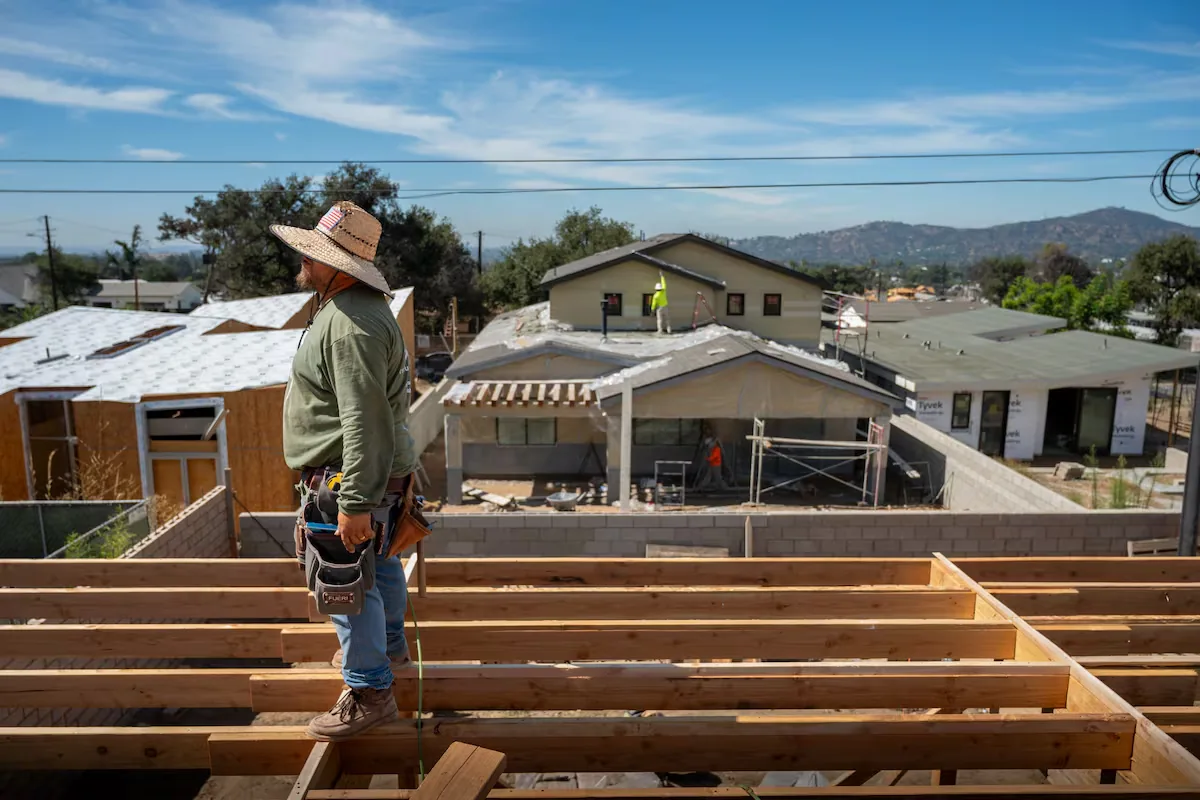
The sound of hammering and Mexican regional music songs announce that Altadena is being reborn. Where just over a year ago only ashes remained after the Eaton fire, today the wooden skeletons of houses that are gradually regaining their shape multiply. The fire, one of the most devastating in recent California history, claimed 19 lives, destroyed thousands of homes, and left an entire neighborhood reduced to rubble. At one of the new construction sites, Ian Hernández, the person in charge, has a task that goes beyond supervising the workers. Before arriving, he checks social media to make sure there are no Immigration and Customs Enforcement (ICE) agents nearby. That morning, he says, he confirmed the area was clear.
ICE raids, Hernández explains, keep the crews on alert and scare away those who are in an irregular immigration situation. This fear is not unfounded: immigration agents have appeared at some construction sites in Altadena and have detained several bricklayers. Others were captured while heading to work at those sites. According to organizations that defend migrants, since the debris removal began and until now, they continue patrolling the community looking for undocumented migrants.
“In February, on Mendocina Street, a car passed by to warn us that ICE was around the corner. Some workers hid and others stayed. Nothing happened. It was Friday. On Saturday, no one came to work,” says Hernández, an Oaxacan foreman who supervises the construction of ten houses. Mendocina Street was one of the last to be burned by the Eaton fire in January 2025. It is now part of a block dotted with vacant lots where a middle-class neighborhood once extended, with an average family income of $65,000 a year, on the slopes of the Angeles National Forest. Previous fires had never reached this far south.
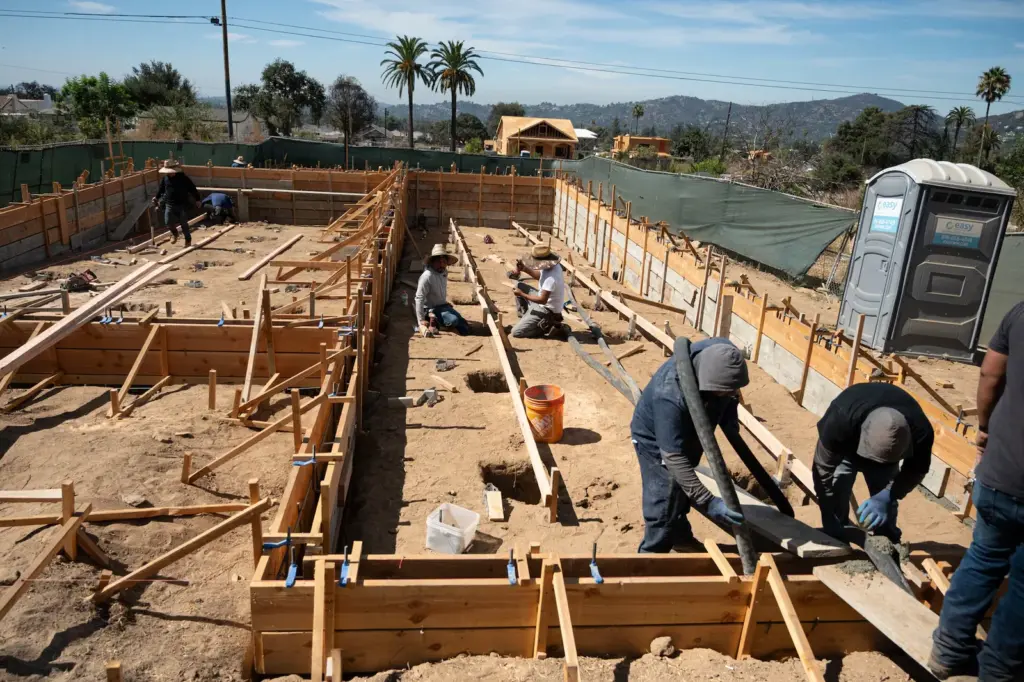
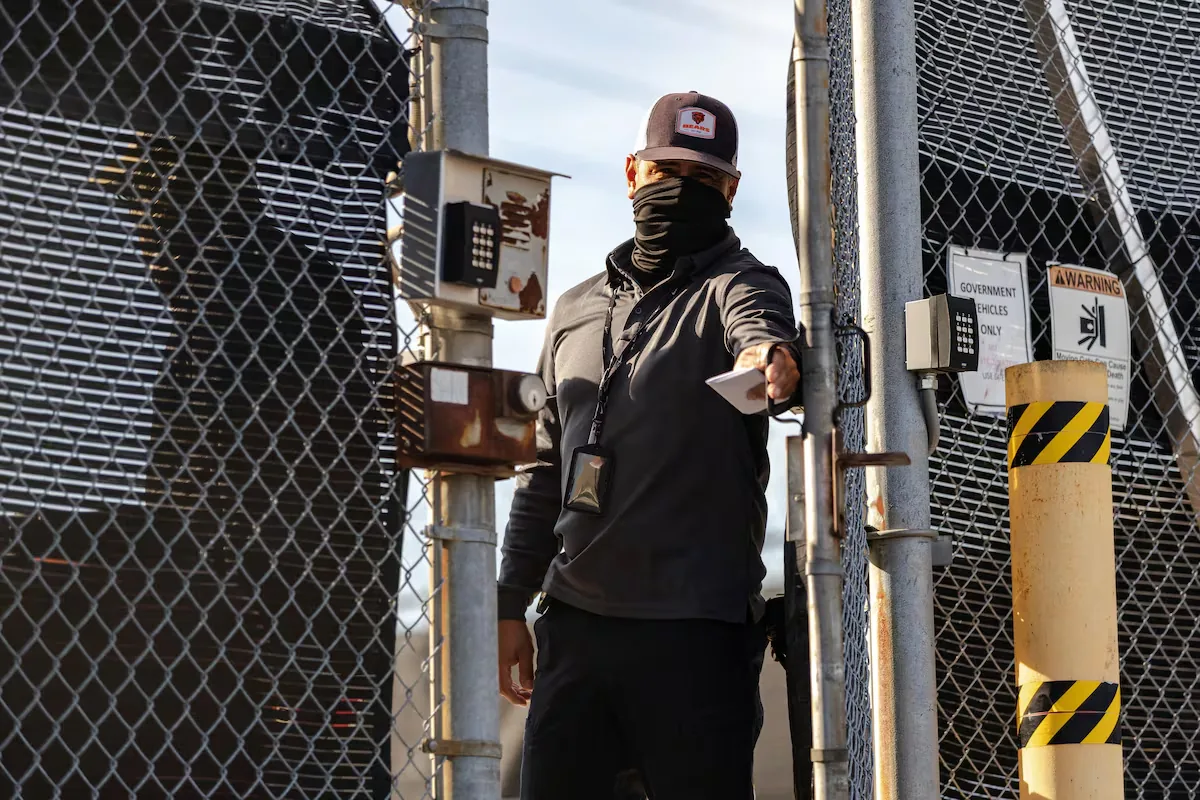
Almost all the homes being built in Altadena have an uncommon feature: the chain-link fences around them, about two meters high, remain locked with chains and padlocks even during the workday. “It’s so ICE doesn’t get in,” explains the person in charge of one of the sites, while workers pour concrete for what will be a patio. “God willing, they never come here, that nothing happens,” the man pleads, protected from the intense sun by a wide-brimmed hat. On other fences hang signs with a blunt warning: “Do not enter without authorization. Private property.”
The fear of ICE presence adds to other factors that, according to activists and property owners, have contributed to the slow progress of reconstruction: bottlenecks in the permit processing with the local government, a process that can take up to 125 business days; insurance compensations that do not cover the total building cost; and the rising prices of materials and labor.
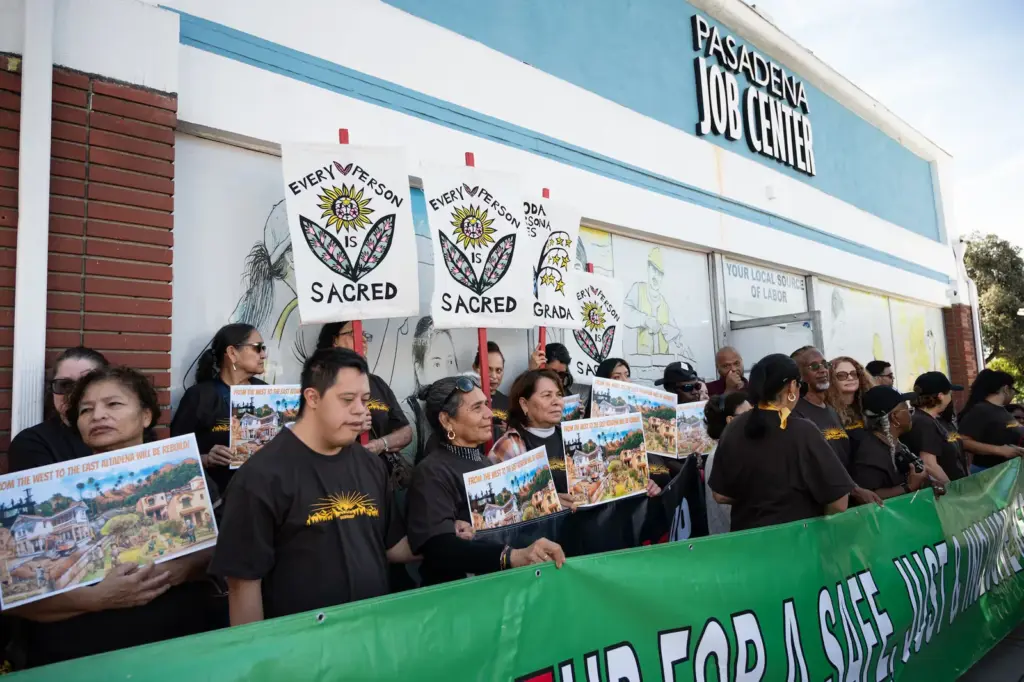
“ICE agents were in Altadena and Pasadena (neighboring city) for five consecutive days,” says José Madera, director of the Pasadena Labor Community Center, an organization that serves as a safe meeting point between employers and day laborers, as well as cleaning workers. “Homeowners have told us that builders no longer want to go to work. That affects families because they cannot return to their homes.”
But the Department of Homeland Security (DHS) maintains that ICE raids at workplaces are “a cornerstone” of its strategy to protect the public and the country’s economy. The agency also claims these actions aim to rescue potential victims of labor trafficking and exploitation. “These operations aim to dismantle illegal employment networks that harm American workers, destabilize labor markets, and threaten communities,” DHS said in a written statement sent to EL PAÍS.
“I pray they leave them alone”
The new house of African American Damon Blount is half-built. Construction began in April and now a crew of bricklayers is working hard to put on the roof. Completing it will take between eight and ten months, but Blount trusts his family can move in before Christmas. If ICE doesn’t show up first and ruin their plans, he clarifies.
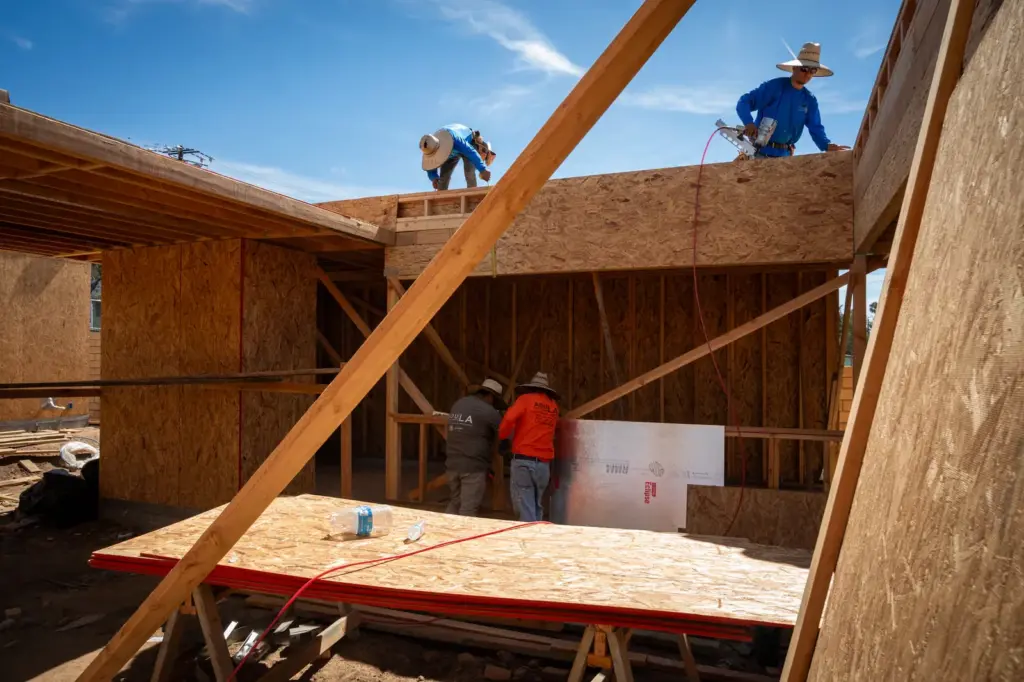
“There are many Hispanic workers in the community right now, while we rebuild, and I just pray they leave people alone, that they allow them to rebuild and let us return home,” he says. Some of his neighbors, he says, have already faced that problem and have paid the price. “They have said ICE agents have taken three or four workers from the sites, and that has caused delays.”
Immigrant advocacy organizations, media, and politicians have reported ICE operations at construction sites, bus stops, local cafes, and during traffic stops. Last January, on the same day Altadena commemorated the first anniversary of the Eaton fire, immigration agents again patrolled the city streets.
Read more Teleserie
“These chaotic raids are never justified, but they are especially cruel when they target our friends and loved ones, including some of the very people who do the physical and specialized work to help us recover from this disaster,” reproached state senator Sasha Renée Pérez, a Democrat representing the area.
Volunteers have also taken to the streets to patrol and spot suspicious vehicles, but their efforts have not been enough. “Immigration shows up here very often. They drive private cars and it’s hard to identify them,” explains Andrés Rivas, a 70-year-old Salvadoran who is still looking to be hired as a bricklayer at one of Altadena’s properties. Rivas is a U.S. citizen, but still fears he could be detained and spend some time in immigration custody. “They come very early. The risk exists,” he says.
A slow reconstruction
The resurgence of Altadena, where the Eaton fire destroyed 6,746 homes, has been, above all, slow. As of June 19, the Los Angeles County government had issued 2,845 building permits, but only 89 homes were ready to be inhabited. More than 1,600 houses were still under construction, from laying foundations to final finishes.
Marialyce Pedersen hopes to be next to join that list. Now, where her home once stood, there is only a patch of earth. For two decades she lived in a house in Altadena that she bought from a friend and that, over the years, filled with memories. Among the most cherished were her grandmother’s piano, who died in 1965, and dozens of children’s books she dreamed of reading someday to her grandchildren. All disappeared in the flames. “It was horrible, the worst thing that has happened to me,” says Pedersen, 62, who has worked as an environmental consultant and advisor for the Walt Disney Company.
Pedersen has already contacted her trusted builder, a Salvadoran migrant who has been in the United States for 25 years. But she fears that he or any of his workers could be detained by ICE, either on her property or at one of the Home Depot stores where they buy materials.
“Some think white bricklayers will come to rebuild my house. Well, good luck with that. It’s not going to happen. Hispanic migrants are the ones working hard on the reconstruction and the ones here, in our community,” Pedersen says. “They are willing to work, even in this heat,” she commented while seeking shelter amid very high temperatures.
The day laborers who never made it to Altadena
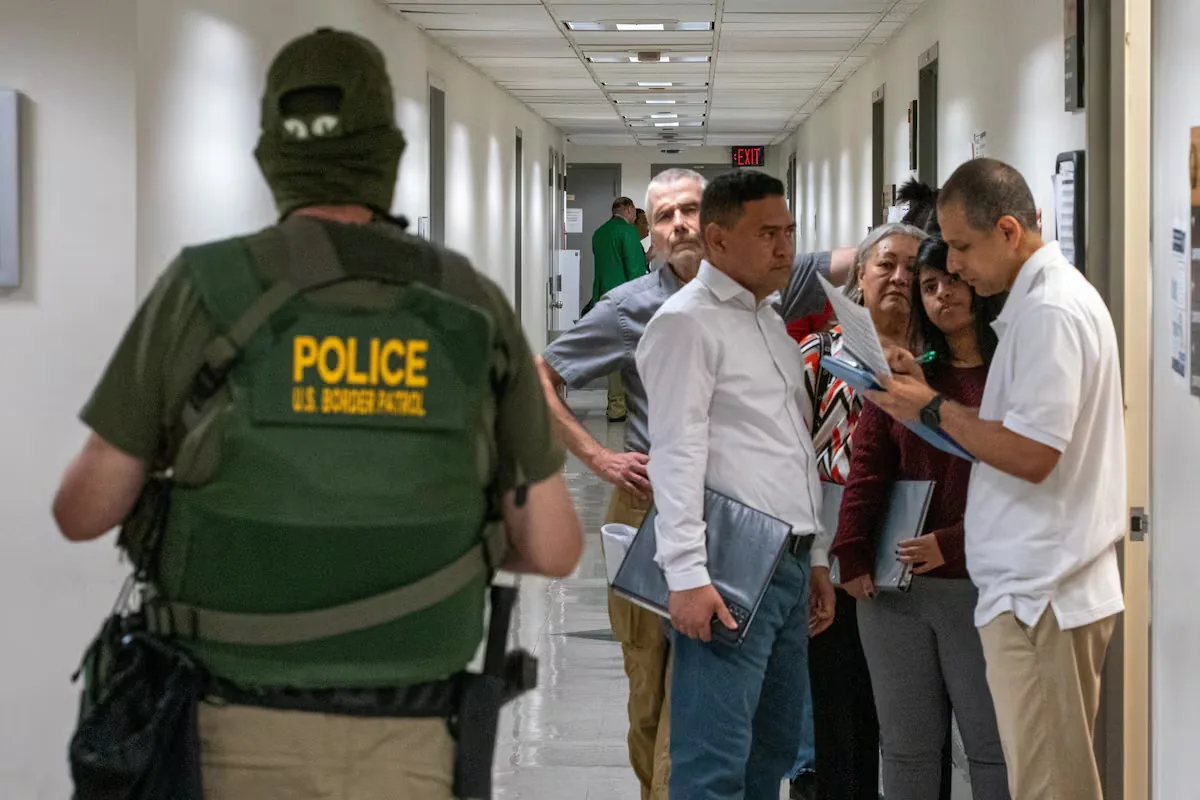
Out of nowhere, four trucks burst in front of a bus stop next to a café in Pasadena. Within seconds, several masked agents got out of the vehicles. It happened on the morning of June 18, 2025, amid the intensification of immigration raids in the Los Angeles metropolitan area, as part of the mass deportation offensive of the Donald Trump Administration. Among those detained were three day laborers heading to work on a home in Altadena devastated by the fire: Pedro Vázquez Perdomo, Isaac Antonio Villegas Molina, and Carlos Alexander Osorto. The three were handcuffed on the spot. One of them, who tried to escape on foot, was even aimed at the head with a Taser gun by an officer. “Stop or I will use it,” the police officer shouted, according to court documents.
Instead of reaching Altadena, the three day laborers ended up in the parking lot of a CVS pharmacy. There, for the first time, they were subjected to a verification of their immigration status and, days later, transferred to the ICE detention center in Adelanto, about 100 kilometers from Los Angeles. But they did not stay silent. The three now lead a lawsuit against the federal government that has brought to light alleged racist remarks by the agents involved in their detention.
Pablo Alvarado, leader of the National Day Laborer Network (NDLON), says this is one of the clearest examples of how ICE operations are affecting a city trying to rise from the ashes and, with it, the progress of the entire country. “Contractors can’t find enough labor. Although they said they wouldn’t raid there, immigration has been around and has indeed detained workers,” the activist complains. “It’s very clear that, literally, migrants are building communities and ICE interrupts it through immoral, inhuman, cruel, and illegal operations.”
Read more Personal decisions