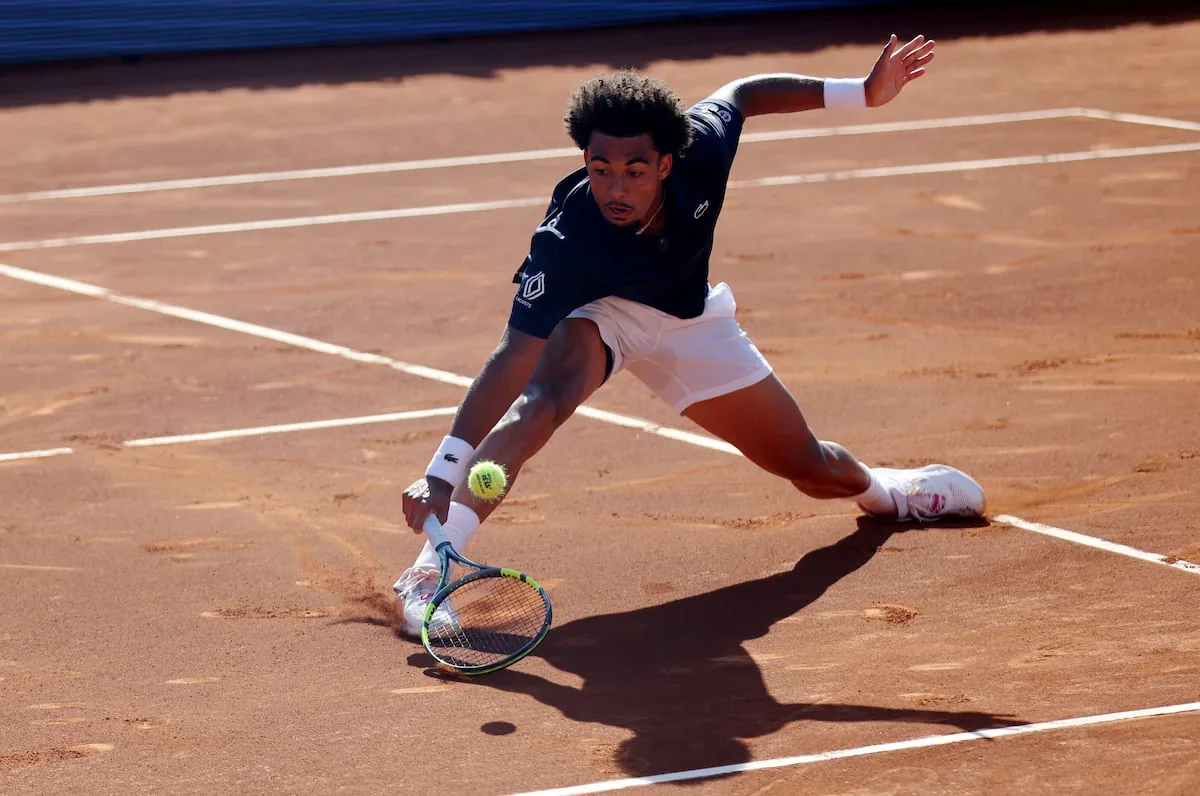



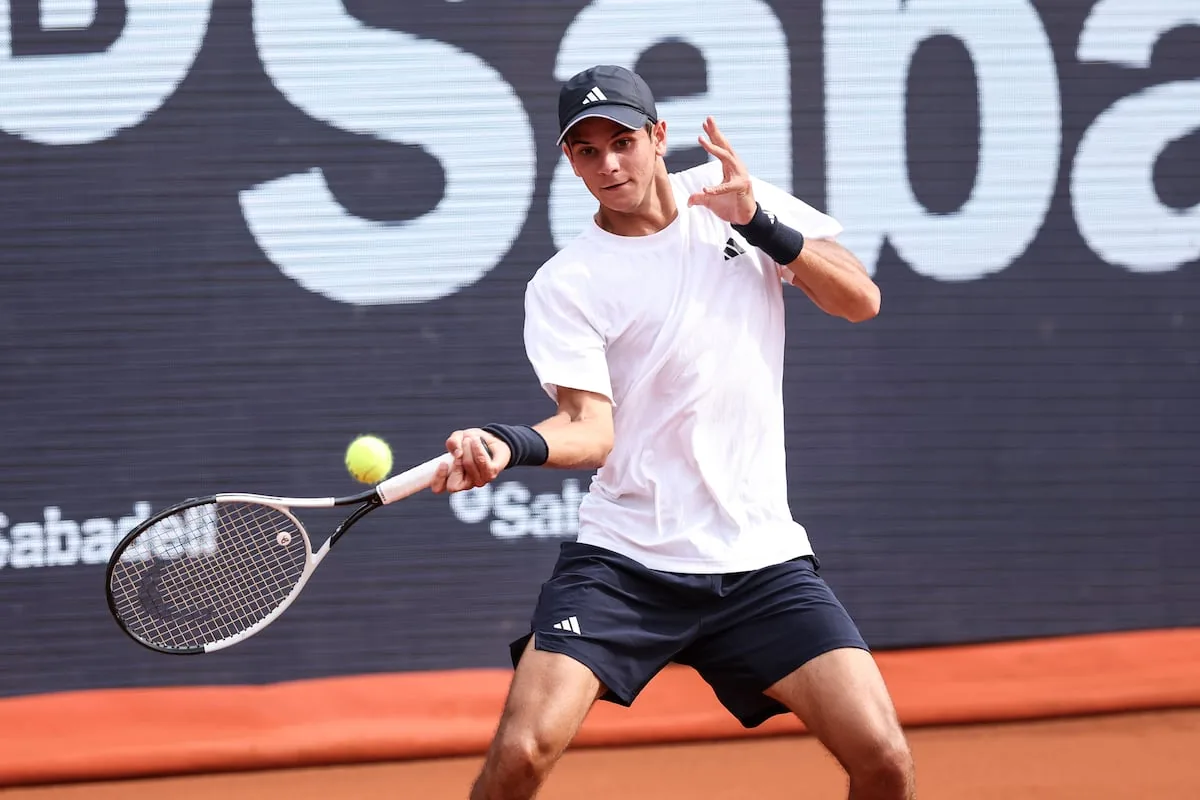
Rafael Jódar discovers another of the necessary tolls to continue exploring the heights of the circuit, that the match lengthens and hardens and the wind comes head-on, when there is already a good dose of effort in the legs and the opponent goes from less to more. Arthur Fils, one of the young players who theoretically should be making a name for himself up there, has found his rhythm and finally hits the mark: Bam! Consequently, the Spaniard’s nice run in this Godó, which soon lost Carlos Alcaraz from Murcia and will crown either the Frenchman or the Russian Andrey Rublev (3-6, 6-2 and 6-2 against Hamad Mejedovic) this Sunday (4:00 PM, Teledeporte and Movistar+), ends here. However, the memory will be different: no promise. Already a reality.
Read more Sheinbaum, Lula and Petro close ranks in Barcelona to reverse Latin America’s rightward shift
Jódar leaves with his head held high, finally bowing out after a very physical struggle of inverted inertias; even, but ultimately decided by a surge that was logical to a certain extent. Fils is the 30th in the world, although he has the makings of a top-10 player —he reached 14th last season— and despite his short career, he knows better the vicissitudes of these types of commitments where one arrives with the fuel gauge dropping. They were two boxers shaking each other. In any case, more learning. The Spaniard says he leaves very satisfied (because that’s how it should be) and that he is barely laying the foundations of an exciting project that is slowly taking the form of a wall: “I would liken him to Sinner.”
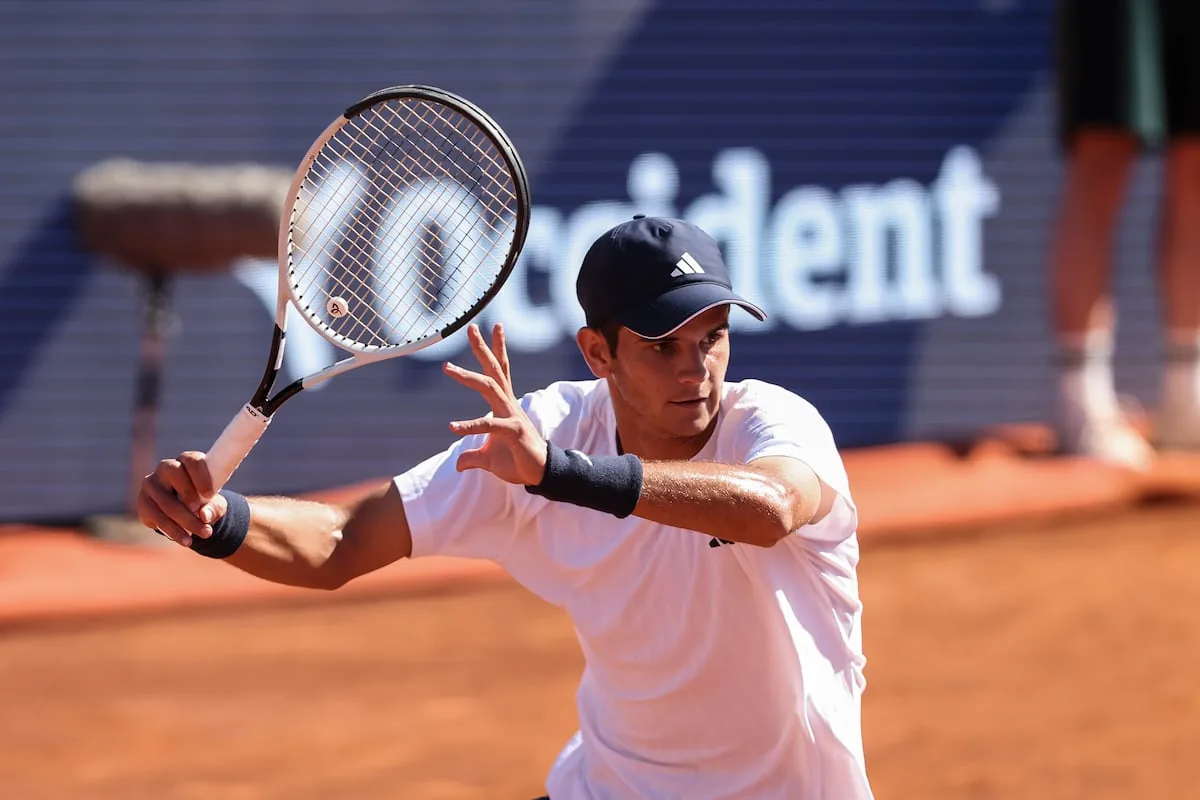
Before, Dani Olmo, a subtle player with the ball, watches from one of the celebrity boxes and taps his friend on the back, who corroborates: Eric, Eric, did you see that? Wow. Indeed, what a way to hit the ball. Fils quickly winds up his arm and when he adjusts his sights, his shot travels to the depths of the court like a projectile, imbued with the spirit and hitting style of the coach who directs him from the bench. Ivanisevic, alias The Cannon, also inevitably looks to the other side, analyzing: Jódar, a world yet to be discovered. Will he be what he seems or not? He certainly looks good. The duel is an even match.
They hit from the baselines, as if they had mined the net, and a game without folds or riddles is decided on the lines. Simply put, the one who is tougher will take this, because it’s about that, about resisting, about knowing how to take a hit, about not giving up and earning it. France has been dreaming of a great champion since almost ancient times, but there is still no one to take over from the great Yannick Noah, that prodigious athlete with braids who once devoured a Roland Garros; since that year, 1983, only glory for their girls: Pierce, Mauresmo, Bartoli. No winning footprint from the men. So, to believe or not to believe in Fils? For now, all caution.
xxxxxxxxx
The young Frenchman has shots and an abundance of lower body strength, but he still struggles to interpret the game and his physique tends to play tricks on him, having been out of action for up to eight months due to his back not long ago. Fils wondered the previous evening what on earth was happening with Spanish tennis, where that production and those green shoots came from, such a factory; why it goes from a Nadal to an Alcaraz and why, in the blink of an eye, this Jódar has emerged, who rows and rows, and denies him up to six break opportunities in the first set. On the second attempt, the Madrid native succeeds. That’s what happens: it’s called order, judgment, accuracy. School. It’s not all about smashing it. Knowing how to listen and identify when to take a risk and when not to.
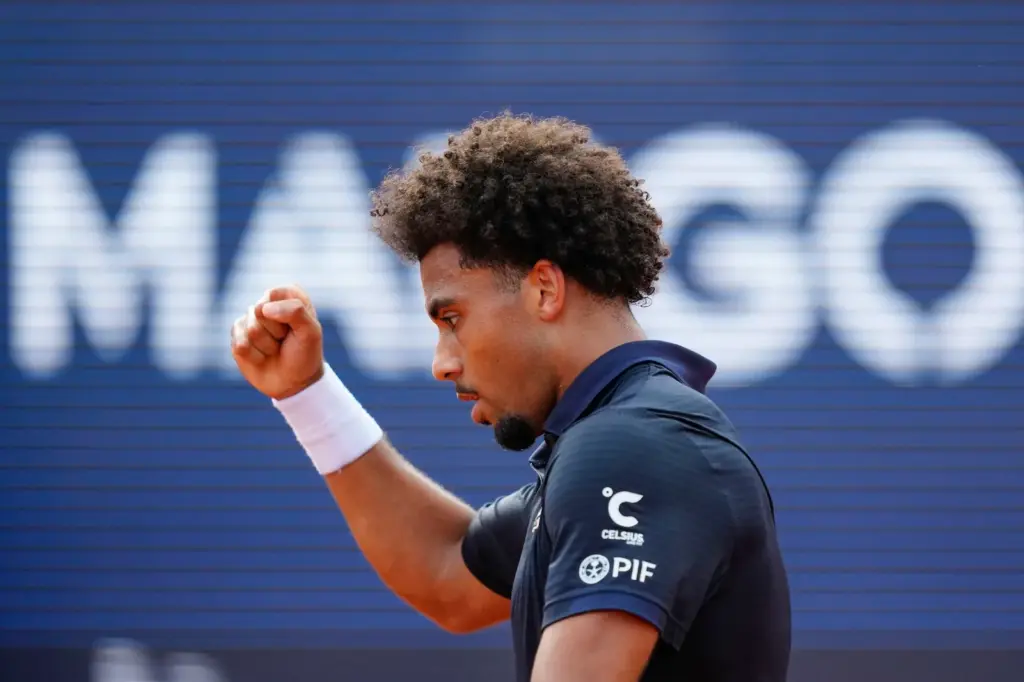
The pounding mix of Quevedo with Bizarrap sounds loud: “Stayyyy…!” And Jódar clings to that with faith, more tempered, resilient, growing every time his opponent puts him against the ropes and threatens. However, the Frenchman also shows his claws to hold on and gets encouraged, tensions out and a timely voice, always so important. That shout, an already internationalized legacy. Medjedovic had let it out a couple of hours earlier and now Fils, tired of hitting, hitting and hitting more. But that’s how it is, my friend. That’s what’s needed. Haste is paid for. “Come on!” That’s how the break comes for him, 5-3, and that’s how he balances the match. He then withstands the onslaughts with that necessary patience.
The curve is reversing and the storm definitely breaks loose. There’s a Frenchman setting the pace and increasingly inspired, with greater shot precision and playing without thinking. Flow, the key. Now, that forehand spits fire and Jódar looks slightly at his bench, to see if he can find something through Rafael senior’s advice. “My father always has solutions,” he used to say. But this time there’s no remedy. On this occasion, the imposed cadence overwhelms him, although hope emerges when he has an opportunity to get back into the game, which the opponent thwarts by reversing and placing the ball in the corner. It won’t be this time, then. However, tennis and Barcelona say so: watch out for Jódar.
Read more Spain recovers from the defeat at Wembley with a restorative thrashing against Ukraine
xxx
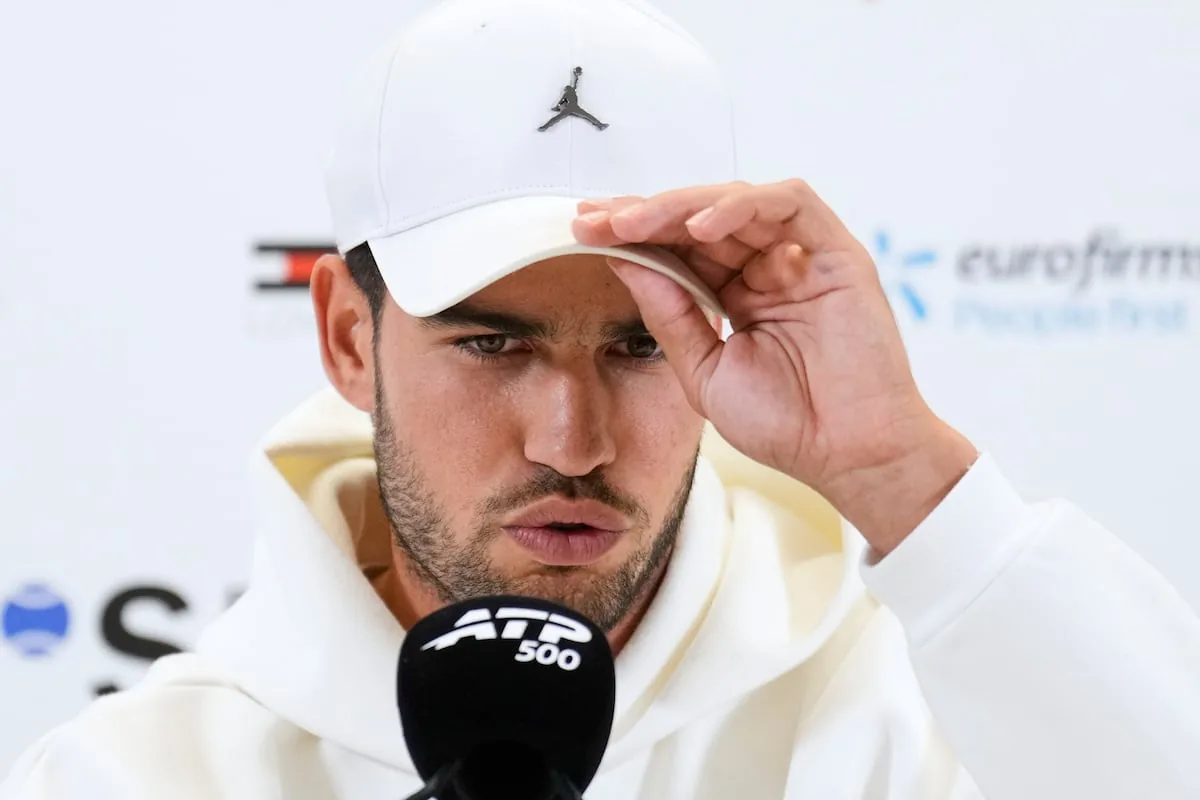
Jódar says he leaves “very happy” with his level, that he can only take “positive things” and that the primary goal of this latest experience —his first semifinals in an ATP 500 event— was to enjoy himself. That’s what he and his father had agreed. “I’ve done it, and I’ll stick with that,” he said emphatically in the conference room, where before the analysis he remembered Antonio Martínez, “a legend of the Chamartín Tennis Club” who passed away on Friday. Jódar, 19 years old but with clear ideas: “There are many more important things than tennis.”
In less than four months, the Madrid native has starred in the most striking ascent of the season, in which he started as 168th and now stands as 42nd. Everything has changed very quickly for him, who despite his youth wants to keep “his feet on the ground” and “continue learning” day after day; naturally (and intelligently) distancing himself from the Spanish heavyweights. His career invites optimism, but for now it is reduced to an insinuation and he repeatedly refers to the power of work: “It’s a very good week, but we must continue doing things with the same humility.”
Logically, Jódar’s discourse is still short, but between the lines, one perceives a natural nonconformist who blindly trusts his possibilities and competes without looking sideways. His destiny is in his hands. “He’s a very good kid,” describes a member of the Madrid club who has been sculpting this latest talent forged under his father’s wing. Whims of fate: another Rafa allied with a family member. In any case, he writes his own story: “Everyone makes their own path and their own progression.” That is, no euphoria.
“Just because I’ve won many matches now or because I’m doing very well, doesn’t mean I’m going to go as far as those types of players have,” he replied, referring to Nadal and Alcaraz. “Ultimately, what I have to do is focus a bit more on myself and try to improve. Next week there’s another opportunity in another tournament [Madrid, in his first main draw participation] and there are still many tournaments and seasons left to try to do my best,” continued the player from Leganés.
Before his arrival in Barcelona, the tennis player triumphed on the sand of Marrakech and from there strung together eight victories and 14 consecutive sets, until Fils took a sharp turn in the afternoon and managed to break through that wall that had stopped players of the caliber of Jaume Munar or Cameron Norrie. In the absence of Alcaraz’s brilliance, the Catalan fans have greatly enjoyed, and from the front row, the overwhelming game of this competitor, still developing and fearless, linear, focused, stony. Similar to Sinner from a stylistic point of view, Fils said.
“If I had to make a comparison, it would be with Jannik. I would say that Carlos can mix more and change things during the match, and Rafa plays very strongly from the baseline, on both sides,” explained the Frenchman, who will face the aggressive Rublev today. A power-versus-power duel, therefore, in which, for sure, the forehand will have a lot to say. This is the first final for both, and the winner will succeed the Nordic Holger Rune in the honors list.
Read more The gift of Beatriz de Moura’s ability to anticipate