







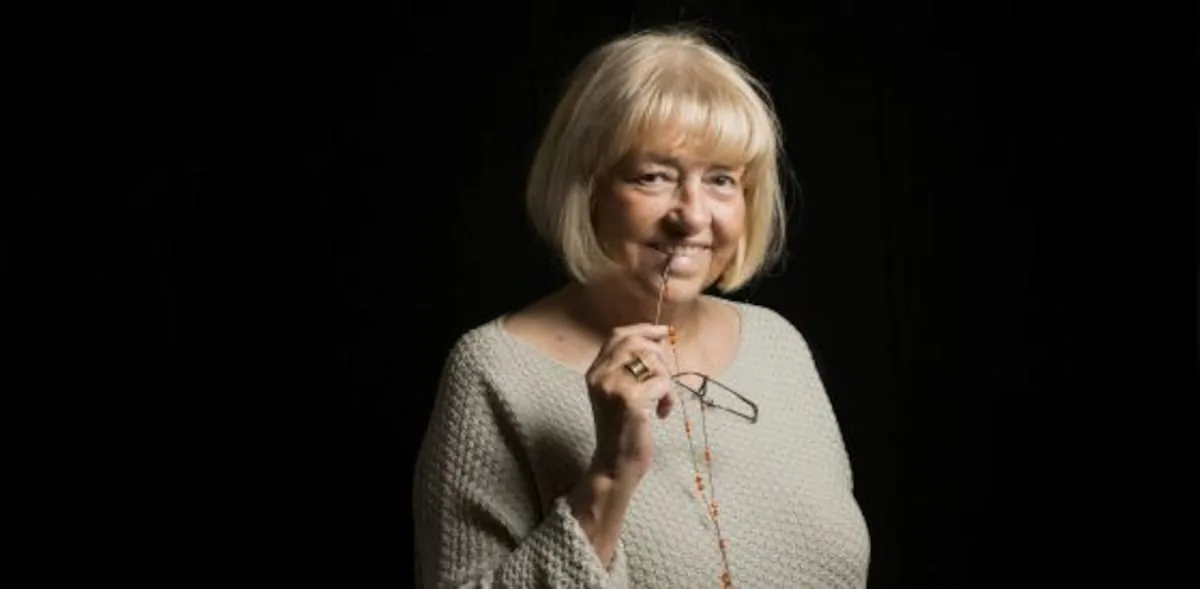
“In the middle of the journey of our life…”, Dante Alighieri.
It was a March morning in 1996 when I received her phone call and we had the conversation that changed my life. At that time, I was right in the middle of the journey of life that I have traveled so far. I was still a young writer of thirty-five, with some sorrows and no glory, who, shortly before, had made a risky bet: I had left my job as editor-in-chief of a cultural magazine and had become, legally and officially, the first independent Cuban writer. When I look back at that moment, it still seems incredible to me that I had chosen to make such a decision: we were living in a country in deep economic crisis, as Cuba was at that time (the endless Cuban crisis), we barely had money to continue barely subsisting, and, as a writer, not even the shadow of an editor on the horizon. But I just wanted to write and had thrown myself into the void.
Read more One of Europe’s most wanted fugitives arrested in Cancun
But now I believe that, as Marcus Aurelius seems to have said (according to the Glass siblings in Salinger’s works), “that was wishing to happen.” And the first thing that happened was that, three months after the stipulated date had passed, I had received the news that my novel Máscaras had won the 1995 Café Gijón Prize, awarded in January 1996, thirteen days after my conversion into an independent writer. Then something changed: suddenly I had an international award that I no longer expected and even had money that saved me from destitution, which was already a lot to ask for. But nothing more. I could say, as a Cuban from the late 20th century, that from the torrid hell of uncertainty I had passed into the purgatory of a certain conviction that perhaps there would be some way out… And then the phone rang, opening the doors to what would be my paradise as a writer.
Not even in my wildest dreams could I have guessed that something like this could happen to me, and that March morning in 1996 it was happening: on the other end of the line, Beatriz de Moura, the founder and director of Tusquets publishing house, told me that she had read my Café Gijón winning novel and proposed to publish it.
I believe that such a call would have stirred any writer of the language to their core. But, for that young Cuban writer that I was, with no other means of livelihood, no job, and no editor, that unexpected proposal, coming from the most coveted place —that already mythical Tusquets publishing house, home to Milan Kundera, John Irving, Marguerite Duras, the erotic novels of the La Sonrisa Vertical collection—, surpassed everything I could have dreamed of. My life, within about five minutes of telephone conversation, took a somersault towards what any author could aspire to, and I thus achieved it, in a magical, revealing, and transcendent instant.
Three months later, having arrived in Spain to receive my Café Gijón Prize —it was merely a prodigious check, though without a ceremony or even a diploma to file away—, my wife Lucía and I moved to Barcelona and entered for the first time the domains of Beatriz de Moura’s wonderful kingdom, the narrow and crowded offices on Iradier Street. There, after a first conversation with Antonio López Lamadrid, the commercial director of the house —a gentleman who would also be one of the most important people in my life, perhaps the one who had the most confidence in what I could achieve with my work— I moved to the small glass-enclosed area, located in the patio or garden of the property, the place where the character of a benchmark publishing house in the Spanish-speaking literary universe was decided, the small great throne from which Beatriz de Moura performed her miracles.
Such was the commotion caused by that first encounter with that self-assured, smoking, well-groomed, and self-confident woman that I have forgotten what we talked about, although I suppose it was about my book and its publication, which would happen in January of the following year, 1997, in the magnificent Andanzas collection. What I have never been able to forget is that, upon leaving the premises on Iradier Street, already on the sidewalk where we were waiting for the taxi that would take us back to the hotel, my wife, Lucía, who had attended the conversations with Tony López and Beatriz with me, told me another of the great truths of my life, in a sense, I believe, the greatest of all truths related to what I wanted to be: “Well, now you are a writer.” And in fact, I began to be one.
Read more Adam Yates wins O Gran Camiño on his way to the Giro
My relationship with Tusquets Editores now spans thirty years and some twenty published titles. It has allowed me to have editions in many different languages, win awards, and participate in events in many places. And all of this has happened because Beatriz de Moura found something in my literature that she thought was worth publishing and supporting. And my gratitude is perhaps greater than that of the rest of my Hispanic American colleagues who have had the literary privilege of being part of the editorial catalog that Beatriz de Moura, year by year, created and consolidated, giving it visibility and what would become the foundation of its prestige: because unlike those colleagues (who surely feel enormous gratitude towards Beatriz), my work as a writer has had since then and until today —in the hands of the heirs of Beatriz and Tony’s school— the backing of a publishing house rather than a country where, for several years now, my books are not being published. That is why I say that I am a Cuban writer, but thanks to Beatriz de Moura, I am also a Tusquets writer.
I must warn, for it is fair, that the editorial paradise to which Beatriz de Moura’s sensitivity and keen eye led me was not always paradisiacal. Dealing with that editor who always thought like an editor had some complicated frictions, as she could be as harsh as she was affectionate. However, working with her and her readings was always an instructive exercise because, in principle, Beatriz aimed for each of her authors’ books to be the best one had the capacity to write. And her standards were always high.
Beatriz de Moura’s legacy was so powerful that, since she decided to step away from editorial work, her spirit has continued to guide the profile of the creature she conceived in the midst of Francoism and nurtured throughout her years at the helm of Tusquets, that house which became mine and which I have had the enormous privilege of inhabiting, thanks to her and what, apparently, she saw in my work. But —and here is the key to everything—: not in the work I had done, but in the work I could do. That capacity for anticipation which is the gift of great editors.
And now Beatriz de Moura has died. And with her, an era closes. With her departure, a throne is emptied. And, in her passing, I trust that she will pass by Virgil’s side and continue, continue, until she meets her celestial namesake who, with her divine light, will illuminate her path from paradise to the heaven where she deserves to be, as the great editor she was and will be.
Read more Marc Barceló wins the Rapid World Championship U10
Thank you, Beatriz.