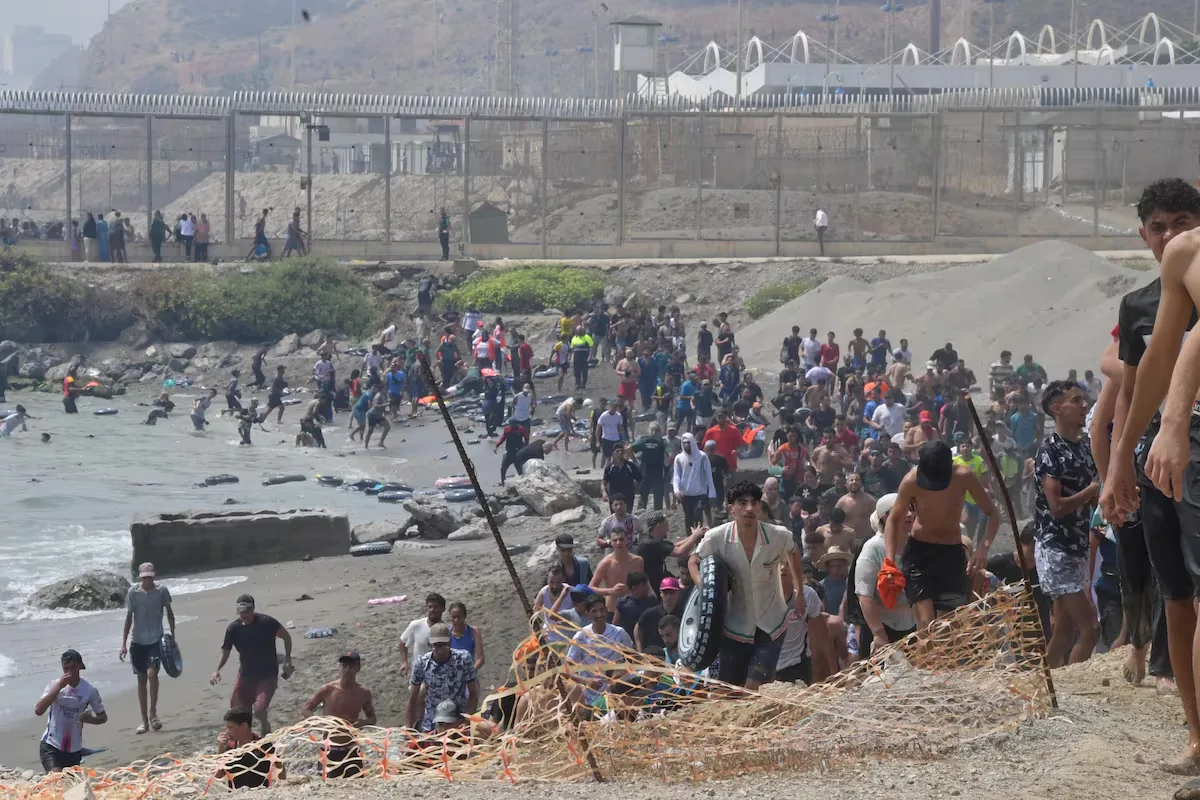





Almost a month after the largest historic jump at the Ceuta border, the Government has made a strategic shift in managing the crisis and has agreed to create the unified command that it was asked for on several occasions but insisted was unnecessary. Additionally, the National Security Council will declare a “situation of interest for national security” in Ceuta. It is a significant political change, although its practical effects are yet to be defined.
Read more Stage 3 of La Vuelta is canceled due to a severe hailstorm 15 kilometers from the finish line
Ángel Víctor Torres, Minister of Territorial Policy and usually appointed by Sánchez to coordinate the various crises of recent years — the most recent being the Canary Islands — will take command of Ceuta as requested by its president, Juan Jesús Vivas, who has admitted to being overwhelmed from the very beginning. The unified command will include a specialized committee to advise Torres, which will include Vivas, the Government delegate in Ceuta, as well as officials from the CNI, and will have the support of the national security department of La Moncloa. The crisis thus takes on a new dimension and the Executive implicitly acknowledges a severity greater than what it had assumed until now.
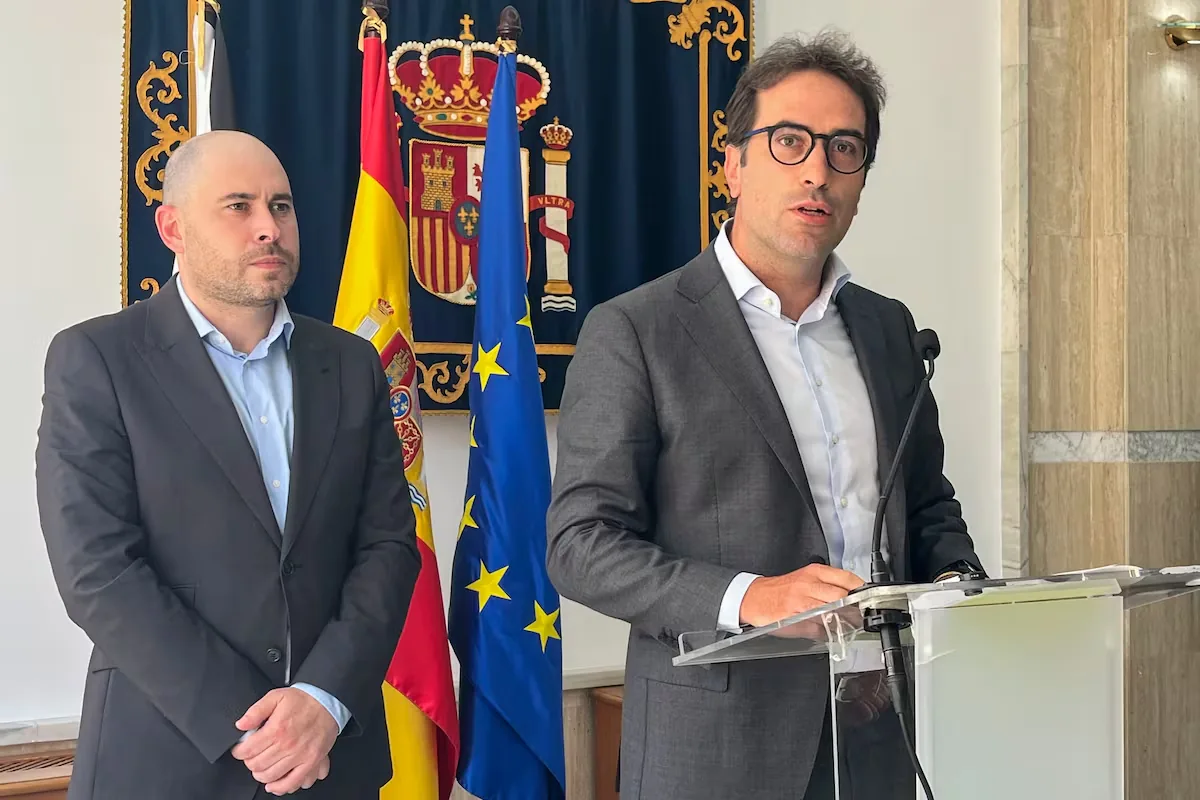
The shift was politically agreed with Vivas in a meeting with the First Vice President, Carlos Cuerpo, who also negotiated with the veteran Ceuta leader a flood of millions that will arrive in the coming weeks to revitalize the economy of the autonomous city, blocked by this crisis.
Sources from the Executive explain that the various ministers who have been in Ceuta and in charge of management did not see this unified command as necessary, but it also made no sense to close off an idea supported by both Vivas and the PP. But the strategic shift, precisely in the week when political activity renews with a Council of Ministers and the entire Government returns to Madrid, including the president, Pedro Sánchez, who until now was at his place of rest in the Canary Islands, is a political gesture showing that the Executive feels the impact of criticism for poor management.
Cuerpo has not clearly explained why the Government now decrees a unified command that it rejected for weeks. His argument is that the crisis “has moved to a phase where we no longer only talk about security” and, therefore, “coordination between administrations is increasingly important, hence this unified command.” The reality is that the Executive resisted this unified command because it thought it was unnecessary and preferred to manage the crisis jointly with Vivas, each maintaining their competencies, but the criticisms have been so strong and the wear so significant that Sánchez has decided it was not worth continuing to leave this flank of the unified command open. In some way, even if not explicitly stated, it is a correction and, therefore, a self-criticism by the Government for a management that has been highly debated in many sectors, not only by the opposition.
Read more The artist Juana Dolores is considering stopping writing in Catalan
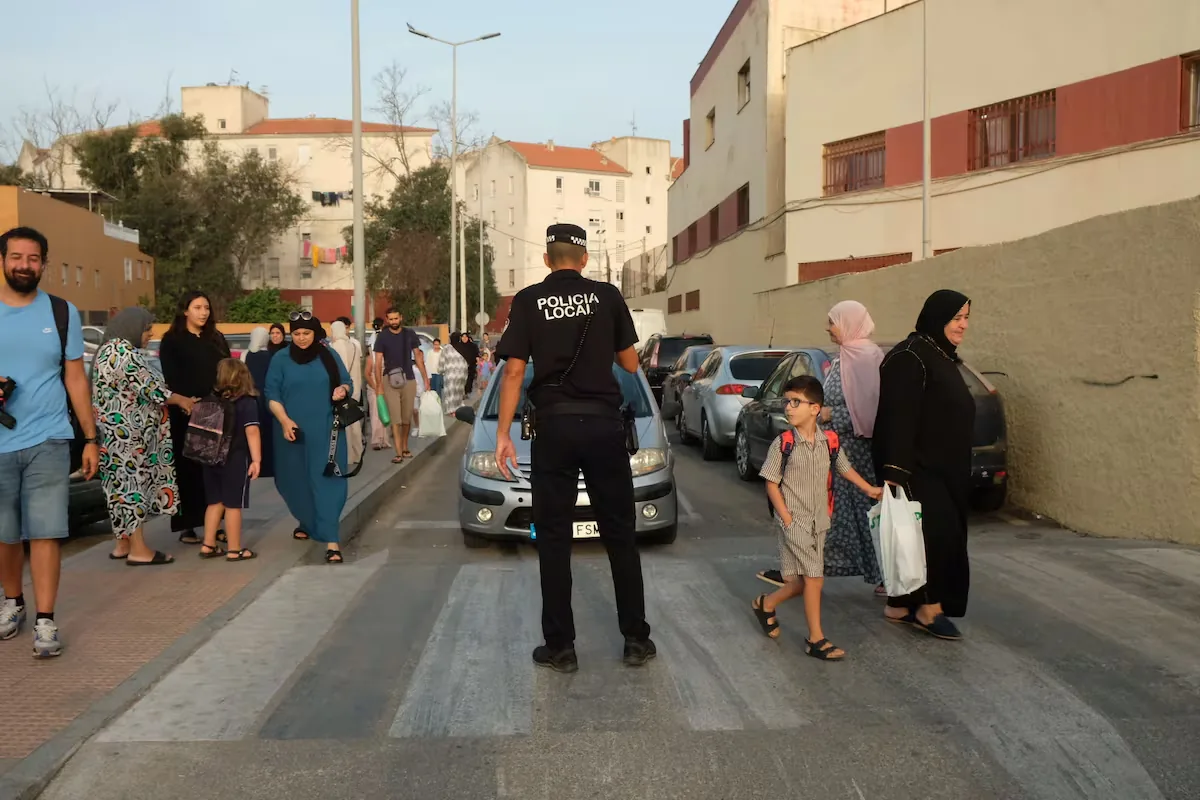
Almost a month later, there are still thousands of immigrants on the streets of Ceuta without a location, and the Government still does not even know for sure how many there are. According to Cuerpo, the minors are already controlled, about 2,900, but many adults are still wandering without having been registered or much less having started their possible expulsion.
The initial strategy of the central Government and Ceuta was to try to get immigrants to voluntarily return to Morocco, something that more than 80,000 did and that, according to Cuerpo, some still do daily, but the Government took a long time to manage all those who decided to stay at all costs. The law prevents them from being expelled if there is no individualized file for each of them and they cannot be forced to be in any specific place; everything must be voluntary.
Cuerpo has sent a very clear and different message from Ceuta compared to the ministers who have visited in recent weeks. The tone has been more serious, and above all he has insisted on one message: “Ceuta is a border territory, but it must feel the State present like the citizens who live on the Peninsula.” It was a clear response to Vivas’s main accusation, harsher than ever, who reproached the Government for having “abandoned Ceuta.” Vivas demands that expulsions be expedited, and Cuerpo has also promised this. “This unified command will make management as fast as possible in the return [of adults] and the management of minors,” he insisted.
And from an economic point of view, he also announced much more money, although still not specified: the recovery plan will not go to the Council of Ministers this Tuesday, but it will in the coming weeks. The vice president explained that there is already a plan underway in Ceuta of 180 million euros, but admitted that “circumstances require going further and giving a response to the current exceptionality.” “All necessary resources will be made available to the people of Ceuta, we will strengthen urban security, manage returns, strengthen public services. Also, in the coming days we will define immediate measures to improve the conditions of Ceuta’s businesspeople, the self-employed, and workers,” insisted the vice president, who marked a change in discourse and political decisions of the Executive, although the management problem remains the same: there are 5,000 people who do not want to leave Ceuta and so far space has been enabled for 1,800, partly also due to the difficulties the city has posed in enabling places and the resistance of neighbors to several possibilities, unlike what happened in 2021. Now, with the unified command, everything will be tried to be sped up. But even without it, much effort was being made, and the results have been modest in the first month of the crisis.