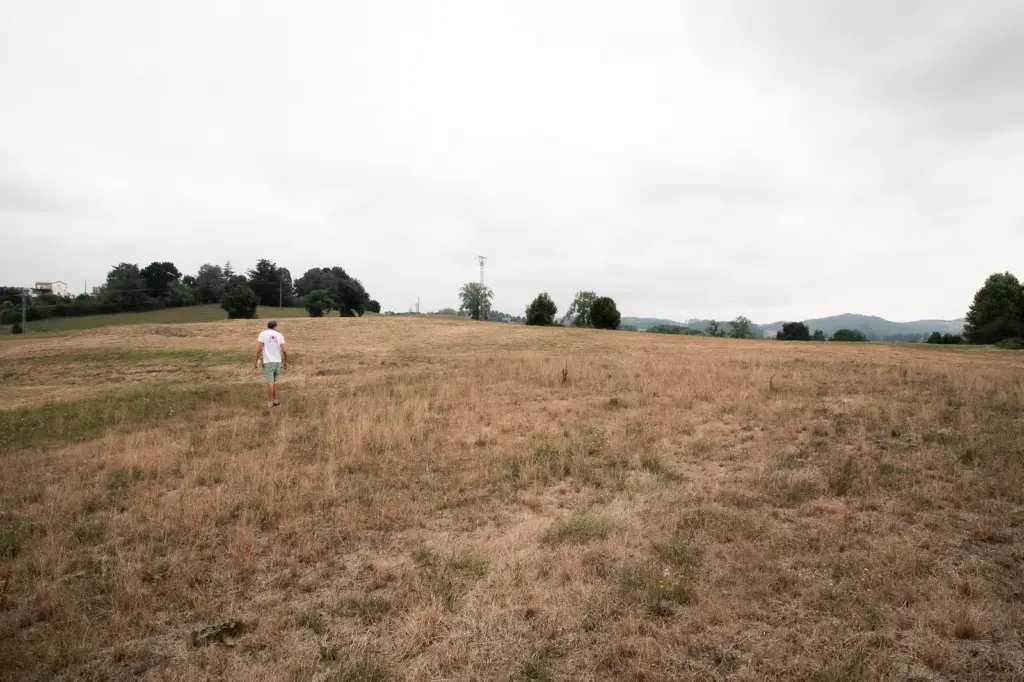
Villaverde de Pontones (470 inhabitants), within the municipality of Ribamontán al Monte, suffers from drought like the entire yellowish north, but a controversy soaks its conversations: Olucas Surf Center. This is the name given by the Cantabrian Government (PP) to a planned indoor wave pool in a region overwhelmed every summer by coastal surfing. The goal for 2030 is a space that attracts “200,000 tourists,” rezoning 100,000 square meters of rural land for the pool and hospitality spaces, and generating about 60 jobs. This economic manna generates mistrust among the population: money is welcome, but they fear tourist saturation in an area still quiet, unlike the traditionally surfer and exploited Somo. The locals denounce that speculators are already indiscriminately asking about land and look to the Mediterranean as a harmful example: “It promotes a tourism model that is not cool at all.”
The initiative was presented in June, with President María José Sáenz de Buruaga denouncing “tourismphobia” in a parliamentary debate where water scarcity in a region without reservoirs and summer overcrowding were also discussed. The mechanism, the controversial Singular Plan of Regional Interest (PSIR) that empowers the Executive to initiate public interest plans without depending on municipal urban planning parameters. The Olucas will operate by rezoning private rural land to make it public urbanizable land to establish a private project of which there are only renderings with palm trees, beautiful sunsets, and large pools, but the exact location of an investment that will be around 40 million euros, according to their proclamation, is unknown.
The idea was presented in June by the head of Urbanism, Roberto Media, the head of Tourism, Luis Martínez Abad, and the current sole partner of Olucas, Ignacio Martínez-Peñalver, manager of the Basque company Wavegarden, which creates artificial waves. Peñalver stated that the initiative “is led by people from our community” although he did not specify them. Paula Fernández, from the Regionalist Party of Cantabria, has assured that the mayor of Ribamontán al Monte, from her party, knows nothing about a matter that “smells like a windfall and a tailor-made PSIR for a very questionable private and public interest project.” Pedro Casares’ PSOE has questioned the PSIR and expresses “great concern” about the plan, and Cantabristas, through Paulu Lobete, condemns the “nonsense” that serves “to further overcrowd” through that discredited formula.
Asking in Villaverde de Pontones reveals that in two bars the waiters prefer not to talk, mysterious. Some customers speak French and many are from outside, a sign of the booming tourism radiated by nearby Somo and Loredo, surfing hubs. Mercedes Fernández, a 66-year-old tobacconist, is ambiguous and admits there were weeks of intense debate: “It’s no longer talked about; if it benefits the town, fine; although there is a risk it won’t, some people defend it because it provides jobs and others say there are already beaches very close.”
Labor and financial aspects support the proponents, and the detractors wield the commotion, road congestion, or price increases as criticism. Teresa Madrazo, 50 years old and a supermarket worker who could see increased clientele with the influx, picks up momentum: “The waves… Waves are very trendy! Some protest, others don’t, others call to buy land… Cattle farms are disappearing and milk is brought from outside… I neither see it nor don’t see it.” The boss, Pachi Méndez, 51, shows both versions: “The business is one thing, if 10% of the 200,000 come to buy… and another the impact on the town’s tranquility with the construction, noise, access. It smells like an urban windfall, a hospitality complex on rural land. Real estate agencies are calling us to buy everything that is for sale.”
“Like crazy!”, Madrazo bursts in again talking with another customer, Isabel Elicegui, 76 and grandmother: “Whatever is good, I think it’s fine. I’m ready to catch waves! Unless they catch me… but my grandchildren could go, they are old enough now.” The lack of rain, which affects the cows and the withered hydrangeas of the region, sneaks into conversations, although Councilor Media has denied the impact: “It will consume what two pools in the region or three holes on a golf course consume.”
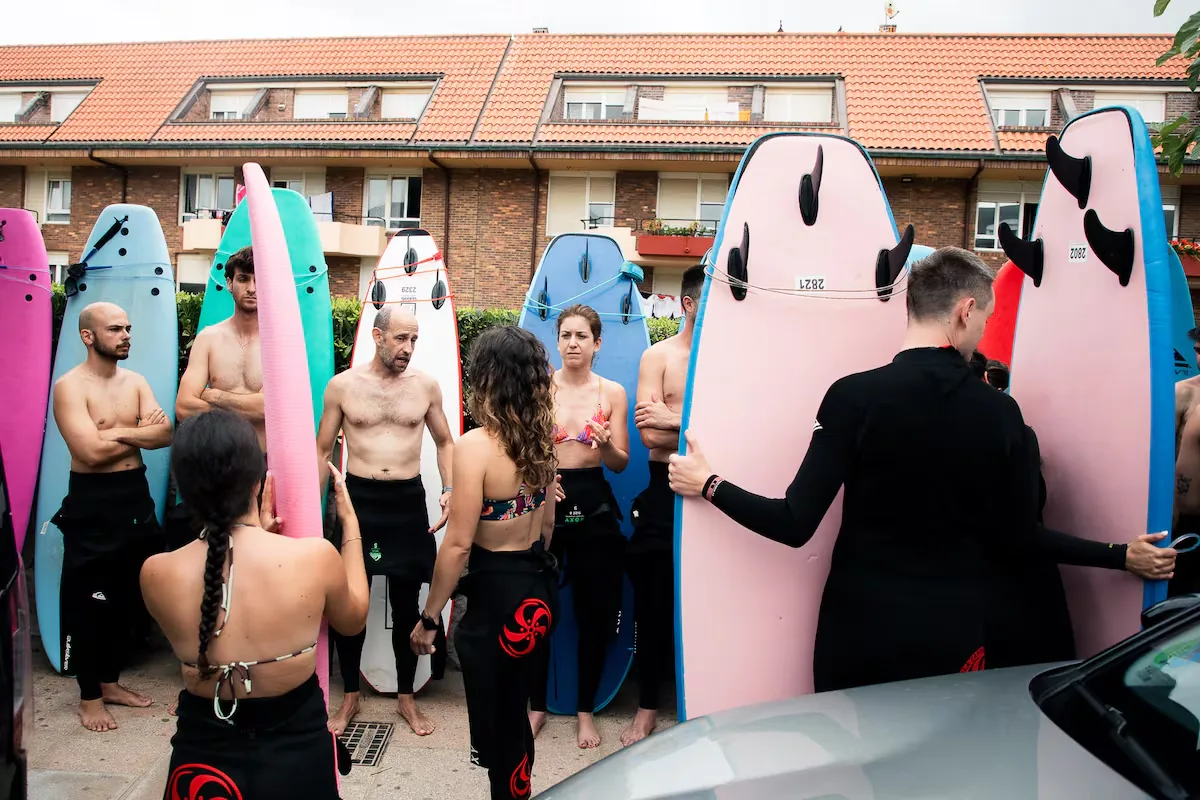
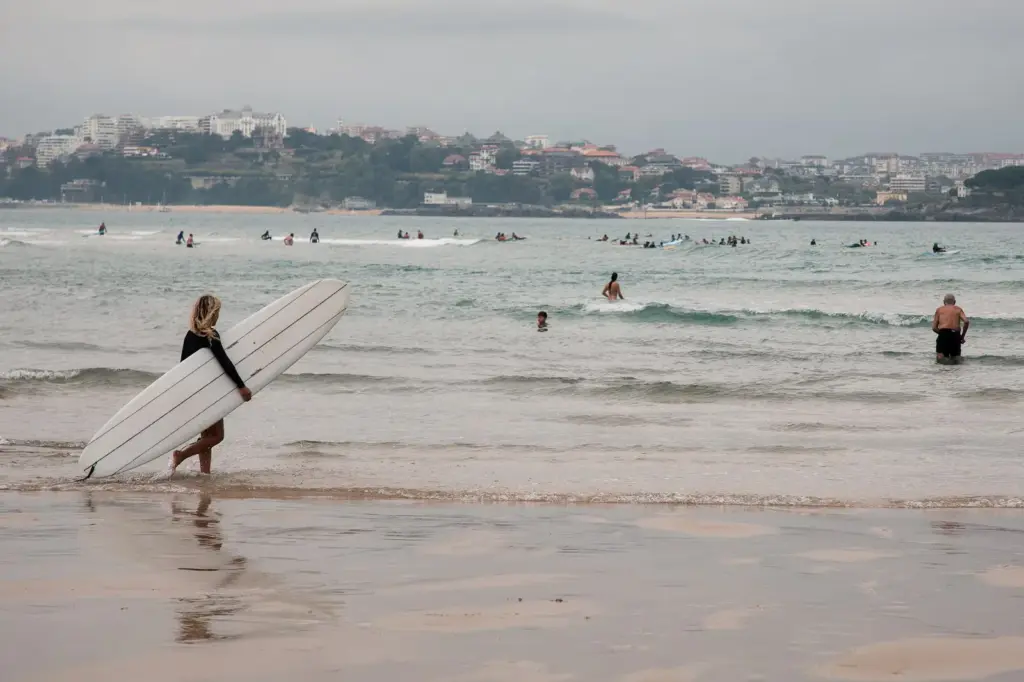
The locals add that the facility will have to add the consumption of those 200,000 tourists who come to the planned “spaces for training, catering, accommodation, and wellness,” where the pool will occupy a quarter of the planned surface. “If we have surf in Somo, why more here?” they ask in the supermarket. In Somo, Nacho García, from the pioneering Cantabrian Surf School, believes that “pools will never replace the beach; we understand the controversy over the PSIR, not over the pools, which are not profitable and we wish we had one to train, but it could be a huge urban windfall; the trap is in the land.” Víctor Aragón, 24 years old and from Ciudad Real, waits with his board to enter the beach and doesn’t mind trying artificial waves; Patricia Barrenetxea, from Alicante and 34, the opposite: “I prefer the sea, it’s more real!”
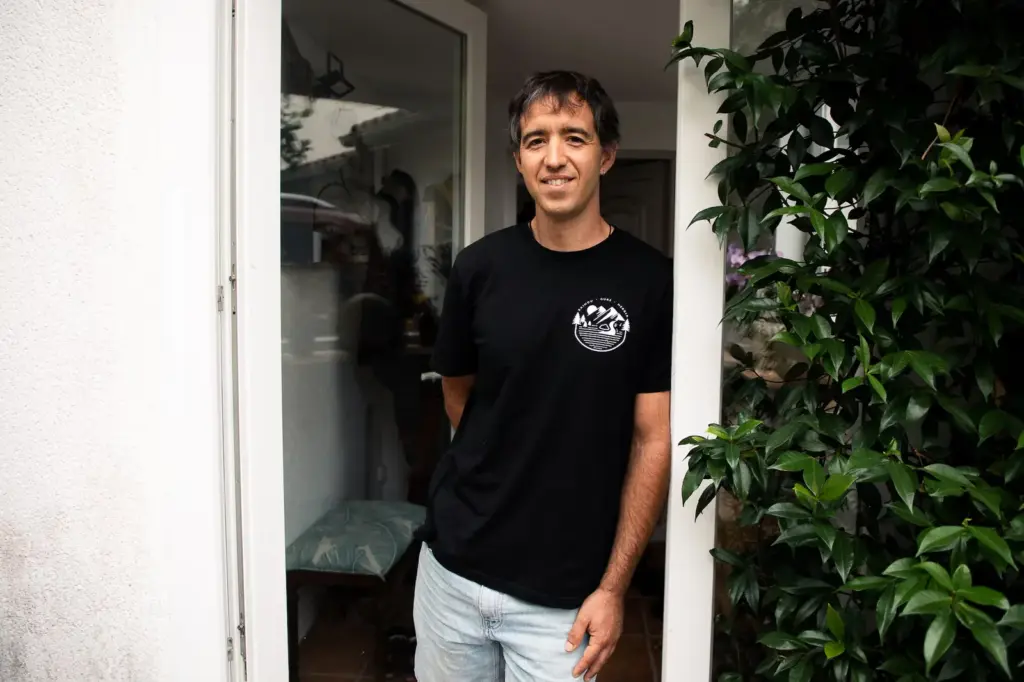
The local Jagoba Yubero, 42 years old, works in a residential area near the land believed to be urbanized. “It promotes a tourism model that is not cool at all,” protests the man, citing how in the Mediterranean construction has been unrestrained and the local population has been suffocated to favor travelers: “None of us in my environment see it well.” Yubero is dedicated to kiwis and criticizes that he, to obtain more land to plant and keep the declining primary sector active, faces all kinds of obstacles, while he sees how “the usual four companies” are facilitated access to land to put their bricks and structures. The kiwi farmer, before saying goodbye and closing the door, leaves another reflection about Spain’s tourism system and the recurring mistakes: “It is pressure for a town that will be gentrified; we are making the same mistakes as always, it seems incredible but also inevitable.” The senses of Villaverde have sharpened at that mysterious smell: “It smells like rezoning to benefit a few; I have no sponsors nor have I inherited land and everything is more difficult. Who knows the moves happening behind the scenes.”