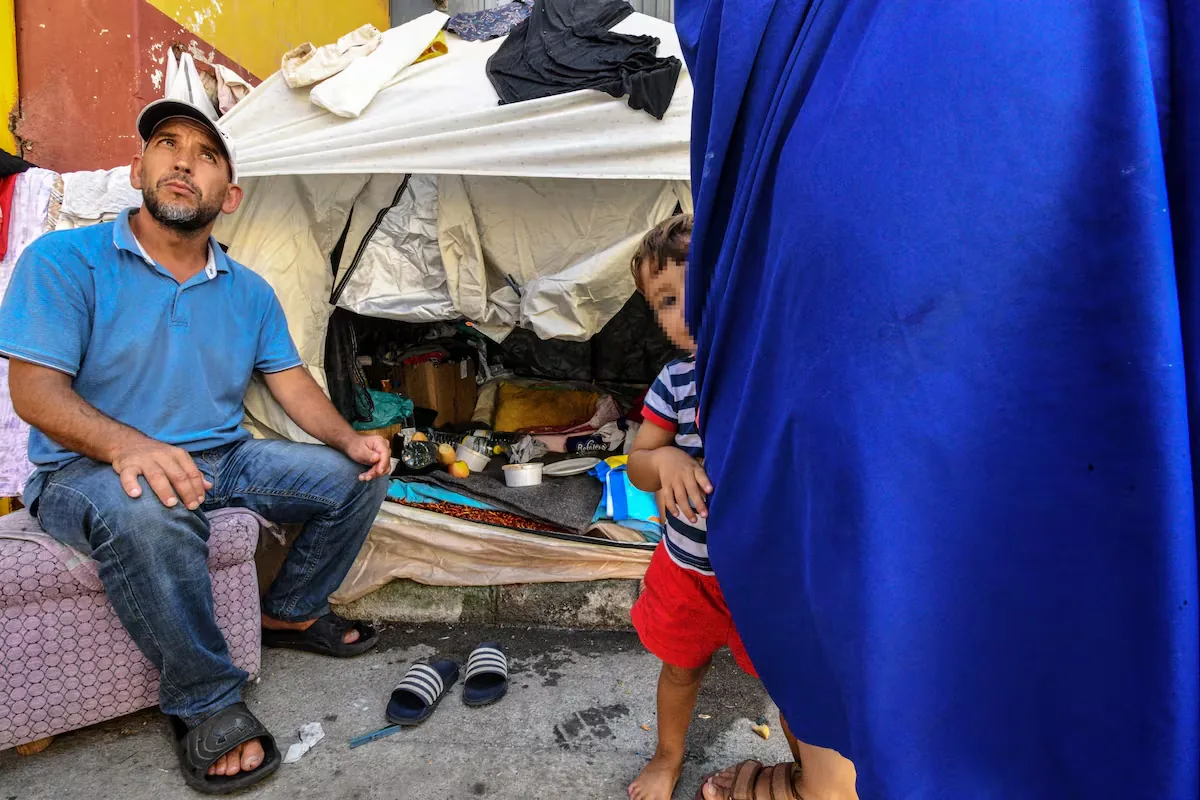
At one of the entrances to the El Tarajal industrial estate in Ceuta, two children, aged three and eight, can be seen walking hand in hand. The little one, dressed in a Paw Patrol outfit and Spider-Man sneakers, responds to a spontaneous greeting by waving his hand and with a curious smile. They head towards four abandoned refrigerators and go behind them. Minutes later, they are seen coming out. The older one adjusts his clothes. Their father, a man wearing a cap and a blue polo shirt, watches them from the shade, barely 100 meters away. “We don’t have bathrooms. Please ask for them,” he pleads. A sharp smell of urine hits you as you cross the colorful gate that gives access to the enclosure.
The warehouses in this industrial estate were, until before the pandemic, an economic engine for the city. A hive of people and vehicles buying goods there to take and resell them in Morocco. The end of porteo and the closure of the border by the Moroccan Government turned it into a ghost place. Now hundreds of migrants live there in poor conditions ―the NGO Luna Blanca distributed 850 meals on Sunday― who arrived in the city during the large influx on July 30 and who resist returning to Morocco. They live in shacks built with pallets, tires, cardboard, and plastics. They play football, wander around, ride bicycles with wheels that only have the rims left.
The three-year-old boy is named Siraj. “Everyone knows him here,” says Nihad, his mother. She proudly shows a social media video in which he is seen from behind, walking confidently through the streets of the industrial estate. The whole family has been settled here for 26 days and assures that no administration has approached them: “No one has come to ask us anything.”
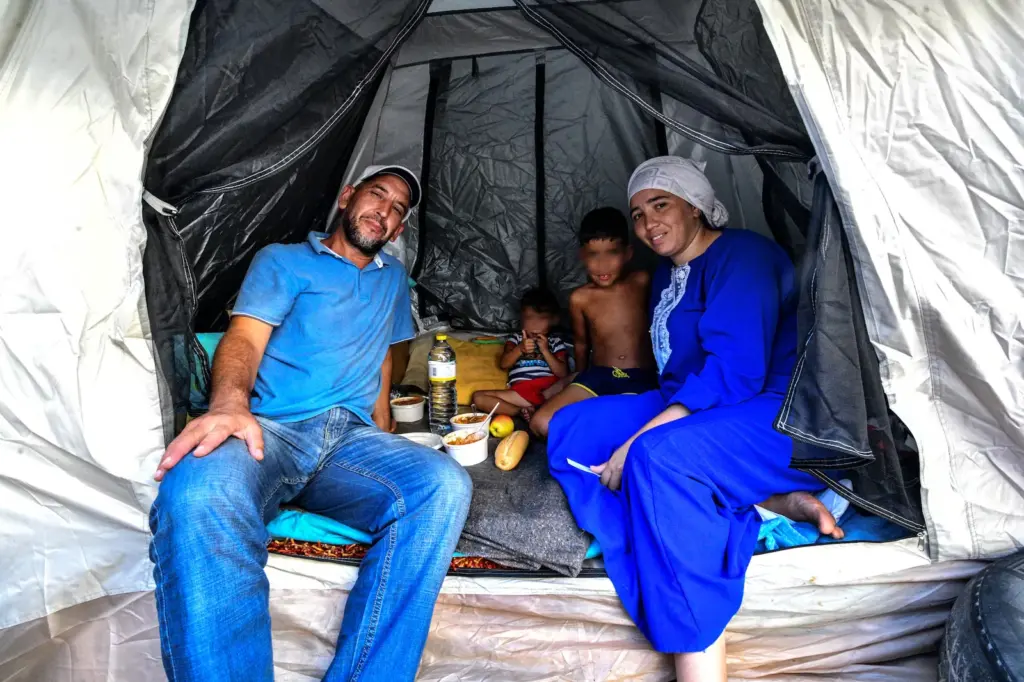
Three hours after the meeting at the gate, the four gather in the tent they now call home. The man with the cap and blue polo is named Daidu and is 45 years old. His wife, Nihad, is 39. They say they lived in neighboring Castillejos, on the other side of the Ceuta border, and that they arrived swimming. “The guards helped us when they found us in the sea,” says the father, downplaying the danger they faced. “In Morocco, we didn’t have a home; we lived with my mother-in-law, with many other relatives. When I went out to work, I feared something might happen to the children,” the woman explains. Her job as a cleaner and the occasional work her husband did were not enough to have a safe place. “We tell the children that we are here for them, for their future, and they dream of studying and becoming footballers,” she adds.
The family has clothes hanging on hooks and railings. They agree to have a photo taken, but first tidy up the tent floor a bit, where the children are eating some macaroni with tomato sauce that Luna Blanca just distributed. “A woman who saw us bought me the hut,” Nihad details. “And a police officer brought us this mattress,” she adds. The inflatable mattress is placed vertically until night falls.
A Moroccan woman who keeps adjusting her scarf over her face joins the conversation. She does not want her face to be seen. “We don’t think it’s right that they first took in the men and have the families and children here,” she complains. She arrived in the city from Tangier on July 29, accompanied by her nine-year-old daughter. A 20-year-old young woman, who is not related but was with them on Sunday during the food distribution, has joined the family unit.
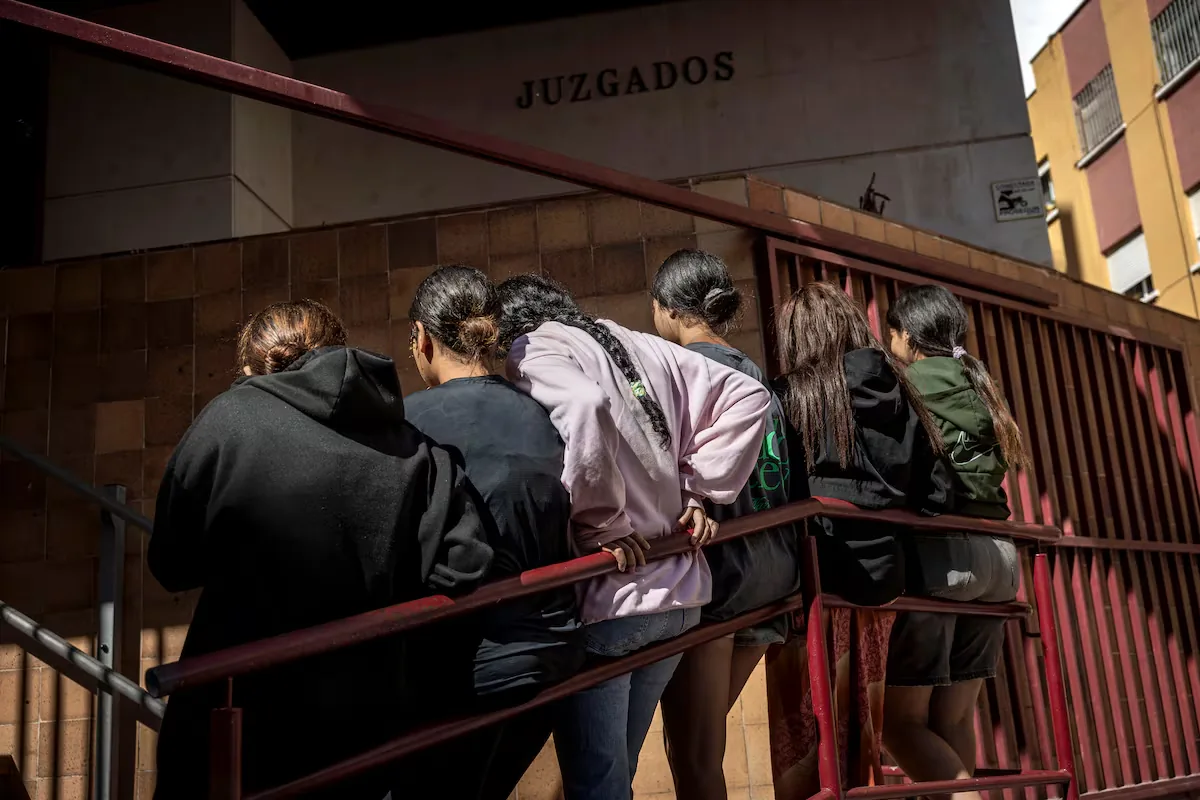
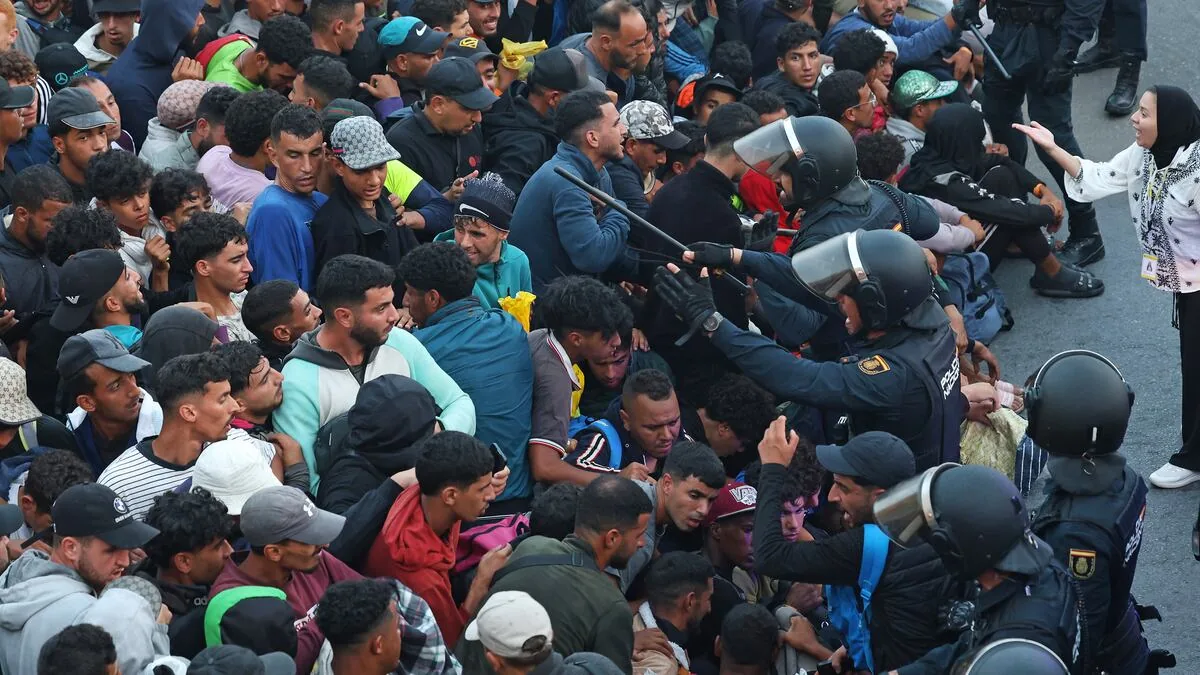
The city, with 83,000 inhabitants, still has not digested the presence of the thousands of migrants who arrived three weeks ago. “We went out for a walk with the children because the afternoon is great and it was impossible to take them to the park because it’s all occupied and dirty,” two women with babies said in frustration in the city center in the afternoon. The most conservative estimates calculate that 7,000 migrants still remain there, including 2,500 minors. The Government opened two temporary reception spaces last week with a capacity for 1,800 people that are already operating. However, there are still open-air settlements, like the one in the El Tarajal industrial estate, and others guarded by neighborhood organizations, housing women and minors, waiting to enter those longed-for spaces that promise to improve their lives somewhat until it is decided what will happen to them, whether they will be expelled or allowed to stay.
The Ministry of Migrations, on which the adults with children in their care depend, is preparing three other facilities. One of them, located at the Equestrian Center, is expected to house women and girls. The City’s Minor Area is also looking for spaces, although, according to neighborhood groups, they are facing much opposition from those living nearby. Two warehouses with a capacity for 200 people have already been put into operation.
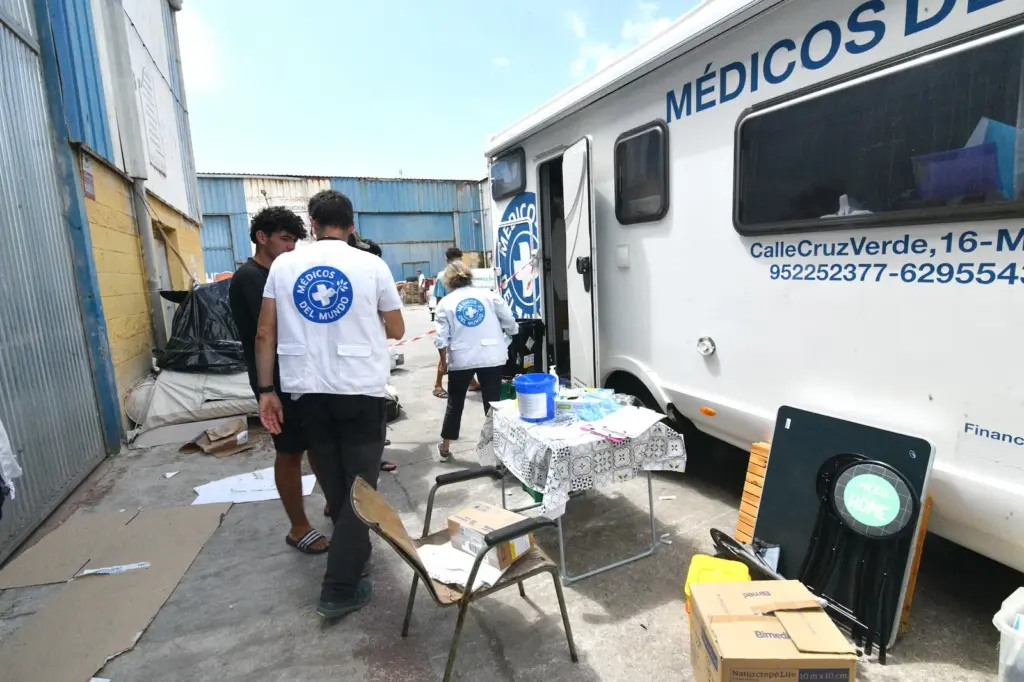
Doctors of the World has been attending to migrants in El Tarajal for 10 days between 10:00 and 16:00. Patricia Martín, spokesperson for the team, explains that the most common consultations are for wounds and trauma, respiratory and dermatological infections. Psychologically: anxiety crises, post-traumatic stress, and lack of sleep. Among the 650 people they have seen, they have found those with mental health problems or women in situations of abuse with partners they are living with on those same streets. The team, made up of nine members, has added two doctors and a volunteer pharmacist.
Around two in the afternoon on Sunday, several National Police patrols went to the area where the Red Cross and Doctors of the World were parked and arrested a man. A woman began to scream and cry inconsolably, asking to be taken as well and struggling to get into the patrol car. “They called the Police saying her husband had hit her,” a friend explained afterward, next to the affected woman, still with red and swollen eyes from crying. “The officers asked if she wanted to file a complaint and she said no, and they let him go,” she explained.
“They are in a humanitarian emergency and no short-term solutions are seen, nor signs of an end. Nor efforts to make this end,” assesses the spokesperson for Doctors of the World. “More coordination and efforts are needed to welcome them. This is not dignified,” she demands.