








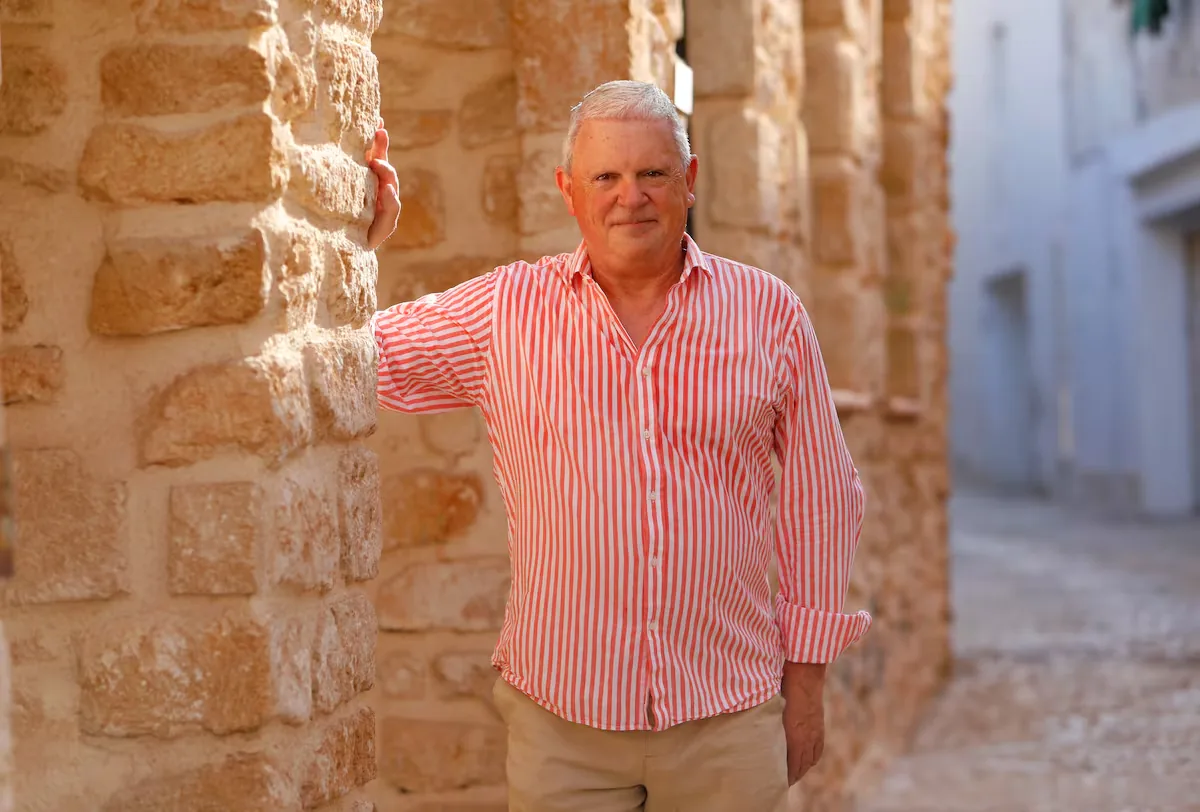
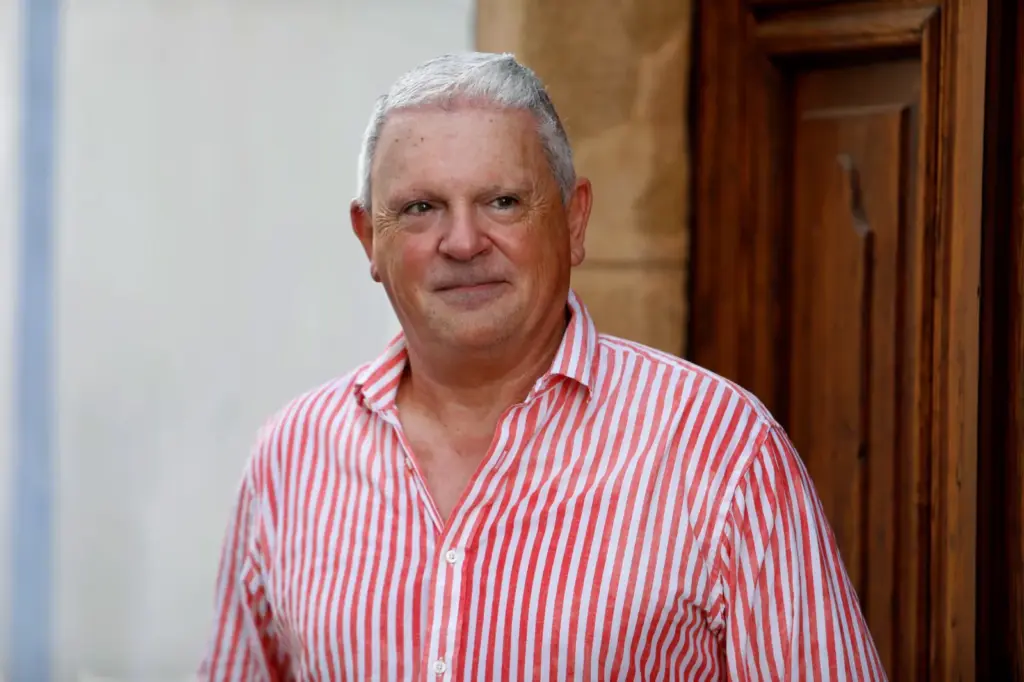
When I tell him that our conversation will be included in a summer series in which famous figures, like him, talk about their time in prison and that it has been named ‘A Summer in the Shadow,’ Pablo Crespo (Pontevedra, 66 years old) laughs. “I use that expression a lot ―he justifies―. Since the sun affects me badly, I always say that the more than nine years I spent in prison under a closed regime, at least I was in the shade,” he adds jokingly. A former businessman, ex-leader of the Galician PP, but above all known for his role as number two in the Gürtel case, Crespo has experienced two significant changes in his life in recent months. At the end of March, the National Court granted him parole. A month ago, he took early retirement. From the Mediterranean coastal town where he has quietly settled, he recalls the day he entered prison, in February 2009. “After the shock of the arrest and spending three nights in the police cells, arriving at prison was almost a relief. Finally, I could shower!” he recalls. However, he also remembers that both he and the ringleader of the case, Francisco Correa, spent those first days at the Soto del Real Penitentiary Center (Madrid) “overwhelmed by the media echo of our arrest.”
—Could you sleep that day?
—The first night I didn’t sleep; but neither did I the last one I spent in prison because of the nerves of regaining freedom.
In the last 17 years, Crespo has completed a true penitentiary master’s degree in which he has gone through all the stages of serving a sentence. He started as a preventive prisoner after his arrest; was released provisionally pending trial; re-entered after being convicted; accessed semi-liberty, so he only had to sleep in his cell from Monday to Thursday; reached the open regime with an electronic monitoring bracelet and, finally, parole. He will continue like this until, on December 12, 2031, the justice system definitively extinguishes the 18 years that the National Court set as the maximum term of the more than 70 years he accumulates from multiple sentences… and he still has to learn the sentence of one of the pieces into which the Gürtel case was divided.
During this time in the shadow, Crespo assures that he never had a serious incident with another inmate. “In prison, appearing on television is like an achievement. Many approached to greet us [him and Correa], to talk with us. Others simply looked at us. Everyone knew who we were. Aggression towards us, none,” he insists. But just as that media prominence had a good side, he also assures that it had negative consequences: “The prison officials paid special attention to us and classified us as FIES prisoners [acronym for the Special Monitoring Interns File, which includes from terrorists and mafiosi to very problematic inmates and implies greater daily surveillance], which limited us in many ways.”
He admits that nine years and three months behind bars and nearly three more in semi-liberty give a lot of time to think. During that time, Crespo went from flatly denying the serious corruption charges against him to confessing and cooperating with justice. This was helped by the two reintegration programs he followed in prison. One, specific for those convicted of economic crimes. The other, a restorative justice workshop, in which inmates are encouraged to empathize with victims. “In a group session, they brought a person whose father had been murdered. Listening to him was very hard. The one most affected was precisely an inmate convicted of a crime, a hitman. He cried. That’s when you realize these programs work and that there should be more, reaching more prisoners,” he demands.
During this time, he was also able to interact with countless prisoners, “from a murderer who really needed to be in a psychiatric hospital, not prison,” to terrorists or inmates that “I never understood why they were incarcerated.” Of those encounters, he recalls one he had during a transfer in a Civil Guard van with an ETA member with several deadly attacks in his record. Both had to sit together, handcuffed to each other, for an hour and a half. “We talked all that time calmly and slowly. He justified what he had done, that the murder was simply a tool to achieve a political goal. I argued that no one can take another’s life for any reason,” he recalls.
Of all the penitentiary centers he visited, Crespo has a special memory of the Victoria Kent Social Reintegration Center (CIS), in the center of Madrid, where inmates in semi-liberty serve their sentences and where he spent the last years of his sentence. He speaks well of the inmates he met and, above all, of the penitentiary workers. “Do you know it is the center with the best reintegration and rehabilitation statistics in all of Spain?” he boasts before expressing outrage at the recent decision by the Ministry of the Interior to close it to install the central offices of Penitentiary Institutions there. “It’s nonsense,” he says.
At the end of the conversation, Crespo tells me that among prisoners there is a belief that if, upon release, you take the clothes you wore in prison, you are doomed to return, and that is why many give them to those who remain inside. “Did you do that?” “I’m not superstitious. I gave many things from my cell, like the television and the radio, to inmates who didn’t have them, but I did bring some clothes with me,” he affirms convinced that he will not suffer this curse and that he will now only seek the shadow outside the prison walls.