









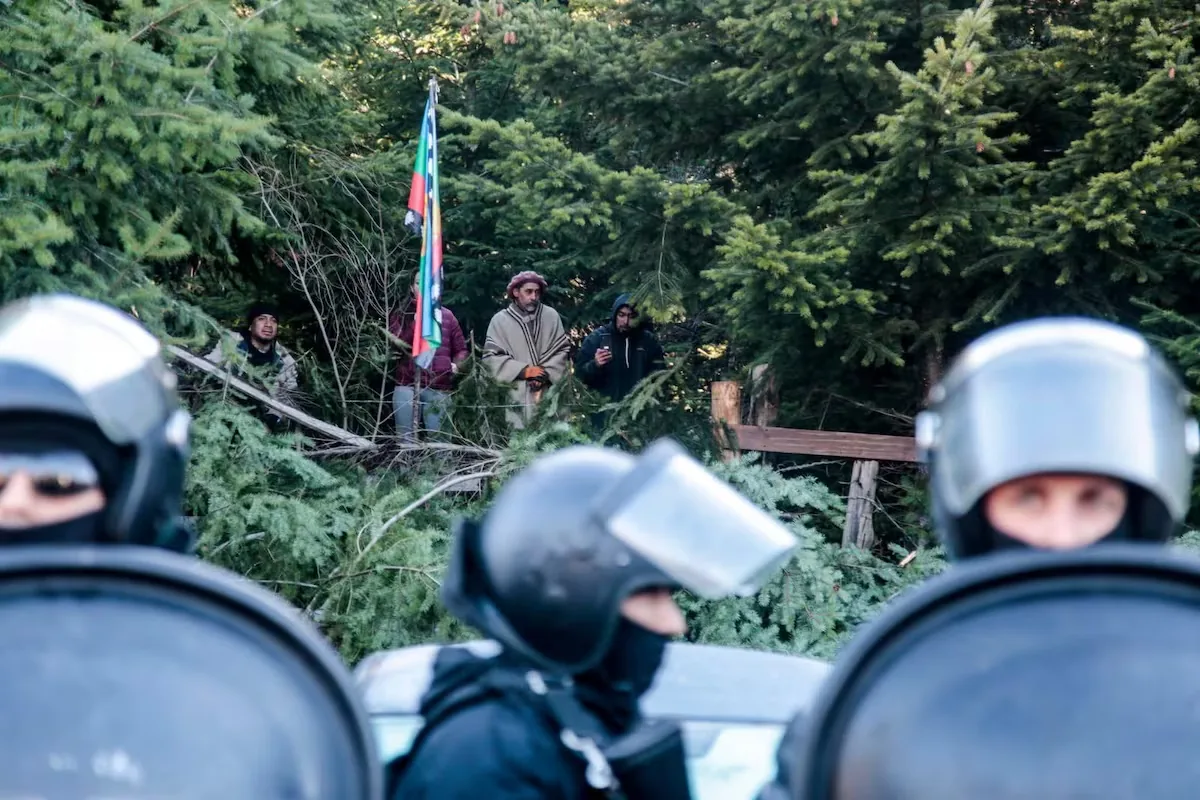
The crystal-clear waters of Lake Nahuel Huapi and the forests and imposing mountains surrounding it attract a multitude of tourists each year to this paradisiacal area of Argentine Patagonia. But near its shores also live Mapuche communities who are threatened by eviction orders in land conflicts that have been ongoing for decades. This weekend, hundreds of people gathered at one of the disputed points to express their solidarity with the members of the Quintriqueo or Kinxikew community, evicted by security forces last week, and also to support the families resisting a similar order from the neighboring Melo community. Legal attempts to stop the eviction have so far been rejected by civil judge Francisco Bonorino.
Read more An earthquake that portrayed a country and overshadowed delicate decisions
The 624 hectares in dispute are in a rural area crossed by the iconic Route 40 between the cities of Villa La Angostura and Bariloche, in the province of Neuquén. According to the Center for Social and Legal Studies, in 2004, the Management Plan of Nahuel Huapi National Park recognized the settlement in the area of these Mapuche communities since before 1902. Two years later, the National Institute of Indigenous Affairs (INAI) registered their legal personality in the National Registry of Indigenous Communities and in 2023 recognized their traditional occupation of those lands through a resolution. But those recognitions were not accompanied by the delivery of community property titles that would have protected them against judicial claims.
The complainant is María Cristina Broers, whom the Neuquén Justice recognizes as the owner of the lands in dispute. According to the complaint by the heir of this Belgian-origin family, members of the Melo family entered her property abruptly at the end of 2011 and have since maintained the place occupied. Sources close to the complainant cited by the Infobae portal assure that the judicial instances have already been exhausted and now it is time to enforce the law: “Only the eviction remains to be carried out, but it is the provincial government that does not provide the logistical resources to carry it out.”
On the contrary, Lucas Melo, the lonko or leader of the community, claims that his family has occupied those lands since the 19th century and recounts that they have already suffered violent evictions before, such as in 1966, during the dictatorship of Juan Carlos Onganía, which resulted in the death of his grandfather, Marcos Melo.
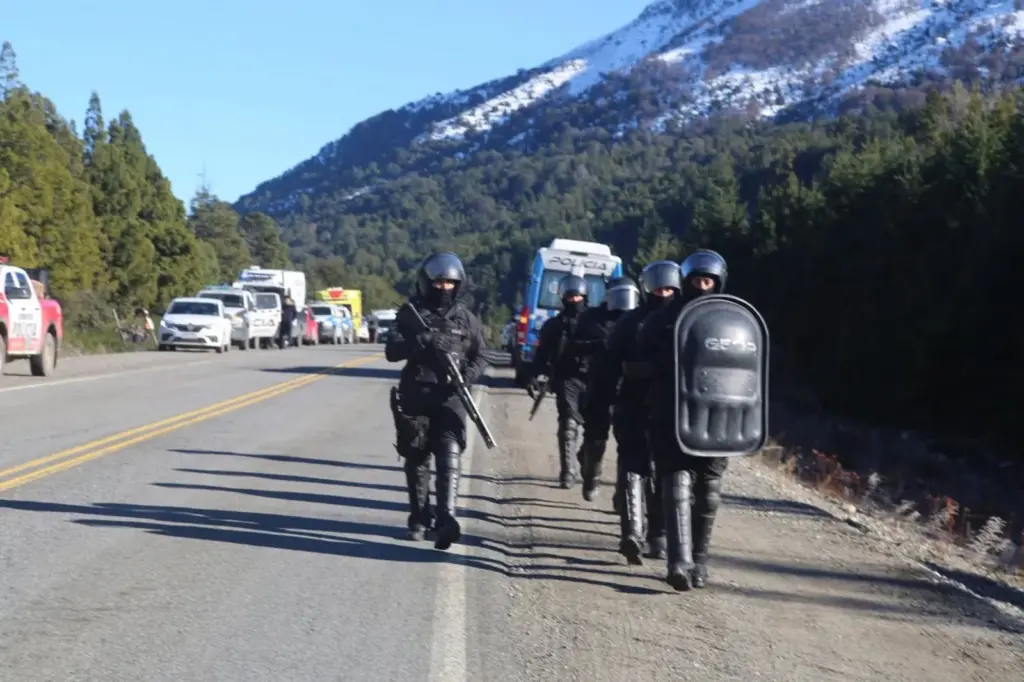
Lonko Melo details that they returned to the place protected by ancestral rights over that land, an argument that the Neuquén justice rejected. The formal recognition by INAI of the current, traditional, and public occupation in 2023 came after the judicial ruling and that prevented it from being modified.
In 2024, the government of Javier Milei decreed the end of the indigenous territorial emergency that had suspended the evictions. The decision tightened the noose even more around those communities and accelerated the expulsion processes.
Read more The lynching in Copacabana of a man accused of stealing a bicycle horrifies Brazil
Currently, the Melo community is made up of about 120 members, although only a third live there permanently. “Our mistake was being born in such a beautiful place,” laments lonko Melo, 56 years old, about a dispute that has already lasted several generations.
To prevent the latest eviction attempt — the ninth in five years, according to lawyer Luis Virgilio Sánchez — they threw logs on the road to prevent police vehicles from entering. “We always resist and we will resist now,” assures lonko Melo, although he describes the policy against them as “extermination.”
Sánchez believes that the current political context makes judges “feel legitimized to carry out evictions quickly and violently.” This lawyer denounces that the eviction of the Quintriqueo community was full of irregularities and did not comply with international standards that require prior, free, and informed consultation and that oblige guarantees of relocation or compensation for those expelled.
This Monday, Sánchez filed a new document requesting the nullification of the eviction process and the restitution of the goods from which they were dispossessed. The greatest concern is the grazing animals: the police forces guarding the place prevent them from entering to feed them.
The land conflict faced by these two communities is not the only one: just around Villa La Angostura there are more than a dozen open judicial disputes. Having exhausted all instances in the South American country, some have reached the Inter-American Commission on Human Rights.
Read more Mexico looks with uncertainty at the trade tension between the United States and Canada