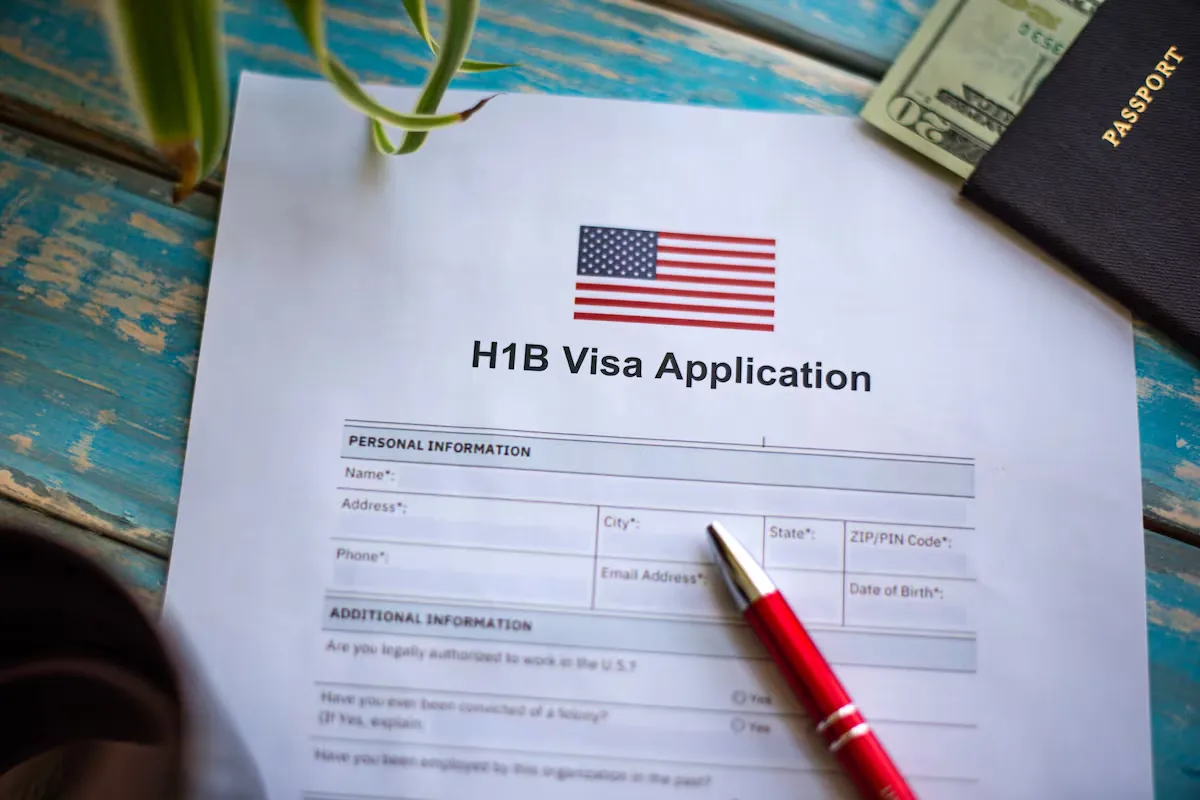
The Donald Trump Administration is back with a second attempt to set an extremely high fee for H-1B visas for highly qualified foreign professionals. Its Administration plans to publish a proposal this Tuesday in the Federal Register to impose a payment of $103,265 at the time of applying for this visa, despite a court rejecting a similar plan in June.
Read more Tension in Argentine Patagonia over the eviction of Mapuche communities from disputed lands
If approved, the new fee would apply to H-1B visa applications subject to an annual cap. This program created by Congress currently grants a maximum of 65,000 visas of this type to foreign professionals and 20,000 to workers who hold a master’s degree from a U.S. university, the Department of Homeland Security (DHS) specified. Additionally, it would be an additional payment to those already in effect, it clarified.
H-1B visas have been in the president’s sights since he returned to the White House in January 2025, since the program, according to him, has been “deliberately exploited to replace, rather than complement” the skilled workforce in the country. This is stated in the measure with which he implemented a $100,000 payment when applying for this visa in September of last year. About twenty states sued the Government to try to stop its enforcement and, last June, federal judge Leo Sorokin of Massachusetts sided with them, considering it a disguised tax. The total payment when applying for an H1-B visa then ranged from almost $1,000 to nearly $7,600.
“The defendants [the federal Government] argue that the required $100,000 payment is a ‘regulatory fee’ that does not amount to a tax. This is mere ipse dixit. The defendants do not provide a definition of what constitutes a ‘regulatory fee,’ do not cite cases or statutes that use this term, nor do they provide an argument explaining how this term represents something other than a tax or penalty,” Sorokin wrote in his June decision. “In any case, the way a particular payment is labeled does not determine whether the payment can be considered an exercise of Congress’s taxing power, because what matters is the substance and application of the payment, not its designation,” he added.
The Government appealed and requested to halt Judge Sorokin’s ruling while the case was further reviewed. But an appeals court declined to do so.
The potential impact of limiting H1-B visas
In this new attempt, the Administration argues that the payment of just over $100,000 per visa application will help it “recover” part of the cost of administering the “legal” immigration system. With this, it would seek to avoid a possible judicial block like the one that stopped the previous plan.
Read more An earthquake that portrayed a country and overshadowed delicate decisions
“The new fee is designed, consistent with section 286(m) of the Immigration and Nationality Act, to recover a portion of the total costs of providing naturalization and immigration adjudication services, including those of the U.S. Citizenship and Immigration Services (USCIS), the Border Patrol (CBP), and Immigration and Customs Enforcement (ICE),” the official document reads.
By legally challenging the previous fee, the plaintiff states said that a payment of such magnitude would complicate hiring educators for elementary and secondary schools and universities, which “would exacerbate the existing teacher shortage.” The impact, they added, could also be felt in the health sector, affecting the ability to provide adequate services and raising the costs of state health insurance programs.
According to the new proposal, the fee will not apply to H1-B visa applications from employers currently not subject to an annual cap, such as nonprofit research organizations.
The plan is part of a much broader one with which the Government has eliminated immigration benefits that protected thousands of migrants from deportation and has advanced an offensive to expel undocumented people on a large scale, including those without serious criminal records.
Read more The lynching in Copacabana of a man accused of stealing a bicycle horrifies Brazil