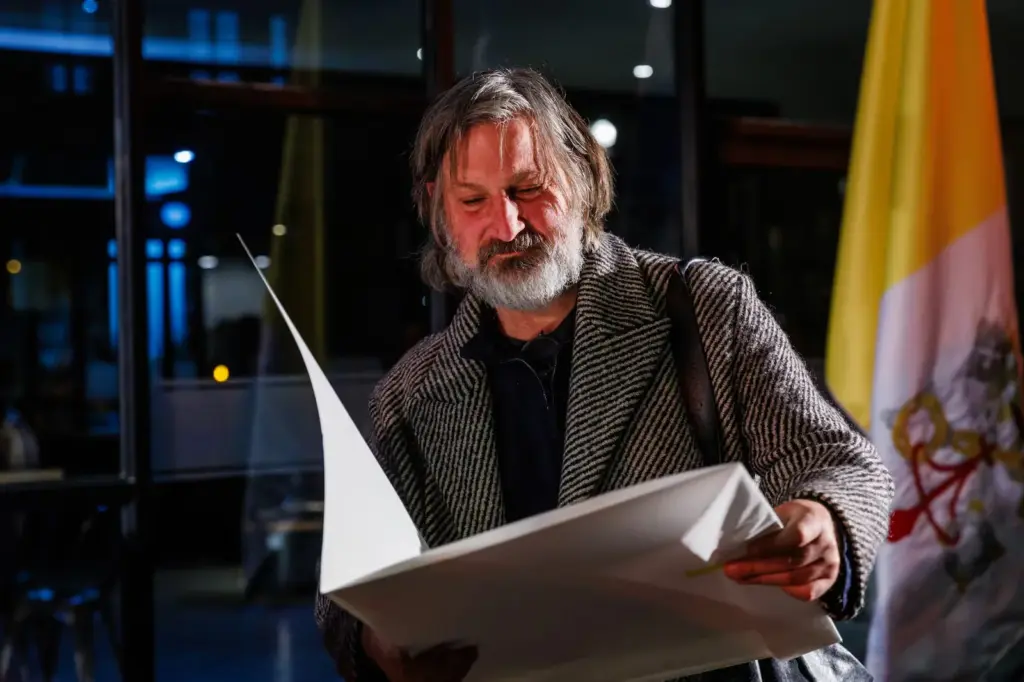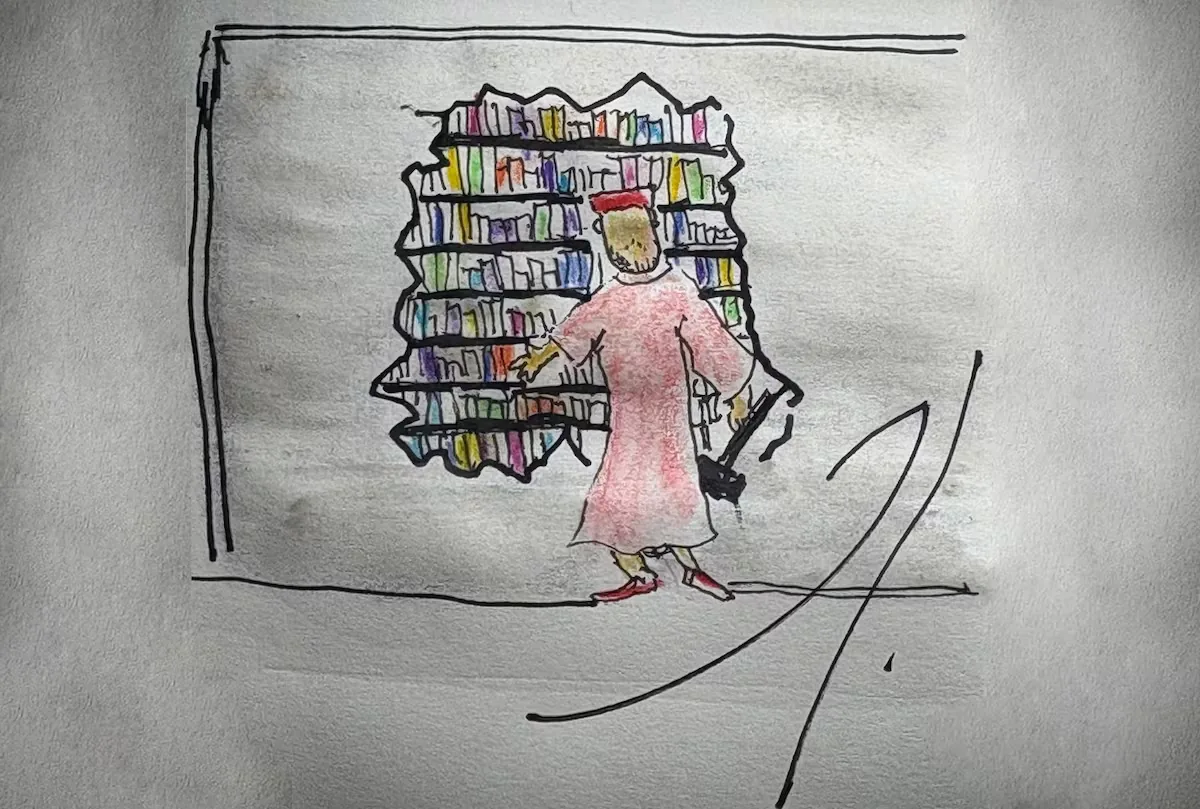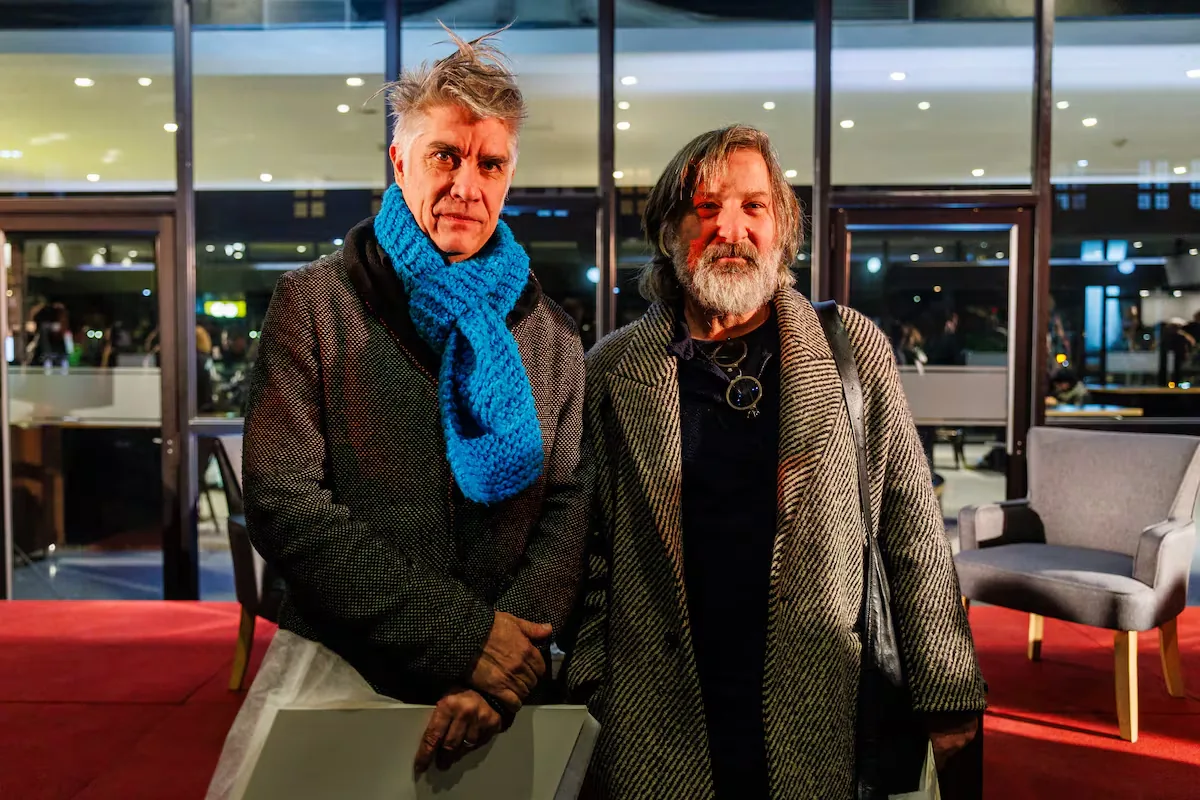
Alejandro Aravena Mori (Santiago de Chile, 59 years old) was the first Chilean to receive the Pritzker Architecture Prize – also known as the Nobel of Architecture – in 2016, and a decade later, in 2026, Smiljan Radić Clarke (Santiago de Chile, 61 years old) repeated the feat. Their careers abound with parallels: both graduated from the Pontifical Catholic University of Chile, then studied at the Venice Institute of Architecture, and began their work as independents with small-scale projects before building large projects – each on their own – such as the Siamese Towers of Santiago, the UC Faculty of Mathematics, the Constitución Cultural Center, the House for the Poem of the Right Angle, the Biobío Regional Theater, the Serpentine Gallery Pavilion, and the Room in Chiloé.
They are also united by a passion for words: both are authors of books such as Habitaré mi nombre or Tristán, by Radić, and ¿Cómo vamos a vivir juntos? or El magno templo griego, by Aravena. Although the most recent coincidence was that they jointly received the National Architecture Prize on July 27. When the board of the National College of Architects gave this recognition, it explained that it was not only about distinguishing “two trajectories of excellence, but also a historic moment for Chilean architecture” that achieved two Pritzkers, something only comparable in Latin America with the two awards Brazil has (a country with 10.6 times more inhabitants than Chile).
But the similarities between Aravena and Radić should not be confusing, because both architects have their own style and careers that differ from each other. Aravena’s, for example, took a turn when he had a conversation with Hashim Sarkis, now dean at the Massachusetts Institute of Technology (MIT), 20 years ago about how architecture could reconnect with society. “He told me that in the 60s there was a bifurcation in architecture. That had to do with architects asking society for permission to be creative and brilliant, society granting it, and the cost they pay is irrelevance because they start worrying about problems that only matter to other architects,” recalls the Chilean.
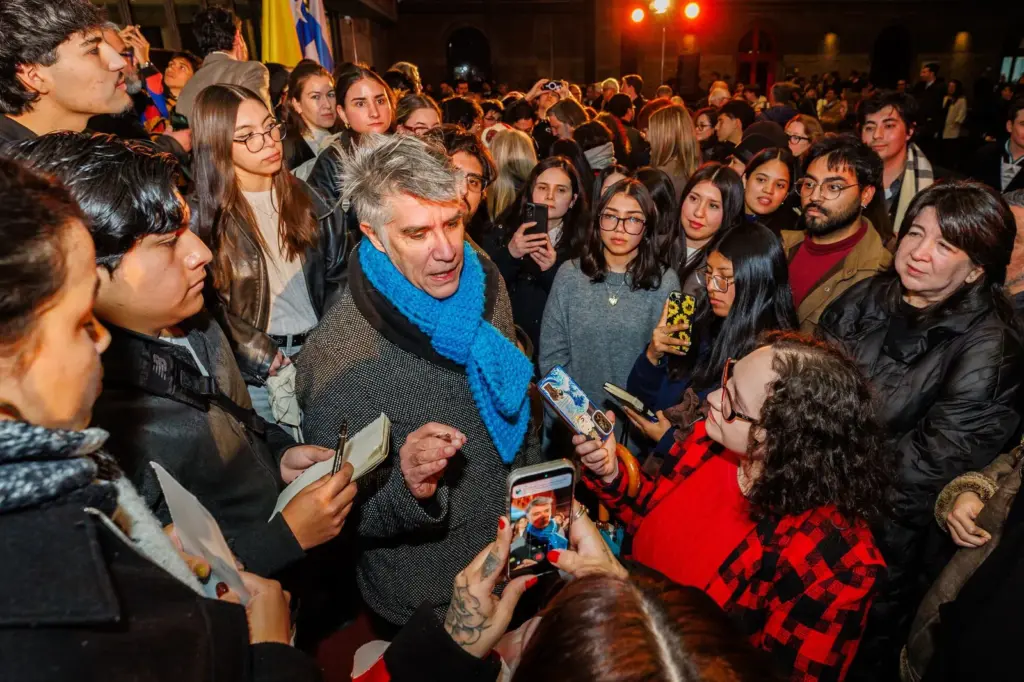
This concern pushed Aravena to step out of the conventional, focusing on “incremental” housing – those that grow with the needs and possibilities of their owners – and with his studio, Elemental, supported the construction of more than 480 half-built houses in Villa Verde in the city of Constitución, in the central Maule region, which was severely affected by the 2010 earthquake and devastating tsunami. What was done, in addition to other works, earned him worldwide admiration, but he points out that in his country he learned to build with little: “The luck of having studied in Chile is that almost inadvertently one can fix things with wires and knows how to handle contexts of partial certainties or the more or less, and that prepares us, qualifies us.”
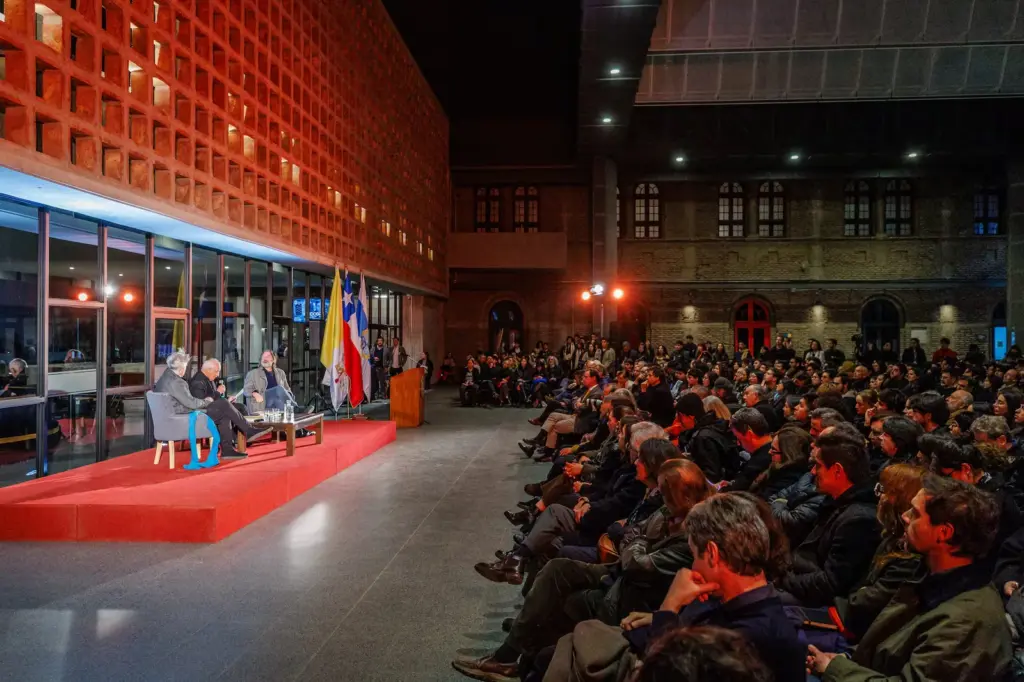
His reflection was heard by dozens of people in the courtyard of the Extension Center of the UC Oriente Campus, where he held a meeting with Radić during a session of the talk series The City and the Words, held four days before they were awarded the National Architecture Prize, on July 23. Aravena points out that everything he learned has been fundamental to determining his style, even “the bad teachers” during his studies because by trying to contradict them, he was pushed to “be rigorously rebellious and defiant.”
Read more Buenos Aires suspends the project to convert a vault of the Recoleta cemetery into a café
For Aravena, who is currently a Pritzker juror, architecture works better when thought of collectively. He maintains that, in the creative field, his studio is very critical of the projects analyzed: “In the office they are especially ruthless and harsh with the project itself. We subject it to a very high level of bullying, because it is better that it suffers on paper before it suffers in reality.”
He recalls that, especially in his first major projects, he sought support from the perspective of other workers, such as welders and carpenters. After drawing what he imagined, he would go to some site foremen, which gave him empirical knowledge: “I went from being their boss while designing to being the assistant (…) They ranted against the architect: How could someone think of making this angle? The screwdriver doesn’t fit in this profile if placed this way.” Hence, he feels grateful to these people. “The leap into the void of the first work is of enormous nerve,” he said.
“Intellectual flexibility”
The Pritzker jury described his buildings as “temporary, unstable or deliberately unfinished — almost on the verge of disappearance —,” but at the same time seemed to offer “a structured, optimistic and discreetly joyful refuge, embracing vulnerability as an intrinsic condition of lived experience.” Today, Radić says that after the pandemic there is a need for intellectual flexibility, which he believes universities should be concerned about fostering: “I mean having all the possibilities to give and know why to choose or not certain things that happen due to personal issues (…) That intellectual flexibility, which is the beautiful thing about architecture, is not having five alternatives, but 20 in front, which doesn’t mean designing a bunch of things. It is what allows that in our generation one can count 15 good architects and all 15 do different things and that has to do with an intellectual flexibility that should be promoted. And that is generally done by reading and traveling.”
For Radić, who created the Fragile Architecture Foundation in 2017, working “one by one” on different projects has allowed him to broaden his vision. He recounted that when he started in his profession “he knew nothing about history or construction,” but he acquired learning continuously through several educators throughout his career. “Starting in something is not as important as staying in that something. And that has to do with what one surrounds oneself with (…) In my case, at least, it has depended a lot on others, on the training others gave me along the way and until today.”
Read more Patriotic Holidays Bonus 2026 in Chile: who receives it, amounts and requirements