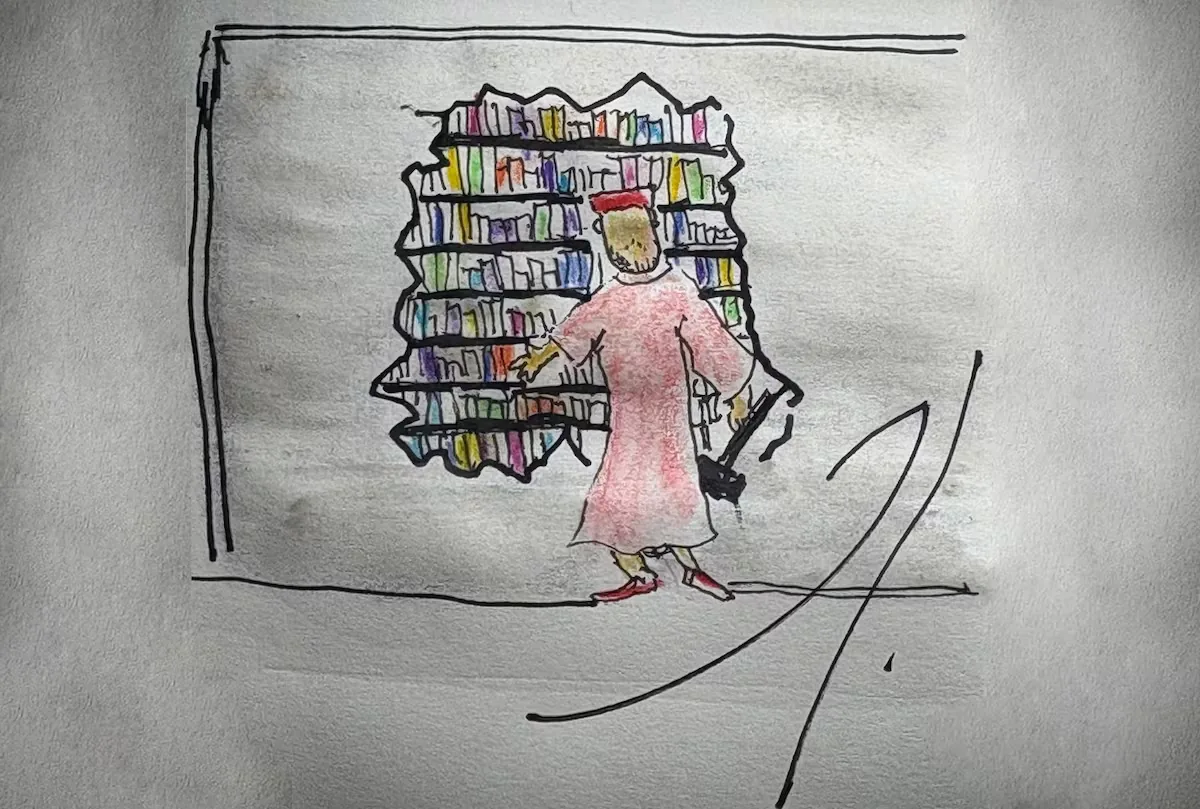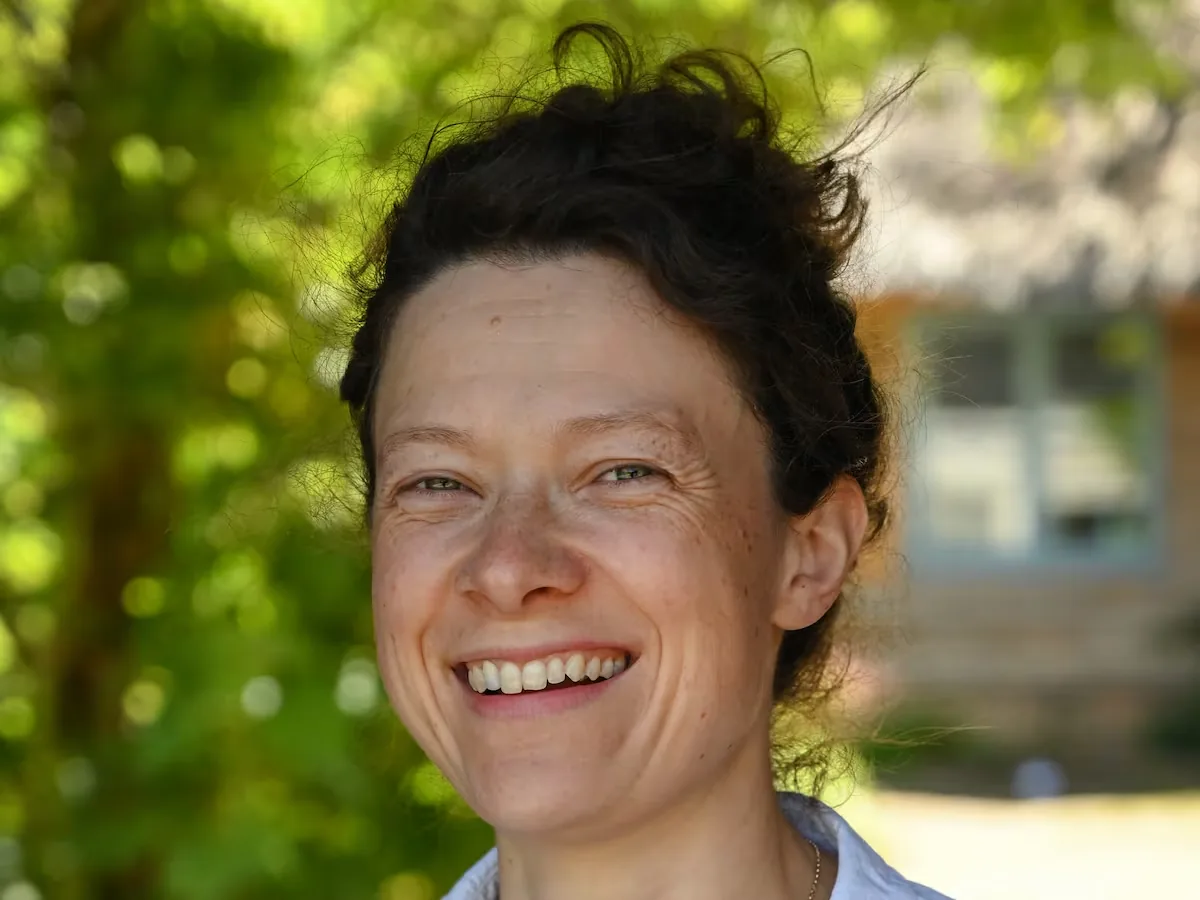
Anthropic contacted theologian and philosopher Carmody Grey (London, 43 years old), a professor at Radboud University (Netherlands). The company behind the chatbot Claude wanted to invite her to San Francisco to participate in something called “research collaboration with wisdom traditions” to “guide the moral training of AI systems.” After several conversations, Grey said no. Her decision surprised her colleagues. What little human says no to these giants who aim to dominate the world? Grey recounted it in a long essay in the Financial Times. But what she finds most important is not her decision about Anthropic, but the seemingly unstoppable global conquest of AI. “I want to talk about the user, addiction, and dehumanization, about new forms of violence and exploitation,” says Grey.
Read more 25 years of Tadeo Jones: the archaeologist is now a father and uses AI
In conversation with EL PAÍS, she explains why it is a problem that big AI companies impose their narrative and how to avoid it. At heart, Grey writes, “they exist to sell a product.” That is why, she adds, it is so important to change the questions when we talk about AI: “We have to think about its effects,” which are many: “It concentrates power, blurs responsibility, depletes nature, expropriates cultures and languages for profit, and probably makes us lonelier and dumber,” she says.
Question. Anthropic proposed collaborating with “wisdom traditions.” That sounds very strange.
Answer. It is very strange. The way it is framed is already suspicious. What tradition has said it wants to collaborate with Anthropic? This kind of presumption made me uncomfortable from the start. They contacted me to see if I would be interested in going to a meeting in San Francisco. Then we had a first conversation in which I shared some initial ideas and they formally invited me. I thought about it a lot. I spoke with several colleagues, did quite a deep reflection, and decided I couldn’t do it.
Q. Why?
A. Because of the feeling that it was a closed-door invitation, on their turf and on their terms.
Q. Did they want to hire you?
A. I doubt it. They had already been warned that I was critical and I immediately said I was not going to collaborate.
Q. There are many headlines about AI companies hiring philosophers. Is it a sincere or self-interested interest?
A. The people I spoke with at Anthropic were impressive and surely had good faith. I liked them, I respected them. I felt genuine sadness when I decided to step away.
Q. Were they philosophers or computer scientists?
A. I can’t answer that. But they were very high up. They had a sincere philosophical curiosity. Later, in some companies like Google, they really want to have people who know about ethics. But in other places, there is such an obvious commercial interest in using philosophy to sell the product that it is inevitable that their approach to the humanities ends up being instrumental. They may be aware of it or not. I am sure some are, especially those more on the business side. They have a very sophisticated communication machinery, they know how to build a narrative of intellectual and moral seriousness.
Q. And the philosophers who sign on for an AI company, are they sold out or do they believe it?
A. If someone who has studied philosophy decides to go work for an AI company, at least it is clear whom they serve. I wouldn’t do it. But if someone decides to do it, that’s up to them. But they shouldn’t call themselves philosophers, but rather someone with philosophical training working for an AI company. The important thing is that it is clear whom their work serves. Doing work that actually serves business interests, disguised as academic neutrality: that is what you have to be careful about. It is clear that academic work is never entirely pure or disinterested, but that should not prevent it from aspiring to all possible objectivity and independence.
Q. Is there any collaboration between AI and the humanities that you think is good?
A. Yes. I strongly believe that the university should talk with the world outside academia. When I declined the invitation to San Francisco, I made a counterproposal. I invited those people from Anthropic to have a talk with me on the BBC. They did not accept. So I absolutely did not refuse to talk to them. I strongly believe in dialogue; philosophy lives from dialogue. I did what seemed to me the most constructive proposal for an authentic dialogue: transparent, accountable, reliable, and on neutral ground.
Q. It is still hard to understand why these companies want so much to talk with philosophers and theologians.
A. The favorable version is that they are smart people. They have realized that AI is existential and raises questions at the most basic level about what a human being is, what a machine is, where the boundary is, what consciousness is.
Read more Sevilla only has five public recreational swimming pools, one for every 140,000 inhabitants
Q. But that is already interpretation.
A. Totally. I am giving their version. They also know that the way this technology is deployed has enormous consequences for the future of humanity. And that is why they want to talk with people who intellectually dedicate themselves to existential and moral questions. That is the formal justification for why they want to involve people like me. A bit like a government that has an ethics advisor. However, in practice, they have already decided in advance which philosophical questions we should ask ourselves. They are questions that invite us to put our philosophical attention on the product. But that is the wrong focus. The most urgent moral and philosophical questions raised by AI are not about AI. They are about the effects of AI on people and the planet, about power, about who is responsible, about addiction, loneliness, and our capacity to value our humanity.
Q. The questions Anthropic posed to you were more about whether AI is a new entity, whether a language model has character, or whether it can suffer.
A. Many academics believe those are the important questions. I would rather ask: should we be anthropomorphizing Claude, to begin with? But it seemed to me that they did not want to have that conversation. An example: imagine we talk about racism. And someone says: “The important question is whether a person of another race is really human.” Even if the answer we all reach is yes, it is clear that that person wanted to sow doubt, and that reveals their underlying attitude. You already show how you think just by the question you ask. That is the key. The question creates the conversation. If the conversation you want to have is about Claude, of course you ask if Claude is conscious. If Claude is your product, that is the right question. But what if we ask a very different question: who benefits from the technology of language models being developed, designed, advertised, and told this way? Who is harmed? These questions lead to different conversations. That is the contribution of the humanities: making sure we ask the right questions. It is not just about finding the right answers, but about making sure we have the right conversation, one that truly serves the common good. And when philosophers go to work for an AI company, they have to accept that it is the company that decides the questions for them.
Q. That is why you say the merit of the encyclical on AI by Leo XIV is to change the subject.
A. Exactly. We have to change the subject. AI is not the central subject. The human is the central subject.
Q. But not even the Pope has managed to change the subject. We keep talking about AI in Silicon Valley terms.
A. I would have liked to write the essay without mentioning Anthropic. I did not choose the headline ‘The philosopher who said no to Anthropic.’ I would really like to discuss philosophical questions directly, for their own sake, without having to justify them by referring to what happened with Anthropic. But I couldn’t, because current affairs don’t work that way.
Q. That’s clear.
A. Silicon Valley knows how to dominate the headlines. They have an exceptional marketing machine. They know how to make the conversation about them. Of course, I would like to be part of the change. Not all conversation needs to go through Silicon Valley. In fact, it shouldn’t go through there. We need humanities scholars, and also ordinary people, to exercise their own judgment, free and independent. I don’t want to be talking about Anthropic all the time. That is not the conversation we need. We need to talk about people. About their dignity, their suffering, their vulnerabilities. And we need to talk about this planet and what our technologies are doing to it. And most importantly: we cannot let AI distract us from more important questions. The most serious existential threat is not AI. It is global warming and the destruction of nature. If Silicon Valley keeps steering the conversation toward AI, we will die from distraction. We will be like the driver who was fixing something on the dashboard and meanwhile the car crashed.
Q. Did your colleagues freak out when you said no?
A. They were surprised, yes. The first draft of the essay was not personal about Anthropic. The FT asked me to include it, presumably because they know how to sell newspapers. I did not write it to promote myself. It was not supposed to be about me.
Q. In five years, how will we know if the humanities lived up to the moment or sold out?
A. At the most obvious level, universities and intellectuals must maintain real independence. When AI companies share their research, academics should be as distrustful as they are when big oil companies share their energy research. This is not the same as saying they should not talk to AI companies. Of course, there should be active, real, and sincere dialogue. But it cannot be a dialogue on the terms set by AI companies, behind closed doors, asking and answering the questions they set. The other sign, and this would be total success, would be that the debate we have about AI starts asking other questions: what makes a human life meaningful? What makes it beautiful? How does AI contribute to that, or how does it undermine it? Is it making us more human or less?
Q. Why do you avoid contact with chatbots?
A. I use them very occasionally, usually to translate something if I don’t have a real person at hand to do it. But I avoid using them routinely, even when they would be very useful to me. When I tell people what my stance is, they roll their eyes and think it discredits my whole argument. But my answer is simple. Imagine there was a robot that made it so you didn’t have to get up. It would bring you everything, take you everywhere, do everything for you. Little by little you would lose your physical abilities. Many uses of AI have the same effect on our brain and our ability to relate. We are increasingly alone and dumber. It is tremendously corrosive. With technologies, we don’t realize the opportunity costs. In the case of chatbots, they are invisible but devastating. Who are you not talking to? What relationships are you not having? What books are you not reading? What places are you not going to? What faculties of yours are dying from lack of use? What life-giving habits are you losing? And if, by losing all that, you are somehow losing the very meaning of life? Human life is made of relationships. Relationships with others, with the natural world, with ourselves, and also with something sacred, which some call God. Those relationships are the key to fulfillment. AI puts them at risk. I would like us to have a conversation about how we can help those relationships flourish. That is a conversation not only for philosophers and theologians but for everyone.