







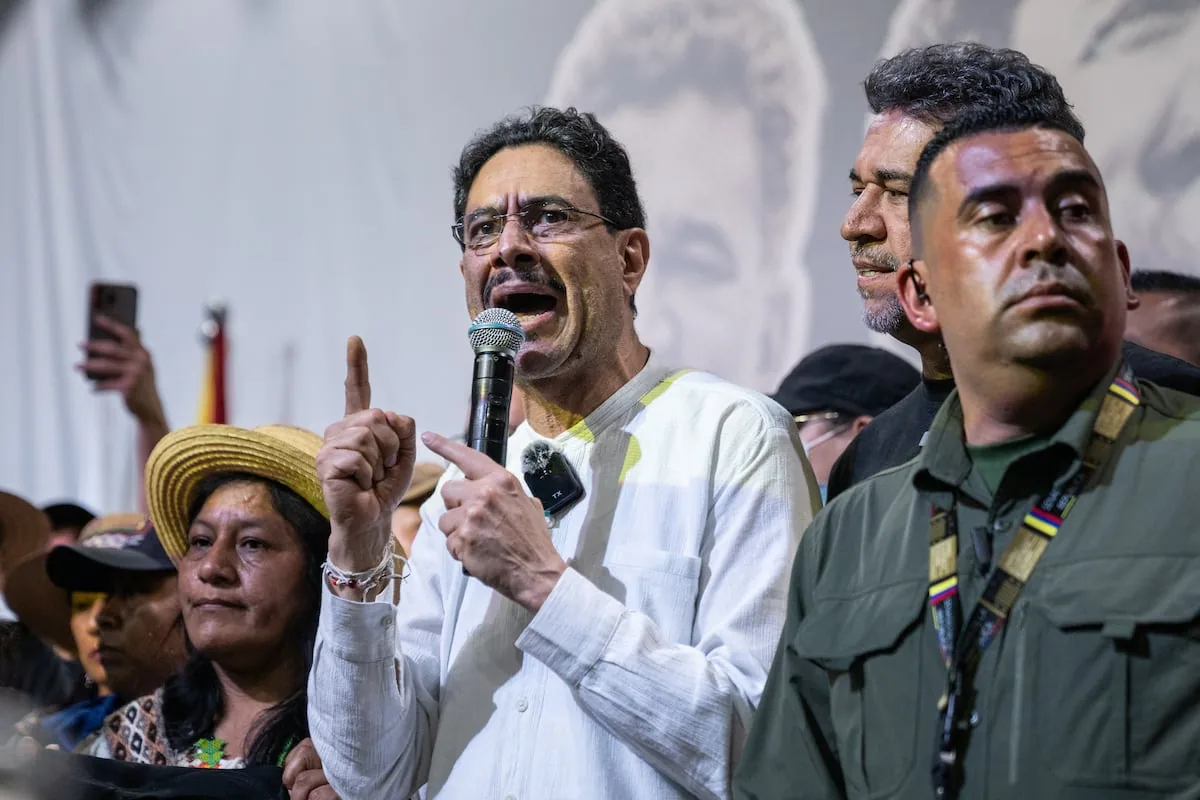
Petro says (via Twitter or X) that the CIA has information about a plan to assassinate Iván Cepeda. Uribe says (via Twitter or X) that ELN guerrillas told him about a plan to assassinate Paloma Valencia. No Colombian who has been alive in the last 50 years can doubt that both things are true and even possible, because that is what has happened in Colombia: our politics lives in fear of assassination, or, to put it better, assassination is a normalized way of political life in Colombia. Candidate Iván Cepeda is the son of a man assassinated by the extreme right (which Uribism conveniently often forgets) and María José Pizarro, daughter of a guerrilla who had laid down arms and was assassinated by the extreme right, is a member of his party. Candidate Paloma Valencia shared a party with Miguel Uribe Turbay, assassinated by guerrillas who betrayed the peace agreements (which Petro conveniently often forgets), and Juan Manuel Galán, son of a man assassinated by narcoterrorism, is a member of her campaign. They are not the only ones: both parties, the government and the opposition, are full of men and women who bear the scars of that violence that has defined us for decades.
Read more The facial shaver that removes hair without irritation is a hit on Amazon for less than 17 euros
So no: no one can question the terrible truth these accusations may contain. The problem is that no one can help but point out how strange everything is in this new world of social media and rampant irresponsibility. Petro says the CIA is his source, despite having previously accused it of conspiring against him, and Uribe says his source is the ELN, despite the little credibility he has given them in the past. Both accusations have been launched on social media, without any shred of proof, without the candidates intervening and without the authorities intervening, because none of the accusers are interested in protecting the threatened person: they are interested in the threat being known for what the threat can suggest or demonstrate. In other words, they are interested in the threat as a political tool. Fear brings votes, of course, and what the two campaigns are saying is: They want to kill us, the others want to kill us; and if they want to kill us, they also want to kill you; and if they want to kill you, then you have to vote for us.
Colombian violence is incessant and incessantly manipulable. And it is true that there is nothing new in that, of course, but it is also true that there are secret or not-so-obvious links between the staging of threats of violence and the temperature of our political conversation, or what passes for political conversation in this country of thugs who admire the violent, applaud those who shout or vociferate the most, and despise those who propose reason, serenity, and proposals. No, serenity doesn’t sell: as we are sick with violence, the violence of words and gestures sells, beauty queens who play at shooting a politician they don’t like, candidates who play at saying they are going to give a bullet or a slug or that they are going to disembowel the left or who become popular overnight just by going out armed into the street. Everything is terrifying, of course, but at the same time pathetic, because it’s all a performance. Fear is real, fear has every right to exist, because the violent are out there and have always killed and will continue to kill: for reasons that are not easy to summarize –ranging from our history to our temperament–, killing is easy in Colombia. But just because fear is real does not mean that our political relationship with it is not fundamentally flawed.
The exhibitionism of violence is one of the symptoms of the general debasement of this society that has been debased for so many years: it has been debased by the various armies of this eternal war, which have left dead in every square meter of the country over the last 60 years, and it has been debased by the drug business, which has been among us for so long that it has managed to corrupt everything: politics, of course, but above all integrity, the attempts many make to lead an honest life, the inviolable character of other people’s lives, all that we used to call values. (I write this word and almost have to avoid a sad smile. No, that thing about values is not in fashion. The word seems to have fallen into disuse, or is for the exclusive use of Ethics teachers in second year of high school.)
Read more The Generalitat charters five vans as mobile citizen service offices in 200 municipalities
What I mean is that violence or the possibility of violence is an everyday spectacle: every day it appears, every day it intervenes in our conversation and our lives, and it anesthetizes us. In Colombia, death threats are made with astonishing ease (I have lost count of the candidates who have received funeral wreaths in any form, just like in the darkest years of the Medellín Cartel) and threats are regrettably often carried out. No one is really scandalized. Security businesses, armored vans, bodyguards thrive, and some even see all this as a symptom of status. It is part of our scenography: the play of Colombian violence, which, unfortunately, has nothing theatrical about it.
And there we go, those of us who spend our lives looking to the past to try to understand it: we also try to understand if one day we will stop killing each other or wishing for or tolerating the death of another. And there is no answer. “We shall know nothing until we know whether we have the right to kill another or to consent to someone killing him,” said Albert Camus. But he was not thinking of Colombia.
Read more The Kärcher accessory for cleaning the car with foam like in a car wash