







Bringing Nueva EPS afloat was one of the great priorities of Gustavo Petro’s Government. Not only is it the largest of the Health Promoting Entities (EPS), the public or private insurers that manage a healthcare system on the verge of collapse. It also holds strong symbolic value for the left-wing militancy. It is the remnant of the old system, in which the State had a more central role. The EPS absorbed the affiliates of the former Social Security Institute 18 years ago, the state entity to which Colombian workers were affiliated before a 1991 reform, and the Government retains a broad shareholding. Immersed in a long crisis, Petro promised to rescue it and intervened in April 2024 “to stop the bleeding.” Two years later, the interventions have failed. The cure has been worse than the disease.
Read more The theater of violence
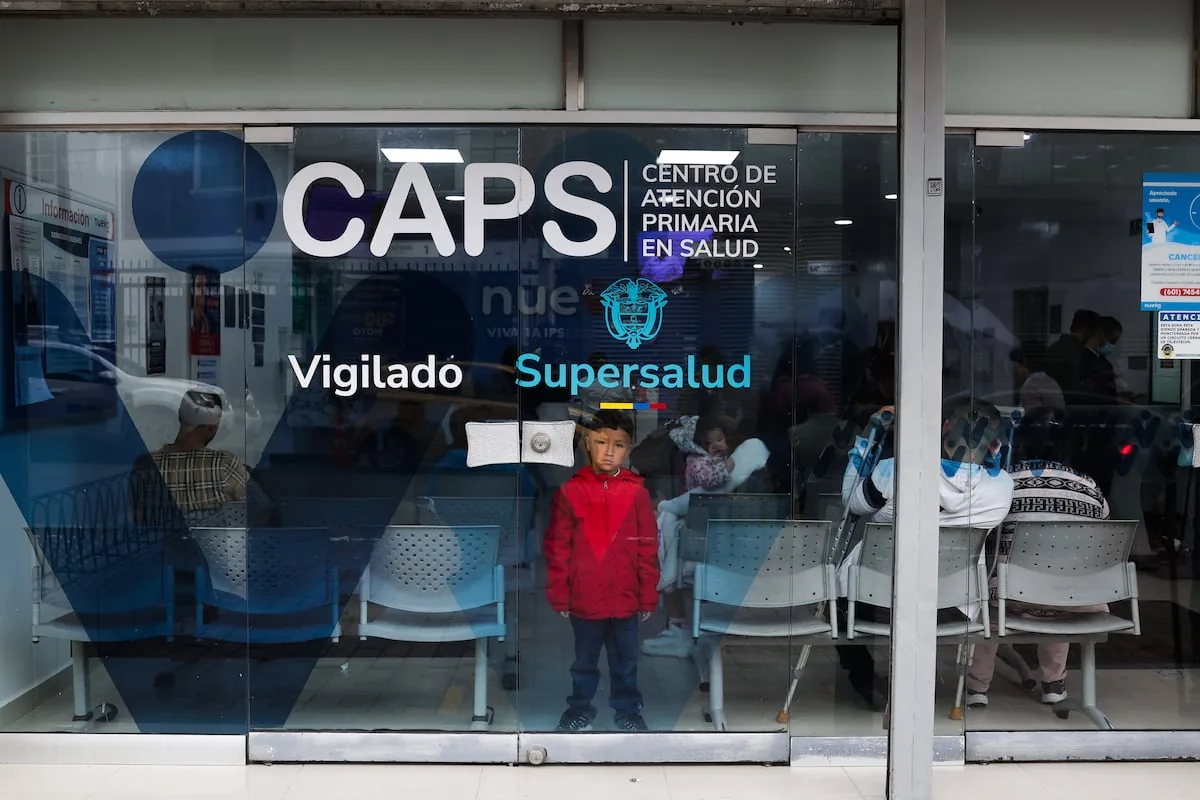
The extension of the intervention for another year, signed by the Government on April 10, acknowledges the deterioration of the EPS. Among the justifications of the Superintendency of Health for maintaining the administration, it points out that debts have risen from 18.4 trillion (about 5.1 billion dollars) in December 2024 to 26.1 trillion pesos (around 7.2 billion dollars) in November 2025. The cold number has a very tangible effect for 11.5 million Colombians. News of the lack of surgeries, specialist appointments, or medications is common. The crisis is evident in “a sustained increase in non-conformities, especially during the extension period”: according to the Executive’s own resolution, its annual growth is 14.3%.
Néstor Álvarez, spokesperson for the Nueva EPS Users’ Association, recounts the changes in recent years by phone. “Undoubtedly, the system has been in a permanent crisis, because each Government has not allocated the necessary resources, but we had never seen anything like this,” he comments. “Before, we fought for a medication that wasn’t delivered to us in 10 or 20 days, a month at most. Now we see that they are missing for two, four, six months. And it’s no longer just high-cost ones, but also generics.” According to him, the issue of medications now affects 40% or 60% of patients. He believes that the number of petitions, complaints, and claims (PQRs) is underestimated: “There are people who don’t even file complaints anymore because they have realized that nothing gets resolved.”
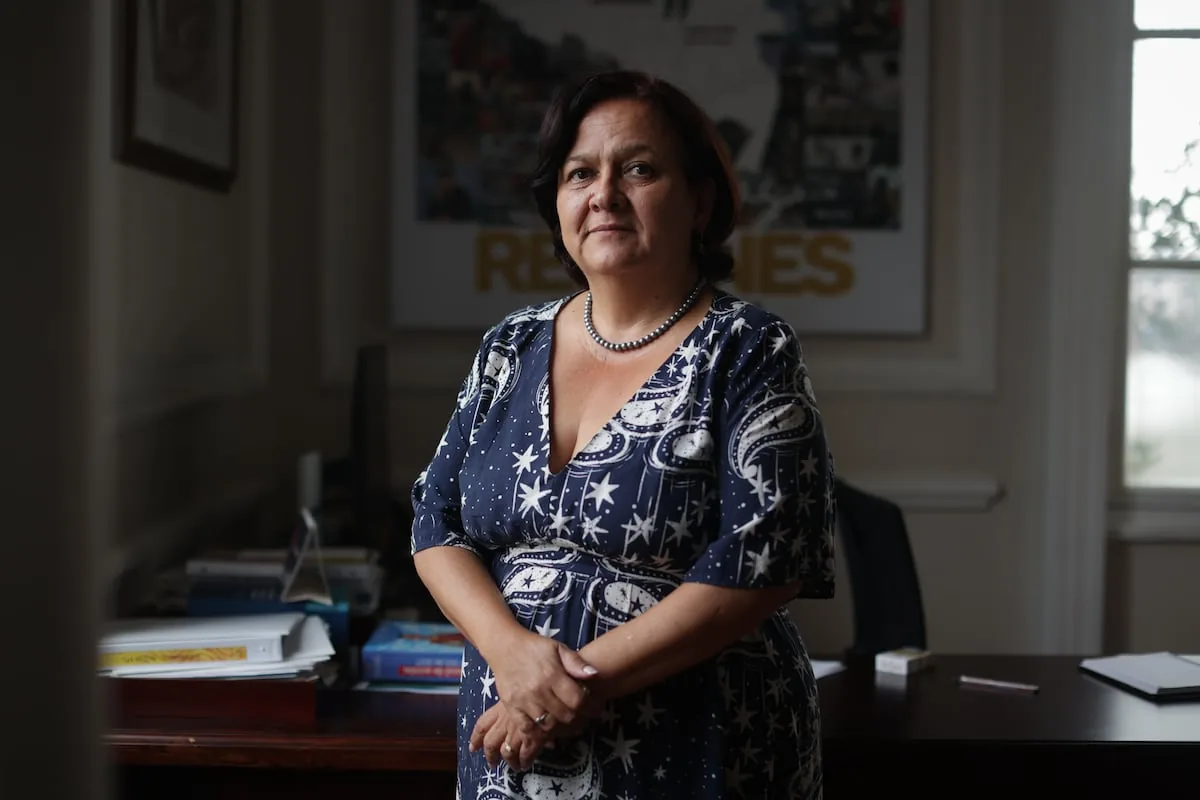
Meanwhile, instability in high-ranking positions shows that the EPS cannot find its way to solve these problems. “Each intervener arrives with their people, says the previous one was corrupt, and changes everything,” says Álvarez. Since January 2024, two presidents —before the intervention— and three interveners have passed through. This week, the Government fired Luis Óscar Gálvez and appointed a fourth intervener, Jorge Iván Ospina, a doctor and former mayor of Cali with several corruption cases. The appointment was signed by the ad hoc superintendent for Nueva EPS, Luz María Múnera, who will leave that role after only six months: her position became obsolete because the superintendent of the entire system, Bernardo Camacho, also changed this week, and he had a specific impediment for this EPS due to having been one of its interveners.
The uncertainty is compounded by political and administrative chaos. Caracol Radio revealed this week a letter in which several Superintendency officials denounce to the Attorney General’s Office that the extension of the intervention was illegal for having bypassed internal controls and that Ospina does not meet the requirements to be an intervener. The EPS, according to the document, should return to its owners: the State and six compensation funds. Simultaneously, the administrative change occurs with persistent doubts about accounting. Múnera acknowledges that, as of February, only 3 of the 15 trillion pesos of overdue accounts have been processed. “It is not known why they were charged, there is no justification,” she explains during an interview in her office. Unlike the other EPSs, the financial statements for 2023 and 2024 are still not presented.
The Government, for its part, raises the stakes month by month. Despite the crisis in Nueva EPS, at the end of February it issued a decree that modified the operating rules of the EPSs and would have implied that the largest insurer, with a presence throughout the country, would absorb about three million additional people. A court overturned it in March after considering that it “could lead to the collapse” of Nueva EPS and “widespread and potentially irreparable damage” for all patients. The president did not back down: a few days later, he ordered in a Council of Ministers that bankrupt EPSs be liquidated, which would imply a massive transfer to those that survive.
Bad management or underfunding?
Superintendent Múnera points to previous interveners, appointed by the Government, for the failures. For her and the president, there is enough money, but it is poorly managed. Event-based contracting, she says, makes providers charge for each procedure “whatever price they want.” Interveners, furthermore, indicate each month which provider should be paid and how much, instead of paying the same percentage of invoices to everyone. From her perspective, it is possible to resolve the crisis if these practices are changed and appropriate officials are appointed. She rejects the alternative of “handing over more money for it to be lost.”
Read more The facial shaver that removes hair without irritation is a hit on Amazon for less than 17 euros
For Múnera, the Nueva EPS crisis is not the deepest. “When you review the PQRs [petitions, complaints, claims] per capita, Nueva is not the first, but the third, after Sura and Sanitas [private]. But it is the one at the center of an electoral debate because attacking it is attacking Gustavo Petro,” she says. The think tank Así Vamos en Salud acknowledges, in a document, the validity of these data. However, the impact is enormous due to the size of this insurer and because the crisis is deepening: there were 518,199 PQRs in 2025, 45% more than the previous year and 116% more than in 2022. Likewise, the think tank comments that there may be an under-registration in rural areas, where Nueva EPS has extensive coverage, because the population usually has less information about the possibility of filing these resources.
Augusto Galán, former Minister of Health and director of Así Vamos en Salud, rejects in a phone conversation that the problem is due to specific officials who fail to follow the president’s guidelines. He believes there is a structural deficiency with the interventions. “They don’t work because the first thing they do is remove the internal control bodies of the entities. The assembly and the board of directors disappear. Everything is left in the hands of a petty king who, in the case of Nueva EPS, manages two trillion pesos monthly [about 550 million dollars],” he explains. He also points out that “poor clinical management,” which the WHO associates with spending inefficiencies of 20% or 40% worldwide, is not enough to explain the crisis. “If there is as much corruption as they say, why haven’t they reported it?” he asks.
Diana Cárdenas, former Vice Minister of Social Protection, adds that one of the biggest mistakes was changing a large part of the provider networks. This broke the continuity of many patients’ treatments. Likewise, the information on the contracting criteria for new providers, who sometimes do not have the same quality as the previous ones, is opaque. It is also unclear how it is established who is paid and when. Although this is a common point with the superintendent, she points out that correcting it will not resolve the underlying crisis. “Resources will continue to be insufficient,” she notes.
Opponents of the Government’s health policy insist that the main problem stems from the low amount of the Capitation Payment Unit (UPC), the sum that the State pays to EPSs for each affiliate. The Constitutional Court declared in January 2025 that the Government should readjust it, even with backlogs dating back to 2021. The Executive has not only refused to do so but has also kept annual adjustments below what the EPSs request. It is difficult to calculate the financial impact on Nueva EPS, which does not present financial statements, but it is evident in the other 27. With some exceptions, analyses by Así Vamos en Salud show accelerated deterioration: the net worth of EPSs went from 110 billion pesos in 2021 to -16.9 trillion pesos in 2025. The outlook is even worse for those under intervention, which went from a net worth of -2.1 trillion pesos in 2021 to -13.3 trillion pesos in 2025.
Even the new intervener Ospina pointed out, in his first interviews this week, that he will face the problem of the State’s lack of resources. “I don’t think the UPC is enough for Nueva EPS (…). The population is shifting to a pyramid with more older adults, more demanding due to chronic diseases,” he declared on Blu Radio. The Minister of Health, Guillermo Jaramillo, did not hide his anger at that statement. “What does Dr. Ospina know? He has no idea about the parameters,” he told Caracol Radio. He insisted that the big problem is mismanagement: “Let him dedicate himself to administration because, Ave María, he certainly has work with the corruption that exists.” Once again, he denied his responsibility for previous interveners. “I am not the one who appoints them,” in a veiled criticism of the president. Meanwhile, patients continue to suffer.
Read more The Generalitat charters five vans as mobile citizen service offices in 200 municipalities