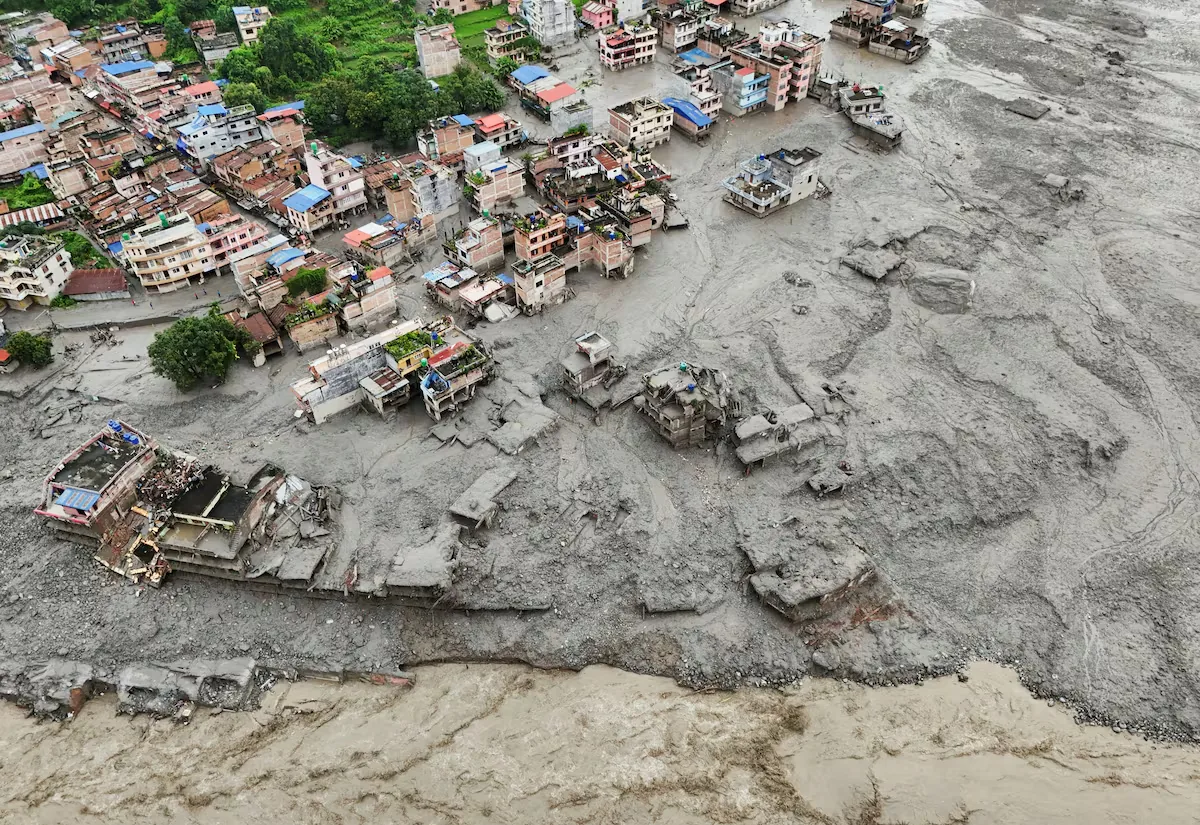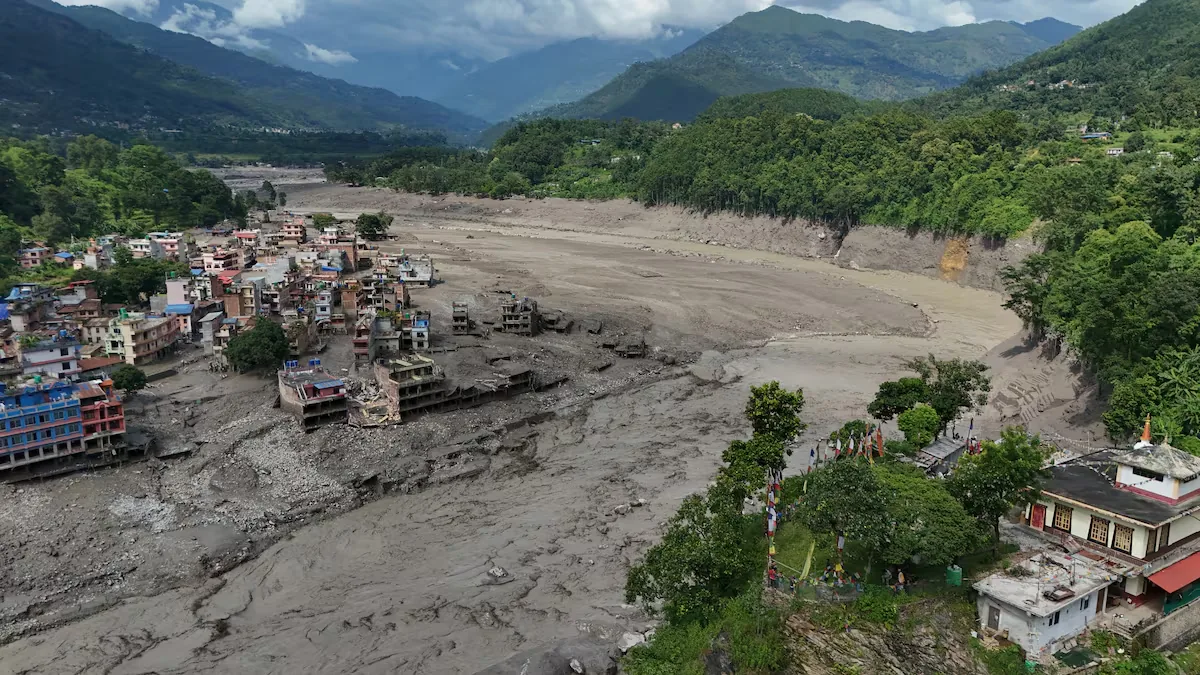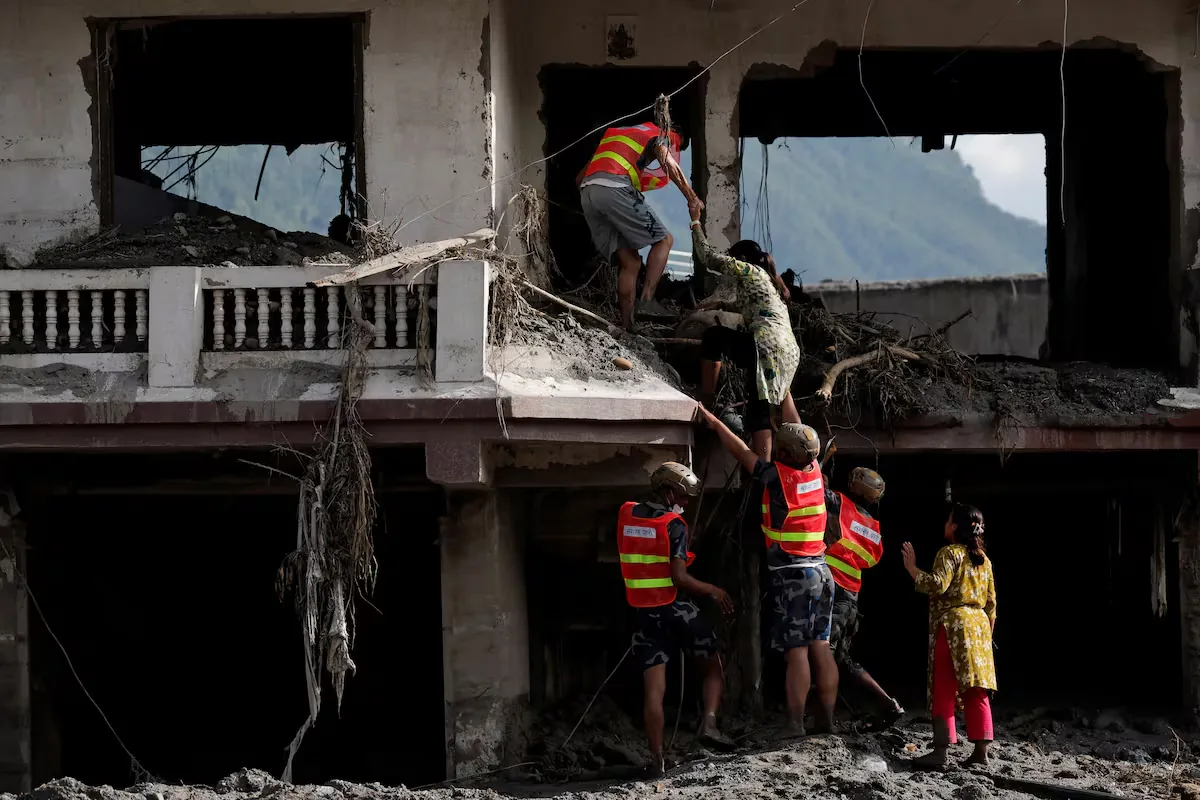
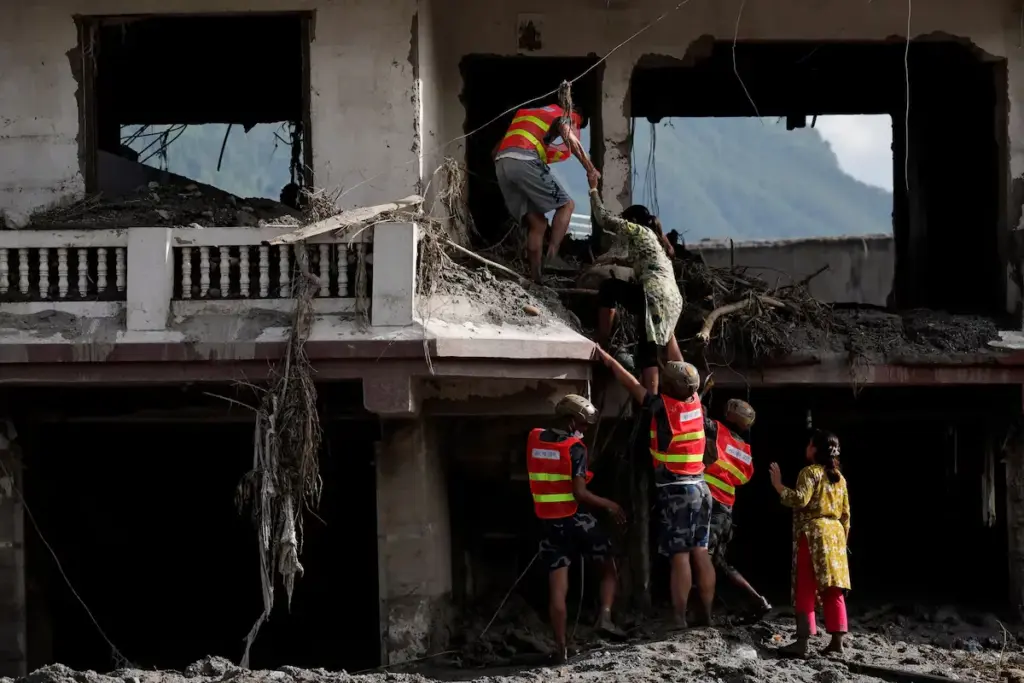
The emergency in the Himalayas entered a particularly delicate phase this Friday, in which China and Nepal face a real race against the water. The gigantic landslide that triggered a violent flood in those valleys on Wednesday left tons of mud and sediments lodged in several channels on both sides of the border. These natural plugs have formed two barrier lakes that Beijing and Kathmandu keep under close watch. With more rain expected in the coming hours and days, the authorities of the two Asian countries warn that the danger is once again upstream: if these dams give way, they could cause new floods in areas that were already devastated two days ago in a disaster that has claimed at least 478 lives and left 1,535 missing, 977 in Nepal and 558 in Tibet.
Read more Enes Unal holds Getafe in the Belgrade cauldron
The victim toll published this Friday by the Nepal police rises to 475. In addition, the authorities of that country have stated that they have rescued 3,253 people alive. China, for now, has only reported three deaths in Tibet.
“The main difficulty is that we cannot get close to the lake,” Chen Hanxiao, a member of the China Aneng reconnaissance team, explained to Chinese state radio and television. “After the collapse, numerous cliffs and steep walls were formed. It is very difficult for people to reach; also for excavators to reach the top of the natural dam.”
The danger has already forced the operation to be halted on the Tibetan side. China Central Television (CCTV) reported this Friday that the teams advancing towards the main search sector have temporarily stopped and remain concentrated in a safe area near the village of Laojiang.
The emergence of a new risk situation has forced the suspension of work in the disaster core. The lake, located at about 2,950 meters altitude and more than 10 kilometers upstream from the Gyirong border crossing, continues to overflow. Aerial surveillance, evacuations, and work away from the channel remain active.
The dam that China is monitoring is, for now, the only one whose dimensions are known. Measurements made with drones indicate that the natural dam is about 150 meters long and between 40 and 50 meters high.
CCTV raised the volume of accumulated water to more than 2.5 million cubic meters at midday this Friday, 25% more than the two million calculated on Thursday morning and equivalent to a thousand Olympic swimming pools. Its surface continues to expand, and unstable masses of terrain are observed on the two slopes surrounding it. The Chinese Ministry of Water Resources estimates that another three million cubic meters could enter the lake over the next three days and considers the risk of a rupture high, with the maximum flow expected around September 1.
A group of specialists from China Aneng has developed a three-dimensional model of the terrain, but on Thursday they could only observe the lake from about six kilometers away. The cliffs, slopes softened by rain, and continuous landslides prevent people and machinery from reaching the natural dam, according to information released by the Chinese state channel CCTV. The team planned to approach on foot this Friday to measure the bottom and the speed at which the level is rising, but the worsening danger has left the operation suspended.
Meanwhile, Nepal’s disaster management authority has only specified that the level of the other lake continues to rise after materials dragged by the flood blocked a channel in the affected area. The agency has asked residents, travelers, and rescue teams to stay away from the shores and remain in elevated places.
The new data also allow a better measurement of the violence of the first flood. According to CCTV, the current reached speeds of up to 200 kilometers per hour and raised a wall of water, mud, and rocks up to 15 meters high when it hit the border post. Satellite images released by the state agency Xinhua show the Gyirong enclosure and nearby residential areas buried under sediments. The flood took the Friendship Bridge between Nepal and China and damaged customs officials’ homes, private houses, a parking lot, police facilities, and the migration control building.
Despite how terrifying the images and information released by the Chinese state media themselves are, Beijing has not updated Tibet’s data since Thursday morning: so far, three deaths and 558 missing have been counted, of which 260 are foreigners. Rescue teams found two people alive.
Meanwhile, Nepal’s National Authority for Disaster Risk Reduction and Management currently counts 977 people missing, including 517 foreigners, 127 Nepalese residents abroad who were visiting, as well as 85 members of security and customs forces and dozens of inhabitants of the affected localities.
Read more Without Julián, Raphinha proves Deco and Hansi Flick right