At least 22 people have died this Wednesday in Nepal, and hundreds more are feared dead as contact has not been established with them following a violent flood and several landslides that have struck the mountainous border corridor with China. The Nepal Tourism Board has included 384 travelers — 291 foreigners and 93 nationals — in a provisional list of missing persons. Among them are 105 Indian citizens, 17 Malaysians, 12 British, four South Africans, three Americans, one Australian, and one Dutch, Reuters reports. Authorities insist they are still verifying this list, so it cannot yet be confirmed that all have been swept away by the flood. Additionally, dozens of members of the Nepalese security forces remain out of contact.
On the Chinese side of the border, there is still an undetermined number of dead, injured, and missing. Authorities have reported “significant casualties and missing persons” at the Gyirong port in Tibet, but state media have not yet provided an accurate count.
The disaster occurred around 10:30 (China time, six hours less in mainland Spain). According to the version disseminated by the Chinese agency Xinhua, the flow of water, mud, and debris originated on the Nepalese side of the border and reached the Gyirong pass, causing casualties and disappearances. However, the Nepalese newspaper The Himalayan Times, citing Nepal’s Flood Forecasting Division, states that the flood came from Tibet through the Bhote Koshi river, which crosses the border. Neither version yet clarifies what triggered the phenomenon or the exact point where it began.
The Nepalese government has indicated that an earthquake may have been the trigger. Foreign Minister Shishir Khanal explained before the House of Representatives that, according to preliminary information gathered by the government, a seismic event recorded at 8:37 (Nepal time) caused a large landslide that blocked the river and likely originated the flood detected around 8:40. The United States Geological Survey recorded a magnitude 4.4 tremor in Tibetan territory at that time, according to the Kathmandu Post.
The causal relationship between the two phenomena, however, is not yet confirmed: the Nepalese disaster management authority considers this explanation preliminary, and the Hydrology Department continues investigating whether the draining of a glacial lake could also have occurred, as happened last summer. The flood has caused road closures and interrupted communications and electricity supply in that remote area of the Himalayas, belonging to the Shigatse prefecture, located in the southwestern part of the Tibetan plateau.
Chinese President Xi Jinping has ordered the mobilization of all available resources and intensified the search for the missing, care for the injured, and relocation of people in risk areas to safe places. He has also called for strengthening surveillance against the threat of secondary disasters. Chinese Vice Premier Zhang Guoqing has traveled to the site leading officials from several departments to oversee rescue operations.
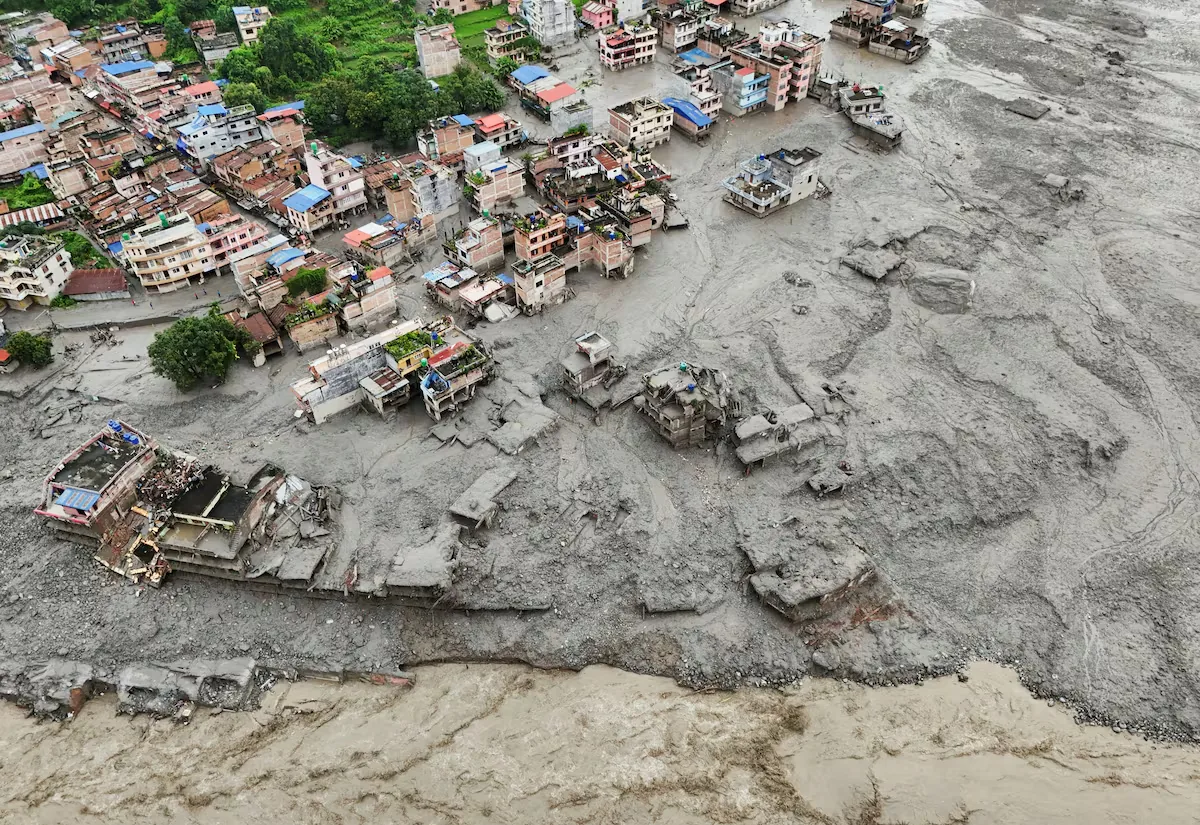
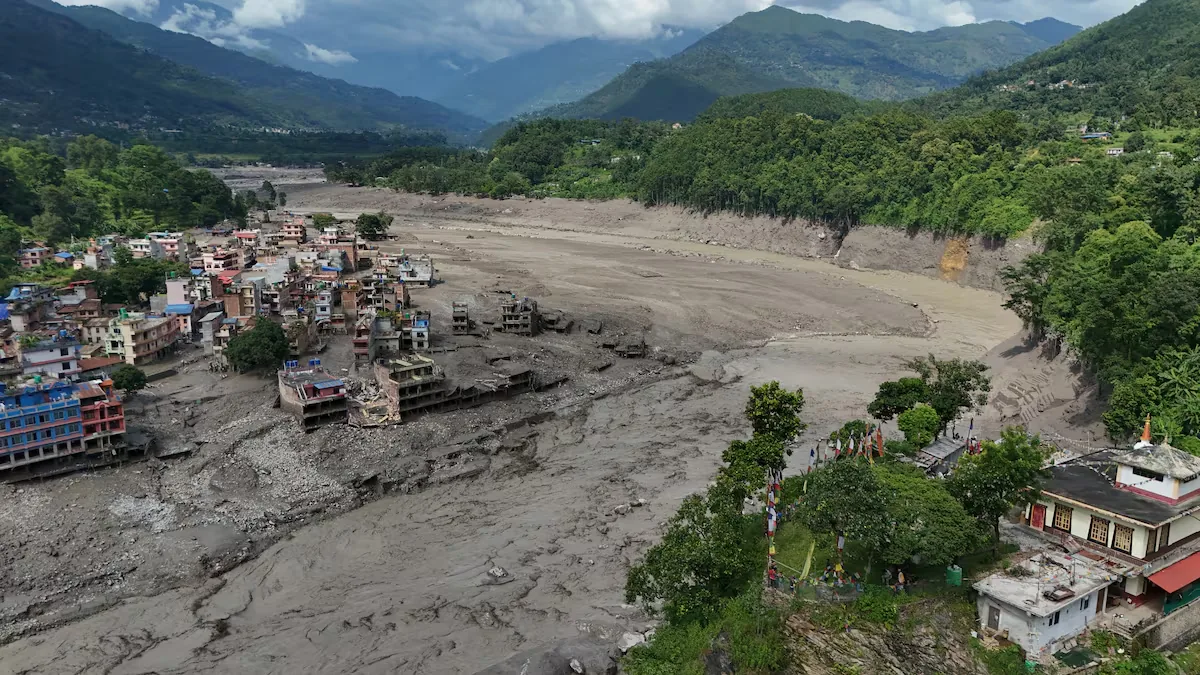
In Nepal, the sudden rise of the Bhote Koshi river first struck the border district of Rasuwa, especially the towns of Timure and Syabrubesi, where it destroyed homes and infrastructure. Then, the flood advanced south along the Trishuli river to reach the neighboring district of Nuwakot.
The Nepalese government has deployed the army, police, medical teams, and helicopters, but road damage and high water levels are hindering rescue efforts. The Nepalese foreign minister reported that 26 police officers, nine Armed Police members, and 44 soldiers stationed in Timure and Mailung remain out of contact. Contact has also been lost with several customs and immigration workers in Rasuwa, although the minister did not specify the number. Nepalese authorities have asked residents along the riverbanks to move to higher ground and have extended the alert downstream, Reuters reports.
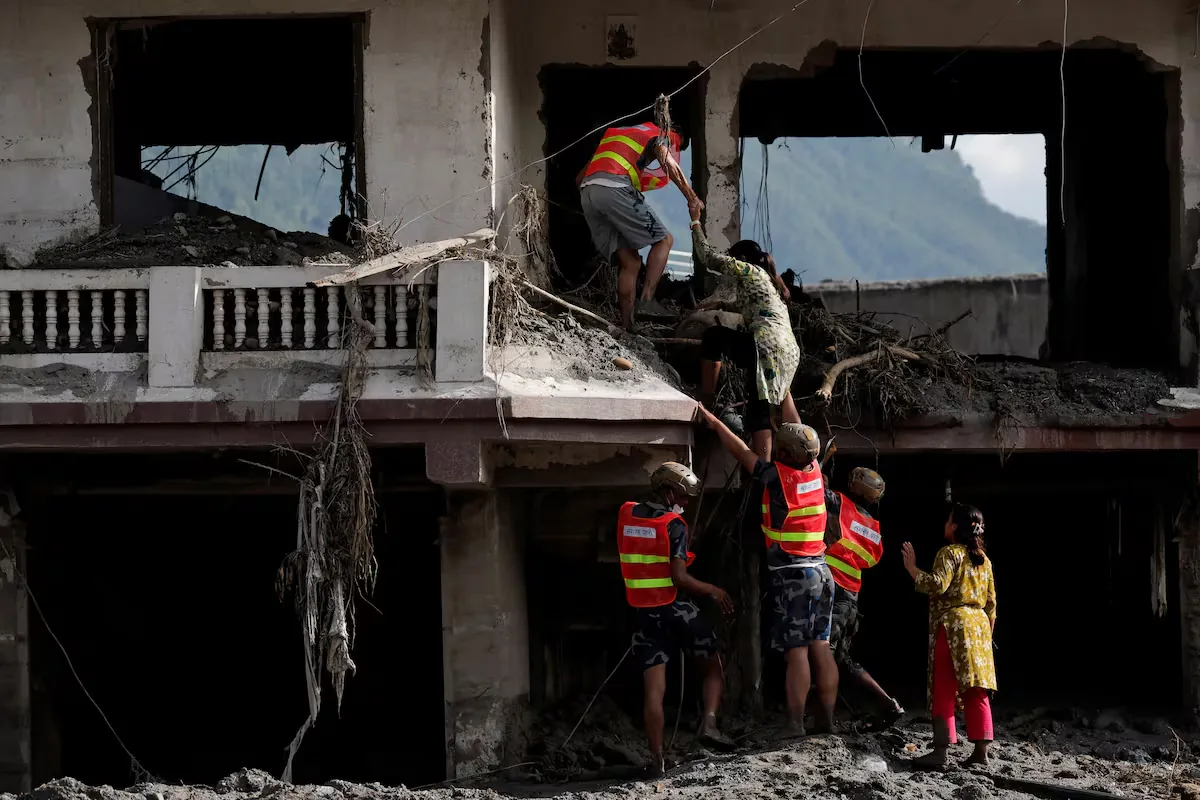
Images broadcast on television showed collapsed houses amid the waters, cars swept away by the current, and a metal bridge swallowed by the flood. “There is devastation wherever you look,” Tula Bahadur BK, a health worker from Rasuwa, told Reuters. “Settlements along the river have been completely destroyed. Five of my relatives are missing,” he added.
The flood has also damaged roads, bridges, and several hydroelectric plants. According to the Nepalese Ministry of Energy, about 430 megawatts of generation capacity have been affected. This figure represents more than 12% of the country’s total hydroelectric capacity, according to Reuters calculations.
The catastrophe occurs just one year after another disaster in the same corridor. In July 2025, another Bhote Koshi flood caused at least 11 deaths in Nepal. Dozens of people were reported missing on both sides of the border, with no definitive count published afterward. That flood destroyed the Friendship Bridge, the main land connection between Nepal and China, interrupting border trade and transport for months. A subsequent study concluded that the water came from a lake formed on a Tibetan glacier and made its way through channels on the surface and inside the ice.