Every four years we fail by electing presidents, but we forget to ask ourselves if we need to elect them. The answer, as would happen with any institutional design, is “no”. We don’t need to.
Read more AI proves a veteran Marxist right
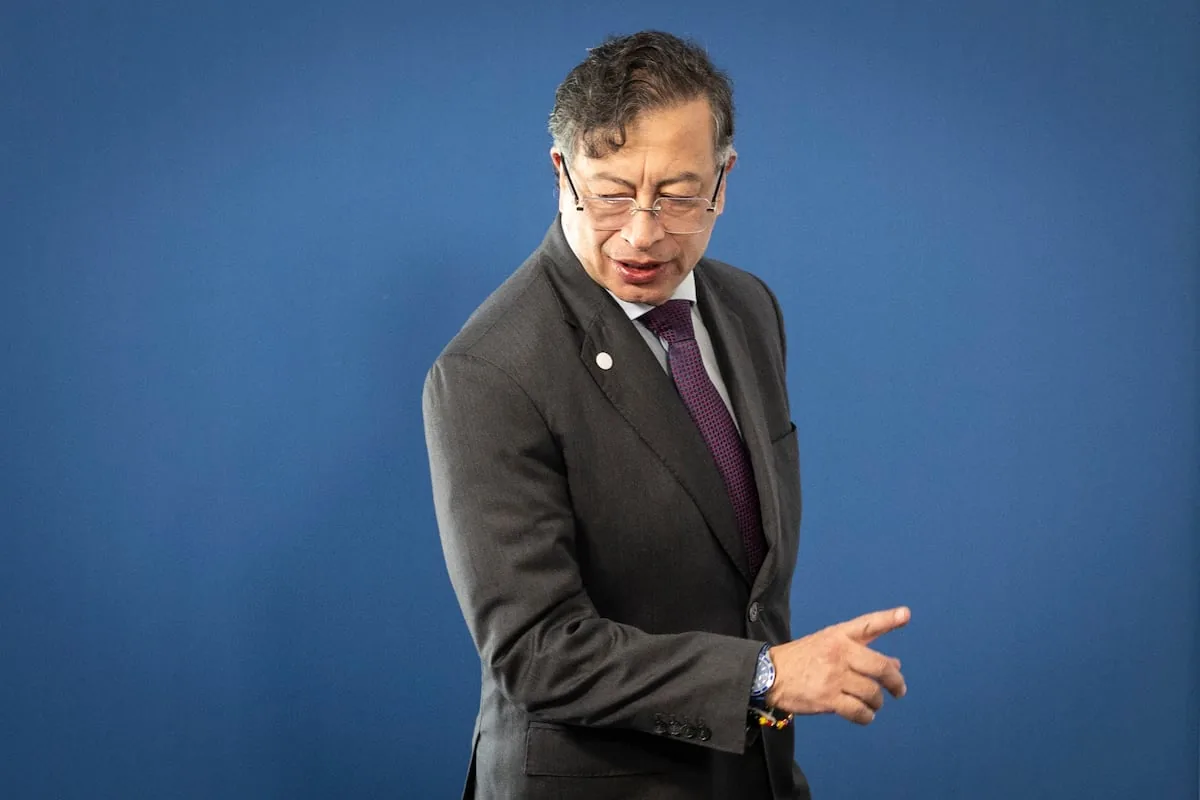
Someday there will be no presidents, just as today there are no pharaohs or marriages that unite kingdoms, no inquisitions, no oracles, and many other institutions that, in other times, other people not so different from us thought were justified. Presidents are a political institution, like any other. They are not carved in stone. It may be that, in the future, someone printing their giant face all over public buildings, as Trump has done, will seem disproportionate. Or it will seem laughable that, as the Colombian president has done, they act disguised as a liberator in a state-funded film. Hopefully.
Created at the end of the 18th century by Americans, the office of president was an arrangement, a deal. And, as sometimes happens with deals, it might not have turned out to be good for anyone. The “founding fathers” invented it because they didn’t want a king, on the one hand, nor chaos, on the other. So they opted for the middle ground: an elected king, a Frankenstein. A subject who sleeps in palaces but represents the “people,” who symbolizes national unity and at the same time is the head of a party, who is in charge of both extinguishing and igniting the bonfires of politics, who is a part of the State but is the center of gravity of the State.
And yet, in its original design, the goals of the office were austere. Presidents have not stopped inflating since then. Originally, in line with the political thought of philosophers like Locke and Montesquieu, their function was to execute laws, to execute. The initiative lay with Congress, even in what are today called presidential systems. To leave no doubt about who the true representatives of the people were, the framers of the American Constitution stipulated that the president would not be directly elected by the people, but by an “electoral college.” It was later, starting with Andrew Jackson, the seventh president of the United States (much admired, for obvious reasons, by the forty-seventh), that presidents began to claim a “mandate” and to argue that citizens had not only elected them, but “their programs” and that —the greatest distortion of the nature of the office—these programs must be approved by Congress, like a notary. This is Petro’s argument in Colombia.
And now we have arrived at these solar presidents. Everything revolves around them, just as planets revolve around the sun. Some say they are less powerful today because reforms have been carried out in many democracies to moderate their institutional power. But the power of presidents today is primarily communicative, and these channels are not regulated. Presidents have accumulated enormous discursive power due to the emergence of social media and the consequent weakening of other forms of social mediation. It’s the “Wild West” out there, as another president, Macron, recently said. They preconfigure everything, they influence everything. They put topics on the agenda, remove them, introduce new ones, highlight some. They have the power to say what they want, when they want, as many times as they want; to lie, to manipulate the debate, without filters or mediators. This is why a Trump is more powerful than a Carter, or a Milei than an Alfonsín.
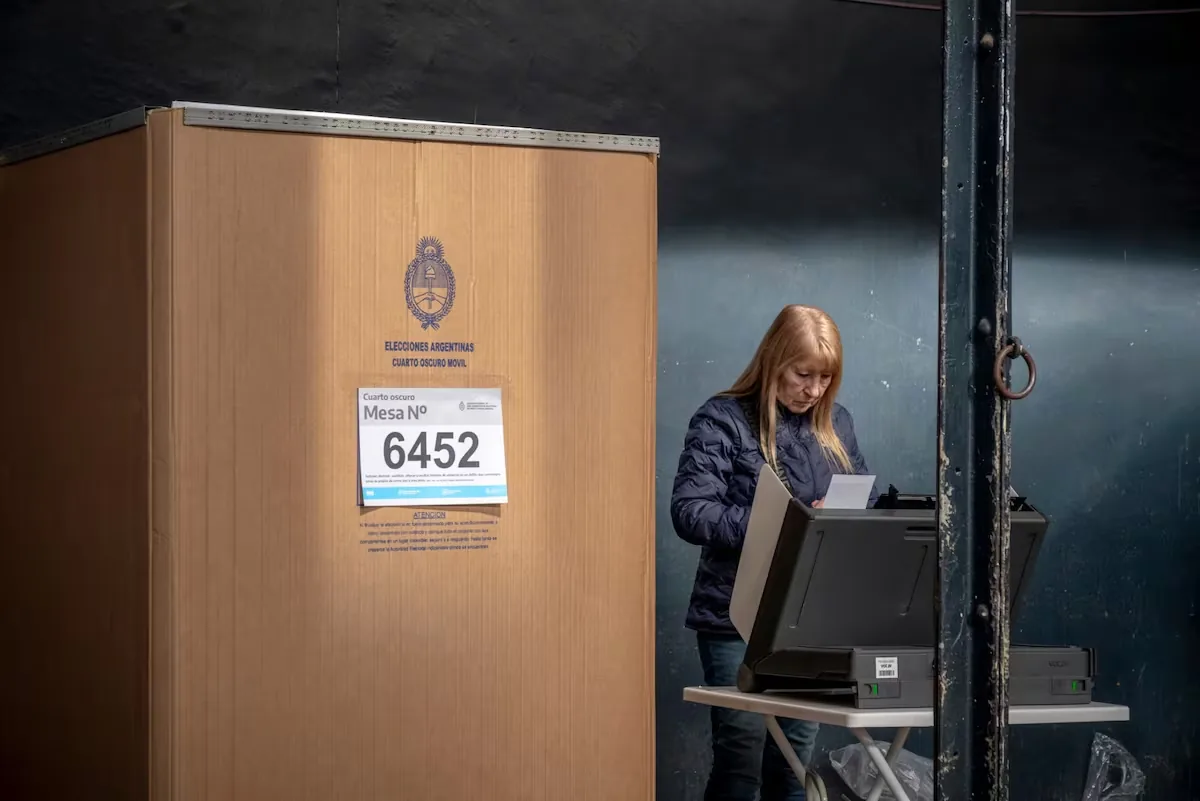
And all with dubious democratic credentials. Because, unlike congresses, presidents can only claim popular support from one half, or even less (when there are no designs like a second round). “Popular” means a little more than half of those who voted, who are half of those who can vote, who are half of all individuals in a country; that is, more or less, 20% of a country. This is what their democratic legitimacy consists of. Or in the public debate that precedes their election? Perhaps less…
Read more The lost hours to solve the crime of Edith Guadalupe
Increasingly, presidential elections leave not only an immense swath of losers, but something worse: millions of people who, justifiably, perceive the result as arbitrary, as something akin to what an individual punch would be; a violent, but above all irrational, act. The problem is not so much that they lost (in a democracy, one sometimes loses), but that they cannot understand how they lost. In these cases, the defeat is double due to the absence of reasons, as always happens when something is imposed on people without justification: the empty order, the absurd whim, the command “just because” or “because I say so.” Majorities without reasons in a democracy are equivalent to that: “because I say so.” Zero normative force. Because —one of Habermas’s greatest lessons—it is reasons that legitimize public decisions, including those of the people; in the absence of reasons, what a majority says is another bang on the table: authority, but not auctoritas —not a reason to have authority, which is different—.
It is paradoxical, but what demonstrates the incompetence of some presidents is that the office is, at least in part, superfluous. If we can subsist with these presidents, perhaps we can also subsist without presidents. Many of their tasks are dispensable.
The Colombian president, for example, has about thirty constitutional functions assigned. One third could be eliminated, another transferred to other bodies, and the remaining preserved and assigned to a more austere executive. Presidents do not have to have the power of nomination they enjoy; many more officials, including high-ranking ones, could be career civil servants. Nor should our presidents have any interference in the public press. Other tasks could be carried out by randomly selected citizens, as part of a new, well-paid public service. Elections could also be organized around policies instead of people, so that what citizens choose are not names but public policy decisions that independent executives must then implement. It is also possible to constitute executive commissions of three or more members, deliberative bodies instead of single-person ones for the execution of certain tasks. And if presidents cannot act as true heads of state, neither should we try to pretend they do. This is the first thing that should be cut, sharply. No speeches in squares, no protocol trips, no interviews with influencers. All the paraphernalia linked to executive positions should disappear: palaces, perks for presidential families, luxuries, and lavish expenses. The pomp of power, and its many trivial symbols.
The point is that a democratic society does not need that supreme deliberative agent, it does not need anyone to “guide the country,” to “point the way,” to “symbolize unity.” For that, its citizens are there, in multiple places of public life.
Read more Lucrecia Martel: “Indigenous communities improved the Christian God”