









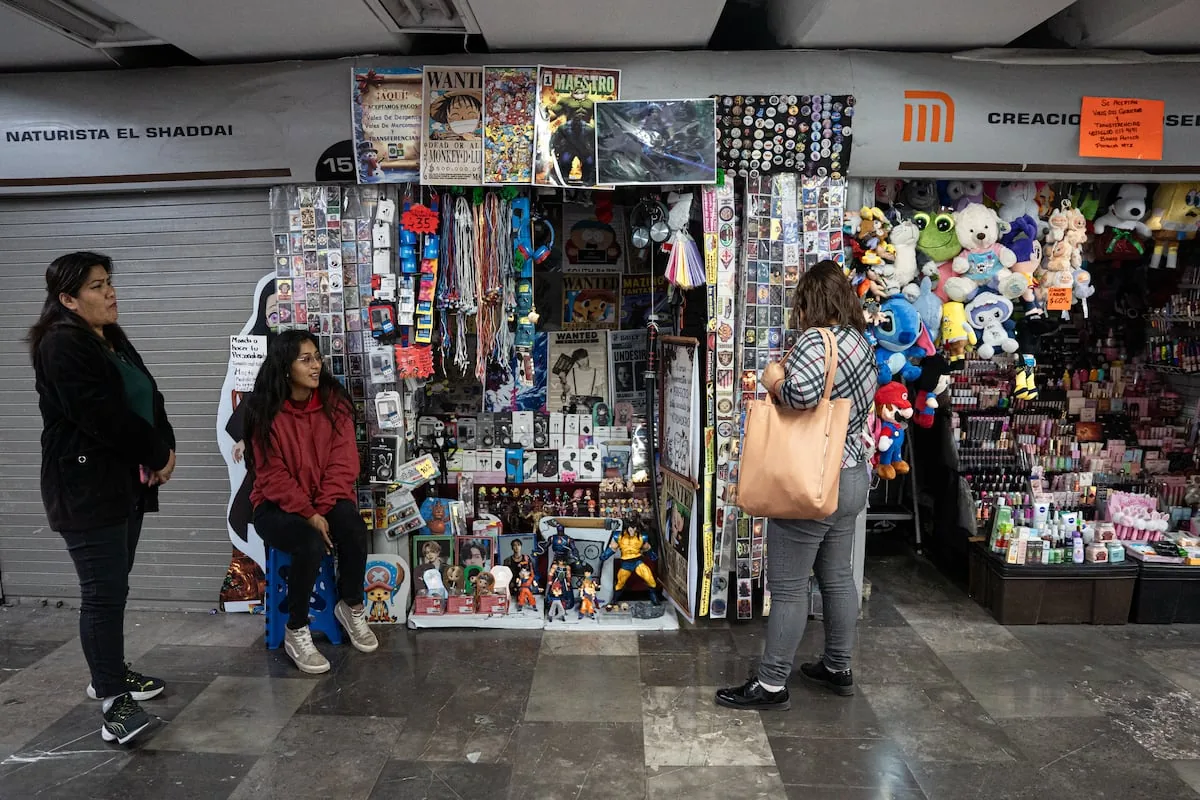
Labor informality is one of the major structural problems in Latin America and the Caribbean, where almost half of the work (around 150 million people) is carried out informally. This reality not only limits the exercise of workers’ labor rights – such as their right to a minimum wage, a maximum working day, job stability – but also leaves them outside the coverage provided by social security systems, contributory pensions, medical care, occupational safety and health.
Read more Naturalizations fall by half in the United States due to Trump’s immigration policies
SMEs operating informally also see their access to credit and official support limited, which restricts their growth potential and, ultimately, the economic and social development of the region.
When we analyze the problem of informality from the perspective of households, the seriousness of the problem is accentuated. In fact, more than two-thirds of those who work informally live in completely informal households, which amplifies the difficulty in accessing social protection.
In Latin America and the Caribbean, more than 40% of children under 14 live in poverty and more than 16% in extreme poverty, indicators necessarily associated with informality since more than 45% of children in this age group live in completely informal households.
Informality varies throughout the life cycle, being higher in the initial phase (between 15 and 25 years) and for older people, hindering access to social protection. The level of informality among young people is particularly serious because those who start working informally will have great difficulty in formalizing.
Informality is also closely associated with inequality, another of the structural problems of Latin America and the Caribbean. Comparisons between countries, or their evolution over time, show that greater informality is associated with greater inequality. Informality especially affects those with fewer resources and disproportionately women and young people, thus contributing to increased inequality.
The fight against poverty, inequality, and informality is not just a matter of social justice, but of rights. Formal employment is a fundamental social right, and its non-compliance limits the exercise of other social rights such as the right to social security or the right to safety and health at work.
The promotion of labor formalization now gains greater importance in view of the protectionist measures that have been developed. The reduction of international trade will have a negative impact on labor markets and, consequently, on social security. Latin America and the Caribbean may face an increase in unemployment, which will contribute to greater informality and a regression in the results obtained in recent years.
The Ibero-American Social Security Organization (OISS), in its commitment to promoting the economic and social well-being of Ibero-America, organized three forums on the challenges of labor formalization in the last three years.
These forums, which will focus on innovative measures for promoting formalization and how to include them in pension reforms, will define a roadmap for increasing formalization in Latin America and the Caribbean.
Read more Bitter anniversaries?
A first conclusion is that informality has several dimensions and can be analyzed from different perspectives – type of employment contracts, gender equity, age of workers, level of contributions – and that this diversity requires the fight against informality to be based on combined and integrated strategies that define public policies promoting labor formalization.
A first recommendation from these forums is the mandatory nature of affiliation, which, given that the punitive approach alone does not solve the problem, must be accompanied by the development of adequate levels of protection.
Experience teaches us that strategies are often based on measures that are difficult to understand and implement because they ignore the perceptions of citizens and businesses. Therefore, it is necessary to ensure that the processes associated with formalization are simple and agile. This applies whether from the perspective of promoting entrepreneurship or from the perspective of workers’ affiliation and contributions.
Formalization was also the subject of other activities such as the V meeting on gender equality, the seminar on youth affiliation, and studies in collaboration with international organizations such as the International Labour Organization, the United Nations Entity for Gender Equality and the Empowerment of Women, the International Organization for Migration, or the Organisation for Economic Co-operation and Development.
Important findings from these activities are the various good practices being developed in Ibero-American countries to promote formalization, from tax incentives to flexible and simplified affiliation mechanisms, improved coverage, and which demonstrate that there are useful tools that can help us move forward.
At the III Forum on the challenges of labor formalization, held in 2025 in the Dominican Republic with the participation of several ministers from the region, Prisa’s vice president, Fernando Carrillo, highlighted that currently social issues occupy a secondary place in global concerns and concluded that the recommendations and contributions that OISS is making on labor formalization in Ibero-America must be fulfilled as a way to defend the social heritage that guarantees social cohesion and is a legitimizing factor for democracy in Latin America.
The XVIII Ibero-American Social Security Congress, held in Paraguay last December, approved the Asunción Declaration. In it, participants, aware that in a context of great uncertainty like the current one, the protection provided by social security systems acquires even greater relevance, agreed on the need to implement innovative affiliation mechanisms, especially aimed at groups with higher levels of labor informality.
Likewise, the Declaration recognizes the work of OISS and supports its initiatives aimed at promoting a more prosperous, sustainable, and socially cohesive Ibero-America.
Read more Do we need presidents?