When two police officers stopped a car in Los Mochis, Sinaloa, on the morning of January 8, 2016, the last thing they expected to find inside was the country’s most wanted drug trafficker. Joaquín Guzmán Loera, El Chapo, and Jorge Iván Gastélum, alias El Cholo, his security chief, had just escaped from a Navy operation at a house where they had hidden, navigating through the city’s sewer system until they were off the authorities’ radar. During their escape, they took a red Focus, the same one reported stolen that two agents from the now-defunct Federal Police accidentally encountered during a patrol.
Read more The UN describes the persecution of Human Rights defenders in Guatemala as «alarming»
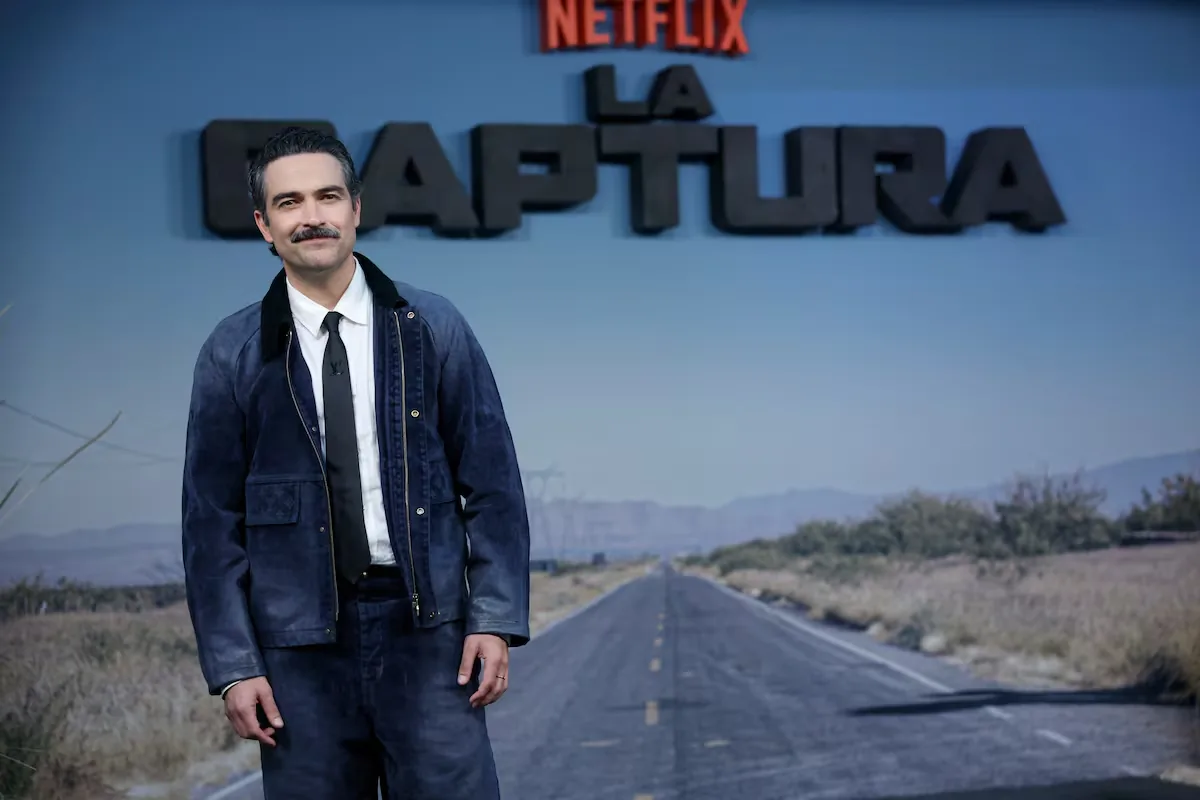
What happened next is a well-known story thanks to the chronicles of journalist Héctor de Mauleón, but it has been revisited this year in La captura, a Netflix production released on August 21. In just one week, the film has taken the platform by storm: it is the most-watched non-English language film worldwide, is in the top 10 in more than 90 countries, and has accumulated 18 million views. In a video call with EL PAÍS, Alfonso Herrera (Mexico City, 43 years old), the film’s lead actor, expresses his amazement “at the impact it has had not only in the region […], but practically around the world.” Even captivating a sector often more complicated: “[I am] very surprised by the reception not only from the public but also from the critics.”
Herrera believes the film’s appeal lies in the way the events are narrated and that this is precisely what sets it apart from other productions made on the subject. “When you talk about a drug trafficking or money laundering film in the region, they usually do it from the criminal’s point of view, but not now. Now it is done from the perspective of these two police officers,” he explains. This change of perspective, which moves away from the big bosses as protagonists and focuses on ordinary people who have also been affected by violence, is, for him, the key. “People are interested in seeing that there are police officers who do their job correctly and that there are people who do their work honorably. […] We want to see a story where the good guys win,” he asserts.

In La Captura, Arturo Carmona, the fictional name of the officer Herrera portrays, faces financial problems that lead him to switch to the night shift at his job to earn more money for his family. A decision that involves more risks. Despite the limited information available about the story’s protagonists, whose names have been kept secret for a decade for security reasons, the Mexican actor shares that he built the character based on his context: “They are two police officers from a very specific social stratum that also reflects the reality of millions of Mexicans trying to get ahead with the little they have.”
Throughout the film, the tension from the coincidence in which Carmona and Héctor Rosales, the other agent played by Noé Hernández, find themselves is always palpable. The suspense hints at the complexity of violence in a Mexico whose reality is also woven with distrust of everyone, including the authorities. In that situation, Carmona, who barely knows the recently transferred Rosales, does not know whom to trust or what to do, but it seems that whatever he decides does not matter. “Carmona, we are already dead, man. Not even God will accompany us,” Rosales tells him in one scene.
Read more Eat “real” bread again every morning: the appliance that kneads and bakes while you sleep
For the actor, the dilemma the characters face, between fulfilling their professional duty and the threat that this poses to their safety and that of their families, made them go “into autopilot” out of fear, dominated by the situation. A perception that changed after filming ended. “I realized they made very specific decisions: how to take cover, where to position themselves, where to go to hand over these two people.” And it is these same vulnerabilities and contradictions that portray the two police officers as what they are: “They are not heroes. They are flesh-and-blood people who got up in the morning thinking they were going to do a patrol like any other and, suddenly, one day their lives changed completely.”
But that has not prevented the characters of La captura from also being protagonists off-screen. “People are getting inspired. They are making corridos, songs, memes… They even sent me piñatas. […] You say ‘here a conversation is being generated and here there is an important echo’,” reflects the actor, who also highlights “the historical value of what happened in early 2016” to explain people’s interest. “That not only draws attention in Mexico but also in other places.”
Herrera, who is in the middle of shooting a project (El enemigo del pueblo) in which he works again with acclaimed Mexican director Luis Estrada, to be released next year on Netflix, assures that despite the tension portrayed in the film, the set was “quite bearable and pleasant.” Above all, he highlights Chava Cartas’ direction and “the production values” that allowed telling this story differently. “[Chava] loves this genre [action], knows how to pace very well [and] has a lot of craft. […] We tried to be very careful about what we were telling,” he concludes.
Read more Rodolfo Londoño, the Catholic priest to whom De la Espriella entrusts his university policy