The first question arrives like a pact, as if she had always asked it of herself, or as if she were condemned to answer it all her life.
Read more The nieces of Mencho who are public officials in California: the other side of the Oseguera family
—What does it mean to be your father’s daughter?
—It’s my destiny, what do you want me to tell him?— replies Alina Fernández (Havana, 70 years old). What Fidel Castro has done to Cuba hurts me enormously. But I share it, and a shared pain sometimes hurts less.
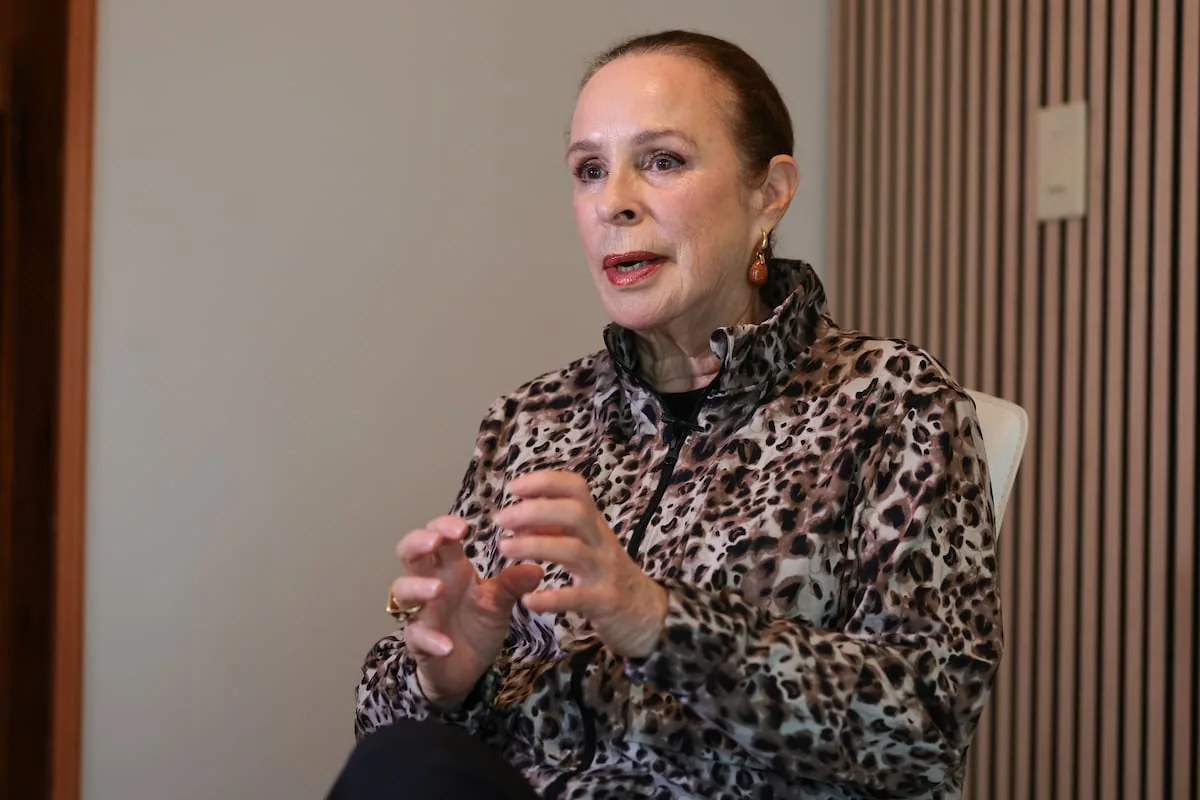
More than Cuban, Fernández, Castro’s illegitimate daughter, is tremendously Habanera and finds it difficult to drive along Miami’s large avenues and not have everything within twenty minutes’ distance, as in Havana. Now she arrives from the street, opens the doors of her modest house, offers coffee and fresh water. She maintains, she says, a “low profile.” For years, she worked in this city in a primary cell culture laboratory for research, which she complemented with radio programs or show production. She has just participated in the production of the documentary The Daughter of the Revolution, by director Thaddeus D. Matula, which premiered a few days ago at the Miami Film Festival, and which not only tells her testimony but also aims to be a choral portrait of recent Cuban history from exile.
When she was ten years old, Fernández learned that the Commander-in-Chief, the owner of the country, the person who spent up to seven hours delivering speeches on national television during the time she and all the children wanted to watch cartoons, was not just her mother’s friend, Natalia Revuelta, but was her progenitor. Until then, she believed her biological father was the cardiologist Orlando Fernández. It was her mother who told her the truth.
“I was afraid they would tell me someday on the street. The first thing I remember is a feeling of betrayal, because almost everyone around me knew, even my best friend, and that hurt me much more than anything else. I’ve had a phobia of lies ever since. I questioned myself and said: well, until the other day I was the daughter of a worm, a traitor, and now I am the daughter of this man who is a hero, whom we children don’t like, a man who could talk for hours every day, in a lengthy monologue. What I did know immediately was that it didn’t change anything; the fact that I knew he was my father didn’t change his treatment of me.”
Castro would come home, sometimes pay attention to her, sit down to play. But there were no feelings in the interaction. According to Fernández, he was someone who didn’t quite know “how to deal with a child.” “Besides, he wasn’t interested,” she says. “He had occasional attacks of fatherhood that always surprised me. But at 10 and a half, I was entering adolescence, and everything starts to stir, you start to think with your own brain. It’s no longer just what your closest people tell you, but you start to develop your hates and loves. He never dazzled or hypnotized me, despite that massive state of devotion towards him.”
It was the same fascination her mother felt until the day she died in 2015, at 89 years old. “My mother lived in love with Fidel. We are talking about him having a typical narcissistic personality, and that explains many things, because Cuba is made in his image and likeness. So when he lost feeling for my mother, when she was no longer useful to him, it was like a discard, a dispossession. My mother never got over that. It’s something I didn’t understand, no matter how much she explained it to me.”
When Fernández was about 20 years old, she had a serious conversation with Castro. One of the few. Some time ago, artisans selling all kinds of things had begun to gather in the Plaza de la Catedral. “In a country where there are no consumer goods, no handkerchief, no keychain, no pair of shoes, these artisans selling their products became very popular.” It was the seventies in Cuba. Suddenly, the police rounded up the vendors, arresting them and confiscating their sales. Fernández asked Castro a question: “Why? Explain to me why these people, who are doing us a favor, have to be arrested. Conversations with him were useless. He had a monologue, he liked to listen to himself and, of course, he was not a person who would admit questioning. The answer was this: the State can never lose the monopoly on trade. That is what Cuba is to this day.”
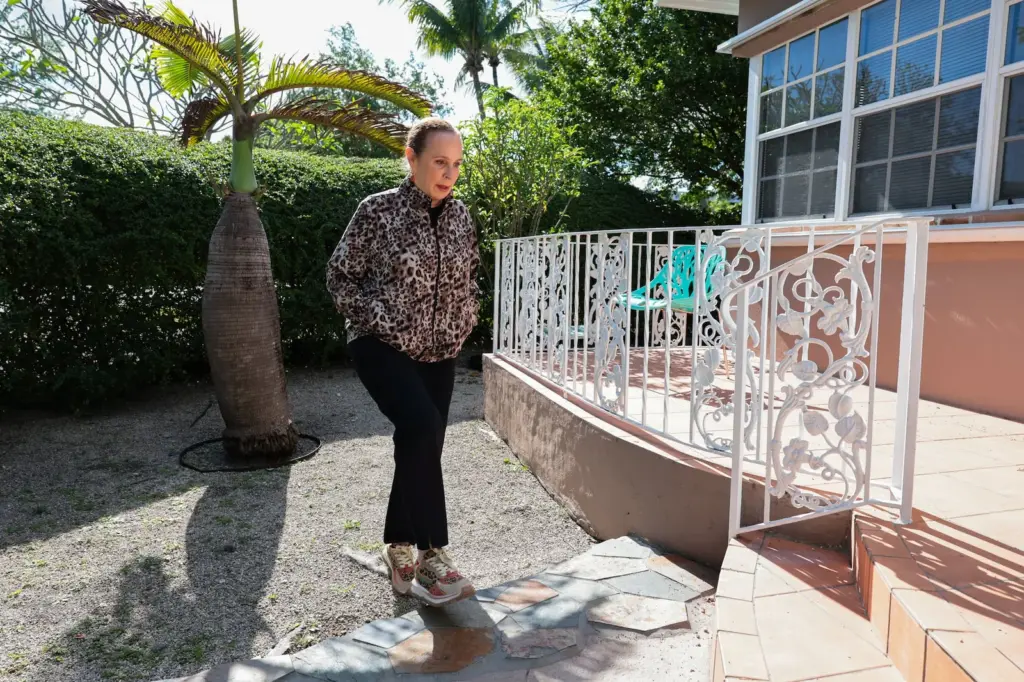
After several attempts and rejections to leave the country, Fernández left Cuba in 1993, in the midst of the Special Period crisis, impersonating a Spanish citizen. “I was able to leave by pretending to be someone else, I imitated the Spanish accent at the airport, I put on a lot of makeup, I wore a wig, a cap. I was a middle-aged lady delighted to have had some mojitos and God knows what else on the beaches of Cuba.” She arrived in Madrid, a few years later she settled in Miami. She returned to the island for the last time three years ago. Today, amidst the threats echoing from Washington or Havana, Fernández believes that Cuba has reached “a point of no return.” One of the main culprits of that misfortune gave her life.
Question. Is your constant denunciation of the Cuban government, your stance, also a duty because of who you are?
Answer. What I have done is also dictated by a feeling of guilt by consanguinity that I shouldn’t feel. Duty too. Every person who sees reality, beyond what they are being instilled or indoctrinated with, must speak. Because the truth is increasingly less easy to hide. Cubans have been the subjects of a completely absurd social experiment which is a Revolution that has lasted almost 70 years. Revolutions, supposedly, are short periods in history. I always wonder what would have happened to the French if theirs had lasted 70 years. We have lived in this kind of political and ideological, anti-family hysteria for at least five generations.
Q. Who is Alina Fernández beyond a woman who has grown up in the shadow of someone like Castro?
A. First, I am a mother, a woman, and Cuban, before being anyone’s daughter. Growing up in that environment, having the possibility to see both sides of the coin, is what made me who I am.
Q. Did knowing that Castro was your father make you start asking other kinds of questions or create any conflict?
A. I’ve been asking myself questions since I was very little; there are things I wrote, I made notes or asked my mom questions. I saw that man and that feverish Revolution around me, and everyone marching, doing hours of volunteer work, so that all Cubans would live well, but I saw that what there was was more misery, more problems. We were hungry. The Revolution triumphed in 1959, and in 1961 the rationing book was established. Two years later there were already shortages. I remember unsalted lentils on my family’s table to eat. Bread disappeared, milk, butter. From the beginning, transportation began to be scarce. Because when the State takes ownership of everything, and it’s not well managed, everything starts to fail.
Q. Even in your home were there such shortages? What were your privileges for being Castro’s daughter?
A. My mom was so strict that she said buying an egg on the black market was not revolutionary. Everyone lived off the black market, but my mom resisted, she tried to adjust to what the Revolution provided. Fidel, at some point, occasionally started helping with a little milk, or something else.
Q. When you were 12, Castro proposed giving you his surname. Why don’t you bear it today?
A. The one interested in the surname wasn’t me, it was my mom, who wanted to somehow legitimize the fact that I existed. A law had to be modified, I was given an explanation that it couldn’t be done. I had been born into a marriage and was recognized by another father. To me, it seemed an unnecessary, despicable process. It even seemed humiliating. He was determined, but it wasn’t really in his interest either. If he had wanted to do it with such eagerness, he would have done it.
Read more Mexico redesigns energy investment rules: without social license, projects do not advance
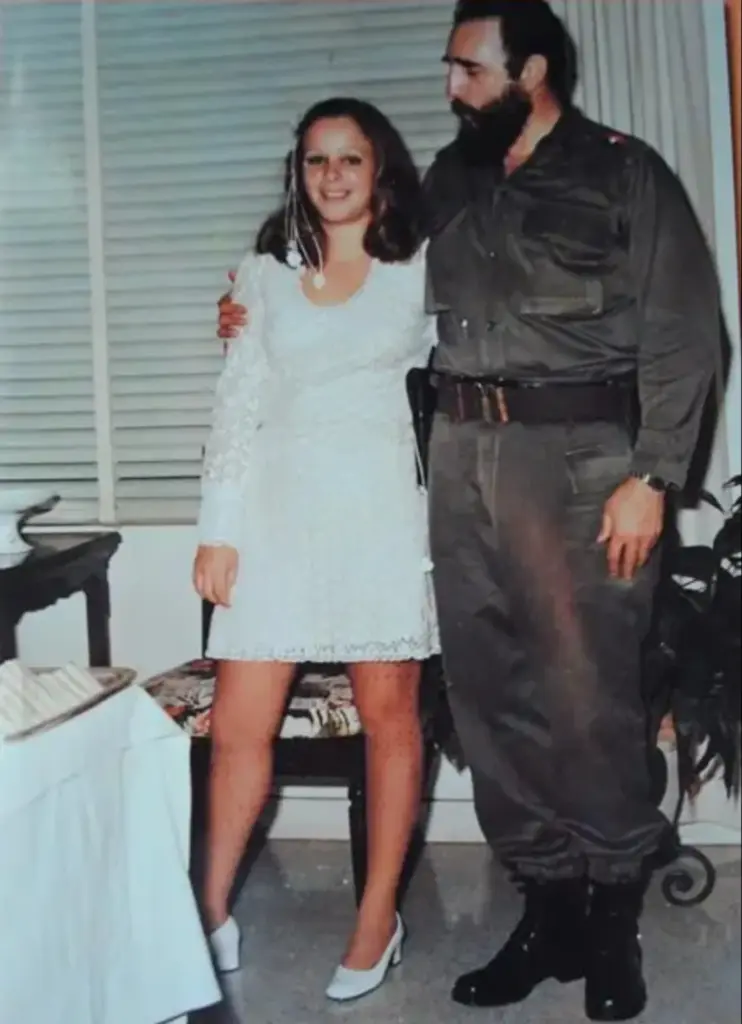
Q. Do you remember any intimate moment with Castro? There’s a photo of you together at your wedding…
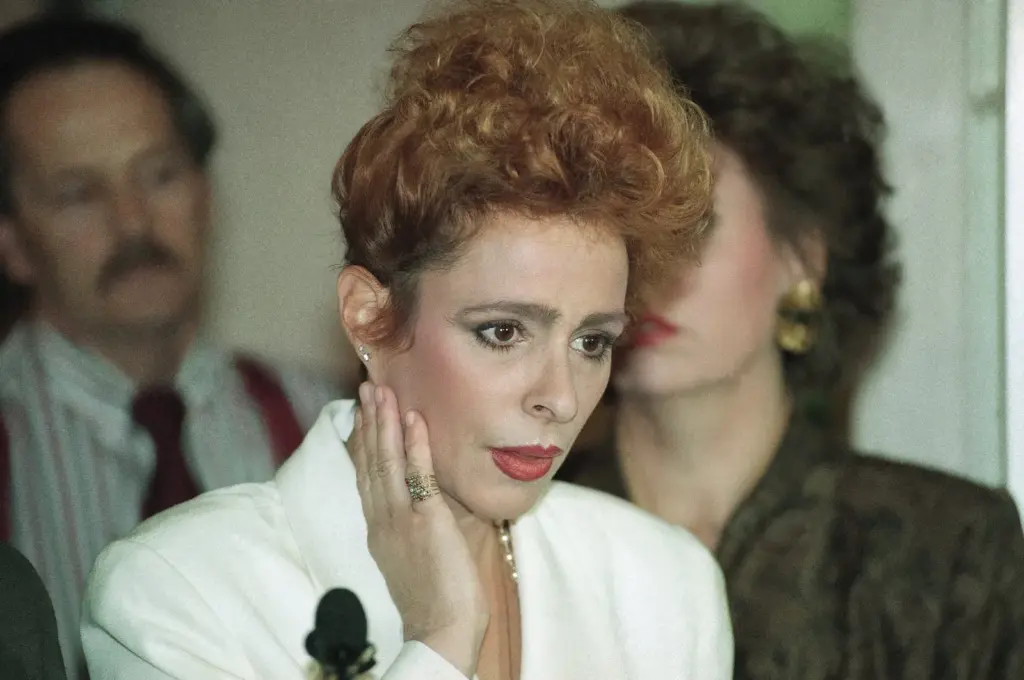
A. In this case, he had an attack of fatherhood. We were planning my wedding and I was 16 years old. That outraged him. To my surprise, he flew into a rage. I didn’t ask him for permission to marry, because I didn’t consider him my father and it seemed to me that he wouldn’t be interested. I hadn’t seen him for three years. He was hurt, he felt guilty about having a 16-year-old daughter getting married, almost a child. Then he visited the house a few more times and then disappeared again. He set the condition that if I postponed the wedding, he would take care of everything. It was a rather modest wedding to be subsidized by the king of Havana. I waited a few months, finally turned 17, and he went and signed that he authorized the wedding. Even without being my legal father. He was whatever he wanted to be.
Q. What was your relationship with the rest of your siblings, Castro’s children?
A. One of Fidel’s rarest characteristics as a person was that he didn’t want his children to interact with the rest of the family, and he kept them isolated until they grew up and could escape the nest a bit, but we didn’t have much interaction.
Q. It is even said that there was hardly any relationship between Fidel’s and Raúl’s children.
A. That’s right, exactly. One day Raúl’s son (Alejandro Castro Espín) and one of Fidel’s sons met, and immediately there was an order that they couldn’t interact. A very peculiar and, to me, inexplicable thing.
Q. Now that negotiations between Cuba and the US are being discussed, we see that it is members of Raúl’s family wing (his son Alejandro or his grandson Raúl Guillermo Rodríguez Castro, alias El Cangrejo) who have been participating, no one from Fidel’s side. Is this symptomatic?
A. The only one who tried to position a son of Fidel Castro in this elite was Raúl, who proposed Fidelito Castro for the Asamblea Nacional del Poder Popular and people voted no, as an act of rebellion, they didn’t want him in that position. Fidelito committed suicide; the other children have never held an official position. The narcissistic personality wants you to remember him by his image. It is very visible.
Q. The most visible right now is Sandro Castro. Fidel had an influencer grandson who has called for change for Cuba…
A. Times have changed. People ask me about Sandro, I don’t know him, nor can I understand things because there’s a big generational gap. I believe that anything said, that a change is needed, is useful. Say it however you say it, with whatever shyness you say it, or with a good or bad joke, but it’s important.
Q. Was there a moment when Castro ceased to be in your life?
A. I was the one who separated myself; I didn’t want to have any ties. In the end, it was a terrible burden. When my daughter was born, I asked him not to visit her at home; each of his visits caused a commotion. When I was little, when he frequented my house, people would come with letters for me to give to him; that was a sad experience too. People knew he visited us and would hand over letters with very sad stories, and I tried to give them to him. I read many tragedies.
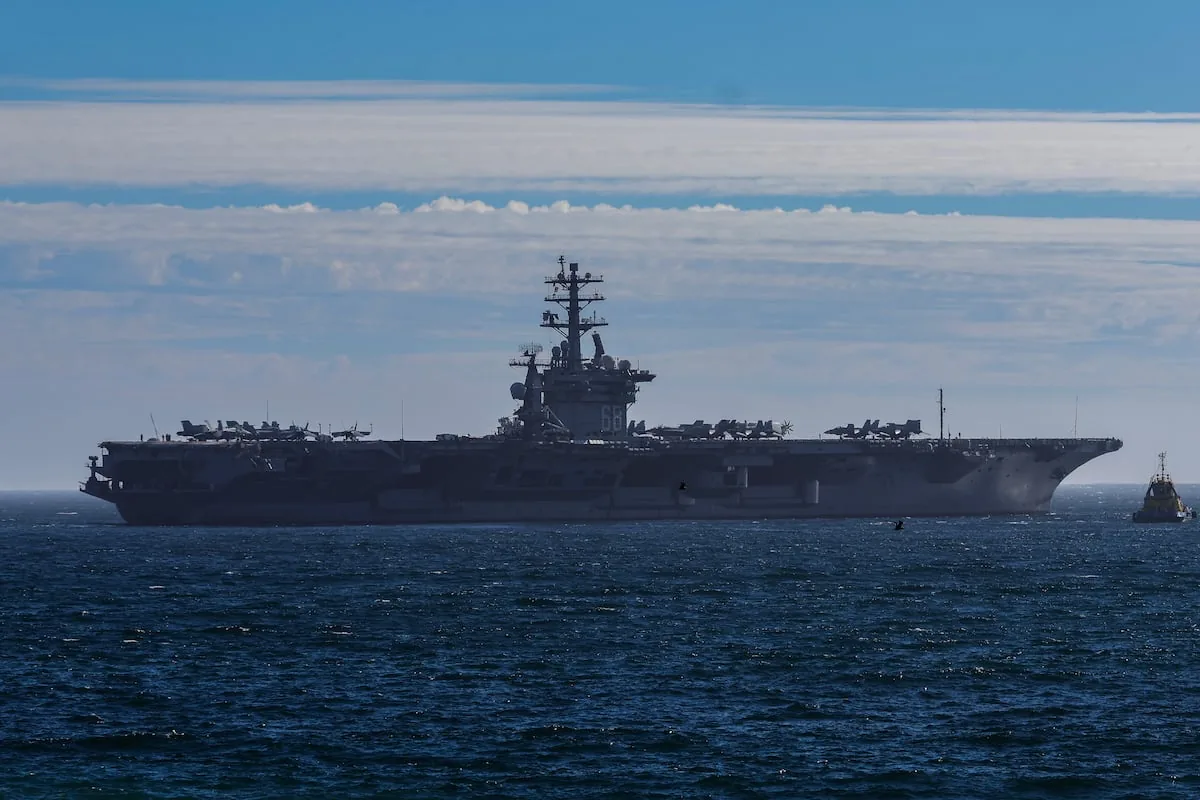
Q. Beyond the economic blockade situation that the United States has maintained towards Cuba since January, at what point is the Cuban nation today?
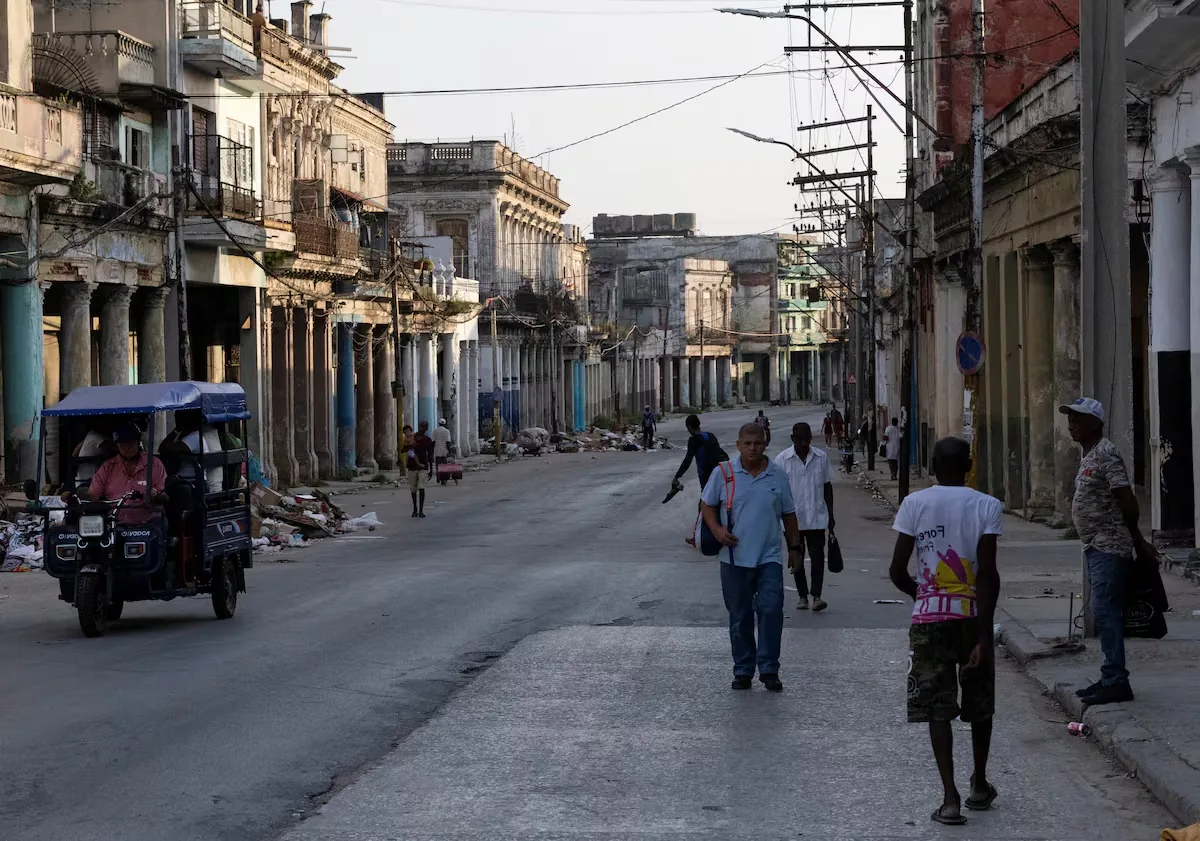
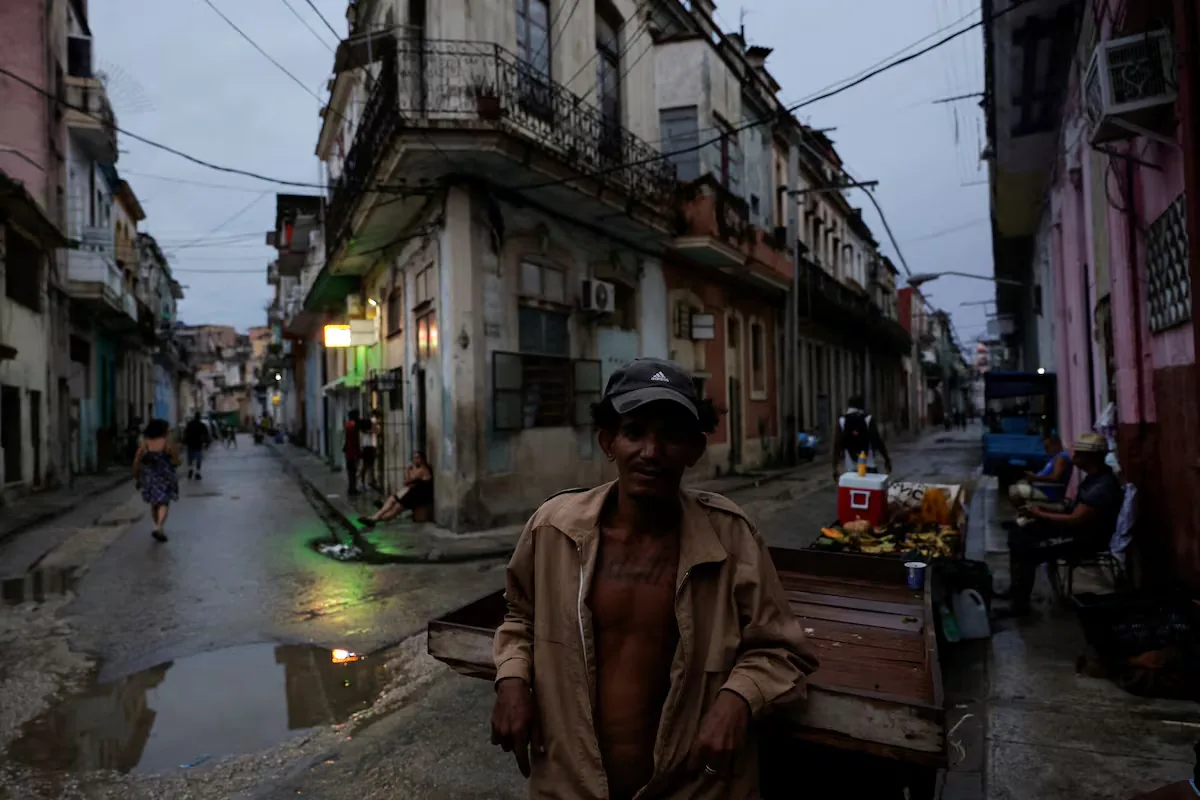
A. At a point of no return. If this vital circumstance of no electricity continues, if this prolongs, I don’t know what could happen. It’s difficult for people, with pot-banging protests, to overthrow a country like that. I believe that dictatorships arise with a little help and also fall, collapse, with another push. Internally, it’s difficult to achieve. We are talking about an island where its youth have also had to leave to make a living.
Q. The intentions of the Donald Trump administration to remove the figure of Miguel Díaz-Canel from the political board, but to keep the Castro family, have been leaked. What do you think of this?
A. Well, I don’t know to what extent the Castro family maintains power in Cuba. I do know that the military conglomerate GAESA has enormous power and a lot of money. Who is in charge? Who controls? I have no idea. Of course, what people want is one thing, and what can or cannot be done is another. I would like the people in Cuba to be able to unanimously express their discontent, their hopelessness, their misery, but it’s impossible. Focusing on Díaz-Canel, who is a person who has borne all the unpopularity of this madness, doesn’t solve any problem. I notice a disconnect between Díaz-Canel’s official discourse, the supposed negotiations that are taking place, those who say there were no Cubans in Venezuela and 32 dead appear. No one agrees. It’s a very disconcerting period and we don’t know what the truth is. I dare to have hope, I also have that feeling that I’ve had hope many times and I have to swallow it. What is needed is change. Whatever it takes. People in Cuba need to breathe, reach the 21st century, give their children a life, they need hope and freedom for all of this.
Q. How do you think these negotiations between Trump and Castro would be?
A. Fidel had something to negotiate with. We forget that he was the ideological president of the Non-Aligned countries. Cuba was involved in all existing and non-existing conflicts worldwide, in places where the US had not even set foot. That is to say, the influence that Fidel Castro has had in this political polarization we see these days is ignored and forgotten. So, he could have sat down to negotiate, there was something to negotiate with, in this case there isn’t. There was a presence, an influence that is not there now. I see that all this time there has not been the capacity to say that the battle was lost. I don’t know if Fidel would have been able to say, well, in effect, I lost the battle and I’m going to see what benefit I can get from an orderly and elegant defeat. I calculate that would have been the position and not the one of entrenchment and stalemate that is being taken.
Q. How much obsession did Castro have with the United States?
A. It was his leitmotif, his sole reason for being and existing. And it served him greatly, it was very useful. Fidel was an elementally astute person, in politics, in manipulation. He forged that idea of the guerrilla, striving, alone in his great struggle against imperialism 90 miles away. All that imagery was created to reinforce his power. We are very damaged; it has been a systematic hammer on our brains, on our education. This idea that we are battling every day, confronting imperialism, as if we were little David facing Goliath, is absurd. If the US were interested in the existence of this 90 miles away, it would no longer exist.
Q. You have said that Miami is your second homeland, but would there be a definitive return for you to Cuba, if something changes?
A. Yes, of course. And I’ve returned whenever I could to recharge my battery. I need Cuba, something I didn’t know before returning. Getting off the plane and feeling like yourself. Here I am an anomaly who has had to learn another language after more than 40 years, I didn’t know the value of money, I still don’t. When I returned to Cuba, despite all the tragedy, I felt that inner energy recharge. If there wasn’t a special energy in Cuba, Cubans wouldn’t have been able to survive 67 years of this madness.
Q. Fidel died in 2016 and Raúl Castro is 94 years old today. Some believe that the historical leaders of the Revolution will depart without having seen justice, after decades of subjugation of the Cuban people. What do you think?
A. The main culprits of this tragedy have died; however, many accomplices remain. The greatest resentment has been from the Cuban Government towards us who are out here. This exile is what provides aid to that country. At some point, we will have to agree to coexist, to rebuild. There is too much pain.