









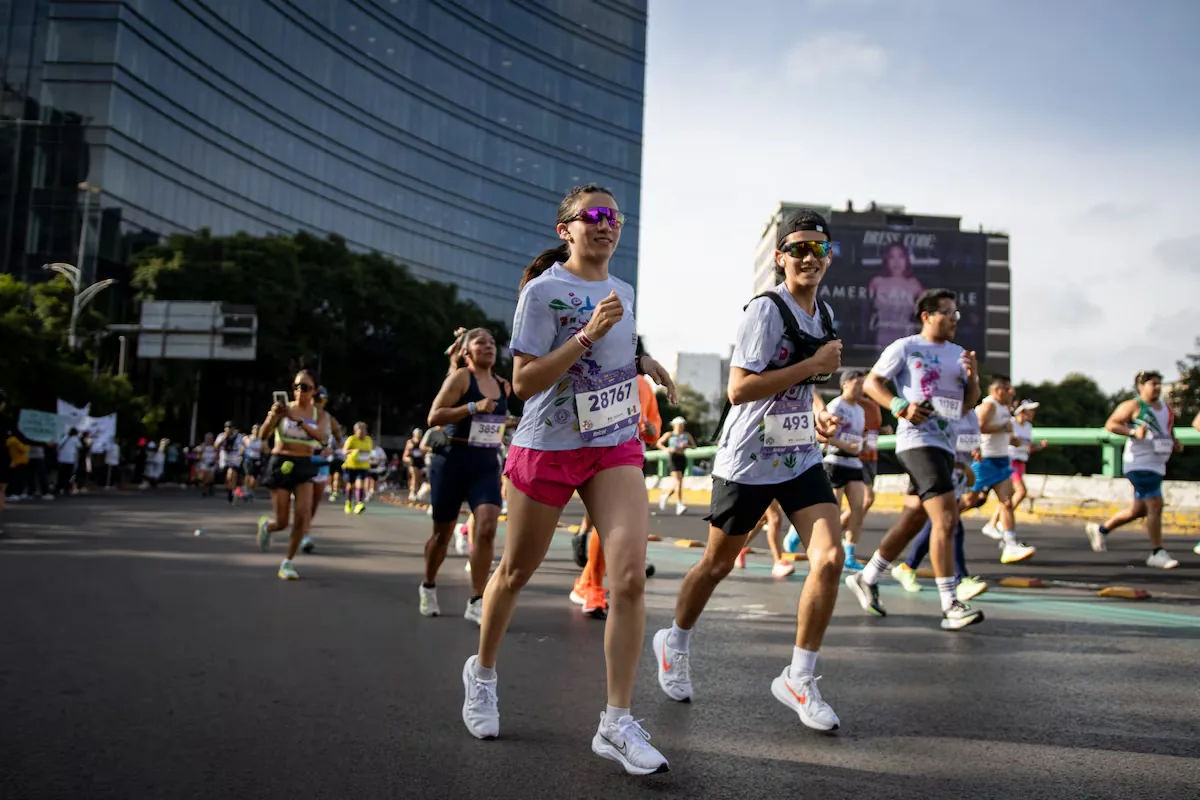
A pink line runs through the Mexican capital. It is the most visible sign of something that has been brewing for months. From Ciudad Universitaria to the Zócalo, crossing Insurgentes, Reforma, and Presidente Masaryk avenues, about 30,000 people will run a distance that only 1% of the world’s population has achieved: the 42.195 kilometers of a marathon.
Read more SER Catalunya expands its programming in Catalan and supports Barça
It was not always like this. Decades ago, there were no streets closed to traffic, crowds cheering from the sidewalks, commemorative medals, running clubs dressed in the same tone, or thousands of photos posted on Instagram. There were also no registrations sold out in minutes, frauds, reselling, or clandestine businesses trying to ride the wave of an industry that moves about 1 billion dollars in Mexico and more than 46 billion globally.
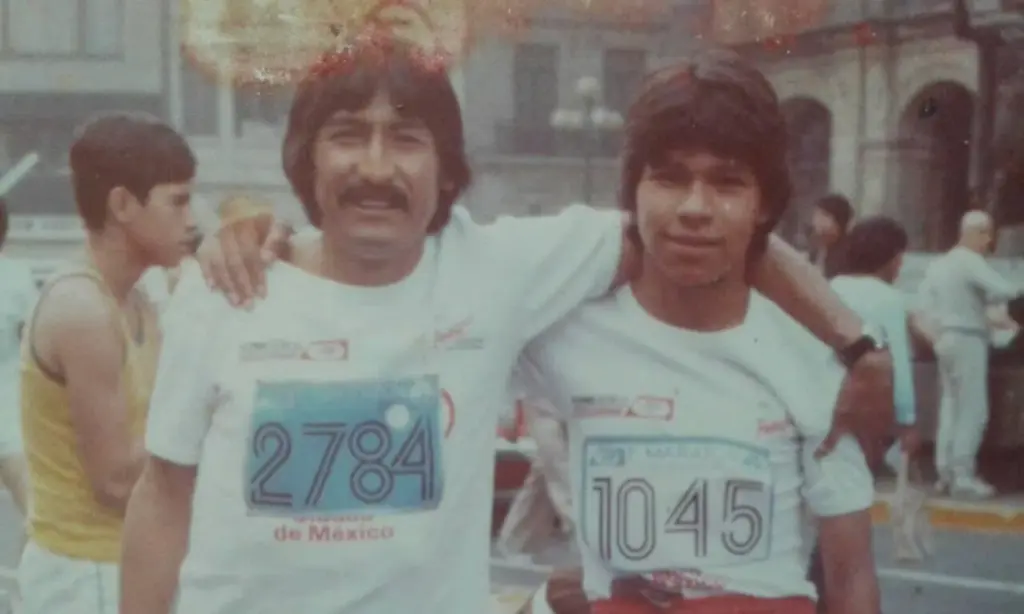
Javier Ramírez Torres ran the first Mexico City Marathon in 1983. He was 17 years old and had been training for a year on the team of the National Autonomous University of Mexico, within the College of Sciences and Humanities Plantel Oriente. At that time, he jogged for an hour and a half every morning before classes. He participated in 400 and 800 meters sprint events, achieving 57 seconds and two minutes 15 seconds, respectively, marks unattainable for most recreational runners. He felt that his “too skinny” body was not made for pure speed. His debut in long-distance races was a year earlier, in the first Fraternity Athletic Half Marathon, a route from the Zócalo to Ciudad Universitaria. He completed it in one hour and 41 minutes. “Not a very decent time,” he says. At that time, there were few sponsors and much disorganization.
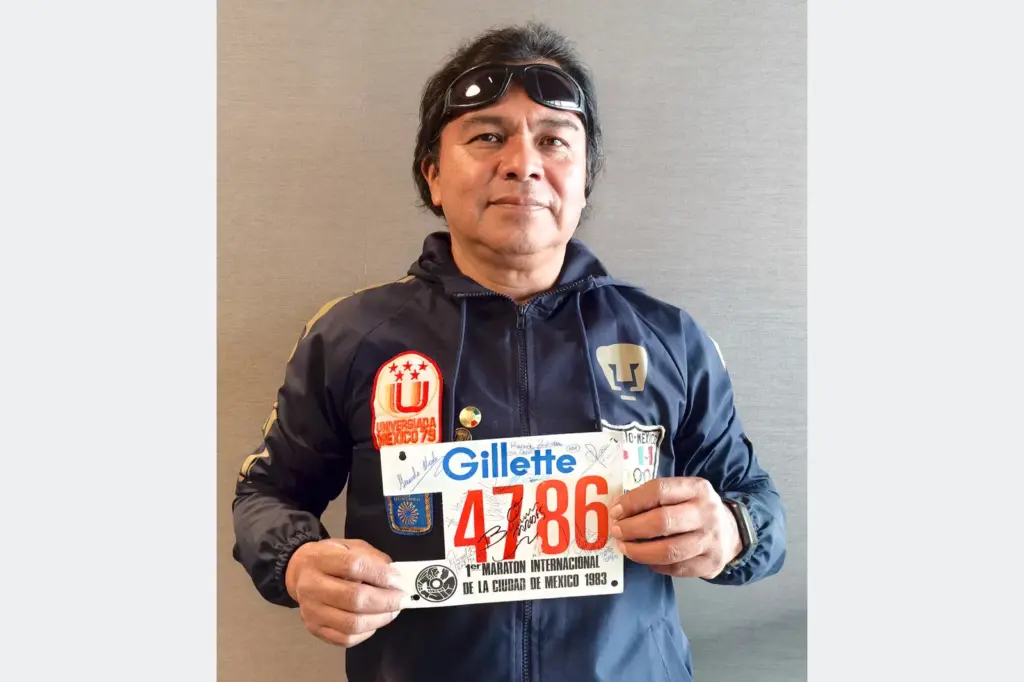
That September 1983, he ran from the Hermanos Rodríguez Racetrack to the Monument to the Revolution, a route that was never repeated. He still keeps the printed bib with the number 4786, with which he recorded three hours, 10 minutes, and 25 seconds. “I didn’t make a decent mark,” he says with the same modesty with which he talks about almost everything in his professional athletics journey. Of the 22,558 people who in the 2025 edition crossed the eight control points of the route, 62% took more than four and a half hours to finish.
From 1984, his team received sponsorship from the Italian laboratory Fernic, which covered travel, registrations, and specialized footwear that at the time could only be imported from the United States: if someone wanted Adidas or Nike shoes to run, there was no other option. Today, the running equipment market in Mexico is worth 697.8 million dollars, according to IMARC Group; footwear alone generates 303 million dollars a year, with a projected growth of 5.3% annually until 2034.
Javier never worried much about how he looked while running, only that the shoes were suitable for jogging on dirt, and he trained for more than a decade climbing the Cerro de la Estrella every morning in Iztapalapa, an inactive volcano with slopes reaching 2,460 meters above sea level. He doesn’t need statistics to notice the metamorphosis of his sport: it’s enough to open social media every weekend, where acquaintances and family post photos of some of the nearly 2,000 races organized each year in the country.
“We were very few who ran marathons. Nowadays there are many… We are still a small population nationally and globally, a low percentage, but the reality is that we are more and more,” says Javier Carvallo, director of Hub Sports and organizer of the Adidas Splits, a series of ascending distance races that serve as preparation for the capital’s marathon.
In 2014, when it started, it gathered 2,000 runners in a single event; 12 years later, there are four competitions with 8,000 athletes in total, and this year the bibs sold out in just 37 minutes. It is not an isolated case: the G15 by Gatorade, the Lululemon race, or the Mexico City Marathon and Half Marathon also sold their spots in hours, sometimes minutes. In 2026, for the first time, registrations for both events organized by the Mexico City Sports Institute (Indeporte) sold out months before the date: the 30,000 bibs for the Half Marathon were gone in two hours.
For Carvallo, there is a demographic and social status change reconfiguring urban athletics: “It is a global phenomenon, fueled by technology applied in clothing, footwear, watches, and apps, plus a very interesting fashion component.” The Splits metrics confirm it: the 15 to 29 age segment has grown rapidly and is beginning to displace the historic 40 to 49, the age when nightlife used to give way to health concerns. The 30 to 39 range remains the largest, with 34% of registrants, but the 15 to 29 group went from marginal to representing 31% in just two years.
The nine and 12-kilometer distances are designed for that young audience who debut there and get hooked on the promise of self-improvement and constant gratification. The isolation of the pandemic, the generational shift, and the emergence of new brands created, says Carvallo, “the perfect storm”: “Very interesting players in clothing design started to enter, turning running into something fashionable, something cool, and they also changed the game.”
One of those new players is the Swiss brand On, with its lightweight textiles, cushioning technology, and above all, a palette of ochres and neutrals that gave athletics a minimalist aesthetic, far from the fluorescent colors that dominated the industry for decades. In specialized forums, some of their models — which can cost up to 7,000 pesos — are not pointed out as the most efficient for performance, but they have become a must-have piece of the uniform displayed on Instagram. That appetite not only moves sneakers: it also feeds a parallel economy that starts where the line of sponsors ends.
The risk of being a runner
It is Thursday morning and Javier arrives at the World Trade Center in Mexico City, where hundreds of runners pick up their number and shirt for the 43rd edition of the marathon, which takes place on Sunday, August 30. He is not going to compete — he left long distances 16 years ago — but every year he participates in this ritual in his own way. He walks among the stands asking about materials, ingredients, and prices; among loud music, narrow aisles, corporate mascots, and lines to customize garments or enter raffles. It is not a comfortable space, but he moves lightly and goes through the same points several times, greeting old acquaintances from athletics, including Raúl González, the legendary Mexican racewalker and double Olympic medalist.
When Javier competed, he did so alongside thousands of people, but never with today’s crowds: there were few public calls, although he always ended up meeting members of other traditional clubs. He comes from a family of runners — his father and two brothers are also runners — for whom sport was always more than a competition. “The marathon is where we can commune with ourselves to delve into our thoughts and endure this tough test […] it is a personal challenge. There you see exactly what level you are at, whether you trained well or trained badly […] you can’t just say ‘I’m going to run with my heart.’ That doesn’t work,” he says.
And yet, every year, weeks before the event, thousands of people try to run it without preparation or official registration. On the first day of number delivery, there are at least four people offering numbers “at price” with an improvised sign. Days before the competition, offers appear on social media from those who give up their spot due to injury or mishap, along with scalpers who buy several registrations to resell them for up to double. It is the same scheme that no one has managed to stop in ticket reselling for mass events, and it has led to direct frauds — access to competitions that never existed — which prompted alerts from the Federal Consumer Protection Agency in January this year. Authorities, however, did not foresee a more sophisticated irregular market.
Read more The Notting Hill Carnival turns sixty and maintains the spirit of protest against racism
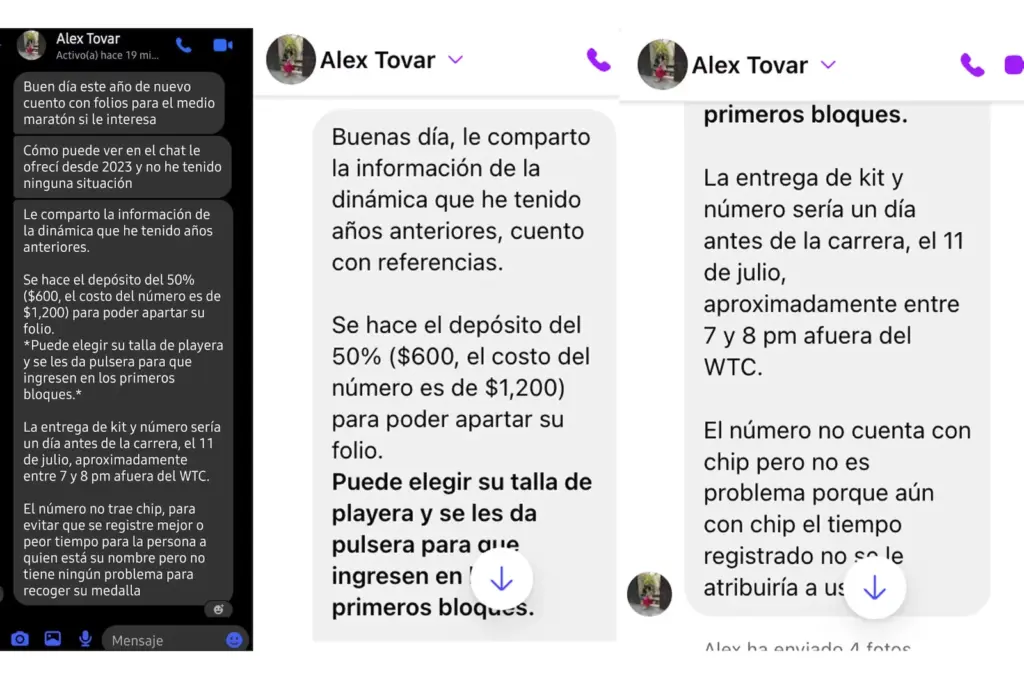
In April 2026, a Facebook profile named “Alex Tovar” began offering numbers for the Half Marathon that had already been declared sold out: the complete kit, with official shirt and sponsor gifts, for 500 pesos above the list price. The condition was that these numbers did not have an official timing chip — the buyer would not be in the race’s timing database but could cross the finish line, receive the medal, and post the photo. The profile, which is still active, claims that its clients since 2023 can confirm it is not a scam, and delivers the packages in person at the WTC doors.
There is a second modality, operated by supposed “promoters” who identify as “Runderful”: they promise a personalized number with a chip in the buyer’s name — identical in every way to the one registered through the normal route, but much more expensive — arguing they have direct access to the institutional registration platform. For the Marathon, they charged 1,800 pesos; four of their clients confirmed having obtained access to the Half Marathon, Adidas Splits, and the Gatorade race this way, and were waiting the following week to buy a spot in Nike’s After Dark Tour, whose numbers sold out in 10 minutes.
The practice is known among private organizers. “We must pay attention and try to understand where this little hole is through which they are sneaking and offering these personalized numbers, when in the end there is a registration you have to complete. And if we have a soldout event, where are these numbers coming from?” Carvallo wonders. All these races have different platforms, brands, and sponsors; the only thing they share is that they need permission and endorsement from Indeporte, the main organizer of the Mexico City Half Marathon and Marathon. In return, private organizers must comply with civil protection and pay between 101,742.90 and 305,227.65 pesos, depending on the route distance.
In the Mexico City Marathon and Half Marathon, the structure combines public and private funds. Since 2015, Telcel has been the main sponsor; since 2002, Emoción Deportiva — of Grupo Martí — operates the registration commercialization and the technological registration platform. The terms of that agreement remain confidential, at least until after the event, according to the response to an information request submitted for this report; neither institution agreed to give an interview.
What is public, according to the National Transparency Platform, is that between 2017 and 2025 Indeporte spent more than 111,372,457.30 pesos organizing both events. The highest contract in that period, 14,204,464.19 pesos, was awarded to Televisa for the television broadcast of the 2025 edition; for 2026, two medal suppliers signed identical contracts of 3,139,134.95 pesos each.
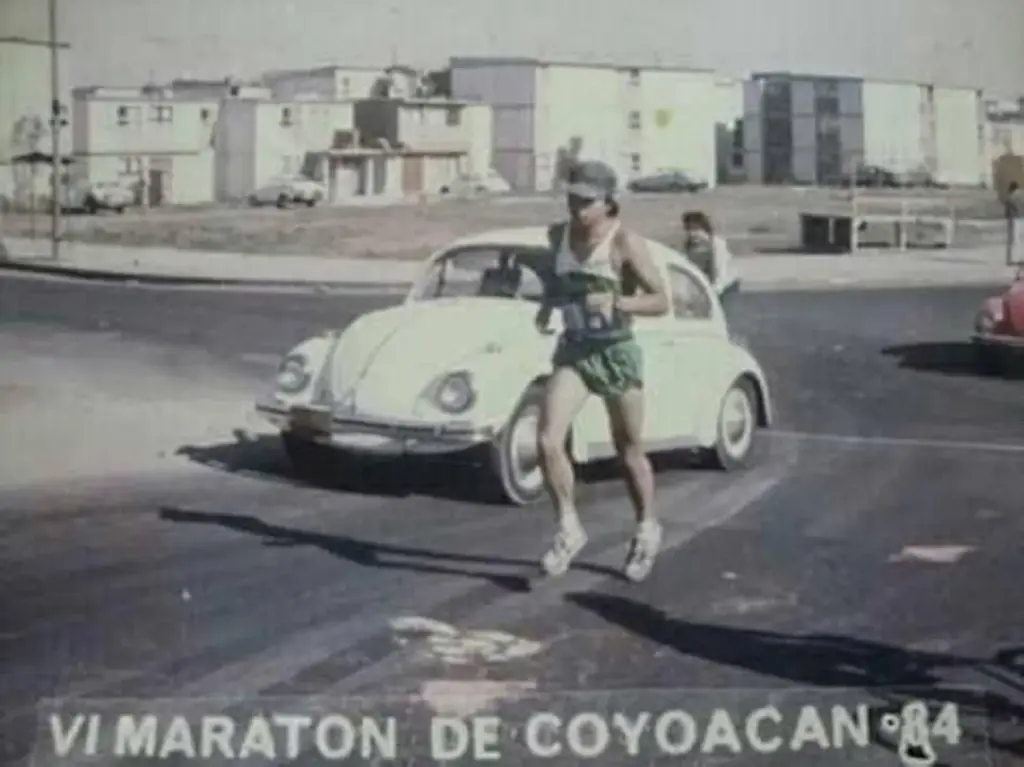
On his chest, over a Pumas jacket, Javier wears four patches that he sewed himself: one from the 1979 World University Games in Mexico, where Italian Pietro Mennea ran the 200 meters in 19.72 seconds and set a world record; another from the 1972 Munich Olympic Games; one from the 1975 Pan American Games in Mexico; one from Moscow 1980, where he arrived after qualifying in the Coyoacán Marathon; and one more from the Olympic brotherhood between Tokyo and Mexico 1968. He has lost the exact count of the marathons he has run but keeps in a folder the numbers from the races that marked his life, and today he carries it with him because he knows he will meet athletes like him. He smiles as he recounts how he got Raúl González to sign one of those fragile papers this very morning.
He shows the number from that first marathon and recalls how the 7,500 participants overwhelmed the authorities’ capacity: there were no time-based start blocks or barriers to prevent pedestrians from passing. “It was almost impossible to make your way to cross the finish line through the crowd,” he says. That time, at least 11 people cut the route to steal the victory from those who had run the full distance. “There have always been people who cut the route, but now it is done with absolute shamelessness,” he laments. In 2018, when he went to the Zócalo to cheer on runners in the last stretch, he saw a man arrive among the first wearing loose pants and a long-sleeved shirt, without a drop of sweat. “What do they hope to achieve by cheating? I think they only care about being seen in their five minutes of fame and getting the participant medal, but honesty and the value of running the full marathon, where is that?” he laments.
Running the Mexican way
The Mexico City Marathon is one of the most accessible in the world: while the World Marathon Majors circuit races — Boston, New York, Chicago, London — charge between 200 and 350 dollars for registration, the Mexican fee remains below 50 dollars for local residents. But that accessibility has a cost: the capital’s race does not reach the economic impact or prestige of the major global competitions. New York generates 692 million dollars in tourism; Berlin, 510 million; Mexico City, according to its own organizers, barely reaches 10 million.
To that modest impact is added the reputational damage of massive fraud. In the 2017 edition, the collectible medals that formed the word “M-É-X-I-C-O,” thousands of people joined the route at kilometer 35 to run only the final stretch and claim the medal. An investigation by the specialized portal Marathon Investigation found that up to 36% of participants had not registered their passage at all timing points; under international pressure, the organizing committee had to disqualify 5,806 runners, about 20% of those registered.
“We are going to compete properly against Boston, Chicago, London, Berlin, and New York, which are the marathons par excellence. They are number one and have an advantage in the number of runners who finish the competition,” said Horacio de la Vega, director of Indeporte at that time. Nine years later, there is no evidence that the practice has changed, although there is no way to know for sure: the number of people who do not complete the eight control points is no longer public, and official records only keep data of those who did run the full 42 kilometers. “Why register for a half marathon or marathon if what you want is to run five kilometers? Register for a five-kilometer race. And it is just as plausible, just as recognizable; you don’t have to run 42, you are not more or less of a person for running 42,” says Carvallo.
Javier left competitive athletics at 26, when the need to enter the formal labor market as a designer outweighed training. He continued running on his own until joint wear, recurrent sprains, and an Achilles tendon injury prevented him from continuing in long distances.
From the back pocket of his pants, he takes out a small medal with a ribbon in the colors of the German flag: it is from the 2010 Berlin Marathon, the last one he ran, with more than four hours on the clock. He wasn’t planning to compete that day — a friend gave him his registration at the last minute — and he ended up compensating with mental endurance what he lacked in training. “The ideas of quitting due to fatigue or the route’s altitude start, and that is the moment to use our mind to overcome and find the extra strength to finish. I forced myself not to slow down, it hurt, but in my mind, I knew it was temporary,” he says.
That is why he is critical of those who cut the route or run just to get an image to post on social media, although he also celebrates the growth of the sport and does not want to be left out; he plans to get certified as a coach to train his niece. “You must have foundations, seriousness, and, besides, knowledge… I need to look for my things because I have many notebooks where I wrote everything down,” he says. For now, Javier Ramírez will keep going to the route every year to watch the contingents pass, to remember better times, to cheer those facing the challenge, and perhaps someday, to lace up his shoes again to run through the city.
Read more Five injured, three of them in critical condition, after a car overturns on a rural road in Lleida