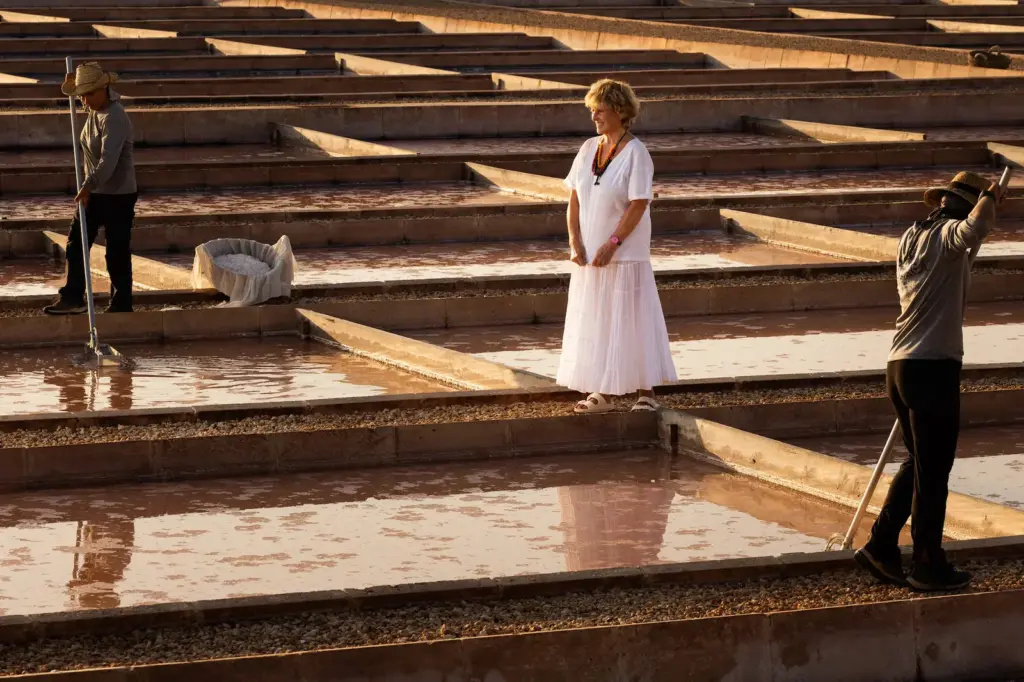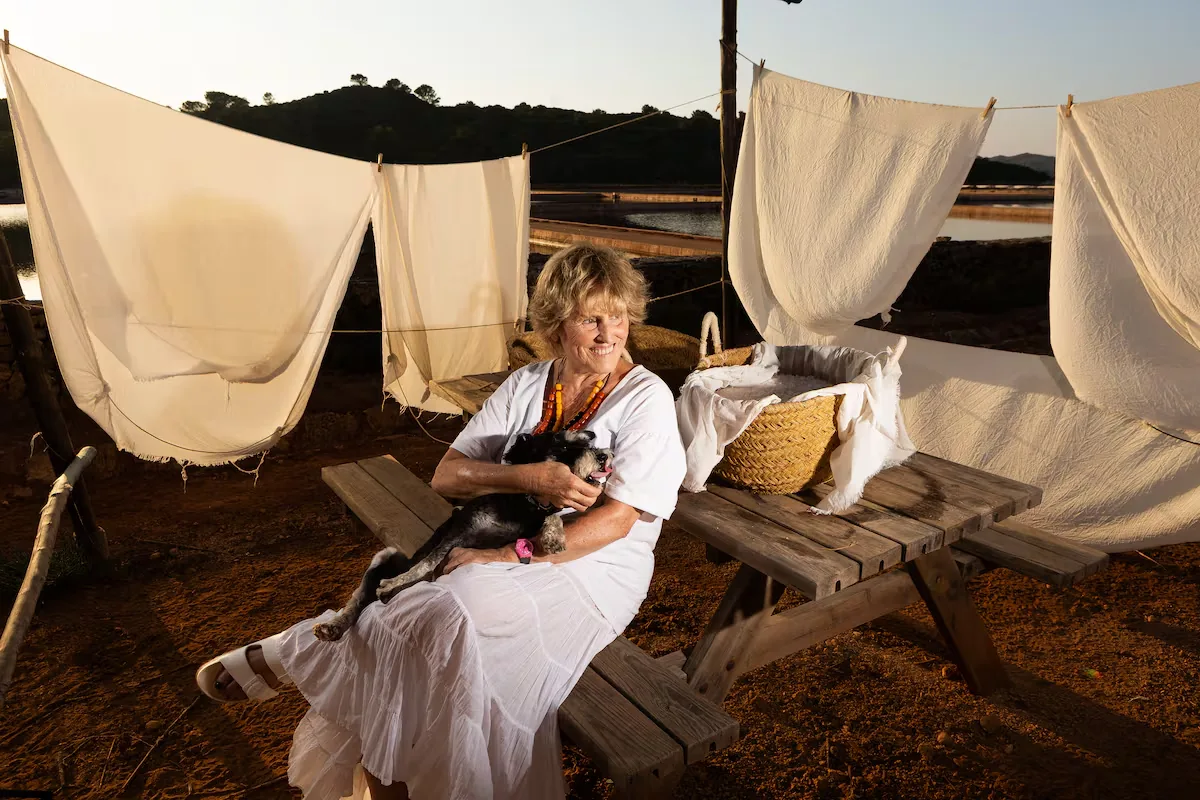
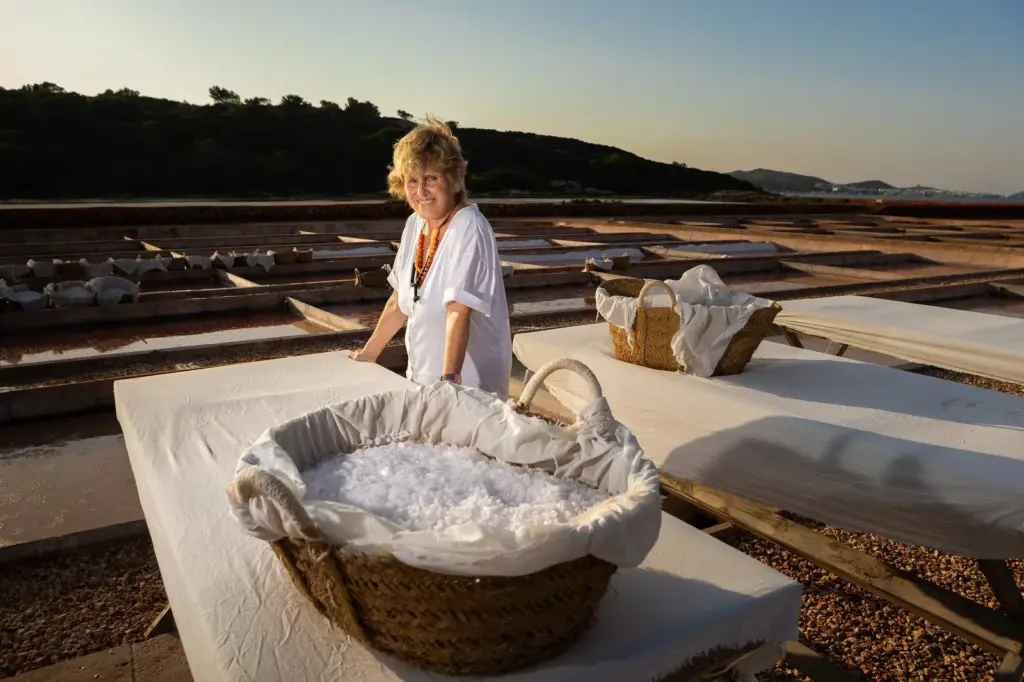
She is the longest-serving presenter in the most promiscuous medium. Mercedes Milá (Esplugues de Llobregat, Barcelona, 75 years old) has dedicated more than half a century to television, where she conducted so many interviews that she no longer recognizes some of the characters who once sat on her set: “Aznar now seems like a different person to me. But in his first term, I defended him a lot because I believed he was doing well.” Journalism was not the initial plan. It was her aunt María Asunción who discovered her vocation and encouraged her to study the degree after noticing her communication skills in the letters she wrote. “The camera has been my friend since the day they told me: ‘When you’re in trouble, hold on to that little red pilot.’ And that’s what I’ve done.” She chooses a beautiful landscape for the interview with EL PAÍS, the Salinas de la Concepción in Menorca, recently photographed by Steve McCurry, author of the famous portrait of the Afghan girl. Very close to there is where the warrior rests. With Me meto en un jardín (La 2) she has returned to doing what she loves most: asking questions.
Question. “When I started in television, my life began,” she said on one occasion. What was Mercedes Milá like before? Don’t tell me shy.
Answer. Well, yes. When my parents told me to go greet some friends in the living room, I would turn as red as a fire extinguisher. And from that shyness came this beast.
Q. And when was the conversion?
A. Honestly, I don’t remember. I do know that when I was shy, I had a hard time. I was also fearful.
Q. Your father was a member of Don Juan’s Private Council, the grandfather of the King. What was the best advice he gave you?
A. He wasn’t much of a giver of advice. You had to pay attention to what he said and take from it what would serve you. The best advice I received from him was when, at the funeral, with his coffin beside, the priest said: “When he arrived here, the first thing José Luis Milá said was: ‘How can I help?’”. And that’s what he did throughout his life: help.
Q. You have done about 3,000 interviews to help the public get to know all kinds of characters better. Do you think the audience has come to know you?
A. I think so because I have never hidden. I have never tried to be or say things on television different from what I would do in normal life. And that naturalness has helped me a lot.
Q. You mentioned that on one occasion they dispensed with you for being considered “conflictive.” Do you think you are?
A. I’m combative, annoying, if I think something needs to be said, I don’t keep quiet, but I’m not conflictive with my colleagues or bosses.
Q. What would have happened if there had been a Political Science faculty in Barcelona, which was what you initially wanted to study? How far do you think your interest in politics would have taken you?
A. You never know. If the degree had been as boring as Philosophy and Letters, which I dropped, I wouldn’t have gotten anywhere. Otherwise, I could have collaborated with a party or run for elections and ended up in Parliament. How far I am now from all that!
Q. What do you think would have been the strongest idea of your electoral program, your big promise?
A. I would get very close to the English constituencies, where people have the right to have their representative listen to them and follow up. I would like to adapt that way of doing politics to Spanish politics.
Q. The share figure of a television success today is the percentage that surely would have caused a program to be canceled 20 years ago. New channels appeared, pay platforms… Will those 40% audience figures return or have they become extinct like absolute majorities in Congress?
A. They will never ever return. When I started, there were only two channels and success was measured by people’s reaction on the street. The audience is never negligible, as many colleagues insist on repeating. Me meto en un jardín is the program that has given me the most happiness. But when they told me the audience figures, I thought they were kidding me. They were very happy with 4.6% and I told them that with that they would fire us the next morning. But it was the most-watched program on the channel. I had to rethink and evaluate audiences very differently. Also, now it can be watched on demand.
Some contestants went on to look for work and couldn’t get it because they had been on ‘Big Brother’. That drove me crazyMercedes Milá
Q. What’s the trick to staying on television for so many years?
A. I have finished all the programs I started except one on Antena 3 that my husband [producer José Sámano, deceased in 2019] and I asked to be taken off because it wasn’t getting the audience they were demanding from other colleagues. My record is with Big Brother: 15 editions. That was crazy and I paid for it with blood, but I loved it so much that I didn’t care if I didn’t sleep enough. In the end, it cost me significant troubles.
Q. And why do you think they keep calling you to propose formats like Me meto en un jardín?
A. I work very closely with María Ruiz [producer] at Zanskar and with David Moncasi [director] and I’m always pushing them to come back. It’s not that they call me, but I’m there, bothering them, and in the end an idea comes out and in this case, TVE accepts it.
Q. You defended the format of Big Brother tooth and nail as a sociological experiment and often, when it was criticized, you highlighted the generosity of the contestants. Do you think they were aware, especially the first ones, of everything they were giving by participating in the contest?
A. Twelve contestants entered without knowing where they were going, although the scriptwriters and character scouts had explained the format. Viewers may believe everything is prepared, but it’s not true. Entering the Big Brother house is entering a place where you are controlled 24 hours by cameras that you sometimes see and sometimes don’t, and by microphones you don’t know where they are. They will get everything they can from you, nothing belongs to you, so entering there is generous and brave. Some suffer much more than others, and some succeed much more than others. There is a Big Brother gene that is now more deteriorated, but when I experienced it, it was very strong.
Q. They probably lost anonymity forever.
A. The most prominent perhaps yes, but the less prominent, who are many, no. But the saddest thing is not losing anonymity. It’s that afterwards they went to look for work and couldn’t get it because they had been on Big Brother. That drove me crazy. I wanted to fight so that wouldn’t happen, but it was fighting against too powerful an army. So being a Big Brother contestant is not paid. And many people criticize them without knowing what those kids are giving.
Q. And that the contestants are not fully aware, especially at the beginning, of what they are giving, isn’t that taking advantage of them a bit?
A. The word is not taking advantage. Their not being aware makes them more natural and then they suffer less.
Q. Do you watch the program today? Are you still interested?
A. No. When I left Big Brother I watched it a couple of times, but it seemed very different from what we did and I stopped watching.
Q. In what way different?
A. They put very different tests, the house was bigger and more luxurious each time… If you have been in the best place in the world of television, and I think that was the best program, it’s very hard not to think: “I would have done this differently.” There were nights when [the contestants] were hungry because they hadn’t passed the tests and I called the people on duty and told them to feed them, that this was not a prison, but a contest. I told them: “They’re like Carpanta!” and they answered me who Carpanta was (laughs).
Q. At what point in your career do you think you were most influential and why?
A. The most influential was when I interviewed more recognized people. The influence in entertainment programs, like Big Brother, is much less.
I was very good friends with Miguel Bosé. And I say was. I loved him a lot. But right now, if I had to bring him to a program, I would have difficulties because I wouldn’t want to deceive him or confront himMercedes Milá
Q. Tell me an interview you wished you had done and why.
A. For a while I wanted to interview Isabel Preysler and I tried, but I gave up because she was very nice, but always said no, and I lost interest. Today I would like to interview the emeritus king without anyone being able to control us. The monarchy creates monsters. If you read any history book of any country you find that: power destroys them in such a way that it makes them what you never thought they could become.
Q. Have you ever spoken with Juan Carlos I?
A. Yes, but very little. I have delivered messages from my father.
Q. And were those messages directly from your father or from King Juan Carlos’s father, Don Juan, through yours?
A. No, never. My father was on Don Juan’s Private Council and when Don Juan saw there was nothing to be done because the son had already admitted everything Franco had asked, my father stepped aside because he understood it was being invaded by Francoists.
Q. It’s curious the opinion you have of the Monarchy coming from such a monarchist family.
A. Yes, absurdly monarchist. Because if you analyze coldly what a monarchy means, it doesn’t pass the test. That’s why I admire Letizia so much, a journalist like me who fell in love and in good faith thought she could live with all that. They have made her go through a horrible time and she has survived because she is very intelligent and because that marriage must love each other a lot, because a normal person ends up like Diana of Wales, who ends badly. My uncles were all very monarchist because there wasn’t a very rational analysis of what the monarchy meant as there is now in my house.
Q. Do you think Queen Letizia has helped improve the image of the Monarchy?
A. Yes. Not even in 200 years could they pay Letizia Ortiz for what she has done for the Spanish monarchy.
The only one who made me cry with what he wrote about me was Ansón. We were very good friends, but when on the program Buenas Noches I invited Cebrián before him, he started writing terrible thingsMercedes Milá
Q. And which interview would you have preferred not to do or would not do again?
A. Once, Xabier Arzalluz didn’t answer any of my questions. I got fed up and halfway through the interview, live, I said: “Are you going to answer any of the questions I’m asking? Because if not, you’re leaving.” And he left. Later it was very violent because after the program we always went to dinner with the guests and he came. I was dying of embarrassment for what I had done, but he acted as if nothing had happened.
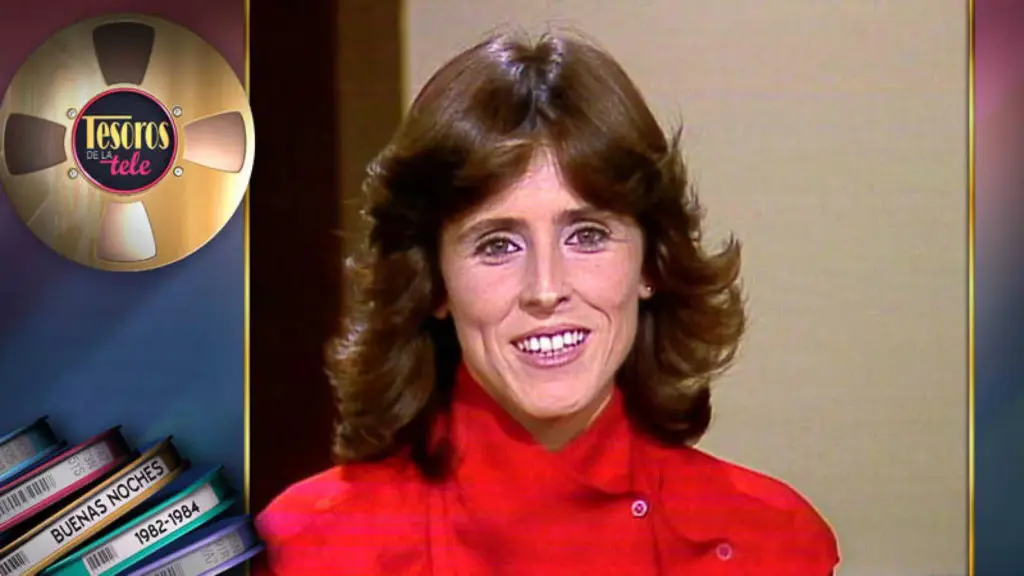
Q. “Mercedes Milá is half ugly, half pretty, half smart, half Catalan, has the charm of the protagonist of Marty. Without any other social condition, brilliant, than her humble condition as a woman —and an adorably absent-minded woman—, she gathered a few men to talk about abortion, in front of the tele-thing,” wrote Francisco Umbral in a column in EL PAÍS in 1983. How much of this paternalism did you perceive and how long did it last?
A. It didn’t affect me because I had a shell. The only one who made me cry with what he wrote about me was Luis María Ansón. We were friends. He was very monarchist and had been very close to my father. He had helped me a lot. Once I already had with Iñaki Gabilondo the name of a program we were going to do, Queremos Saber, the budget, everything…, but they stopped it because at SER they said I was conflictive. Ansón talked to them and they readmitted me. He became almost like a father in Madrid. But when on the program Buenas Noches I invited Juan Luis Cebrián [first director of EL PAÍS] before him, he started writing terrible things. I took that very badly. That’s when I became immune to crying, but I cried a lot. I stopped talking to him. It’s the only time in my life I’ve had such a bad relationship with someone close to me. That he revealed the content of our conversations in the newspaper he directed seemed like a betrayal to me.
Q. Do I ask for forgiveness?
A. No.
Q. And even if it didn’t affect you because of that shell, did you perceive a lot of paternalism at the beginning: men on the set thinking less of you for being a woman, for being young or for being a young woman?
A. Having a bad temper has helped me a lot. Maybe it’s not that much, but people think it is.
Q. You mentioned the program Queremos saber. What would you like to know now? What question would you like to be answered?
A. I would like to know why they lie so much. The case of Ábalos [José Luis, former socialist minister sentenced to 24 years in prison] or Cerdán [Santos, former PSOE Organization Secretary investigated for several crimes] have been blows that, honestly, I have taken very badly. And you see they keep laughing. The feeling is of an ethical lack very hard to reach.
Q. When Miguel Bosé came to one of your programs on Antena 3, the rumor had spread that he was dying of AIDS. You helped him deny the rumor and you became very good friends. Today he is the one spreading rumors. Fifty-two years into your profession, is that still the most frustrating thing: the lie?
A. On television, the lie is seen. There is a gesture in the eyes, a way of fleeing… It’s easy to lie if you do a monologue, if you don’t have someone in front of you to stop you, which is the obligation of a journalist against lies, but if the journalist is there it’s very complicated to lie. I was very good friends with Miguel. And I say was. I loved him a lot. He was on all the programs I did, but right now, if I had to bring him to a program, I would have difficulties because I wouldn’t want to deceive him or confront him.
Q. Your defense of Zapatero on La revuelta went viral. Do you really think that Broncano, by not wanting to take sides on whether he is innocent or not, is “cowardice”?
A. It’s very different to be a presenter and a guest. He was in a much more difficult position than me, who could say whatever I wanted. I told him he was a coward, but it was a joke, a quip. What I do see is that people who believed Zapatero was innocent are starting to weaken and that worries me a lot because I still think he is innocent.
Q. Did you notice that trick of the eyes, the look, to check if Zapatero was lying in the TVE interview?
A. I didn’t see it. I have it pending because I also love Javier [Ruiz].
Q. What do you think was the last great television moment?
A. The World Cup final.
Q. And a television moment you would like to see?
A. The King and Queen talking without masks about politics, society, sports, food… about everything that matters to us.