Morocco has not officially commented on a possible visit by Felipe VI to Ceuta, although the media have echoed the announcement made this Monday by the Prime Minister, Pedro Sánchez, on Cadena SER. A political official and analyst of bilateral relations, who prefers not to be named due to the sensitivity of the issue, stated after the interview with the head of government that “a visit by the King of Spain to Ceuta at this time would only serve to rekindle the crisis.” “Now it is necessary to reduce tension, try to find solutions for the immediate return of the people who crossed the border [in the migratory surge of July 30 and 31]. That is what matters: finding pragmatic solutions to these serious problems, given the situation in Ceuta,” highlighted the Moroccan political source consulted in Rabat.
Read more A 20-year-old young man seriously injured in a stabbing attack in San Blas
He also considers that “facing a policy of symbols and nationalist escalation, it is better to calm the spirits,” he concludes in his analysis ahead of the legislative elections called in Morocco on September 23. “A visit by the Spanish King will always be seen as a provocation that will not help to fix anything,” he warns. “Morocco has stated its position on Ceuta and Melilla and Spain has as well. But this dispute should not prevent us from continuing to work together.”
He agrees in warning about the climate of Moroccan political hypersensitivity the Arabist and expert in bilateral relations with Morocco Bernabé López García. “Three weeks before the legislative elections, the situation is very peculiar. Morocco is treading carefully,” says this honorary professor at the Autonomous University of Madrid.
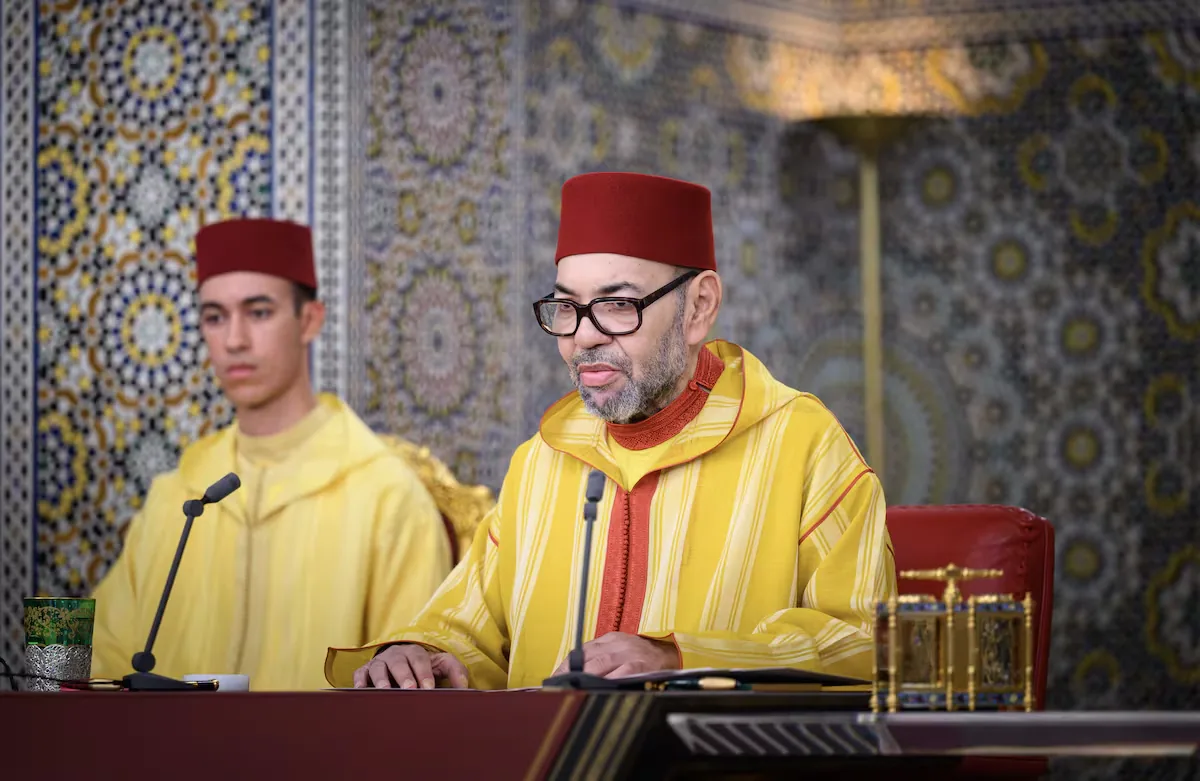
“Morocco’s response would in any case be very measured, as there are many sensitivities at stake,” he explains. “Mohamed VI has already been given a history lesson at a religious event to subtly express the official position on Ceuta and Melilla,” he specifies referring to the speech by the Minister of Islamic Affairs, Ahmed Tufiq, who referred to the “occupied cities” during a religious ceremony presided over by the monarch in which he alluded to the historic Moroccan claim over Ceuta and Melilla. “The King of Morocco may be forced to resort again to some subterfuge if he wanted to warn against a visit by Felipe VI to the autonomous cities.”
Read more Lamine joins Barça’s offensive wave against Rayo
Mohamed VI was more explicit in 2007 when Juan Carlos I traveled to Ceuta and Melilla, and condemned through an official statement “the regrettable visit” as a “counterproductive step” and against “the patriotic feelings (…) of the Moroccan people,” in a “nostalgic act of a dark and decidedly overcome era.” The declaration was made shortly before the public speech of the monarch on the occasion of the 32nd anniversary of the Green March on Western Sahara, in which there was no explicit mention of King Juan Carlos’s visit to Ceuta on that same date.
The statement from the sovereign of the Alaouite dynasty was released in parallel with the withdrawal of the Moroccan ambassador in Madrid, a gesture that surprised both the then Prime Minister, José Luis Rodríguez Zapatero, and his Foreign Minister, Miguel Ángel Moratinos, both known for their close understanding with the Maghreb country.
The Minister of Justice, Abdelatif Uahbi, has so far been leading on behalf of the Moroccan government during the Ceuta crisis to demand a negotiation process over its sovereignty, which has been flatly rejected by the Foreign Minister, José Manuel Albares. The head of Spanish diplomacy emphasized in 2022, after the shift by the Sánchez government on Western Sahara, that Rabat and Madrid had reached “the mutual commitment to avoid the use of unilateral sovereignty claims and actions that may offend the other party.”
Read more The Supreme Court definitively authorizes the construction of Trump’s ballroom at the White House