The final communiqué of the Shanghai Cooperation Organization summit has shown the strategic priorities of China and India. The leaders of the two great nuclear powers of Asia have signed their support for Iranian sovereignty and the end of the war unleashed by the United States through diplomacy, but the document did not include a single line about the Ukraine conflict nor did it advocate for its negotiation.
Read more Increase of the PGU in Chile: how much the Universal Guaranteed Pension rises in September 2026
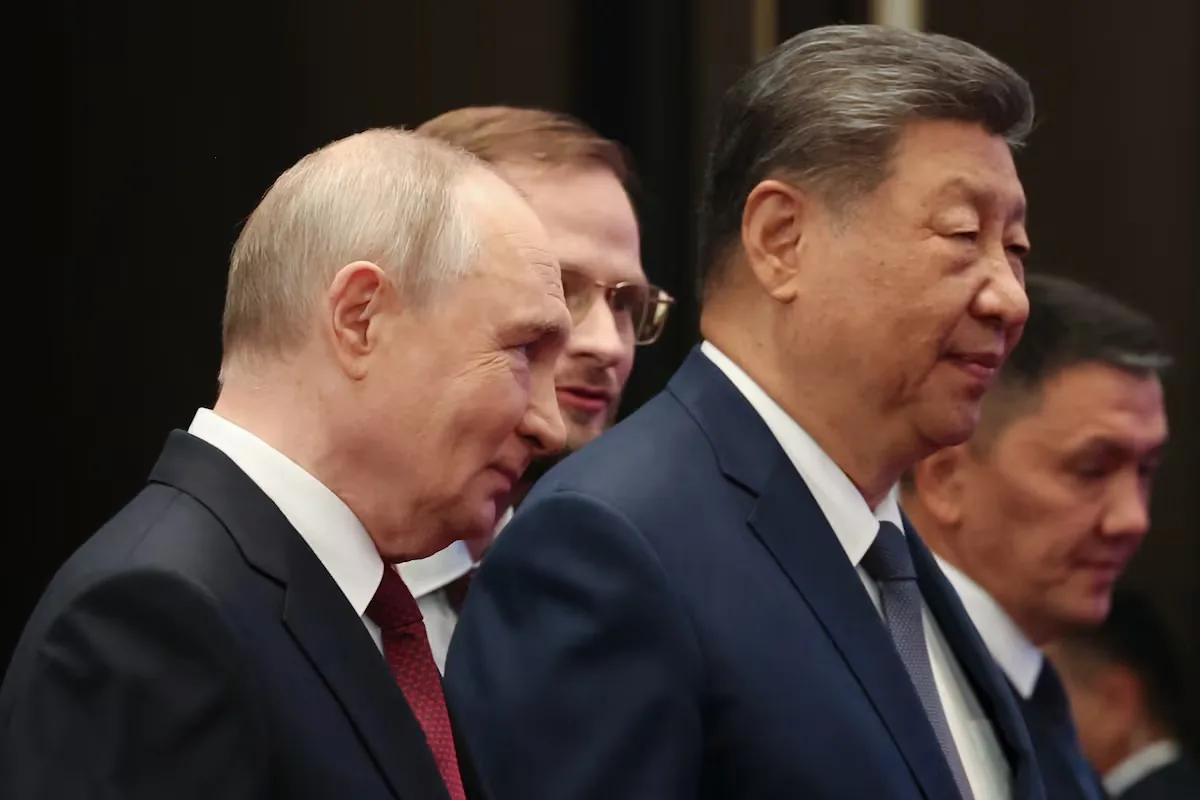
The meeting in Bishkek, the capital of Kyrgyzstan, was the first major international summit after Washington and Tehran resumed their attacks this weekend for the first time since July. Present at the meeting were the presidents of Russia, Vladimir Putin; China, Xi Jinping; and Iran, Masud Pezeshkián, as well as the Indian Prime Minister, Narendra Modi, and other international leaders, including the heads of Turkey, Armenia, and Kazakhstan.
Tehran extended an unexpected hand to Washington this Tuesday. “Iran will act reciprocally immediately if the United States again fulfills its commitments under the provisional agreement signed in June,” Pezeshkián stated during the summit. “I say it clearly,” the Iranian prime minister reiterated. “If the United States fulfills its commitments under the memorandum of understanding, the Islamic Republic of Iran will respond reciprocally.”
His words coincide with the resumption of U.S. attacks on Iranian targets on Sunday, when two Iranian launchers were bombed on Larak Island in the Strait of Hormuz. Tehran responded by launching missiles against two U.S. bases in Jordan.
The final declaration of the Bishkek summit consists of a preamble and four sections in which they call for “sustainable international peace” and denounce “double standards” in judging conflicts, recalling “the indivisibility, interdependence, and interrelation of all human rights” and their universality. However, they only mention the U.S. war against Iran and not the Russian invasion of Ukraine.
“The member states of the Shanghai Cooperation Organization express their deep concern about the events in the Middle East and the vicinity of Iran. They reiterate their condemnation of military attacks against Iranian territory, which have caused numerous civilian casualties and serious damage to the country’s economy,” the communiqué denounces.
“These actions violate the principles and norms of international law and the United Nations Charter,” the final declaration adds. It also includes condolences to the Iranian people “for the tragic death of Supreme Leader Ali Khamenei,” assassinated on the first day of the war during a surprise bombing.
The leaders of China and India have spoken outside the communiqué about the conflict in Eastern Europe and have advocated for diplomacy, while their economies benefit from their support of the Russian war machine.
Read more La Ventanilla, the Oaxacan paradise of the American crocodile
“In areas of international and regional conflicts, such as Ukraine, the Middle East, and Afghanistan, China is willing to strengthen coordination with all parties, adopting an approach that addresses both the symptoms and causes of the problem and promotes a political solution,” Xi Jinping declared.
One day earlier, Modi stated in front of Putin that humanity “demands the end of the war.” However, his nation has become Moscow’s main oil client during the war, and in recent months has sold the fuel with which Russia has alleviated the shortages caused by Ukrainian bombings.
Putin, who launched the largest war Europe has seen in more than 80 years, has advocated avoiding conflicts. “I would like to remind you, dear friends, that today, September 1, marks the beginning of World War II. We must do everything possible to eradicate the provocation of armed conflicts from international practice.”
Furthermore, the Russian leader assured during his speech at the plenary session that “the potential of the UN seems far from having been realized,” and advocated strengthening its mechanisms despite the United Nations Secretary-General, António Guterres, having unequivocally condemned Russia’s violations of the organization’s principles with its invasion of Ukraine.
Russia received drones and other weapons from Iran, and Tehran counts on Moscow’s support in its war with Washington. The director of the Russian agency for technological-military cooperation abroad, Dmitry Shugayev, indicated this Tuesday that the main focus of their aid to Iran now is air defense systems, although “the export of other types of weapons” is also being discussed, including light weapons and aircraft.
Putin pleaded during his speech for the Shanghai Cooperation Organization to support Russia in circumventing sanctions. Modi and Xi, leaders of the two countries that have most supported the Russian economy since the invasion of Ukraine began, listened attentively. “The organization’s development bank should be as independent as possible from the financial systems of those countries that use economic instruments as a weapon to gain unilateral advantages in international affairs,” the Russian leader declared.
Russia, China, and India have also expressed concern about the military space race, at a time when the United States is fine-tuning its Golden Dome, a revolutionary and very high-cost defense system capable of protecting it from advanced aerial threats, including ballistic, hypersonic, and cruise missiles. The signatories of the Bishkek summit “support maintaining outer space free of weapons of any kind” and demand compliance with existing treaties, which exclusively provide for the peaceful use of space.
Read more The OAS Foreign Ministers and Nicaragua’s Self-Determination