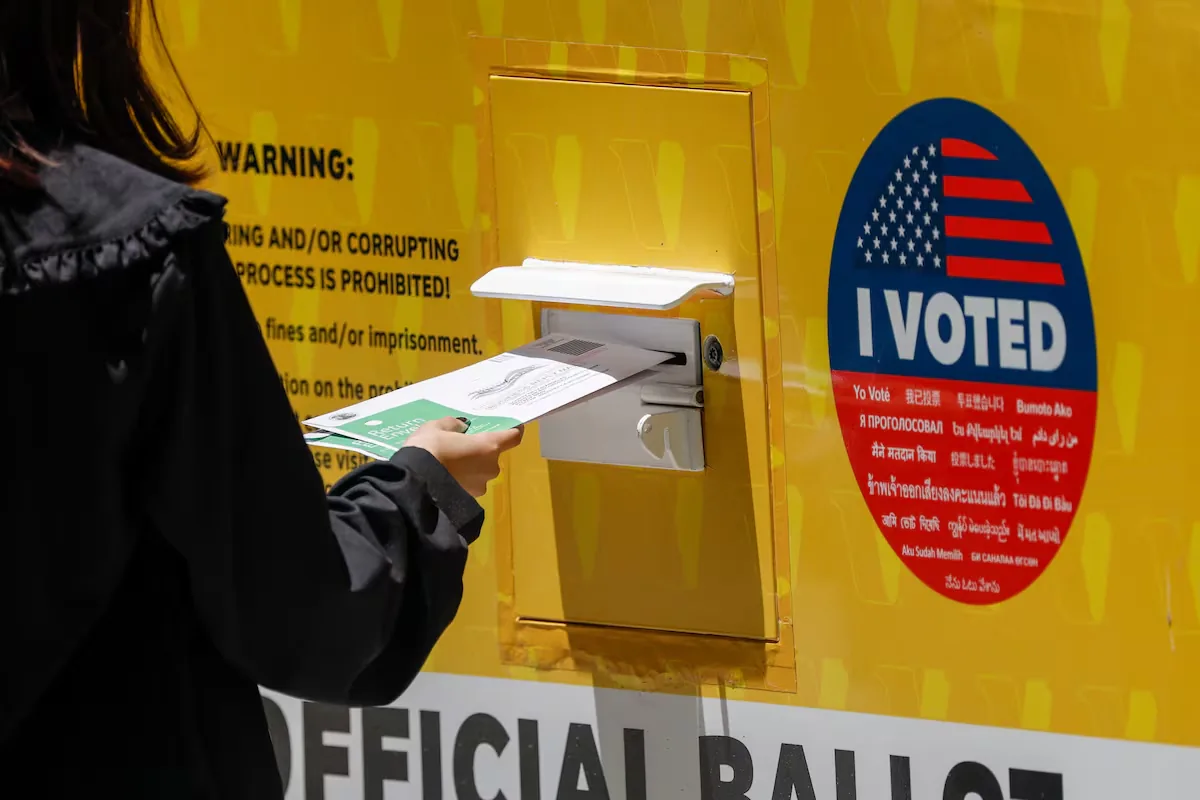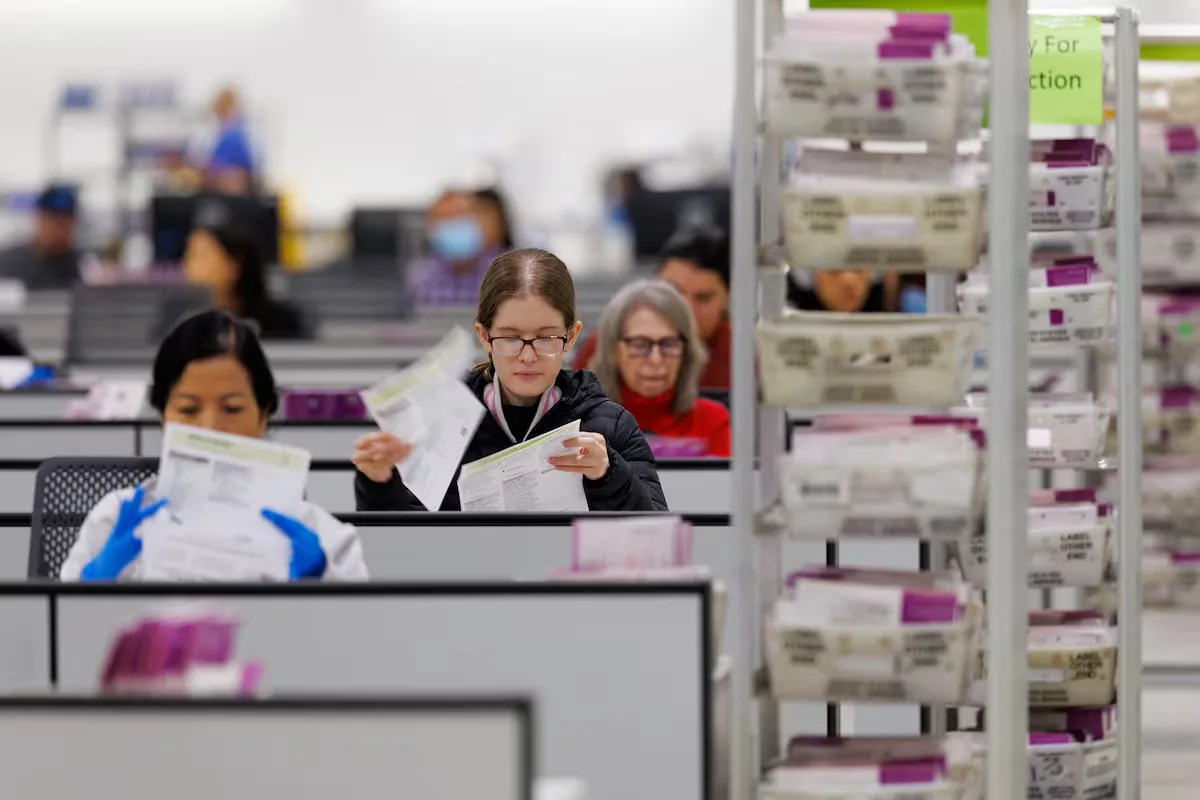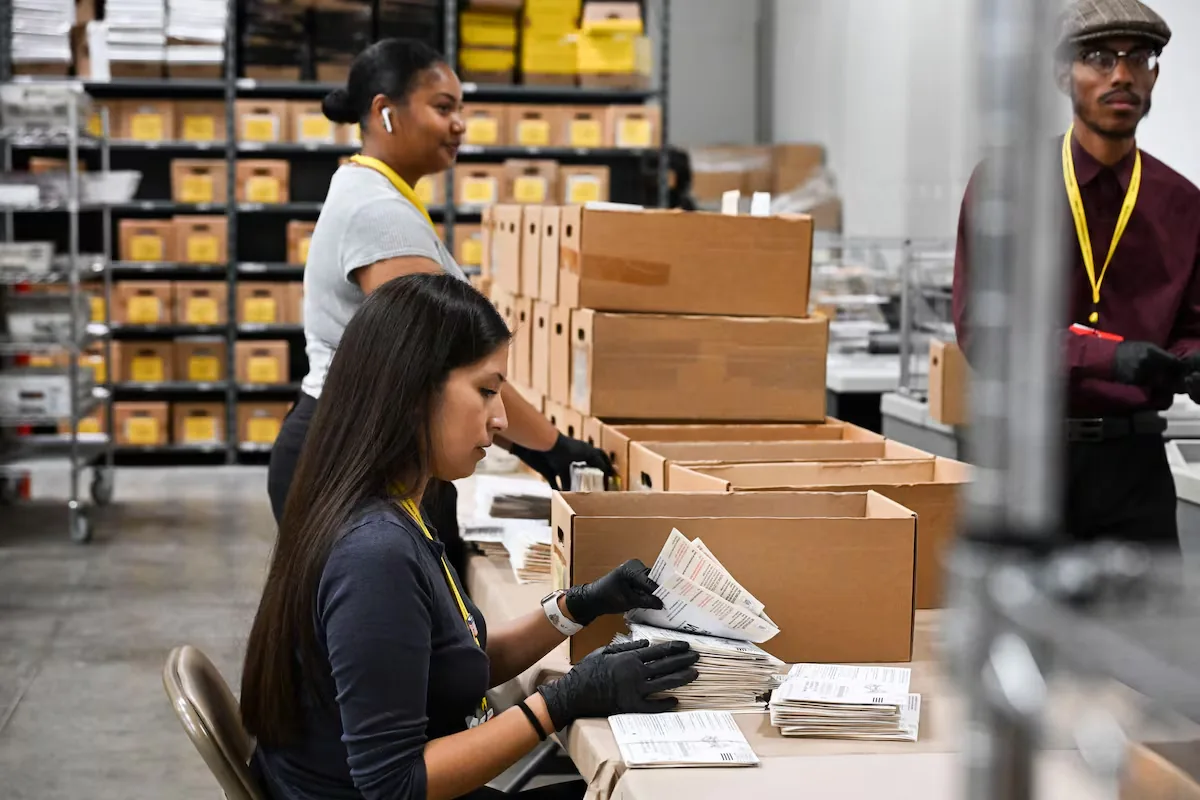
Millions of people who prefer to vote by mail in the midterm elections (midterms) risk being unable to exercise their right, according to a whistleblower. The official has filed a complaint through Democratic Senator from Connecticut, Richard Blumenthal, who pointed out that the revelation demonstrates President Donald Trump’s attempt to sabotage mail-in voting ahead of the November elections, in which the Republican is fighting for control of Congress.
Read more Leire Iglesias, appointed Secretary of State for Housing following the death of David Lucas
According to the complaint, the USPS, despite court rulings against it, rushed to create a system to comply with the president’s wishes, who in March issued an executive order to limit mail-in voting. With the new procedure, the USPS has adopted an internal policy of 0% errors, whereby if an envelope could not be scanned or matched with the information sent through a new online portal, the entire batch would be discarded, leaving tens of thousands of voters without receiving their ballot.
“It is possible that millions of American voters will not receive their mail-in ballot in a timely manner in this election cycle, or not receive it at all,” said the official.
The report states that within three months the Postal Service devised a system that would normally take a year. The official warns that the “risky and rushed” implementation of Trump’s order could lead to a “catastrophic failure” in the mail-in voting system ahead of the November midterm elections.
“The Postal Service has designed a system to deprive millions of Americans of their right to vote,” Blumenthal told the press before disclosing the whistleblower’s information. “This Administration seems determined to change the voting framework in the country, clearly for political reasons,” he criticized.
The new regulation imposed by Trump and currently blocked by a judge includes strict requirements to limit mail-in voting, which were detailed by the Postal Service on August 21. It was established that ballots would only be sent by mail to those States that had obtained approval of their envelope designs, which must include a barcode, and submitted a list of recipient voters through an online portal.
Read more Germany accuses Russia of the failed bomb drone attack in Leipzig
The rule requires that ballots be handled in a physical post office by an election official. Ballots are scanned to verify that they match the voter database, but a single error would cause the entire batch to be rejected.
After Trump’s executive order was issued in March, Democrats and civil rights groups went to court and succeeded in having Boston District Court Judge Indira Talwani rule to suspend the implementation of the system.
However, last week, the conservative majority of the Supreme Court—without ruling on the legality of Trump’s order—considered that decision premature and overturned Talwani’s ruling, temporarily clearing the way for its implementation. In a judicial back-and-forth, the judge then withdrew the second ruling she had issued against the presidential decree, but a day later, on Friday, August 28, she again imposed a two-week halt in response to a new lawsuit filed by more than twenty Democratic States.
Trump has long opposed mail-in voting, despite having used this method repeatedly to cast his own vote. The Republican falsely attributed his 2020 electoral defeat to Democrat Joe Biden to mail-in voting and has spent years spreading conspiracy theories about it. A Brookings Institution report published in 2025 revealed that mail-in voter fraud is almost nonexistent, with an approximate ratio of four per 10 million votes cast by this method.
The president would benefit from the elimination or reduction of mail-in voting because more Democratic voters choose this option to exercise their right. More than 29% of all voters in 2024 cast their vote by mail. Civil rights advocacy organizations have denounced that Trump’s attempts to end this modality would mainly affect the most vulnerable communities, such as Latinos or women, voters who mostly lean towards the Democratic Party, and who have more difficulty taking time off work to go to a polling station.