









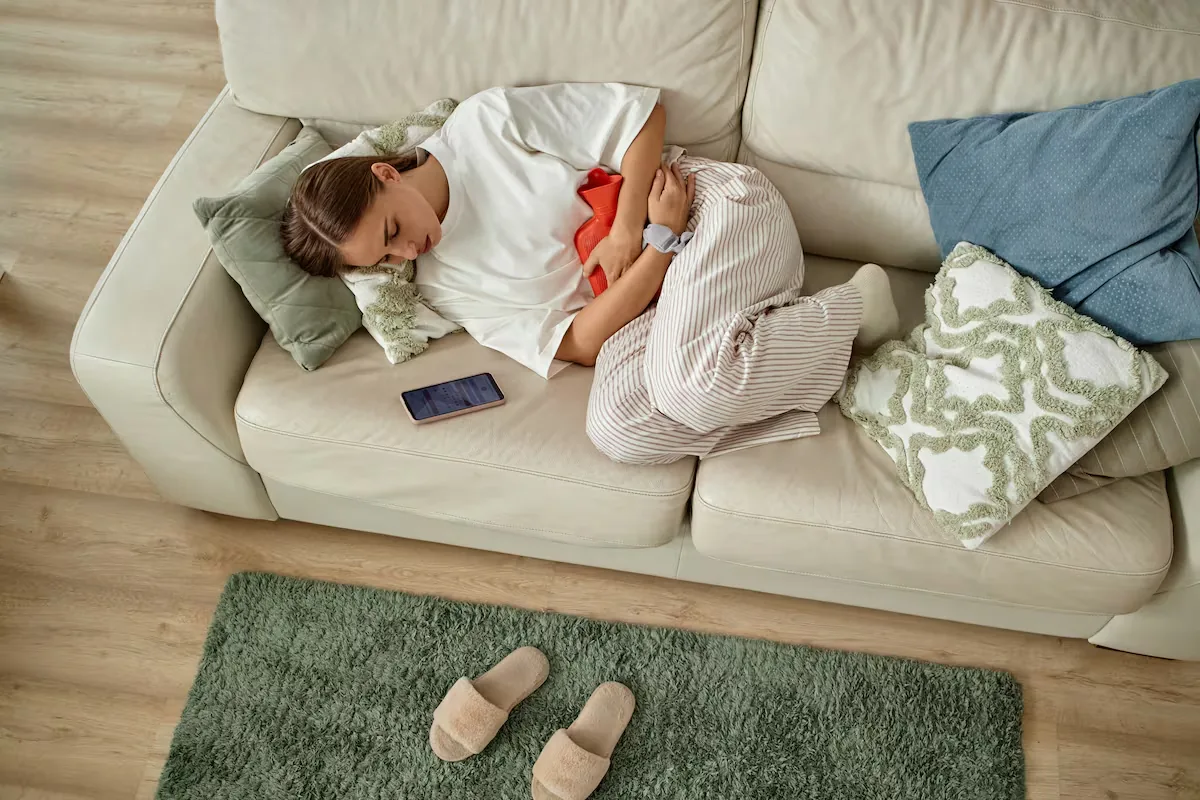
Menstrual pain has been so normalized that it is only recently that science has begun to question its origin. Women have grown up hearing that having pain once a month “is normal,” but just because something is common does not necessarily mean it cannot be avoided. In a 2025 Spanish study by the Institute of Innovation and Knowledge Management (INGENIO, CSIC-UPV) with about 3,500 women over 14 years old, 70.9% experienced menstrual discomfort, such as pain and abdominal bloating, every month or most months. However, they found insufficient care in their healthcare and social environment, which has traditionally assumed that “women’s issues” have no explanation and that oral contraceptives are the patch for multiple ailments.
This Tuesday, The Lancet published a U.S. study where, for the first time, they examine risk factors for developing menstrual pain – dysmenorrhea – at a fairly early age, even before the onset of menstruation. Until now, similar research had followed adult women and older adolescents with inconclusive results due to lack of homogeneity among studies, as explained in this one.
The new work focuses on girls aged 12 and 13, for whom they evaluated symptoms three years before the first period – menarche – through questionnaires to them and their families. They sought factors that predisposed them to painful periods, which, as they found first, occurred in almost 58% of the 2,254 adolescents studied, about 20% of whom recognized the pain as “severe.”
In the case of dysmenorrhea, understanding risk factors can not only help identify those who may suffer from it. “There is a strong relationship between severe dysmenorrhea in adolescence and the development of chronic pain in adulthood,” Melissa Lenert, one of the authors, explains to EL PAÍS. “We believe the nervous system can develop chronic pain in response to certain traumatic factors such as illnesses, infections, or repeated injuries, and untreated severe dysmenorrhea could be one of those factors,” says the researcher from the University of Michigan Medical School.
Girls who later experienced painful menstruation were more likely to have had certain physical symptoms between ages 9 and 10. Their families more frequently reported that the daughters had suffered dizziness, excessive fatigue without apparent cause, nausea or general discomfort, constipation, dryness or itching of the eyes, or skin rashes at that early age. “Many of these symptoms are present in adults and adolescents with chronic pain and often precede it, although their causes are not always known,” Lenert says.
The researcher admits they are only beginning to understand the relationship between pain and internal sensory sensitivity that may be triggering these symptoms. “Exploring the underlying causes of this sensitivity is a fundamental step in this field of research,” she adds.
Early development and sociocultural origin
Girls who reported painful menstruation at ages 12 and 13 also showed signs of advanced puberty three years earlier: body hair, skin changes, growth spurts, and breast development. Lenert explains that this advancement may be due to genetic, environmental factors, or both: “For example, environmental factors affecting nutrition, exposure to endocrine disruptors, or childhood stress can contribute to advanced pubertal development before menarche.”
The combination of all these factors results in great natural variability in pubertal development, which can also reflect other social and cultural factors. Some of these, such as unequal access to healthcare, stigma around menstruation, or earlier physical development itself, have been linked to social and cultural stress factors.
Read more Sheinbaum extends the lifeline to Pemex amid pressures on public finances
In this context, that of social determinants of health, the authors frame another of their findings: Black adolescents had a 38% higher likelihood of experiencing painful menstruation than white adolescents, and Hispanic adolescents 34% more than non-Hispanic ones. Although the underlying causes of this variability may also be genetic, the cultural burden that menstruation has historically carried worldwide is necessarily a subject of study that has recently gained much importance and contributes to breaking taboos and false beliefs.
For Alicia Botello, a nurse and social and cultural anthropologist, menstruation is “probably one of the physiological and biological processes on which the most cultural and social norms have historically been built, as well as numerous stigmas and myths passed down from generation to generation.” “Since antiquity, menstruation has been linked in many cultures with impurity, shame, and prohibition, and unfortunately, some of these beliefs have been transmitted and have contributed to making it invisible and normalizing pain,” adds the researcher from the University of Seville, who is not involved in the study, in a phone call.
Educating to avoid normalizing pain
Sleep problems at an early age were not related to the onset of menstrual pain. However, among girls who developed dysmenorrhea, it was associated with greater disruption of daily activities once menstruation began. “The brain and body need restorative sleep to function properly; therefore, when the body does not get enough sleep, the impact of pain on daily life is much greater,” Lenert argues.
From this, they draw one of the recommendations from this study: improving sleep quality during adolescence to try to reduce the impact of menstrual pain. This is one of the aspects that could be addressed through education, one of the fundamental paths advocated by Botello to protect young women from preventable risk factors. “Teaching adolescents to understand their cycle, know what is expected, and recognize when pain should not be considered normal is essential to caring for their health,” says the anthropologist.
Botello acknowledges the progress in menstrual health in recent years in Spain but believes that, besides breaking taboos, it is still necessary to stop normalizing disabling pain. She explains that this, “combined with shame, the idea that ‘it’s women’s stuff,’ and that you have to endure it,” often leads to self-medication and affects daily life: “They stop going to school, stay in bed, or stop doing sports.” “Having information from the start allows them to experience menstruation more naturally, know their own body, and know when it is important to ask for help and seek medical care,” she adds.
Although the underlying causes of the risk factors identified in the study are not yet known, its author also points out that the way forward is to end the normalization of pain. “Most women will experience menstrual pain at some point, but it should not be so intense as to interfere with their daily activities and should be investigated further,” she comments.
“Many people with severe dysmenorrhea develop chronic pain due to conditions such as endometriosis or uterine fibroids, among others; early intervention in these conditions is essential to limit unnecessary suffering,” concludes the researcher.