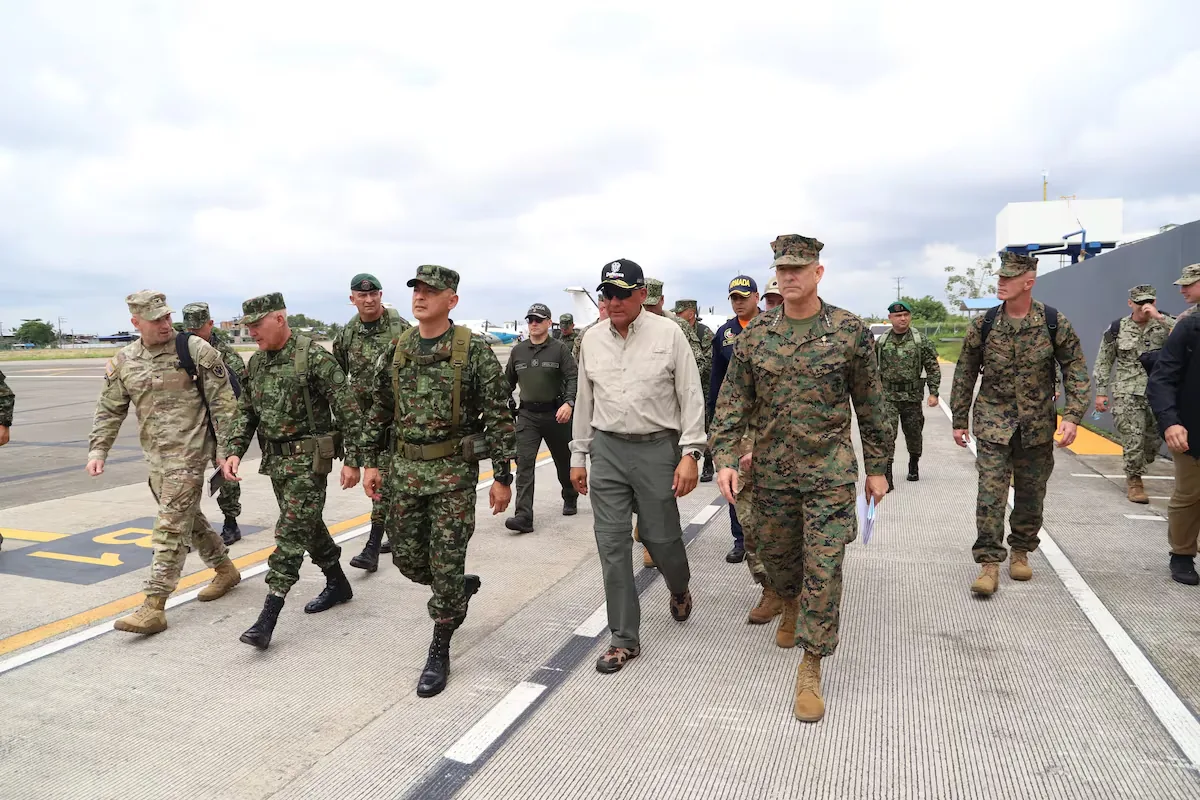
The strengthening of military cooperation between Colombia and the United States is advancing at a rapid pace. Two weeks after the incorporation of Abelardo de la Espriella’s Government into the Shield of the Americas, the anti-narcotics coalition founded by Donald Trump, a joint agenda to tackle drug trafficking networks in the country is already being formalized. One of the highest-ranking U.S. military officers visited Colombia last week and prioritized operations on the border with Ecuador, surveillance over the Pacific — the main drug route exported to the northern continent — and the rehabilitation of the air fleet.
Read more Milei embraces the Malvinas cause after a boost from Trump
General Francis L. Donovan, head of the U.S. Southern Command (SOUTHCOM), was in Colombia last Thursday and Friday and met with Defense Minister Jorge Mora. “Commander Donovan’s visit reaffirms the commitment to continue working together against narcoterrorists, cartels, and all criminal organizations that seek to sow violence,” the Colombian official said about the U.S. visit. SOUTHCOM’s official account highlighted the importance of “strengthening the security partnership between the United States and Colombia.”
One of the central points for the Command was Donovan’s visit to southwestern Colombia. The U.S. high command was in Tumaco, a city embedded on the Pacific coast that has become one of the most important drug trafficking routes with access to the ocean. Its strategic location has made it a zone with a strong presence of armed groups, including the ELN, the Gulf Clan, and FARC dissidents, all organizations declared terrorist by Washington.
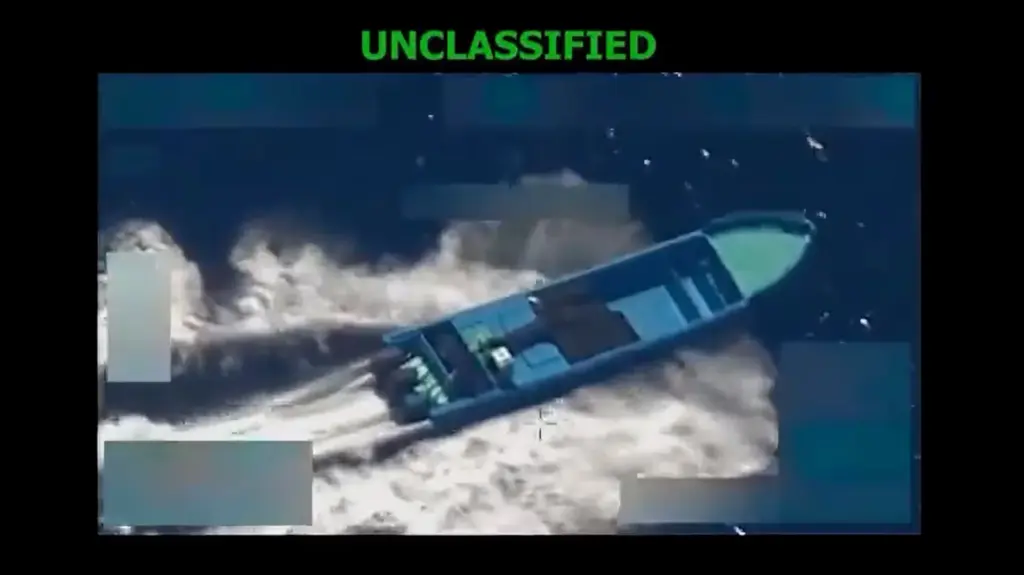
From there, the possibility of relocating radars to detect vessels engaged in drug trafficking was discussed, according to El Tiempo this Tuesday. “The placement of these systems in Tumaco would allow tracking movements of semi-submersibles and boats from an area used as a departure point for drug shipments and provide information to Colombian units,” a source cited by the newspaper said.
In the past year, Washington has launched 68 attacks against alleged drug boats in the Pacific and Caribbean seas and has killed 227 people, according to an updated count by the New York Times. Although Trump says this is one of the best strategies to curb drug trafficking in the region, human rights organizations have labeled these actions as “extrajudicial executions.” The most recent bombing of a vessel occurred on August 26 in the Caribbean, killing four crew members.
Maritime surveillance is just one segment of the agenda the White House wants to implement in this region. Donovan also visited San Lorenzo, a city in Ecuador near the border with Colombia. There was a tripartite meeting attended by Ecuadorian Defense Minister Gian Carlo Loffredo. The countries agreed to strengthen military presence in the area and tighten intelligence cooperation to tackle the cartels.
“The border area between southwestern Colombia and northwestern Ecuador is an important corridor for cocaine trafficking by some of the most violent organizations in the world. Today, in the heart of the region, Commander Donovan met with elite forces to refine a joint strategy aimed at combating cartel operations and leaders,” SOUTHCOM’s account posted on X. In addition to these informal announcements, the Ecuadorian newspaper Expreso revealed that during the meeting among the three countries, the idea of creating a binational military base between Colombia and Ecuador was considered.
Read more 84% of Mexicans believe that social media is dangerous for minors
De la Espriella, who came to power less than a month ago, has prioritized military cooperation with other countries in his security strategy. On one hand, he has held several conversations with Ecuadorian President Daniel Noboa, who shares his tough stance against armed groups. On the other, he has fully restored military cooperation with Washington, which was severely damaged during Gustavo Petro’s government, frequently at odds with Trump. The new administration’s friendship with the White House is such that, according to U.S. Secretary of Defense Pete Hegseth, it authorized him to carry out joint military operations on Colombian soil. The decision has not been echoed by Colombian authorities.
Colombia is the world’s largest cocaine producer; and the United States, the largest consumer. If these operations come into effect, the cooperation pact allows De la Espriella to count on one of the most powerful armies in the world and also its intelligence to combat about thirty armed groups and their more than 20,000 members spread throughout the country. At the same time, it opens the doors for Trump to one of Latin America’s most fundamental states for his tough strategy against drug trafficking.
A restoration of the air fleet
Donovan concluded his visit at the Tolemaida Military Fort, the most important military base of the Colombian Army, in the center of the country. Another topic on his agenda was the rehabilitation of the military air fleet. According to figures received by the current government during the transition period, there are dozens of aircraft that are not operational, as well as 11 of the 19 MI-17 helicopters that the military forces have.
In this regard, SOUTHCOM announced this Tuesday its participation in a joint operation led by the Colombian Air Force that resulted in the interception of 4.5 tons of cocaine, two fast boats, three high-speed vessels, and the arrest of eight people. “The Americas Coalition Against Cartels (AC3) is taking decisive steps to defeat cartels and narcoterrorists in the Western Hemisphere,” it highlighted on X.
Trump has found in De la Espriella a friendly president with whom to expand his military power in the region, while the Colombian seeks to strengthen this cooperation to fulfill his promise of toughness and security as soon as possible.
Read more September does not belong to those who seek to rewrite it