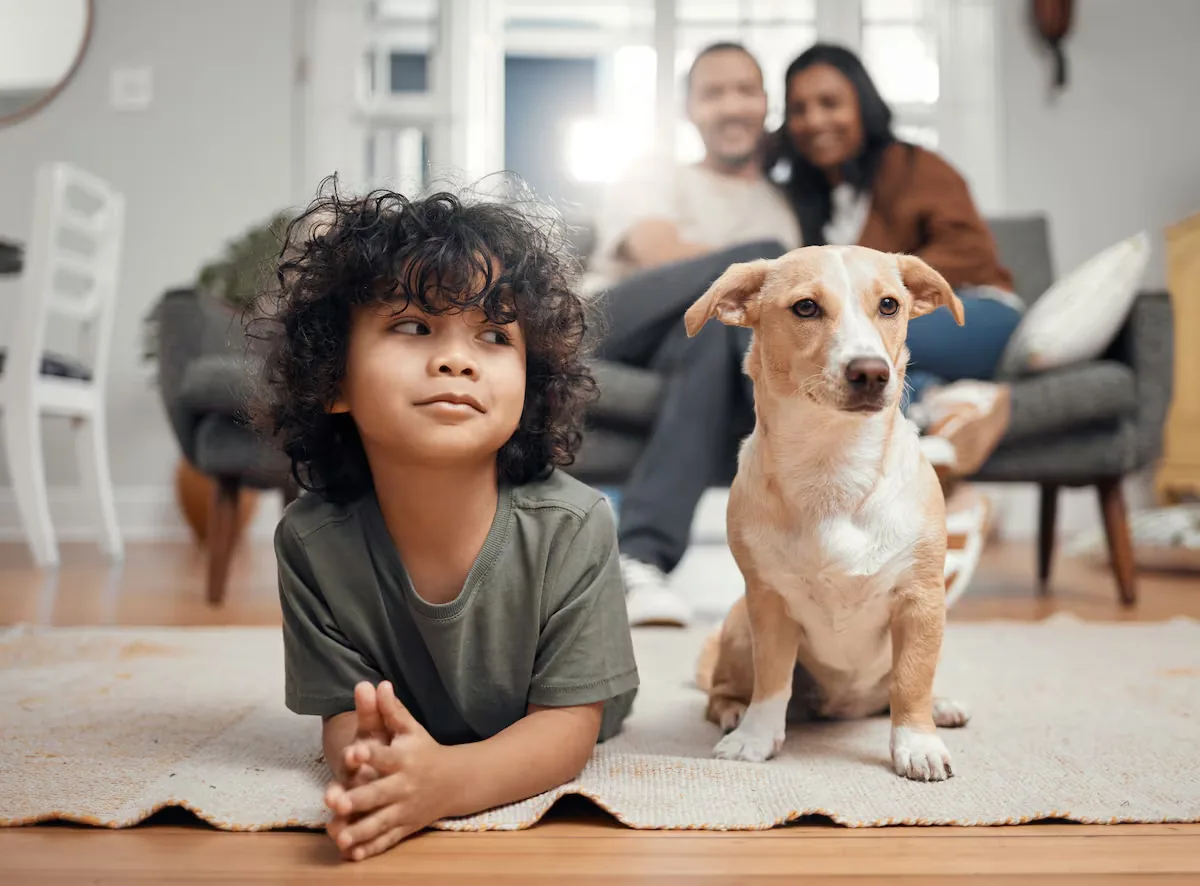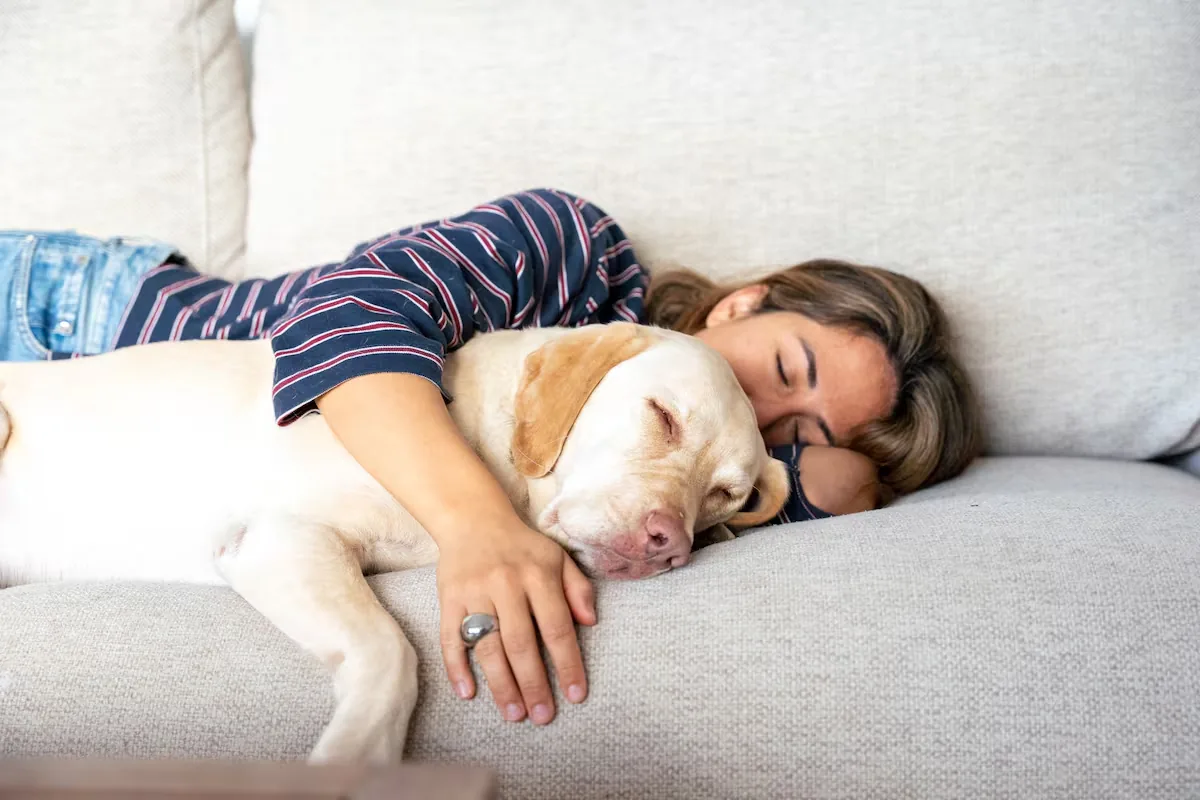
The bond that many adults develop with their pets can be as strong or stronger than the one they have with other human beings. In Spain, moreover, the trend of living with a pet has not stopped growing in recent years. According to the 2025 Census Study by ANFAAC and Veterindustria, there are currently more than 20 million pets living in the country and 52% of households live with at least one. However, sharing a home with a dog is not the same as sleeping with it, and yet many people do so every night. Why does this happen? Is it good or bad to sleep with your pet?
Read more The bigmouths
“Humans are social animals, just like dogs; sharing spaces is natural for both species. When we have a healthy bond with a pet, we want to share routines and mutually seek their company and, therefore, there is no problem sharing sleeping hours, the bed, or the sofa,” says psychologist and ethologist specializing in animal welfare, Helena Bat.
The study Pet Bedsharing and Wellbeing, recently published in the scientific journal Clocks & Sleep, concluded that adults who slept with their dog showed a higher level of psychological well-being than those who do not live with a pet. Although the research did not prove that sleep was of better quality or that the dog was the direct cause of that greater well-being, the authors did suggest that, for many adults, physical closeness with the dog during the night can provide a sense of security, companionship, and emotional support, factors that could explain the better well-being scores. “Sleeping with a dog or a cat favors emotional coregulation processes, a process by which we regulate ourselves emotionally when accompanied by another mammal, whether through physical contact, body heat, calm breathing, or simply the feeling of companionship,” explains psychologist and Animal-Assisted Therapy (AAT) therapist, Ángela de la Fuente.
This specialist assures that animals transmit to the brain a feeling of security and calm that favors the activation of the parasympathetic nervous system, which is responsible for rest. “Relationships with animals promote the production of oxytocin and the decrease of cortisol. Many people who sleep with pets feel calmer, especially those with anxiety, feelings of loneliness, or high activation and stress,” she explains.
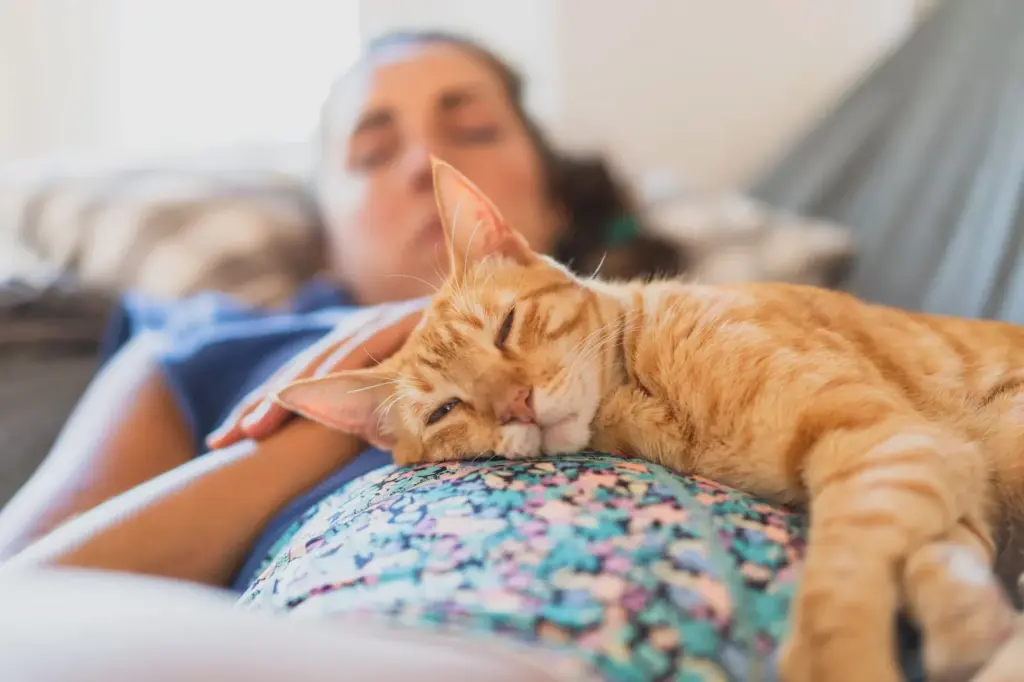
Bat refers that there is also a genetic and environmental basis that determines the type of interaction that will occur between a dog, for example, and its owner. “There are species with marked differences in their personality, therefore, there are dogs, just like humans, that do not need very close physical contact, while others will seek it,” she comments. And she specifies: “Just as some people are light sleepers and are bothered by sleeping with someone else, they also do not tolerate a dog that has been on the street getting on their bed because it may seem unhygienic to them, or they are bothered by hair on the clothes, while for other people this is not a problem.”
Read more The Venice festival kicks off with Gaza and without women
Risks of sleeping with a pet
The study highlights that the possible emotional benefits must be weighed alongside the impact that sharing the bed may have on sleep quality. “It depends on the person, the quality of sleep, the animal… There is no universal answer because there are also cases where it is not recommended, for example: if it moves a lot, if it wakes up frequently, if it takes up too much space, snores or disrupts rest in some way… Also not recommended for people with allergies or respiratory problems which, although more physical causes, compromise rest,” comments Ángela de la Fuente.
On the other hand, pets can expose us to a variety of germs, such as parasites and bacteria. The World Health Organization (WHO) points out that there are more than 200 known types of zoonoses, diseases that can be naturally transmitted from animals to humans. The responsible pathogens can spread through direct contact, as well as through food, water, or the environment. In these cases, the institution recommends washing hands after contact with animals but does not indicate that pets should be kept in designated areas or be prevented from accessing rooms or play areas. “Ideally, each individual should choose the place where they feel most comfortable and be able to decide. Agreements must always be reached, especially when, for example, a dog arrives at a house and does not know the rules and maybe decides to use a space that the family does not find appropriate. In that case, it is advisable to place them in areas more or less close to people,” Bat maintains.
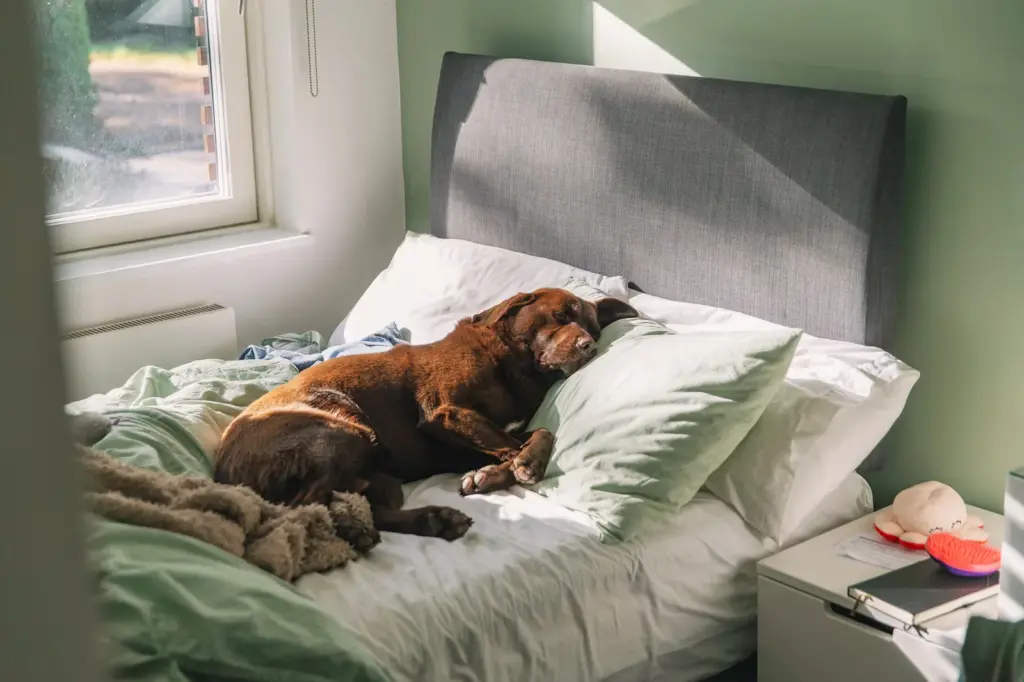
The expert also recalls that there are pets, especially dogs, that have difficulties staying alone and it causes them a lot of stress, so the most important thing is to work progressively so that they can be in spaces where humans are not. “Through professional guidance, so as not to force situations that can lead to increased stress and worsen the situation,” she advises.
In the end, there is no single answer. Despite the risks, many people, without allergies or other underlying health problems, sleep with their pets. Perhaps the key is not so much to determine whether sleeping with a pet is good or bad, but how that nighttime coexistence affects the health and well-being of both.
Read more Ghosts, ‘yokais’ and other monstrous inhabitants for a hot autumn