









The residents of Matalascañas, the large-scale urbanization of Almonte (Huelva) at the gates of Doñana, have opened a new front to demand once and for all a wastewater treatment plant after years of neglect and delays by the administrations. The Matalascañas homeowners association has demanded this long-postponed treatment plant a thousand times through letters addressed to the European Commission, the Ministry for the Ecological Transition and the Demographic Challenge, the Guadalquivir Hydrographic Confederation, the Andalusian Government, the Almonte City Council, and the Doñana Participation Council, while launching a petition campaign through Change.org.
Read more ‘Gender theory’: an anti-academic speaker teaches you to read freely
The initiative comes after problems recorded this summer at the current treatment plant. The association’s president, Juan Gómez, maintains that the incidents suffered at the facility have highlighted the need to accelerate a long-demanded infrastructure. “After what we have gone through with the treatment plant, which broke down and there was wastewater on the beach, this homeowners association has decided to send a letter to all the competent bodies in the matter,” he says. Gómez calls for urgent intervention by the administrations to prevent the situation from further deteriorating. “Miteco must act very quickly before this explodes and causes an ecological and environmental disaster in the Doñana National Park,” he points out.
The association has formally requested the Ministry to publish a binding schedule for the construction of the new treatment plant, detailed information on the status of the ordinary environmental assessment, and periodic dissemination of project progress. It also demands guarantees that the future municipal concession of the integral water cycle will not affect the execution of an infrastructure whose commissioning is not expected, according to the Ministry’s own documentation, before 2031 in the most favorable scenario.
In this regard, the Ministry argues that it continues working with the aim of seeking a framework of understanding with the City Council. It recalls that this is an infrastructure that, although classified as of general interest, ultimately aims to be integrated into the municipal water cycle. The Guadalquivir Hydrographic Confederation is now finalizing the evaluation of the new alternatives study, whose preparation has already been completed, Miteco specifies.
The situation in Matalascañas is not new. The town has been among the cases included in the European procedure for non-compliance with the Urban Wastewater Treatment Directive for years. In July 2018, the Court of Justice of the European Union (CJEU) condemned Spain for maintaining deficiencies in water treatment in several urban agglomerations, including Matalascañas. That ruling imposed an initial fine of 12 million and opened the door to periodic coercive sanctions while non-compliance persisted. Spain has accumulated more than 74 million in fines derived from this case.
The Ministry itself acknowledges that the current Matalascañas treatment plant, built in the early 1990s next to the promenade, has operated only with primary treatment. According to the Department’s official documentation, that system is insufficient to meet the quality parameters required by European regulations.
The initially planned solution involved building a new treatment plant to completely replace the existing one. However, the project has accumulated administrative delays over recent years. One of the main obstacles arose in March 2024, when the Directorate General for Environmental Quality and Assessment of the Ministry concluded that significant environmental impacts could not be ruled out and determined that the project must undergo an ordinary environmental assessment. That decision forced new studies and a rethinking of part of the processing, further delaying the final infrastructure.
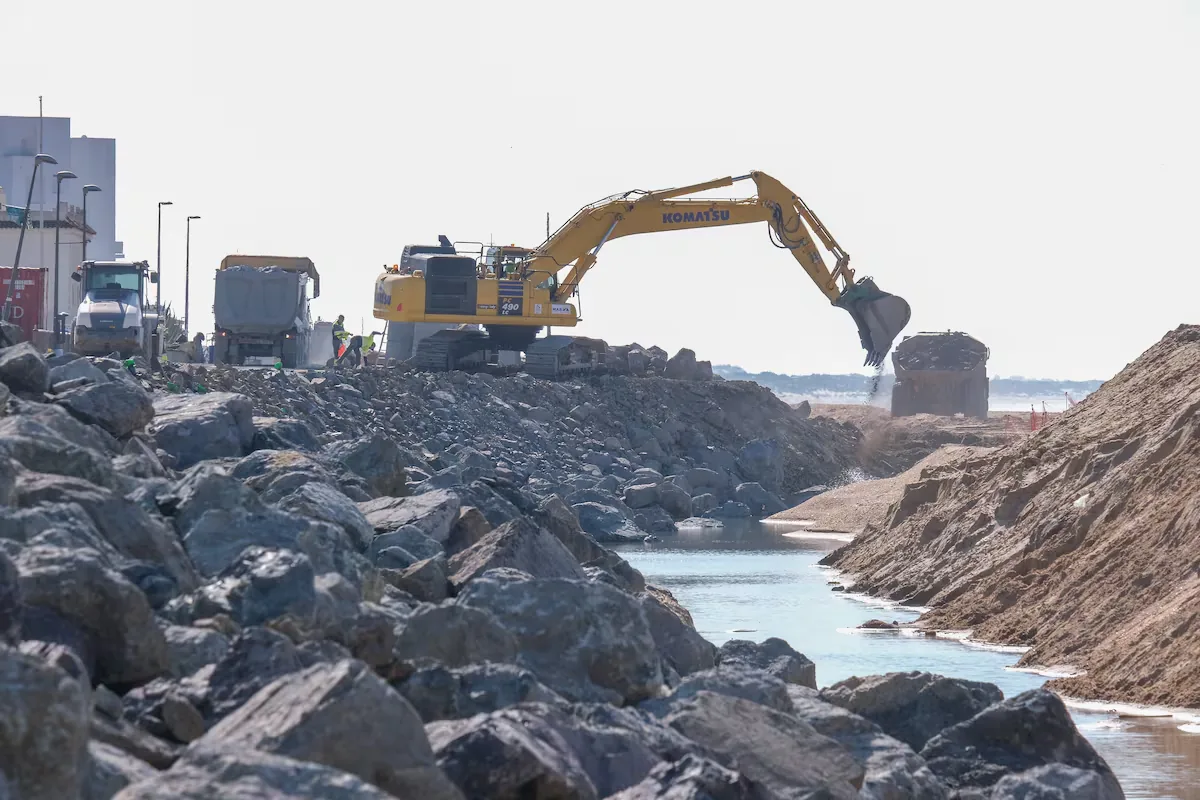
As a result of that procedure, the Ministry estimates that the new station could not be operational before 2031. Faced with the delay of the new facility, the State opted to carry out a temporary intervention at the existing plant. The works, awarded to the public company Tragsa and with an investment close to five million, consist of incorporating secondary biological treatment using moving bed biofilm reactor (MBBR) technology, aiming to improve effluent quality and adapt it to European requirements while the future treatment plant is processed.
Read more Federico García Lorca lights up the autumn of cinema in Spain
According to the Ministry, the intervention will complement the current primary treatment and achieve the parameters required for wastewater discharge in normal zones, making use of part of the existing facilities.
The Almonte City Council stated last July that these works are in their final phase and described the intervention as one of the most important environmental improvements developed in recent decades in Matalascañas. The Council maintains that the new configuration will allow adapting the treatment plant to community regulations, improving the environmental quality of the coastal nucleus, and opening the door to future uses of reclaimed water for irrigation of green areas and public spaces.
Despite this, the homeowners association considers the ongoing actions insufficient if not accompanied by the construction of the new definitive infrastructure. The entity has launched a petition campaign stating that Matalascañas has been waiting for more than 30 years for a treatment plant suitable for current demands and calls for a “modern, safe, and effective” solution.
In addition to the letters sent to the various administrations, the association has requested the Doñana Participation Council to analyze the possible environmental impacts of the future treatment plant. Among other issues, it asks for a specific report on the project’s impacts, public monitoring of the ordinary environmental assessment, and the inclusion of this matter on the agenda of an upcoming meeting of the protected area’s participation body.
Gómez has also directed criticism at the involved administrations. The association’s president reproaches the Andalusian Government for charging the treatment fee for more than 15 years without the new facility being executed and accuses the mayor of Almonte, Francisco Bella, of obstructing the definitive solution.
The organization assures it will maintain its institutional and social campaign over the coming months to demand an action it considers essential to guarantee compliance with European regulations, avoid new sanctions, protect the Doñana environment, and respond to a historic demand from residents and homeowners of Matalascañas.
Read more The rise in energy prices pressures the Executive to renew the anti-crisis shield