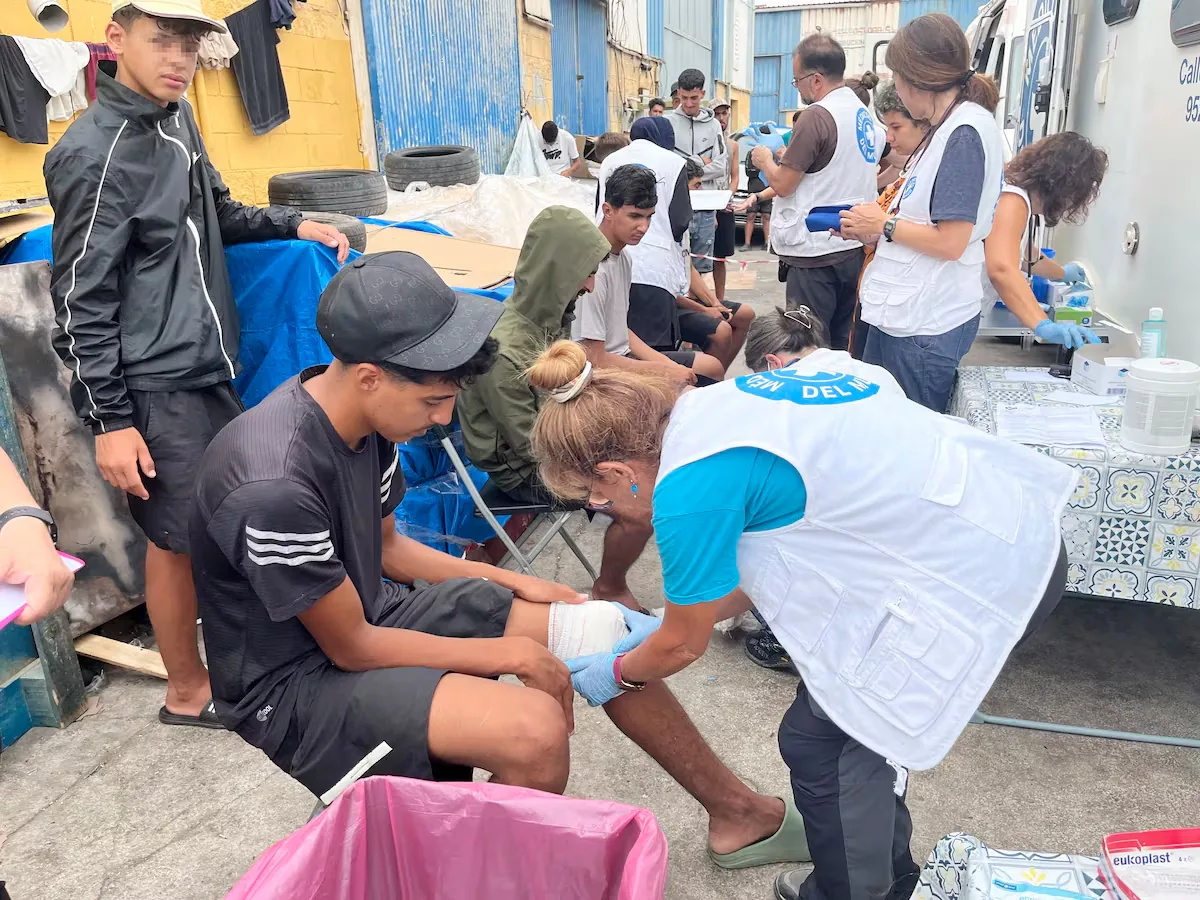
The Ministry of Youth and Childhood is seeking ways to alleviate the collapse of reception systems in Ceuta, but the political stance of the PP blocks the initial solutions. Two weeks ago, the department led by Sira Rego publicly put on the table the option of immediately transferring about 500 girls to the Peninsula, where they would be distributed in centers with capacity for between 20 and 30 minors through an agreement signed with private entities. The Ministry focuses on Ceuta’s refusal to carry out the procedure, while official sources from the autonomous city now claim they have no “written” evidence of the existence of these places in non-profit organizations, and point out that it is not common for these to be available outside the framework agreements of each community. In the department led by Rego, they say they do have it, that it has also been discussed in bilateral meetings, but they refuse to clash over this.
Read more Betis stops Madrid happy with Mourinho
Therefore, at this moment there is a technical discrepancy, but above all political, with a Popular Party that has made rejecting the reception of minors in its territories a battlehorse in this migratory crisis, which places the autonomous city presided over by Juan Jesús Vivas between a rock and a hard place.
“We have made available, and they are already operational, 500 places on the Peninsula to transfer very vulnerable girls. This would significantly help reduce tension and, of course, treat these girls in a humane way,” Rego denounced on Thursday in the corridors of Congress, assuring that everything “is pending the Popular Party, which governs Ceuta, signing the transfer.” From the city, they insist that the Ministry presented this option as a “work proposal” and committed to opening dialogue with the autonomous governments.
In Ceuta, they refer to article 18.4 of the Legal Protection of Minors Act, which regulates the transfer of minors. Since it is a sensitive matter, they explain, a coordination protocol was developed in 2015. In its seventh section, it states that “the transfer of a minor to a residential center located in another autonomous community, but not dependent on its public child protection entity, will require prior communication by the latter, but not its authorization,” as would be necessary if this residential center depended on the autonomous public entity, according to the previous section. Official sources from Ceuta justify that it is the host community that must give permission for the signing, because they have no “written” knowledge of the existence of these places in private organizations.
Youth and Childhood sources insist that, since Ceuta has custody of these minors, it is the one who can agree on their transfer with those organizations.
Read more Mourinho: “I don’t know why we lost this match”
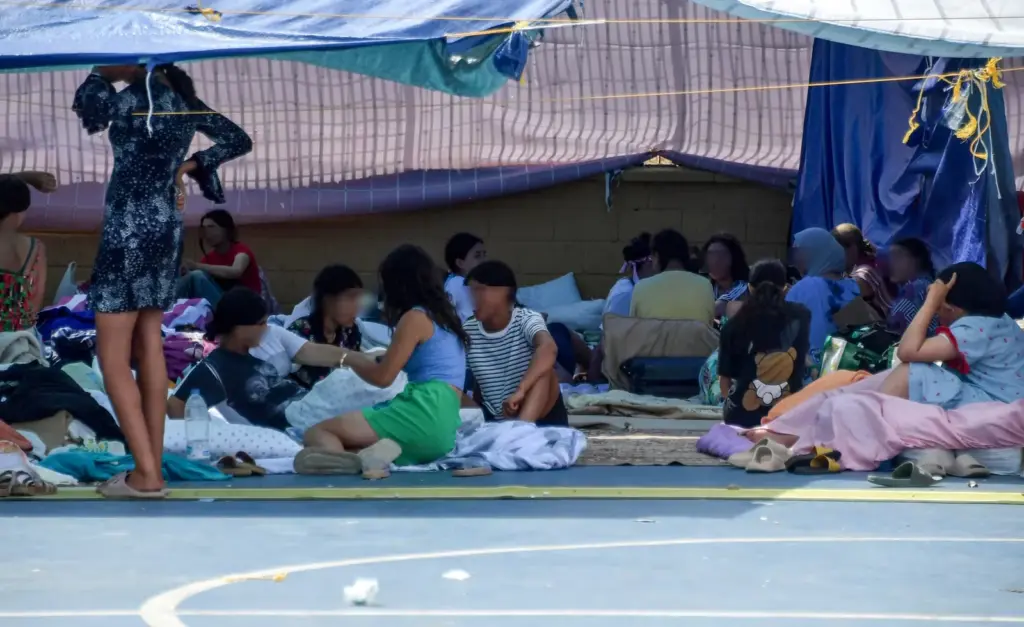
The central government interprets that, although President Juan Jesús Vivas, of the PP, has the power to sign these agreements with reception entities, the pressure exerted by the party with its rejection at the national level makes it very difficult to make the decision to relocate the girls against the will of the communities. The Executive understands that, to reach a good outcome, negotiations must be discreet, otherwise any transfer could be frustrated in a context of much noise and partisan confrontation just months before the regional, municipal, and general elections.
From the autonomous city, they do appeal to the “shared responsibility” of the rest of the territory in an extremely sensitive matter. “We ask that they let us have a little piece of their land to keep them safe while we take care of finding a lasting solution,” they explain.
Although transfers to the Peninsula in case of extraordinary migratory contingency (that is, when a system exceeds triple its capacity) are regulated in the royal decree approved in 2025, the procedure requires deadlines that are not agile in an emergency situation like the current one. Against the 29 available places, there are currently 1,711 children and adolescents in facilities of the autonomous city. And the total estimate given by the central government these days is about 2,500 in total, that is, about 800 remain unregistered. The Ministry has proposed two other routes. In addition to signing the agreement with private entities, bilateral agreements between communities were proposed last week at the Childhood and Adolescence Sectoral Conference to quickly transfer minors to their systems.
The 500 places would be financed by Ceuta charged to the funds transferred by the Government of Spain (an initial extraordinary credit of 25 million euros and an amount of 62.5 million euros contemplated in the Royal Decree approved at the last Council of Ministers). Rego communicated this possibility to President Vivas in the meeting held last August 8, almost a month ago, and ministry sources insist that the mechanism was already used previously in the Canary Islands. In Ceuta, they acknowledge that it is no longer just that the reception system is overwhelmed, but also the complicated schooling of all these minors or their healthcare in a city of barely 84,000 inhabitants.
Read more September, will month: how much it costs in each State and how to carry out the procedure