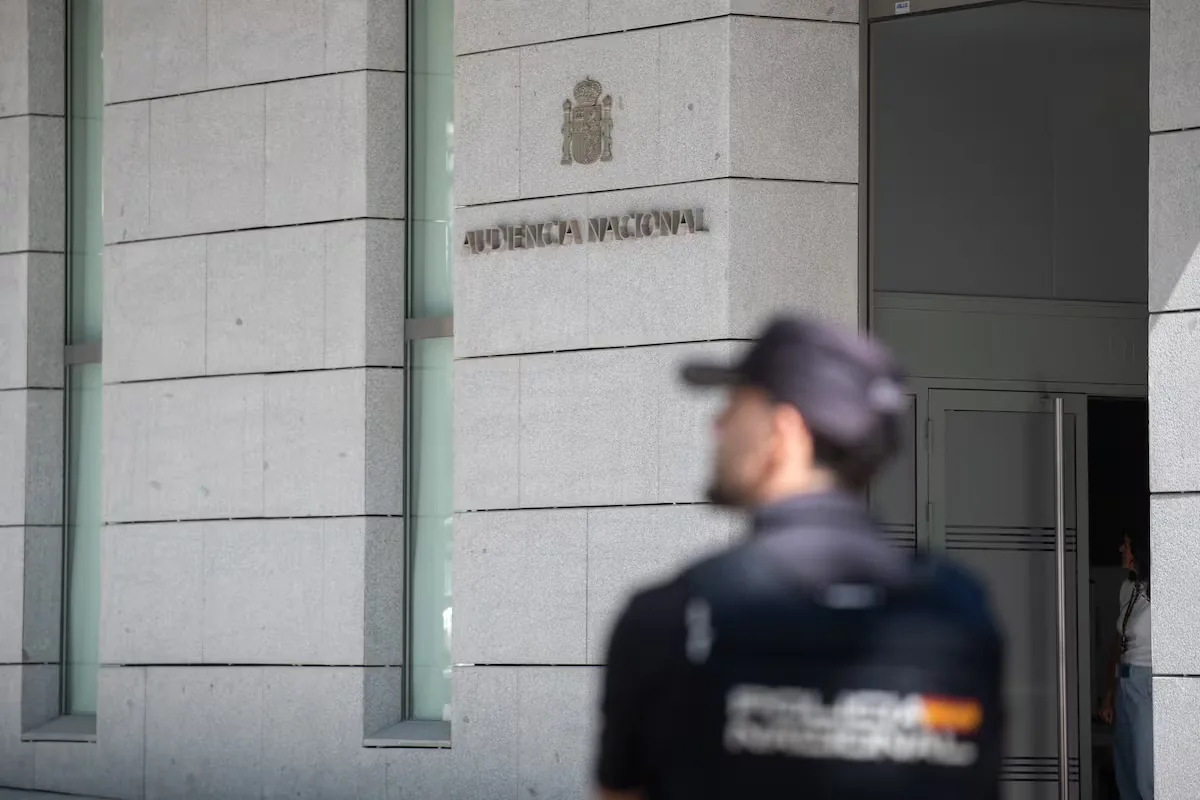
The Public Prosecutor’s Office and the State Attorney’s Office opposed on Monday at the Supreme Court the suspension of the registration in the electoral census of the beneficiaries of the Democratic Memory Law, the so-called grandchildren’s law, which grants nationality to the descendants of exile and emigration. The suspension of that registration has been requested as a precautionary measure by Vox and the Iustitia Europa party, within the appeal they have filed in the high court against an agreement from last July by the Central Electoral Board (JEC) in which this body declared itself incompetent to rule on the effects on the census of the grandchildren’s law. Both the public ministry and the State Attorney’s Office consider that what the far-right parties really intend by challenging that agreement is to sabotage said law and have requested the Supreme Court to reject their requests because, among other effects, the suspension of the registration in the census would deprive these new Spaniards of the right to vote, a fundamental right enshrined in the Constitution.
Read more The Government launches ‘The Casa 47 Portal’, its public housing search engine
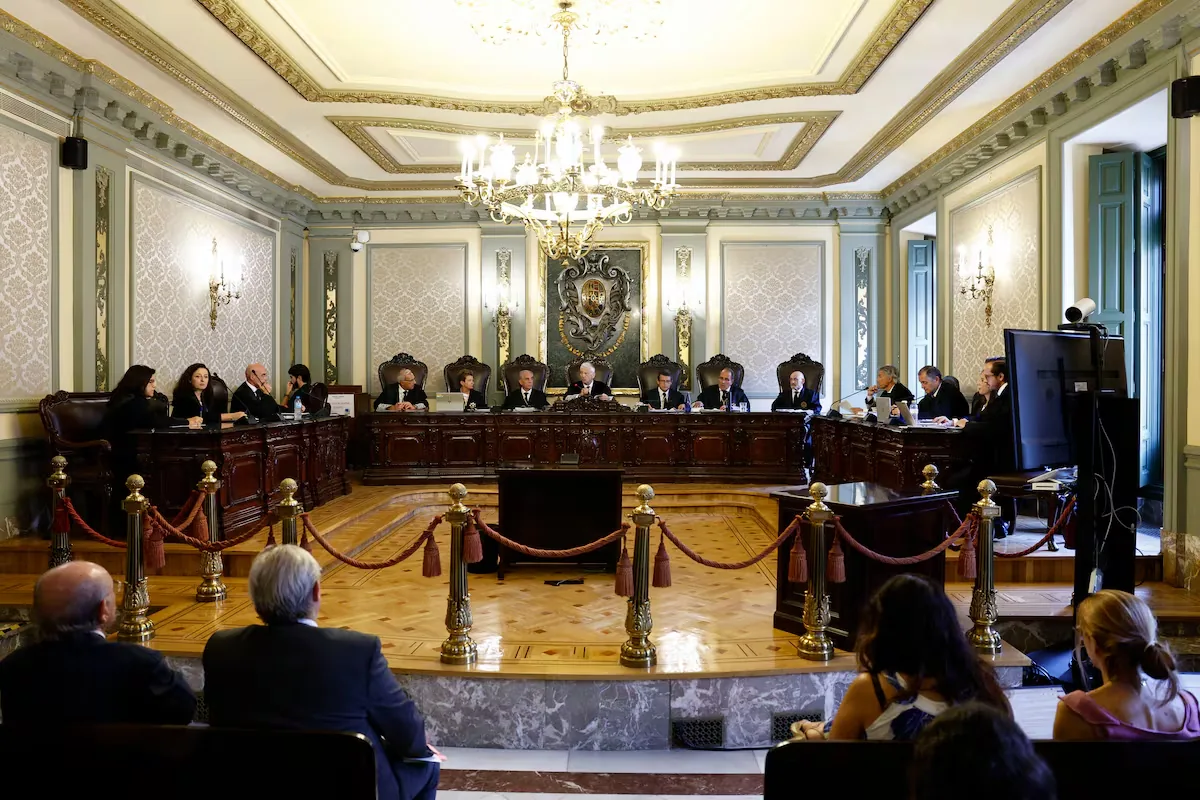
The parties, the legal counsel of the Cortes (who represents the National Institute of Statistics), the State Attorney’s Office, and the Public Prosecutor’s Office have presented their arguments during two consecutive hearings (one for each appeal) held in the Contentious-Administrative Chamber of the Supreme Court. Representing Vox was MEP Jorge Buxadé, who warned the judges that if they deny their request, the Electoral Census of Absent Residents (CERA) “will continue to increase abnormally if not illegally.” “It will have contributed to a gigantic and massive fraud,” he assured.
According to the latest data provided at the end of June by the Ministry of Territorial Policy and Democratic Memory, up to March 31, 2.4 million people had requested appointments at consular offices to submit their application for nationality under the Memory Law; 1.2 million officially appeared at those offices and 544,722 have already been approved, of which 306,000 are already registered. Buxadé, for his part, added other data: that the census of residents abroad has increased in the last two months by more than 29,000 people, and by 403,466 since 2023, “given the massive volume of new nationals without roots neither of themselves nor of their parents nor of their grandparents.” This increase, however, is not only due to nationals derived from the grandchildren’s law, but to all granted in that period.
The president of Iustitia Europa, Luis Pardo, has also requested the Supreme Court to suspend the census effects of the grandchildren’s law due to the risk of “irreversible effects” on the CERA. “The risk is very concrete: that the ruling arrives when it can no longer be materially useful,” Pardo said after emphasizing that the census for the 2027 regional and municipal elections will close in 116 days, on January 1. The president of Iustitia focused on the CERA, warning that official files identify 162 municipalities where the voters registered in this census equal or exceed the residents in Spain and 558 where they reach at least 50% of the total.
Read more 240 people have died on the roads during the summer, 10 more than in 2025
The representative of the Electoral Board denied that this body has incurred in the “abdication” of responsibilities of which the two far-right parties accuse it and recalled that the JEC has requested more information from the Electoral Census Office about the update of the CERA and has asked for the preparation of an instruction on aspects that have not been clarified, such as the criterion by which it is determined in which municipality each CERA voter is registered. For the legal counsel of the Cortes, therefore, the appeal to the Supreme Court is “premature.”
Both this lawyer and the State Attorney and the prosecutor have denied that rejecting the request of the two parties could cause “irreparable harm,” one of the essential criteria for the admission of a precautionary measure. For the public ministry and the representatives of the Government and the Cortes, what would cause irreversible damage is suspending the registration in the electoral census of those naturalized by the grandchildren’s law, because it would deprive them of the right to vote.
“The right to vote is a fundamental right and cannot be suspended collectively,” the legal counsel of the Cortes recalled, while the State Attorney emphasized that the electoral law (Loreg) establishes the mandatory nature of registration in the census of all Spaniards over 18 years old, without distinguishing the way of access to nationality, and that this right can only be suspended by a final criminal sentence.
Read more A man accepts 26 years in prison after killing his pregnant partner in Manresa