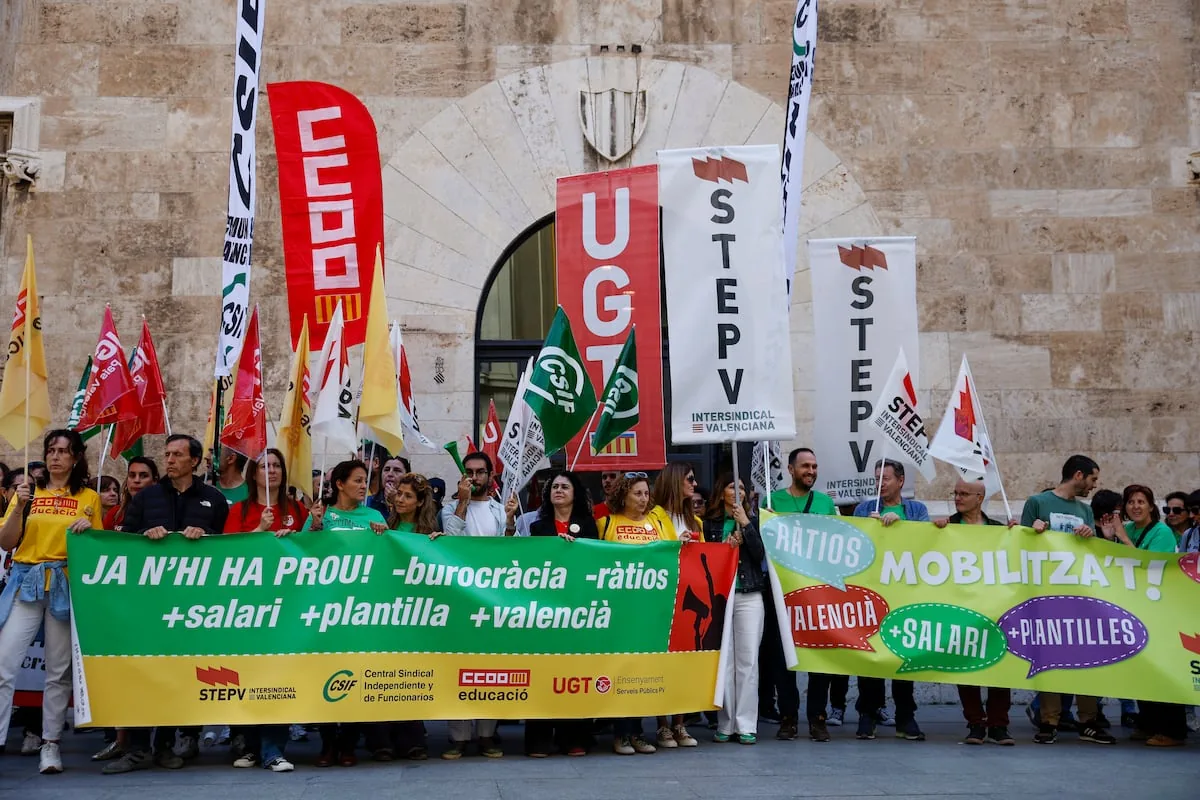
The next school year will have 808,688 students in the Valencian Community, of which 404,450 will be in Valencia, 305,280 in Alicante, and 98,958 in Castellón, representing a decrease compared to the 810,730 of last year, and with 83,921 teachers, which means 385 more teachers. The school cycle, which begins on Wednesday, September 9, starts with the conflict with the public education unions pending after the nearly month-long indefinite strike that closed last school year.
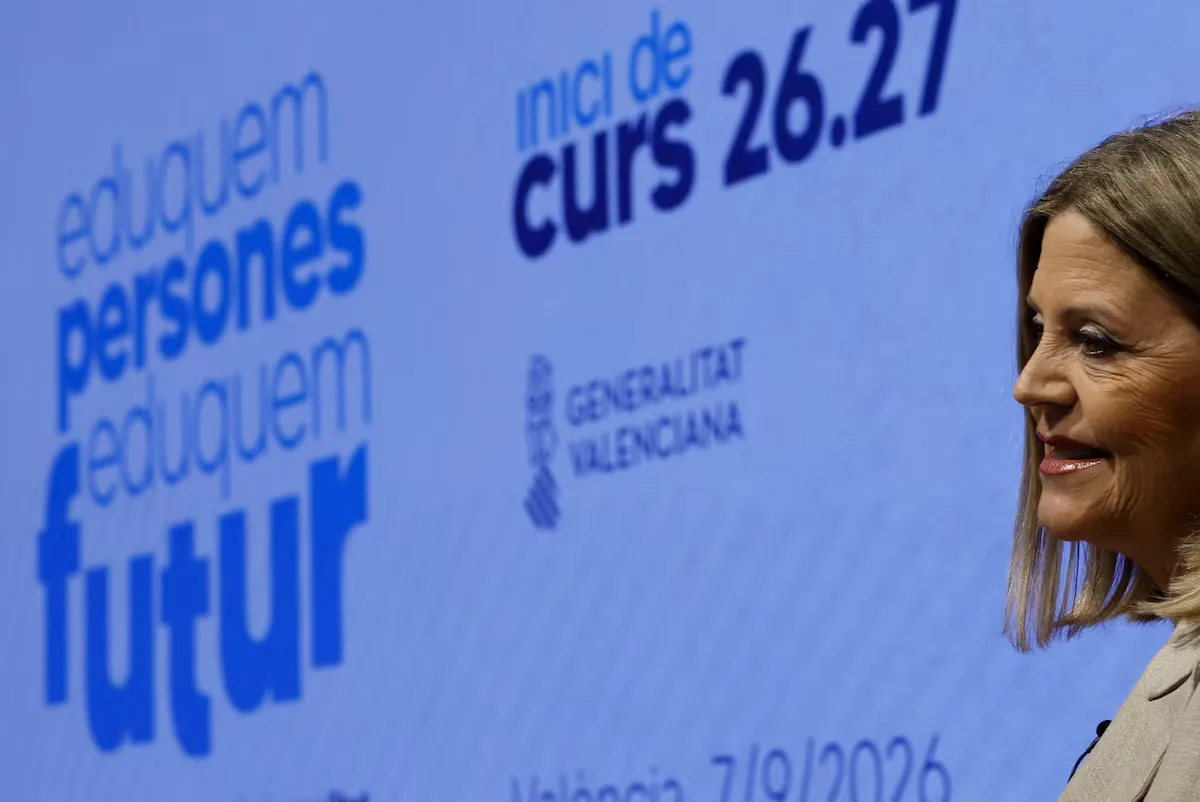
The Department of Education announced this Monday the main data for the school year that will begin this Wednesday, September 9, in Early Childhood, Primary, Secondary Education, Baccalaureate, and Vocational Training, and will end on June 18, 2027.
The Education Minister, Mari Carmen Ortí, highlighted in a press conference that the goals for this year are that “in every classroom there is a great teacher, with authority, support, and professional recognition,” that each student “learns more and that no one is left behind,” and that no family “feels alone” with education.
Ortí emphasized that 3.338 billion euros will be invested in Education until 2029, of which 802.3 million are for improving teachers’ salaries, 469.12 million for the Més Mestre Plan, and 1.410 billion for educational infrastructure.
The head of Education, when asked by the media about negotiations with the unions, stated that her department has “its own objectives” and that, “if there is no way to agree” with the unions, “they will be applied and carried out.” “Our priority goal is to have quality public education and that our students have the best we can offer,” Ortí stressed.
Asked about the points where she sees it “impossible” to reach an agreement, the minister indicated that the issue that “has most complicated” negotiations has been the matter of ratios, since, as she explained, the proposal from her Department — which is set at 25 students for this year — seeks a reduction that is “progressive, real, applicable” and that has “resources and buildings,” while the unions demand a maximum ratio of 15 students in Early Childhood and Primary.
A proposal that from the Campanar department they see as “impossible to apply within the deadlines required” since, for that, it is necessary “to have the infrastructures and the necessary staff prepared to carry out such a drastic reduction in ratios.”
“We would love to reach 15 if possible, but, of course, not within the deadlines set by the unions, absolutely not,” Ortí stated, who emphasized that the “same” applies to the ratio reduction proposed by the Ministry of Education for teaching from 0 to 3 years with “four, six, and eight” students per classroom, which means “half of what there currently are.”
And, on this matter, she criticized that “there are no structures to enroll the students who do not fit in the classrooms currently available” and stated: “If they have to stay at home, we are doing a disservice to reconciliation, besides clearly going against the law, the organic law.”