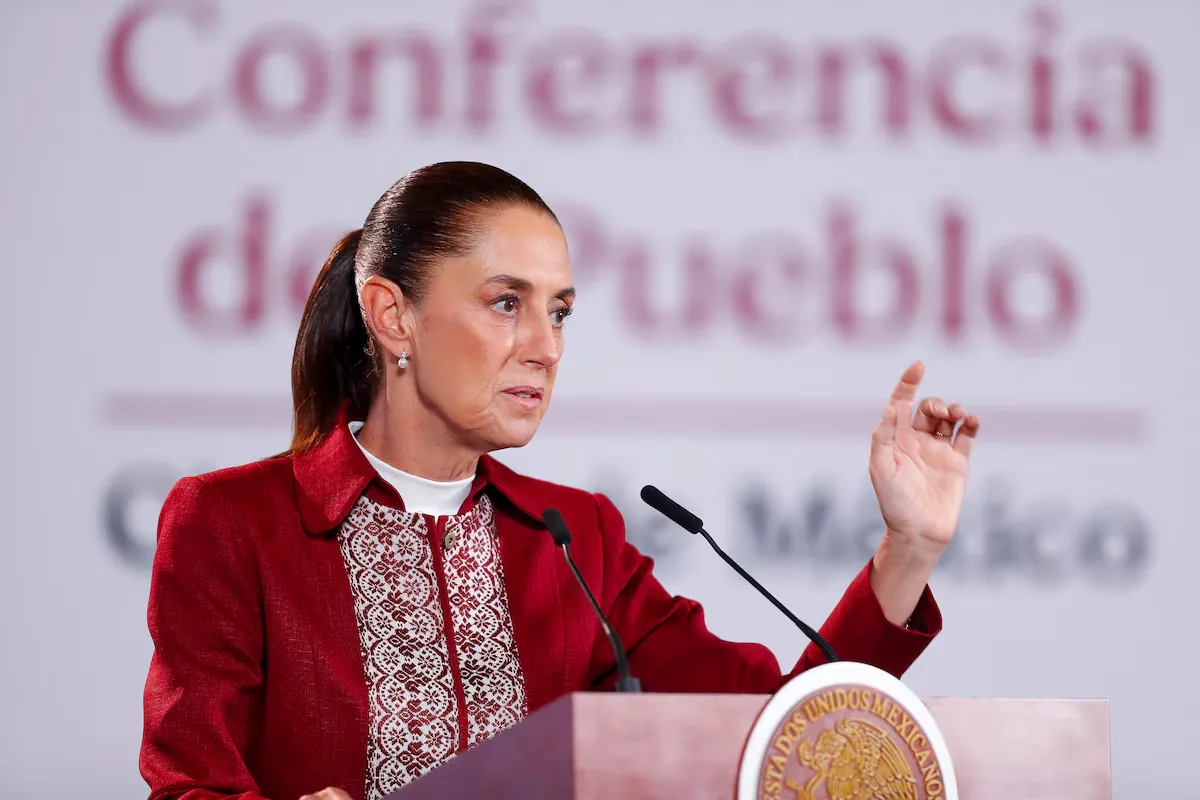
The results of the PISA 2025 educational assessment opened the discussion on Tuesday about the educational model in Mexico. President Claudia Sheinbaum has come out in defense of the New Mexican School — the educational model implemented by Andrés Manuel López Obrador focused on critical and humanistic education — after the poor results obtained by the country in the international assessment became known, while the National Union of Parents (UNPF) read the figures as confirmation of an educational crisis that, they claim, they have been warning about for years since the new model was implemented in 2019. “We have always criticized the PISA test,” was part of the president’s response during her morning conference at the National Palace. Sheinbaum questioned that the same assessment is applied to other nations with different realities and qualified the results. “The same test for all countries always has its limitations, due to the characteristics of each country,” she said. At the same time, she wanted to highlight the improvement in Mexico’s performance in Science, an area in which it rose two points compared to the previous year. And she attributed it to the model: “Thanks to the New Mexican School.”
Regarding the reading results, she said that Mexico’s decline was “much smaller than in other countries” and blamed the impact of digital platforms. “In the OECD report, they associate it with the famous digital platforms that we have been studying here. It is not exclusive to Mexico,” she concluded about this area.
All in all, the international balance leaves little room for triumphalism. Mexico scored 414 points in science, 408 in reading, and 388 in mathematics, below the OECD averages in all three areas. In mathematics, only three out of ten students reached the basic level, compared to 65% of the organization’s average. The Mexican score also fell seven points compared to 2022, according to the report. The New Mexican School eliminated mathematics as a subject in basic education to incorporate it into the training field called: “Knowledge and Scientific Thinking.” This change generated and continues to generate criticism for downplaying a subject essential for the education of children and young people.
The OECD warns that the setback is not exclusively Mexican. Reading and mathematics registered widespread declines among member countries. But it also points out that, in Mexico, the 2025 results were lower than those of 2022 in mathematics and remained approximately at the same levels in reading and science.
Read more The Guadalajara FIL recognizes the merit of Ekaré, the children’s publisher that avoids morals
The UNPF has not taken the numbers as lightly. In a statement released this Tuesday, the organization affirmed that the results “strongly confirm” their warnings about the new educational models. Parents question the lack of structure, the depth of the content, teacher training, the quality of textbooks, and the articulation between curriculum, teaching, and assessment. The figure that worries the association the most is that 41.8% of Mexican 15-year-old students are simultaneously at low levels in science, reading, and mathematics, compared to 19.7% of the OECD average. Only 0.5% reach the highest levels, according to the parents’ statement.
The UNPF’s response was not a defense of PISA itself, but a questioning of the argument that the figures can be explained by external factors. “This concerns us as parents and should occupy us,” the statement says. The results, it maintains, show that a significant portion of students lack fundamental skills to interpret data, understand texts, and solve everyday problems.
Parents have also rejected that the problem can be reduced to the use of devices and digital platforms. “Regulating the use of devices and social platforms will no longer be enough,” they have said. The organization has demanded a diagnosis that does not seek to minimize the crisis and sees the assessment as a wake-up call that cannot be diluted in international comparisons. It demands from the Sheinbaum government a medium- and long-term plan, with measurable goals and accountability, to ensure that students in public schools reach minimum learning levels. “We demand results, not speeches,” the UNPF concluded.