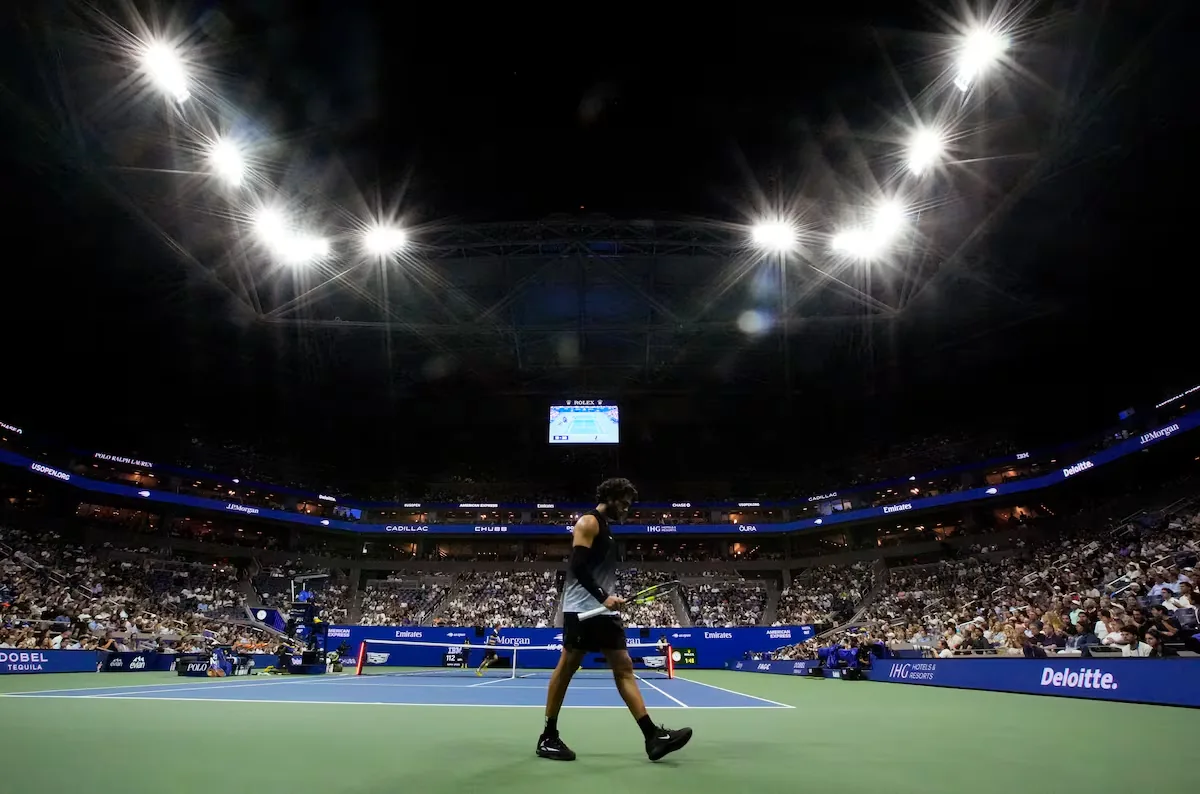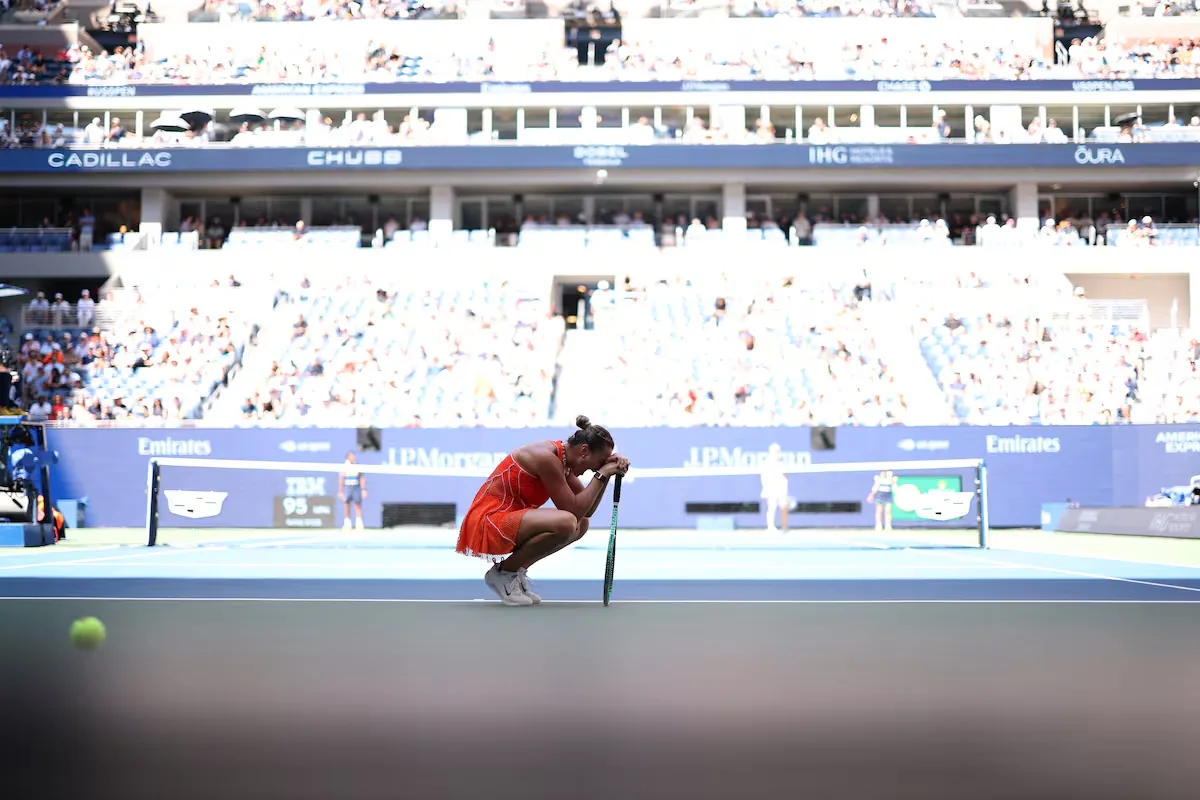
The four members of Aryna Sabalenka’s bench watch the tennis player petrified. They don’t even blink. She, seized by nervousness and with her back against the wall, is not in the mood for any celebration. Times are not good for the Belarusian, who after a superb display of greatness against the Czech Linda Noskova, has no choice but to face the cold and harsh reality of the numbers. That’s how the ranking works: it no longer depends on her, it is no longer in her hands. She wins (7-6(1), 3-6 and 7-6(7)) and progresses to the semifinals (after 2h 22m of anguish and suffering), but if Elena Rybakina manages to defeat the Chinese Qinwen Zheng this Wednesday, she would lose the number one spot she has defended for almost two years.
Read more The Government refutes PISA and parents question the New Mexican School due to poor results
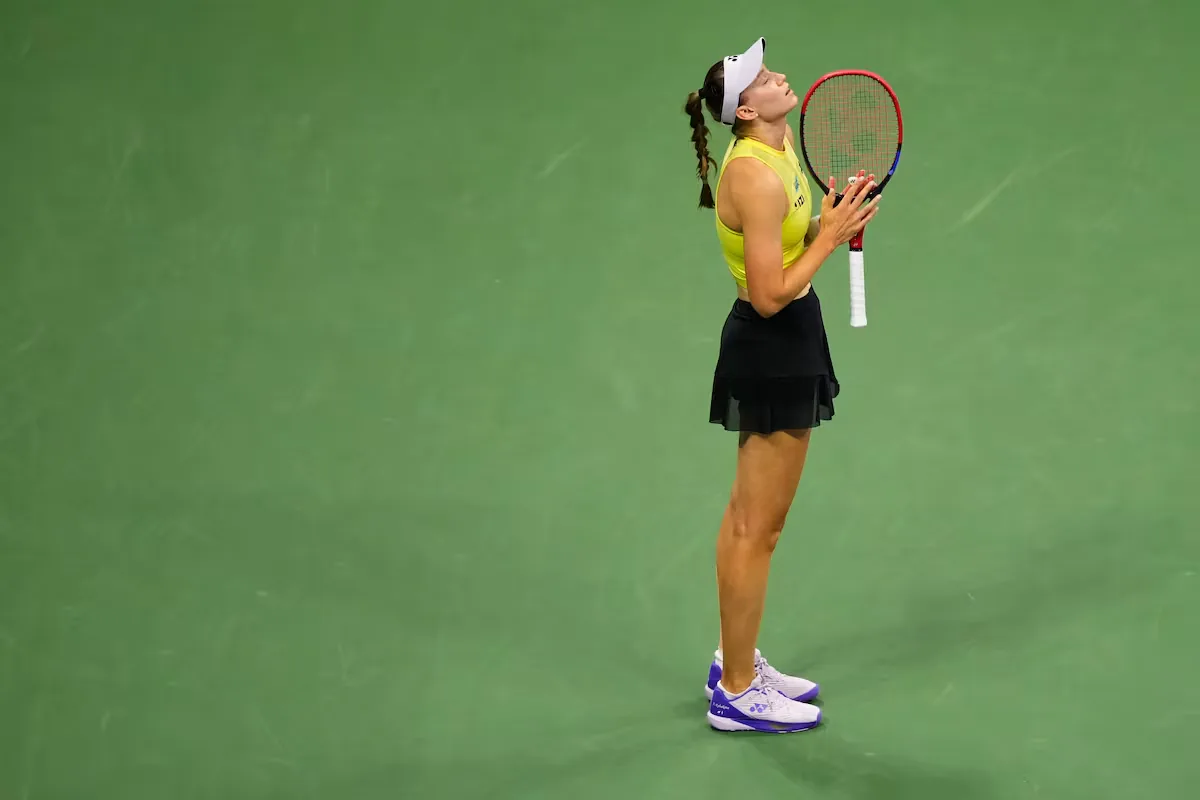
Sabalenka competes these days as if she has something very precious in her hands slipping through her fingers, knowing that three rivals are closing in on her and that Rybakina’s injured foot, doubtful until the last moment, has finally responded well. The Kazakh, following her trail for some time, has been navigating rounds and is one win away from ending a reign that has lasted 99 weeks. There hasn’t been one so long since the 186 consecutive weeks held by the all-powerful Serena Williams between February 2013 and September 2016. The Belarusian, therefore, fights against a double circumstance: that triple offensive, simultaneously, and a loss of vigor that began in April and has stretched much longer than expected. Since then, a downward trend.
The decline of Iga Swiatek — knocked out on Monday after Zheng came back from 5-0 down — cleared the field for her, until successive setbacks and the consistency of the three contenders have placed her on the edge of the precipice. Since her arrival in New York, the Minsk native (28 years old) has played with a look of anguish, exposed day after day to the tyranny of the numbers and the very long shadow of Rybakina, a tennis player who without making the slightest noise — who remembers her Wimbledon win? And this year’s Australian Open? How many ads or iconic images have been seen of her? — is one step away from becoming the thirtieth ruler of the WTA.
The scenario is very clear: Sabalenka only has to hope for a stumble from the Kazakh (of Russian origin) and win on Saturday. Everything else is no good for her. Close behind them, the Americans Jessica Pegula (32) and Coco Gauff (22) watch events attentively, in a situation identical to Sabalenka’s: if one (third in the world) or the other (fourth) reach the summit this week, they would rise to the top for the first time.
“I thought that was it, that the match was over. Feeling the defeat. That was probably what helped me relax a bit and recover my shots,” she expresses with relief, after managing to overcome an almost limit situation against Noskova, 4-2 up in the final set, 2-0 also in the final tiebreak. One and the other, opposing tennis players. The gestures and competitive fierceness of the still number one contrast with the silent demeanor of the Czech, positively expressionless (poker face) and who these days has shown that Wimbledon, where she was champion, was no mere coincidence. There is a tennis player there. In today’s tennis, often a battle of power, surely her forehand will have a lot to say.
During the last two years, Sabalenka has set a pace that began to lose rhythm with the arrival of spring. Although Rybakina beat her in the Melbourne final, she then recovered with a historic double on the North American hard court tour (Indian Wells-Miami). However, some physical problems hampered her preparation for Roland Garros (quarterfinals) and at Wimbledon (round of 16) she simply disappointed. The stumbles in Toronto and Cincinnati did not help to dispel doubts. “They are just conjectures. I only focus on myself. Why would I think about that if it is not under my control,” she replied two days earlier.
Against all odds, with pride, whatever happens she will try to capture her third consecutive major in New York, an achievement not accomplished since the interval between 2012 and 2014; then, of course, Serena Williams.
Read more La FIL de Guadalajara reconoce el mérito de Ekaré, la editorial infantil que rehúye las moralejas