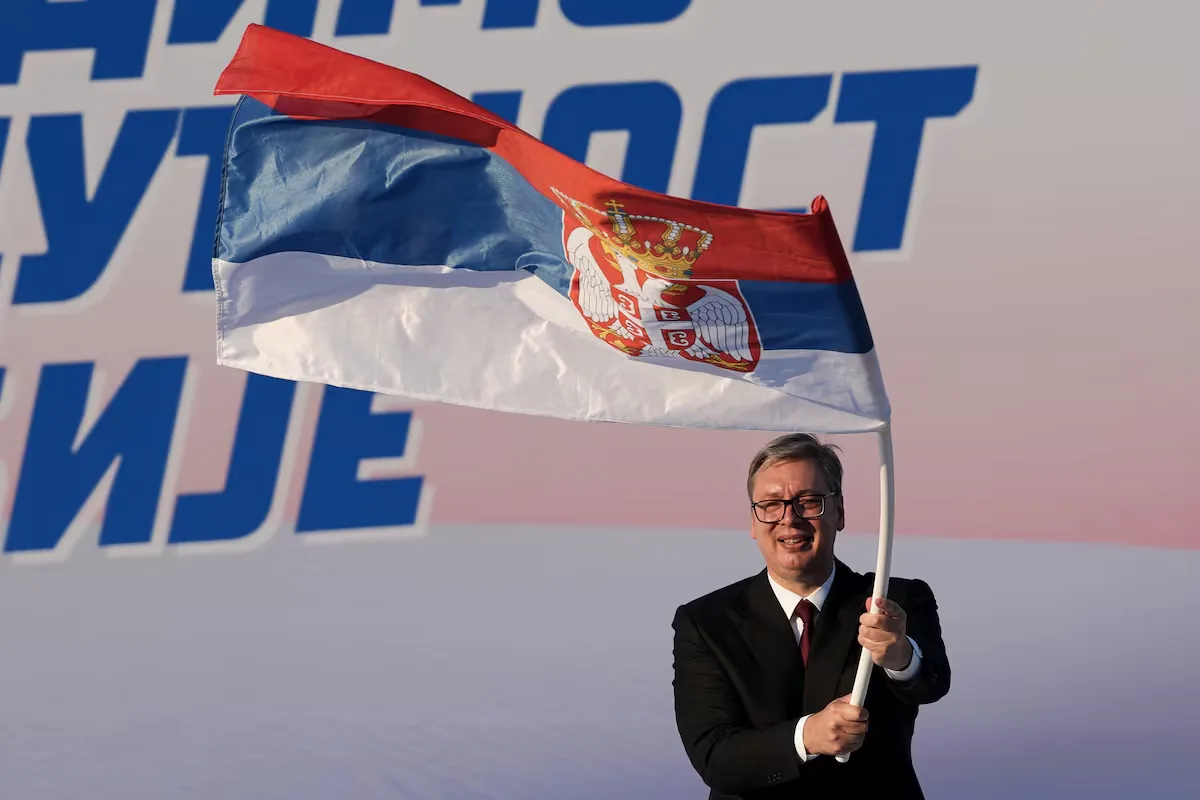




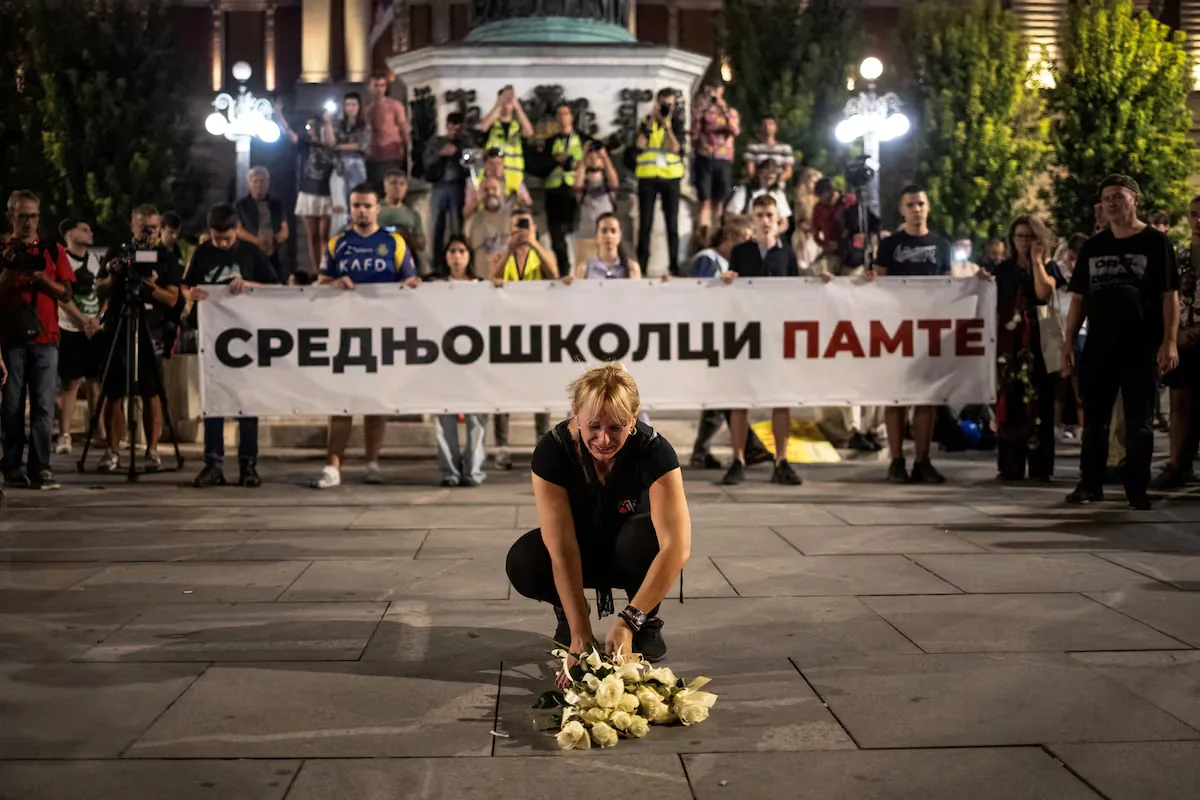
The momentum that began in the streets of Serbia after the collapse in November 2024 of the Novi Sad station and the death of 16 people will finally make the leap to the polls. President Aleksandar Vucic dissolved Parliament this Wednesday and called for early elections on October 25. Students started mobilizations 22 months ago demanding transparency and accountability over the collapse. Later, they demanded new elections. They denounced that the tragedy was no accident, but the product of many years of systemic corruption; a stance supported by hundreds of thousands of citizens of very different political affiliations in a country of 6.6 million inhabitants. Now it remains to be seen how the outrage that has filled the squares translates into votes.
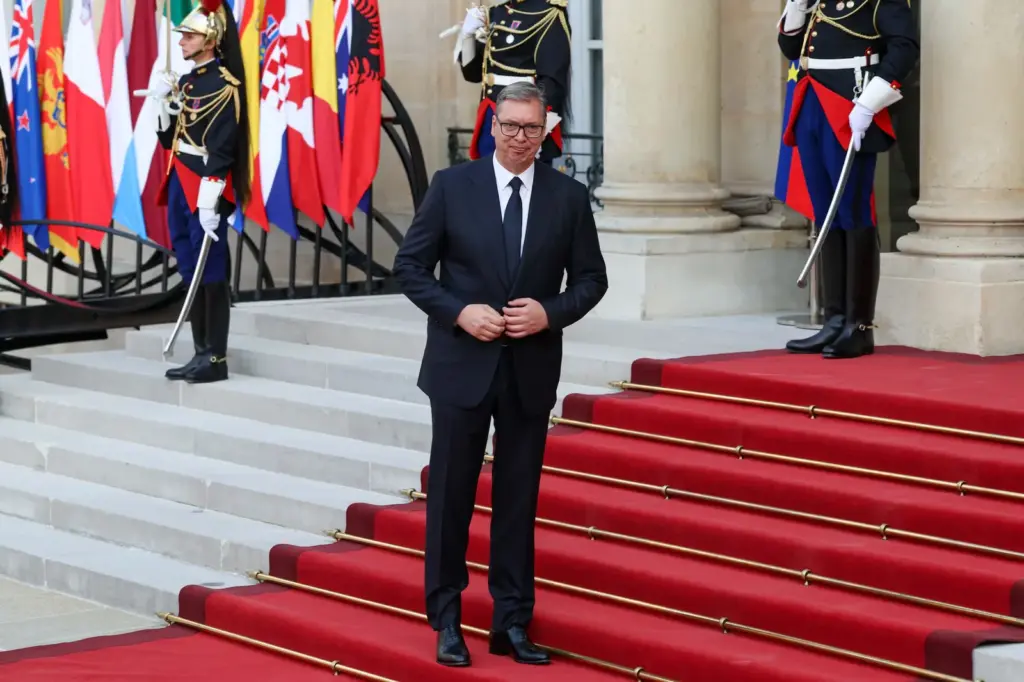
The students have not wanted to ally with opposition parties. And the doubt for many opposition members is whether the vote against the Government will be too fragmented. Opposite them they will face the solidity of a leader with ample experience. Vucic was Minister of Information between 1998 and 2000, during the Kosovo war and under the regime of Slobodan Milosevic. Later, he was responsible for Defense (2012-2013), Prime Minister (2014-2017), and President since 2017. His term was set to expire next year and he could not run again as president. So this summer he announced he would call early elections and run for prime minister.
Dinko Gruhonjic, journalism professor in Novi Sad, the country’s second most populous city, states in a written message that if Vucic has decided to bring forward the elections it is because he is convinced he can win them. “He controls practically all the key levers of power, and behind him there is not only a political and party machinery, but a structure deeply intertwined with organized crime.”
Gruhonjic, like the others consulted, believes that the majority of Serbian citizens are against Vucic. “But there is still no political force sufficiently organized to transform that discontent into a change of government,” he adds. The journalist finds it difficult for the university students to compete against “Vucic’s highly structured political and criminal machinery.”
However, Aleksandar, a student at the Faculty of Mathematics in Novi Sad, who requests not to appear with his surname, like most of his interviewed peers, is optimistic. He says that during the next 45 days the most important thing for them will be to carry their message to “every village, every city, and every neighborhood.”
Jelena, another student from Novi Sad, believes the main achievement of the student movement has been “awakening the civic consciousness” of citizens. “And once something like that happens, there is no turning back,” she predicts. Lazar Dinić, a student at the Faculty of Philosophy in Novi Sad, emphasizes that the student campaign has been operating unofficially for almost two years with hundreds of marches from one city to another and actions like A student in every village. “We all believe in victory,” he concludes.
Rasa Nedeljkov, deputy director of the Serbian NGO Center for Research, Transparency and Accountability (CRTA), indicates from Belgrade that early elections used to be Vucic’s “favorite game.” “We have had them many times without a valid reason: in 2014, 2016, 2022, and 2023. It almost seemed like an opportunity for Vucic to test the infantry of his gigantic party and showcase his growing power each time. Now the situation is different.”
Rasa explains that, “for the first time in a long time,” the country faces elections “whose winner is not decided in advance.” She adds that the survey CRTA conducted with the Democracy Action Lab of Stanford University at the end of June concluded that more voters would support the Student List than Vucic’s Serbian Progressive Party (SNS). However, Rasa clarifies that those results do not necessarily translate automatically into an electoral victory.
Student List
The analyst concludes: “It is not easy to defeat a regime that has almost turned Serbia into an electoral autocracy. In a democracy, parties win and lose elections. In an electoral autocracy, only the opposition loses elections.”
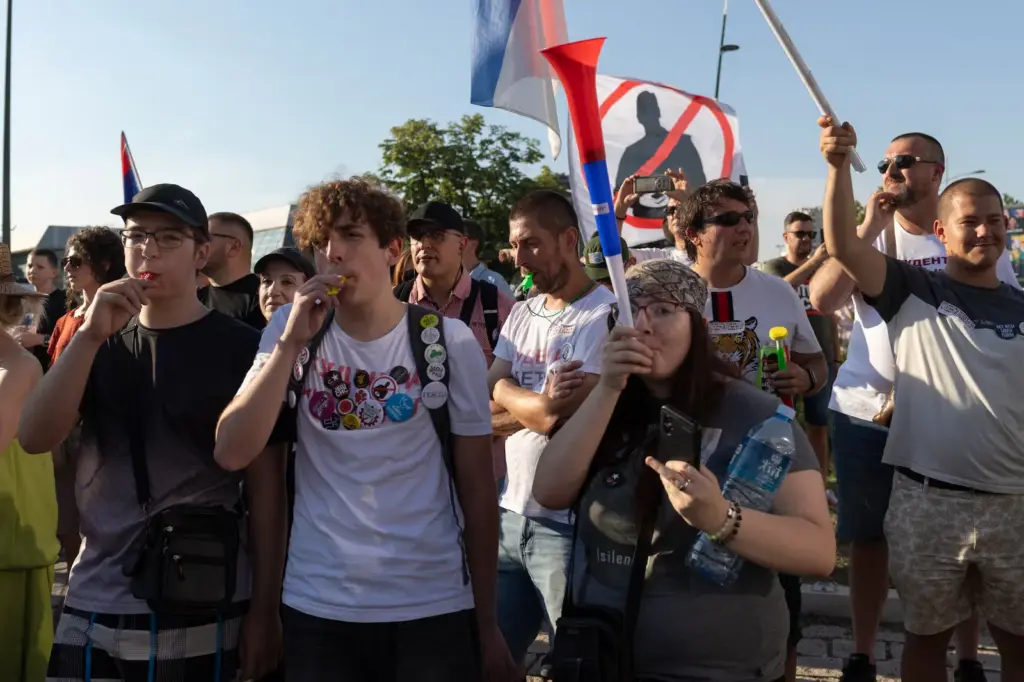
The students have not yet presented their list of candidates. But many students believe that their proposals will be the most important. Nikola Burazer, program director of the Centre for Contemporary Politics, a think tank based in Belgrade, points out via videoconference that the students became popular “because they never put a specific person at the head of the movement.” No one identifies a specific face with the student movement. “What is popular is the collective, the students as a group. However, the electoral list will have to present candidates,” Burazer adds.
The political scientist explains that this list of candidates will not be composed of students, “but of different people chosen by the students themselves to represent them.” “The selection process has been extraordinarily complex. There were proposals, filters, and vetoes. The final result will be the product of major compromises and negotiations of which we barely know details,” he notes.
“Europe must not lose sight of Serbia”
Burazer warns about the possible “dirtiness” of the campaign. “We will see numerous controversies, incidents, and even episodes of violence. That is why it is very important that Europe does not lose sight of what happens in Serbia during the coming weeks. It will be essential to closely monitor both the campaign and election day.”
Aleksandra Tomanic, an economist and political scientist residing in Belgrade, expresses her hopes for change by phone: “The electoral fraud machinery [by the Government] is designed for a ‘normal’ level of participation in Serbia, around 50%. If the students manage to mobilize more people and significantly increase turnout, they can win.”
Tomanic argues that the student movement has been preparing for the elections for many months. “It has been present in villages and small towns, organizing its own network of election observers, etc. However,” she specifies, “it is clear that the secret services try to destabilize them, break their unity, and damage their public image. And it seems that in some cases they are having some success.”
Mila Pajic, an activist from Novi Sad, says by phone that since March last year she has been “exiled for political reasons” in a place she prefers not to name. From there, she states that the President of Serbia is not fully aware of the risks that early elections could pose for him. “I think the authorities are convinced of their victory because they have imposed a very clear rule on themselves: they must never lose, not even in a small municipality. And that may be precisely the biggest factor that ends up removing them from power: their inability to imagine the possibility of defeat.” Pajic warns that “the authorities will use all methods and all forms of pressure at their disposal to stay in power.”
Biljana Stepanovic, director of the Serbian digital site Nova ekonomija, argues from Belgrade that if truly “free” elections were held, the students would win. “They are very well organized and have been able to mobilize public opinion like no political option had done before. But Stepanovic believes there is fear that Vucic will not accept the result under any circumstances, even with a resounding defeat.”
Silence over Ratko Mladic’s funeral
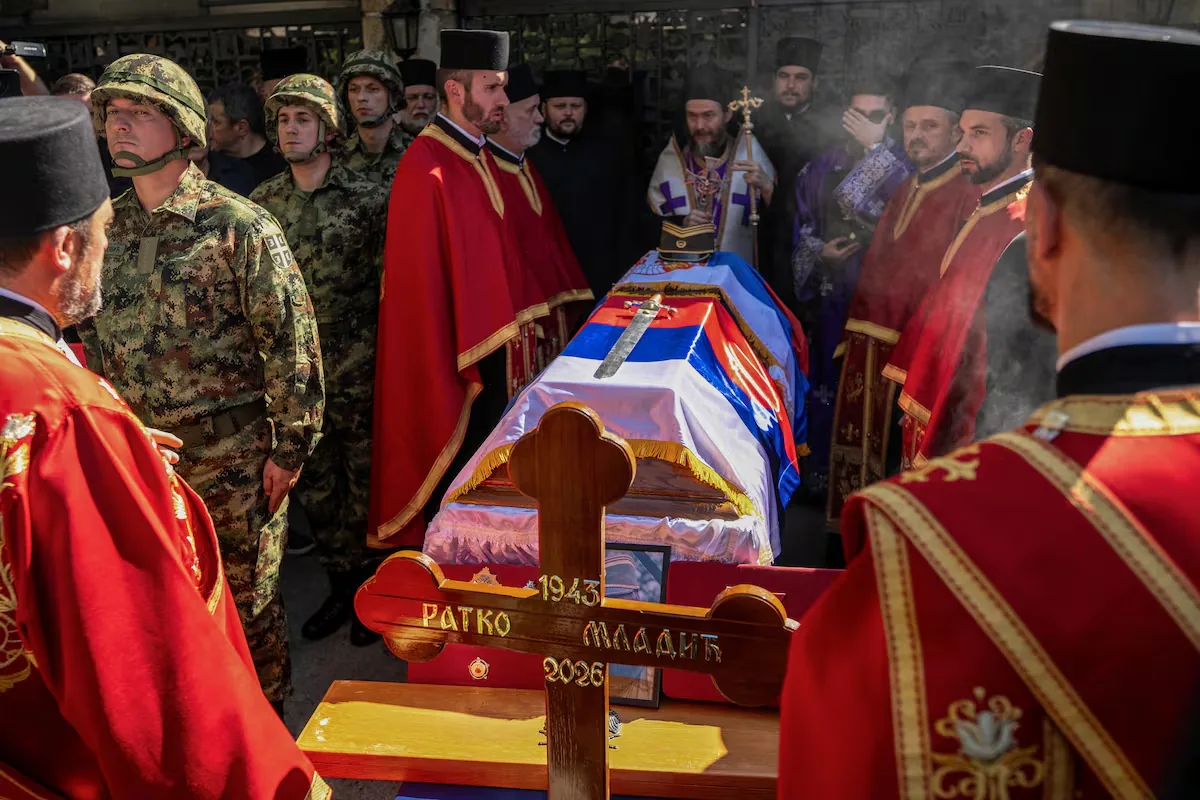
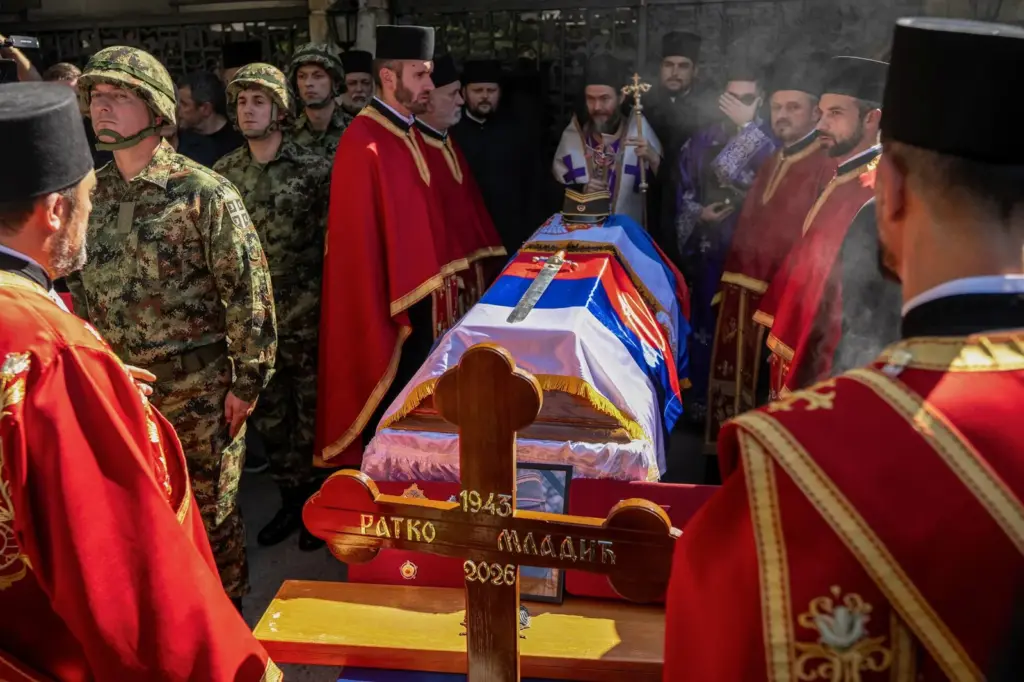
There are sensitive topics on which the students have preferred not to comment. This is the case of the funeral of war criminal Ratko Mladic, who was buried on September 7 in Belgrade with military honors. European Commission President Ursula von der Leyen and European Council President António Costa harshly criticized Serbia on Tuesday for the official support and presence of high government officials at the funeral. But the students have not spoken on the matter.
Political scientist Nikola Burazer believes that the silence on this issue has been a very “intelligent” decision by the students. “Serbia is deeply divided on issues such as nationalism, the wars of the 1990s, the European Union, Russia, or Kosovo. Any reaction would have harmed them. If they had glorified Mladic it would have been a catastrophe, both inside and outside Serbia. And if they had openly criticized him, they probably would have lost important votes. And if they had taken an intermediate position, they would have been attacked by everyone. If the opposition wants to defeat Vucic, it must do so on the issues where he is most vulnerable: corruption, institutions, democracy, and the rule of law.”
For analyst Rasa Nedeljkov, regardless of what happens at the polls, the country is no longer the same. The rift that opened in Serbian society after the collapse of the Novi Sad station has transformed the political map and has left Vucic’s regime facing its most uncertain challenge.