Zakaria was one of nearly half a thousand people who on March 2, 2022, jumped the border fence of Melilla. Still a minor, he was 17 years old, and had made a long journey to escape the climate of terror existing in his hometown in Mali. Once on Spanish soil, when he was heading to a youth center seeking support and advice, a civil guard struck him with a baton on the face, destroying his left eye and causing total loss of vision. Despite the assault, which was repeated on his back, he managed to reach his goal bleeding and very weakened. Today he lives in Barcelona under refugee status and on Wednesday morning he testified before the judge regarding the complaint he filed against that officer and the hierarchical superiors who might be responsible for those events.
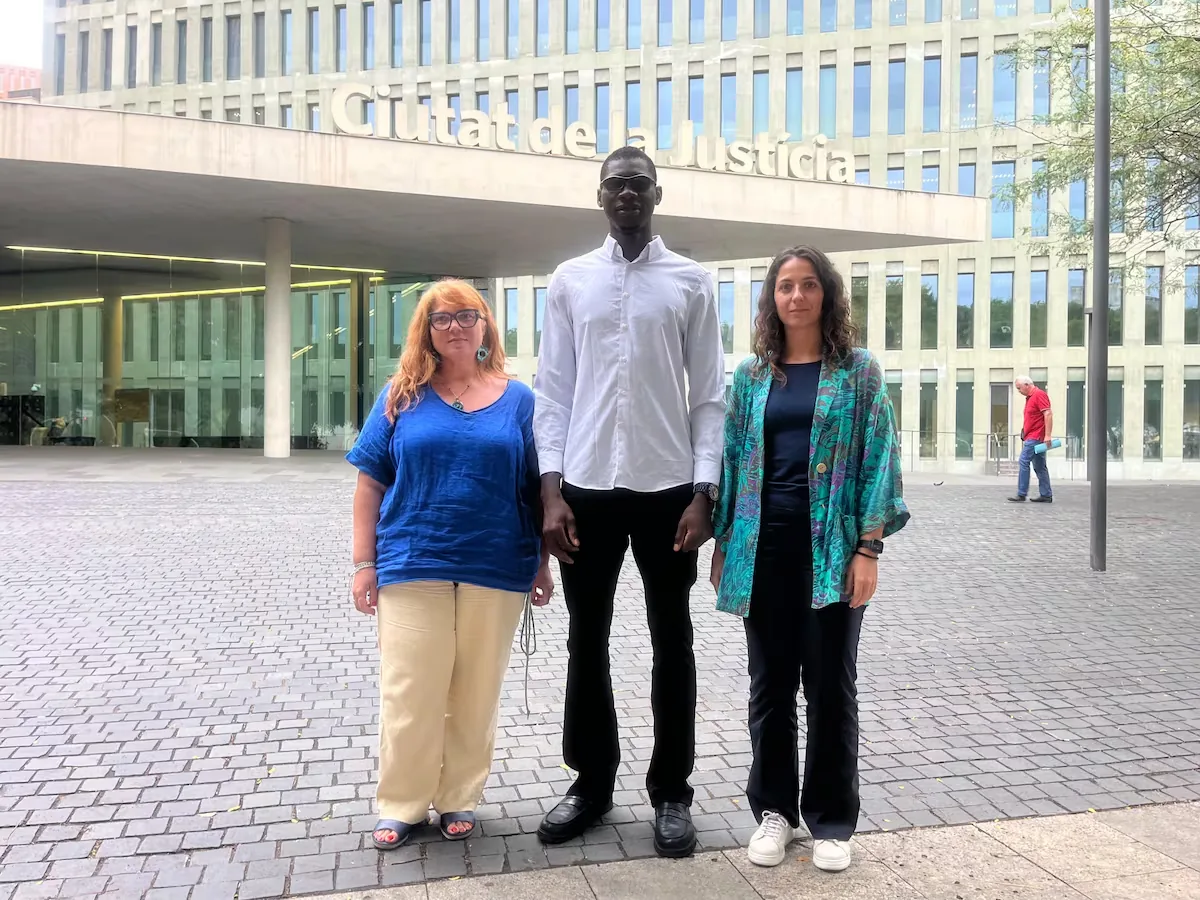
Behind black sunglasses that he preferred not to remove, Zakaria said he was happy to be able to restart a judicial process that had accumulated a delay of three and a half years. “I don’t want the same thing to happen again to other people seeking refuge to survive,” he said at the doors of the Barcelona City of Justice. He has had to be patient. His case was lost for two years in court due to administrative errors and is now reactivated after being archived and only reopened following an order from the Provincial Court of Málaga.
The young man shares an apartment while taking training to be able to work. He already worked as a cook, but had to leave the position because the environment of fumes near the stoves caused him intense pain. He has a recognized 40% disability after undergoing surgery a year ago to remove the eyeball. Today, represented by the human rights association Irídia, he only wants a little justice for being, as the association’s litigation coordinator Sònia Olivella has defended, “a victim of brutality at the border.” Olivella is optimistic about the “impression” the judge, who takes over the case, gave her that he will take the case to the last consequences. The Prosecutor’s Office was absent from the session.
Despite the long wait, it is as if everything has to start over in the process. The necessary proceedings to find the officer who caused the injuries have not been carried out and, as Olivella has argued, “identifying the perpetrator is the most important thing.” One of his bosses did testify as a witness. “The time and obstacles to investigate such serious facts cause harm, they are a form of revictimization,” Paula Rosi, psychologist at Irídia, denounced alongside Zakaria.
The complaint denounces crimes of torture and against moral integrity, injuries with loss or uselessness of a main organ, and with the aggravating factors of racist motives and public character prevalence. The complaint states that beyond the violent baton blow that took away the vision in his left eye, the assault caused Zakaria “strong feelings of humiliation, anguish, fear, and helplessness.” This Wednesday he admitted being satisfied with his statement before the judge, simply because “I didn’t think we would get this far.”
The statement, Olivella explained, covered from the assault to the young man’s motivations for jumping the Melilla fence in search of a future in Spain. The complaint explains that if he did not stop running after being injured by the officer, it was because of the fear of being caught and deported without the option to apply for asylum in Spain, as was happening with other people whom the officers detained and immediately returned to Morocco. In fact, a travel companion was detained by the Civil Guard officer who assaulted him and was returned in hot pursuit without medical aid and without being identified.
Due to the injuries, Zakaria had to spend 15 days in the Ceuta Hospital, where he was operated on for an eye perforation, and he still has sequelae from everything that happened. He has been diagnosed with post-traumatic stress disorder and major depressive disorder due to what he experienced on the morning of that March 2.
Read more Barcelona — Feyenoord: when and where to watch the Champions League match