









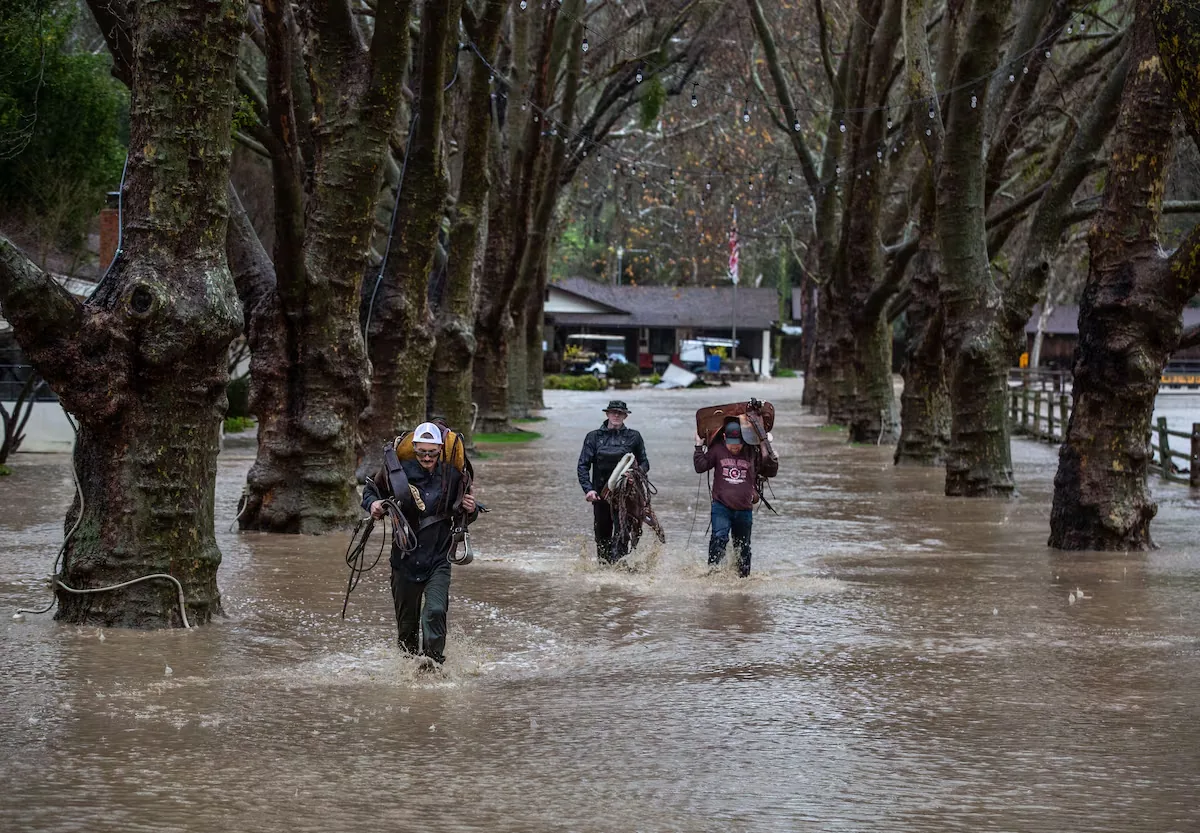
Atmospheric teleconnections are relationships between climate anomalies that occur between very distant geographic regions. The most studied example is El Niño, a natural phenomenon that increases the heat of the waters in the tropical Pacific and changes temperature and rainfall patterns in America and Africa, thousands of kilometers away. A new study has discovered a teleconnection not studied until now, which links extraordinary warming in Tibet at the beginning of two winters with torrential rains in California a few months later. The authors acknowledge that there may be other factors explaining the increase in precipitation, so they urge further research on the phenomenon to improve predictability.
Read more A 63-year-old woman drowns during heavy rains in Felanitx (Mallorca)
“We conducted a statistical analysis of land temperature and precipitation data and discovered a correlation between high land temperatures on the Tibetan plateau and late winter precipitation in California,” explains Yongkang Xue, professor of Atmospheric and Oceanic Sciences at the University of California (UCLA) and lead author of the work, via email. “We experimented with a model that uses sea surface temperature as the main factor and it failed to reproduce both phenomena. Then we improved the initialization of land temperatures in Tibet, with which the model successfully reproduced both the warming and the rains,” he continues.
Then, they investigated the underlying mechanism linking both phenomena: “The warming of the Tibetan plateau excites a Rossby wave train [natural undulations in the atmosphere] that propagates from Tibet to the Rocky Mountains in the US. This causes the waves to break, which intensifies atmospheric rivers and leads to heavy rains,” says Xue. This happened both at the start of the 2016-17 winter and the 2022-23 winter, which triggered torrential rains that caused severe damage in the state of California.
“Sea surface temperatures can only explain between 30% and 40% of weather and climate variability, while historically the role of temperatures in high mountain areas has been overlooked,” he advances. “A collaborative research (GEWEX/LS4P) showed that, during summer, the influence of soil temperature can be equated to that of the oceans. This study represents the first time that such pioneering research is extended to winter patterns, thus covering a critical gap in our prediction capabilities,” concludes the researcher.
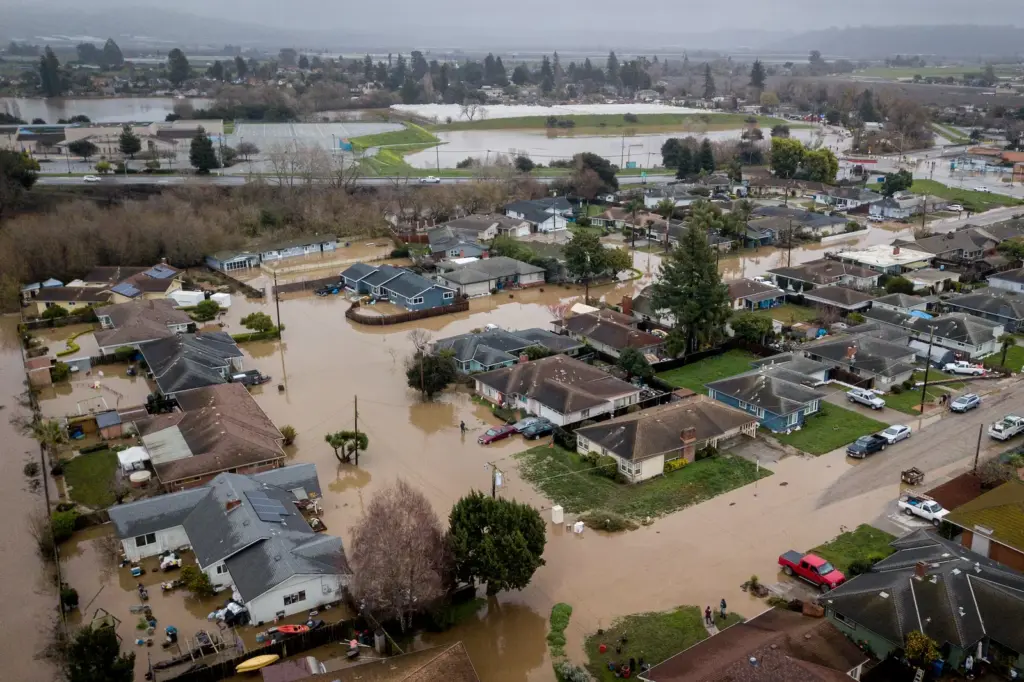
José Ángel Nuñez, spokesperson for the State Meteorological Agency (Aemet) — who did not participate in the study — points out: “The work shows another case of atmospheric teleconnections, which act like planetary domino pieces: a disturbance in the thermal balance or atmospheric pressure over one area of the globe, Tibet, generates a perturbation that travels through the atmosphere and influences the weather in areas located thousands of kilometers away, in this case in California.”
Read more Juliana Guerrero confesses she falsified her university degrees
Francisco Martín León, meteorologist and collaborator of Meteored — who also did not participate — comments: “Teleconnections aim to improve seasonal forecasts, those made several months in advance, which talk, for example, about a summer being warmer and drier than normal, or a winter being rainier or colder. If I know that with an intense El Niño phenomenon, we can predict that the hurricane season will be less intense than normal, and possibly storms will reach lower latitudes, resulting in more precipitation in Western Europe.”
Improving climate predictions
As both experts acknowledge, this type of research is important to improve climate predictions in the future. “The skill of seasonal forecasts is greater in the tropical belt than in the mid-latitudes where Spain is located, where the noise of random weather fluctuations is usually much higher than the predictable components at seasonal scale, which increases uncertainty,” says Núñez. He continues: “The effects of El Niño often arrive very weakened in Europe, hence the relevance of discovering other teleconnection patterns, like the one described in the study, to continue improving prediction tools in our latitudes.”
As the authors themselves acknowledge in the paper, “the Earth system is complex, with numerous interactions and feedbacks, and it is unlikely that a single factor can fully explain extreme phenomena.” Therefore, “the effect of Tibetan warming explains only part of the observed precipitation anomalies, suggesting that other factors, including internal atmospheric variability and possibly other external factors, such as snow, vegetation, and soil moisture, may also contribute to causing these anomalies.” Thus, they urge further investigation on this issue.
In any case, the Aemet spokesperson considers that “these studies significantly contribute to the knowledge of teleconnections that allow improving seasonal forecasting (several months ahead),” that is, “determining probable trends over longer periods at regional scale, something key for decision-making in strategic sectors such as civil protection, energy, or agriculture.”
Read more Harald V of Norway is buried in a sober and solemn farewell