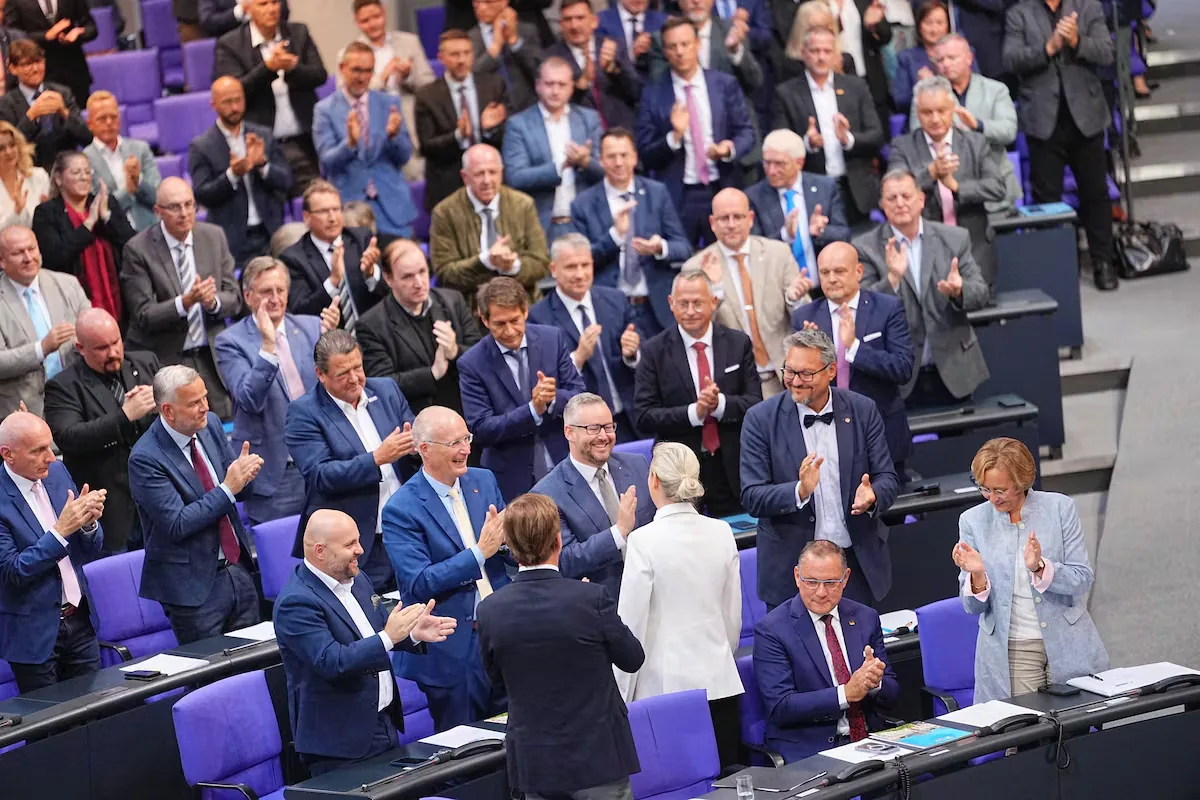
“I left my meeting with the AfD representatives terrified.” These are the words of Jean-Philip Tanguy, a heavyweight of the National Rally, the French far-right party, this Tuesday on BFMTV television. Tanguy was asked about his assessment of AfD’s electoral victory in the federal state of Saxony-Anhalt, where 44% voted for them last Sunday: “I am appalled: that so many people have supported a party that downplays Nazism and has even said you could be in the SS and be a good person. And their proposals for what they call remigration, even expelling Germans of foreign origin… We quickly decided to break off any relationship with them.”
Read more The Sahrawis receive the nationality law as a historical reparation with recognition of rights
What is it about Alternative for Germany (AfD) that puts not only the German system but also its theoretical European partners on alert? “Their problem is that they insist they do not intend to change and accept the system,” explained Axel Salheiser, director of studies at the Institute for Democracy and Civil Society in Jena (IDZ), on Sunday in EL PAÍS. “They are not from the same family as Giorgia Meloni or Marine Le Pen, because these have excluded the most radical sectors from their parties and have accepted the basic rules of democracy. AfD does not want to do this.”
The Central Evangelical Church of Germany (EKMD), a religious and non-partisan institution, published a study in August detailing point by point why AfD “wants to break democracy and the constitutional order.” The same conclusion was reached last year by the Office for the Protection of the Constitution, the German domestic intelligence service (BfV), which produced a report labeling Alternative for Germany as a “right-wing extremist force.” The document was intended to obtain executive authorization to monitor the party.
A court ruled last February that the intelligence services’ request was inadmissible because, according to the judges, they relied on statements from AfD members that proved their subversive ideas but not actions or an organizational strategy to overthrow democracy. The court ruled that the BfV could not spy on AfD.
A report published in June by a group of lawyers from the GFF organization called for the party’s ban based on 1,500 pieces of evidence collected over a year that, in their view, justify AfD’s prohibition. This work mainly gathered public statements from its representatives. It emphasized the intent to persecute opponents but focused on social media messages and speeches in which party members called for the imprisonment of former Chancellor Angela Merkel for hosting refugees or the previous Olaf Scholz government for — supposedly — negotiating multimillion-dollar benefits for pharmaceutical companies.
The Hans Böckler Foundation, linked to the DGB union, explains in an analysis from this August that AfD is “a right-wing populist force because it plays on pitting the idea of a people against political elites, media, and justice.” Nothing uncommon in countries like Spain on either side of the political trench. In Germany, however, it is something new. The weight of history, recalled Vice President Sudha David-Wilp on Sunday, makes Germany a different country: “For historical responsibility, it is a pillar of stability in Europe, but the rise of AfD shows that the political margin of its leaders is shrinking.”
“Bed, bread, and soap”
The Evangelical Church study, on the other hand, focuses on the far-right’s electoral programs and legislative proposals that would violate the law. And the result is devastating: in matters of immigration and education, the measures are the most radical.
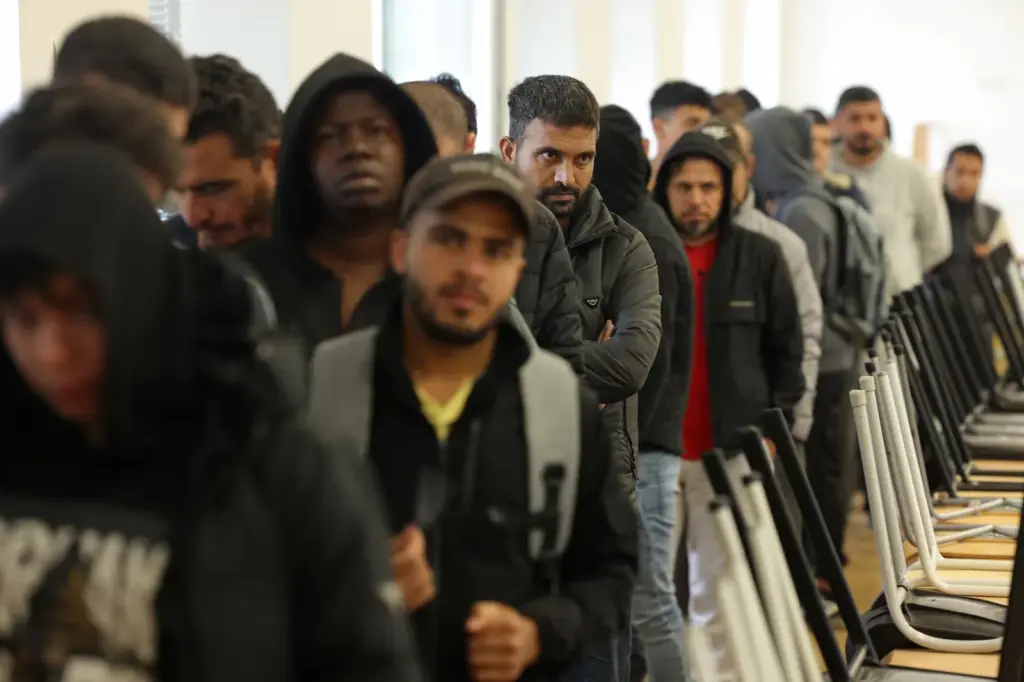
AfD’s government program in Saxony-Anhalt proposes suspending all public aid to any asylum seeker and refugee who is proven able to work but does not. Students from families in the asylum process and refugees will study in classrooms separated from the rest of the school because the school will no longer assume integration tasks. “Our children cannot suffer the consequences of massive immigration,” the electoral program states.
Schools with children from foreign families must also hire private security to watch over them, according to AfD’s proposal in Saxony-Anhalt. The reason, they argue, is that “the rate of school violence is higher when there is a migrant population.”
AfD also wants to suspend foreigner reception projects in that federal state, but if by law its government were forced to accept them, they would be concentrated in specific buildings and in areas “far from the local population, to avoid potential conflicts.” The far right would thus materialize a sadly famous 2024 slogan that it brought to the Bundestag in a proposal to suspend economic aid to asylum seekers: “Only bed, bread, and soap for asylum seekers.”
“Authentic patriotism”
The party led by Weidel also wants to drastically limit the possibility of a person having dual nationality and eliminate the right of a person born in Germany to foreign parents to opt for German nationality. AfD demands tougher exams to prove that “whoever has German citizenship embraces their new culture and forgets the previous one.”
AfD’s program in Saxony-Anhalt goes further: if in power, it will introduce mechanisms to evaluate that any public contract or agreement is with entities that do not defend “anti-Germanism” and that subscribe to “authentic patriotism.” The Evangelical Church assumes that any measure in this regard will be declared unconstitutional.
The Robert Bosch Foundation also assumes that the reform AfD wants to apply in the study of History in Saxony-Anhalt schools will be suspended by the courts. The proposal of its regional candidate, Ulrich Siegmund, is to reduce the syllabus on the Nazi era to highlight other moments in history that reinforce “a positive feeling of being German.”
AfD’s climate policy is another area where a legal battle is assured. The party demands suspending all decarbonization agreements signed by Germany with the EU and the United Nations. The party considers climate change a natural process and that fighting it only harms the economy. In Saxony-Anhalt, Alternative for Germany promises to suspend any new licenses to install renewable energies and revoke obligations in building energy efficiency.
Neo-Nazism
Regarding Germany’s relationship with the EU, its positions are ambiguous but Eurosceptic. Leaving the Schengen area — which allows free movement of citizens across European territory — is a clear demand by AfD, but Germany’s exit from the EU has been nuanced in the last two years. “The EU must die so that the true Europe may live,” proclaimed Björn Höcke, one of the party’s most radical leaders, at a rally in 2023. His words were a nod to a famous phrase of the National Socialist Party after Germany’s defeat in the Battle of Stalingrad in World War II: “They died so that Germany may live.”
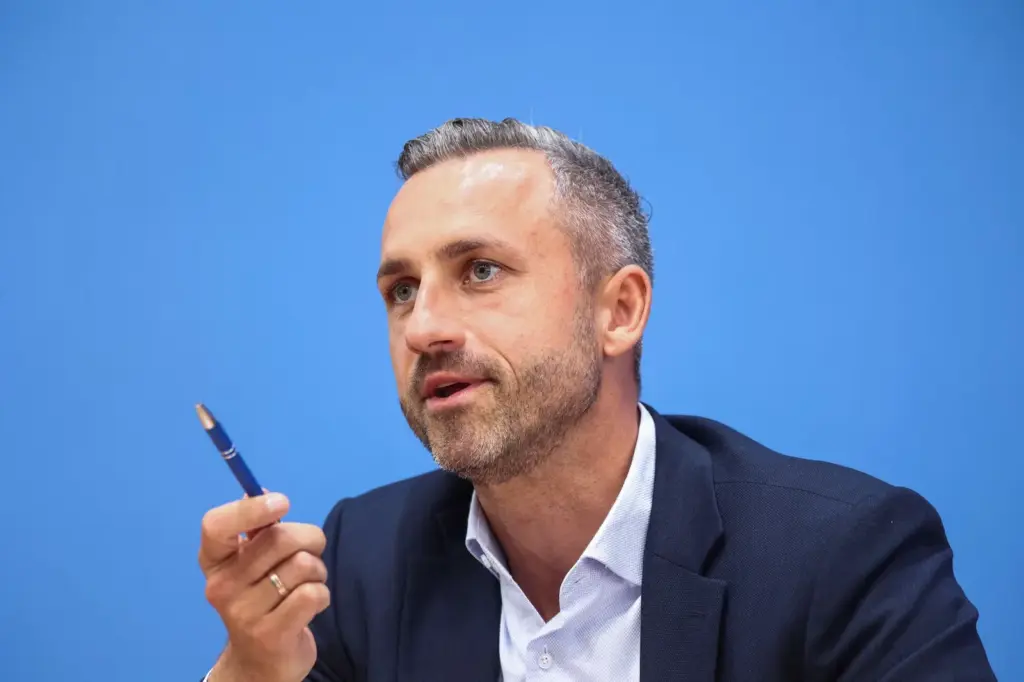
AfD also has some of its roots in neo-Nazism. Siegmund, the candidate in Saxony-Anhalt, participated as a teenager in summer camps of an ultra organization now banned, where students studied ethnic separation, adorned themselves with swastikas, and marched in uniform.
The Amadeu Antonio Foundation, which works for migrants’ rights in Germany, keeps track of violent organizations prosecuted for terrorism in which AfD militants have participated. This institution has identified 13 such cases since 2016 (three years after the party’s founding). The latest, in 2024, was the arrest of members of the Saxon Separatists group, an ultra organization proposing violent acts against foreigners. Three of those arrested were AfD militants.
Read more 30,000 pesos bonus per child in Chile: how to know if you qualify and who can receive it