










She had been going to the same gym for a year and a half. Amid the noise of weights and selfies, she had barely exchanged any brief and trivial conversations with two colleagues. She liked them, but taking the leap and asking for their phone number to meet outside took her 18 months of doubts. “I thought it over, I thought a lot. I was very afraid of rejection,” explains Andrea. “I think the difference with childhood is that we shared spaces where play united us, but as adults, obligations, ego, and prejudices end up driving us apart,” she maintains. The story of this 32-year-old Argentine is not exactly an exception, but a reflection of a phenomenon that affects many people upon reaching maturity.
Read more From Dolly Parton’s wigs to the hair of MAGA women: the political meaning of hair
“I have never had friends like the ones I had when I was 12,” writes the protagonist of the film Stand by Me (1986), based on Stephen King’s novel. Making friends in childhood or adolescence was easy, an almost natural process, a logical consequence of sharing a desk or park. However, when things start to get more serious in life, creating deep bonds becomes increasingly difficult. Moving to a new city, changing jobs, or starting a family complicate our lives. Making true friends requires conditions that clash with adult life.
Perhaps to understand why for many the mechanism of building intimate friendships stalls upon reaching adulthood, it is best to analyze the dynamics that nourished those bonds in youth. According to sociologist and University of Barcelona professor Sandra Escapa, friendship in maturity has lost its infrastructure. “Close bonds need continued proximity, repeated encounters that no one has previously organized, and a context where people can let their guard down without fear,” she argues. “School and university easily and freely guaranteed those three variables, but adult life dismantles them one by one through long workdays, commutes, caregiving duties, and residential mobility often forced by housing prices that prevent neighborhood bonds from taking root.”
Adding to this scenario is an institutional barrier. In Escapa’s words, friendship stands out as the only significant relationship without formal recognition, since it lacks papers or legal frameworks comparable to marriage. “That condition makes it flexible, but it also makes it the first thing sacrificed when time is tight. No one asks for a day off work to care for a friend,” she emphasizes.

Clinical psychologist and psychoanalyst José Ramón Ubieto, author of the book Digital Solitudes (Ned, 2026), places the origin of these difficulties in the life stage change. As he explains, “childhood and adolescence are moments of initiation into life, play, and learning, where the peer group is very important because we learn and see the world through others’ eyes and, above all, through others’ desires.” At that stage, it’s as if we need friends. In adulthood, however, that initial journey has already been completed. As a result, affinities become much more selective and require matches in political, cultural, or leisure criteria, while available time drastically reduces due to professional and/or family responsibilities.
However, not all complications in making intimate friends in adulthood are marked by individual circumstances. There are also problems arising in the more collective sphere. Unlike what happens in the early decades of life, adult urban sociability seems to require an economic transaction. Perhaps in the past, adults spent more time in free public spaces. Many remember, for example, the chairs at doorsteps where neighbors enjoyed the evening air. It’s not that these places have disappeared, but “much of urban sociability today takes place in spaces where consumption is the entry requirement [bars, terraces, restaurants], which turns sociability into an expense,” warns Escapa.
The sociologist adds another key factor: the need to schedule appointments well in advance eliminates a whole layer of intermediate relationships with which we coincided spontaneously at university, recess, or the plaza. Without needing to arrange meetings. This has reduced encounters to people who are already important in our lives and has left out many potential new friends. People we would never meet up with. “Still,” Escapa qualifies, “we must be careful with nostalgia. Old spaces also excluded.” She gives examples like the bar (usually a male territory) or the parish, which were not neutral for everyone.
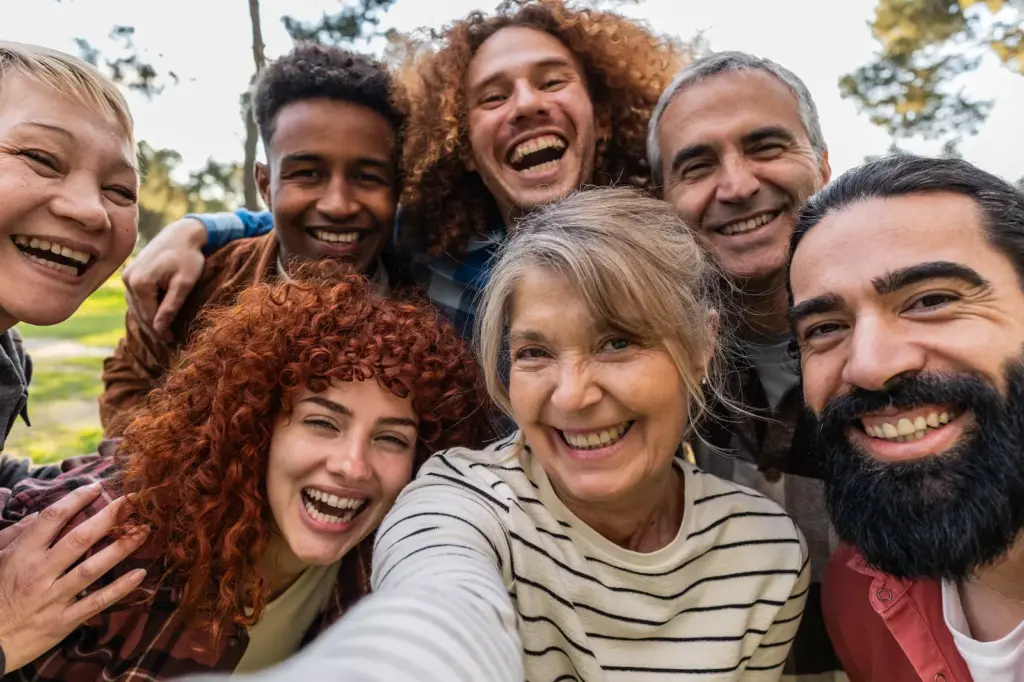
Moreover, there are still examples of free meeting spaces. “Public libraries are the most solid meeting place without consumption that we have,” notes the professor. “In Barcelona, we also have a wide network of community centers, cultural centers, and civic centers. The problem is not that they don’t exist, but that much of the working-age adult population does not use them, and their hours poorly fit a full workday.”
Read more Madring: this is the new Formula 1 circuit in Madrid
Friends from 9 to 5
Given the difficulty of finding places to socialize, the closest thing to those spaces we have in adulthood is the workplace. That’s where many people end up looking for company because they have no other choice.
This is the case of Ana, 27, who moved from Madrid to Barcelona after graduating and found a very closed environment for making new friends. “Besides Barcelona being a socially very closed city for newcomers, I think if you’re in your twenties and have already finished the formative stages where you can spend many hours with people still figuring out how they want their life to be, it’s much harder to build a network; everyone already has one,” she reflects.
In any case, continuous interaction at the office does not guarantee building a deep personal relationship. As Escapa points out, the workday provides physical closeness but blocks the possibility of showing vulnerability. Sharing space with people who evaluate performance or compete within the corporate hierarchy, we show competence instead of fragility. According to the sociologist, “you can spend two thousand hours a year next to a desk mate without building anything meaningful.”
Another obstacle to taking the first step and turning an acquaintance into a friend is the fear of being annoying or causing discomfort. Alejandra, living in Barcelona at 35, describes the paralysis she feels in her daily life when considering expanding her circle: “I think over time I’ve become more introverted and I care much more about what others will say than when I was young,” she assures. “I think: Will I seem desperate? Will I be too intense? I go to Pilates and I don’t even dare to socialize outside class for fear of not fitting in or seeming out of place. They are younger girls than me.”

For psychologist José Ramón Ubieto, although the fear of not measuring up is sharper during adolescence, “in maturity difficulties arise from the fear of exclusion by already closed groups. For example, a migrant arriving in a place where they are not accepted,” he explains. José, 35 and living in Málaga, spent a year in Canada, where he experienced how complex it can be to connect with people when you come from far away. “I went out with my coworkers three times in total,” he recalls. “They were never more than that, coworkers; I didn’t connect 100% with any of them. Maybe because of the cultural clash. In Andalusia, we are very open, and Canadians are wonderful people, but very reserved.”
Strategies to make friends
Despite what countless self-help books say, there are no magic recipes to improve the ability to make friends. According to the two experts consulted, however, we can try to do some things.
Escapa recommends “creating structure.” Encourage recurring commitments, go to the same place with the same people, and, if possible, make it cheap. “A choir, a team, a class, a garden, volunteering… Repetition over novelty. Friendship is not born from a brilliant encounter; it is born from accumulation.” Ubieto aligns with this view but points to the importance of having realistic expectations: “You have to enjoy those shared activities without creating emotional or sentimental expectations, which probably won’t be fulfilled.” “Maybe a choir is a place to have fun, but intimate things take time to arrive or don’t arrive because they require other types of bonds,” he adds. Escapa also encourages, despite it being threatening, not to be afraid to try to deepen a little more: “We tend to underestimate how much people enjoy our company and how happy others are when we write to them. The invitation, the attempt to get closer, is usually received better than we think.”