









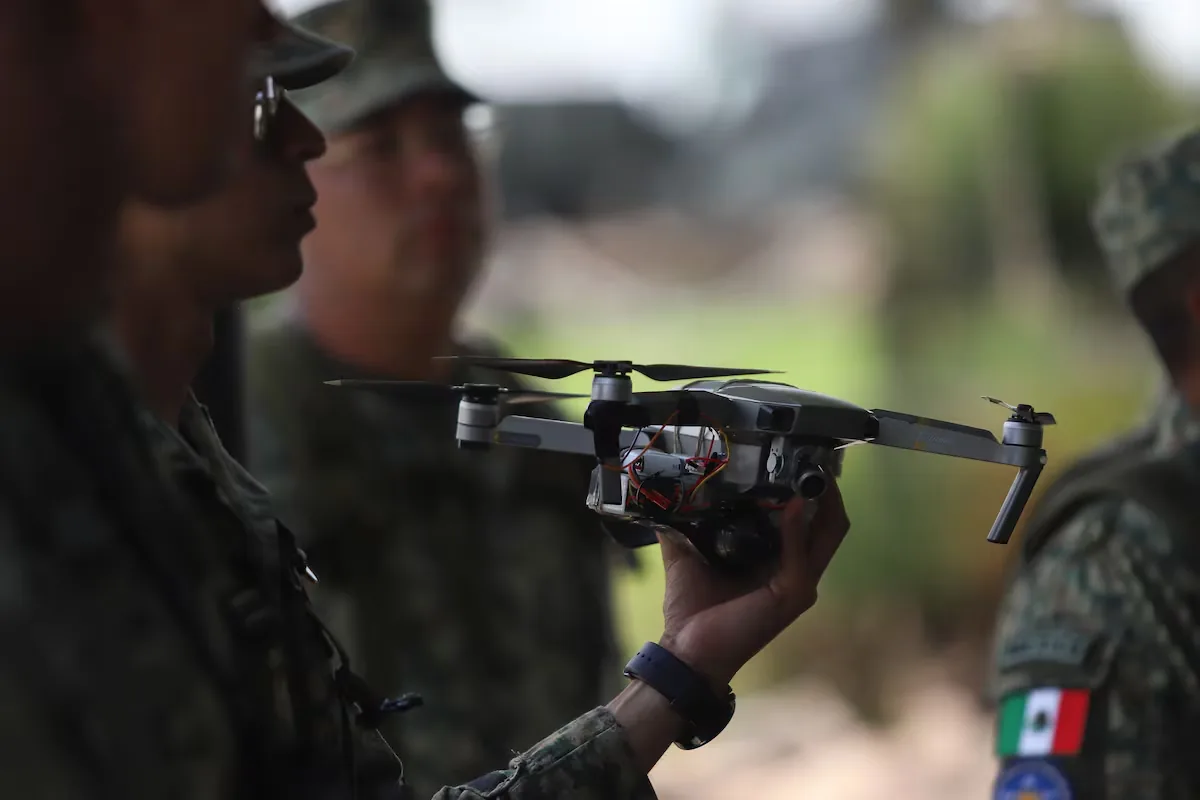
The Mexican government has not yet made progress in the new operation launched this week with the United States to combat the use of drones on the northern border. The Secretary of National Defense, General Ricardo Trevilla Trejo, acknowledged this Friday that there is still no progress on the Mexican side and that authorities from both countries will meet next week to assess the results of their U.S. counterpart. The official also detailed that the deployment covers five kilometers in length and 500 meters in depth, centered on Mesa De Otay. The operations take place in two ways: through ground patrols by military personnel and through semi-fixed and mobile anti-drone teams capable of inhibiting drones within a three-kilometer radius. There are two or three to cover the strip corresponding to Mexico.
Read more Released on charges the three detainees during the incidents at the Fossar de les Moreres
In total, he specified, there are about 800 military personnel deployed for the joint program, named Águila Alta, which seeks to combat the use of these commercial-type devices by migrant traffickers. The states of Michoacán and Sinaloa lead in this type of use, the secretary said, although he clarified that in the second territory they use them “in another way,” without giving further detail. The bilateral operation, which will conclude its second phase on September 21, was announced a few days after the United States revealed that it had shot down more than 300 drones linked to organized crime in one year, a record number. Additionally, U.S. authorities detected more than 35,000 flights near their border, according to a report by the organization ACLED, which analyzes violent conflicts worldwide. According to this same entity, it was precisely in Mexico where organized crime began using these devices, approximately a decade ago.
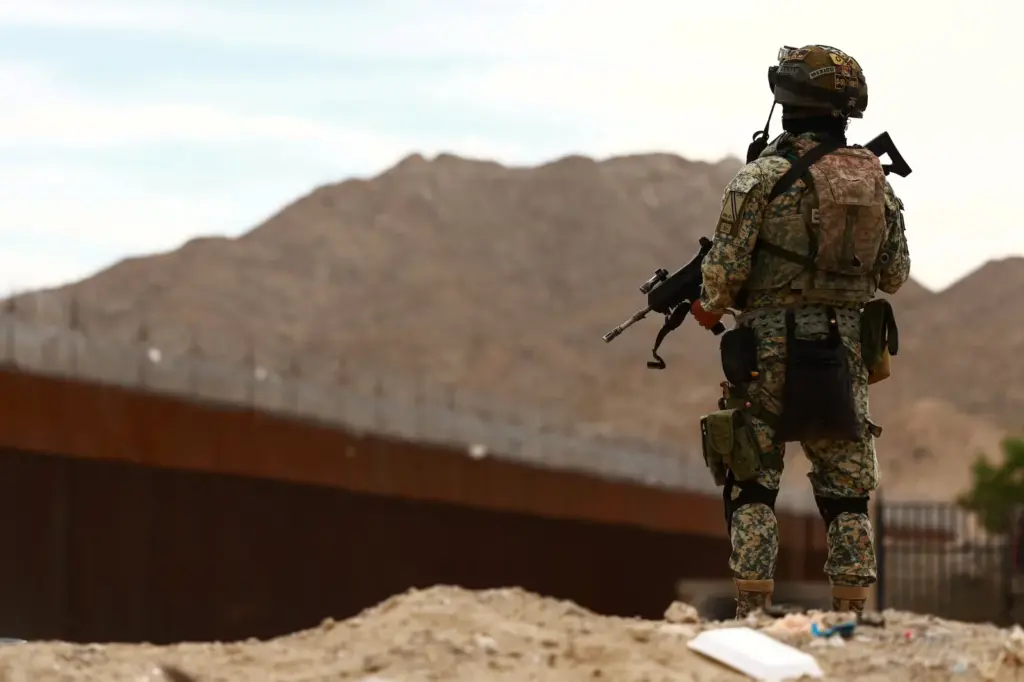
“As criminal organizations adapt, we are one step ahead. Through technology, innovation, and coordinated operations — each country acting within its own territory — we face constantly evolving threats and make our communities safer,” said U.S. Ambassador to Mexico Ronald Johnson this Thursday, regarding this new effort to pressure the cartels from both fronts.
Read more The Xunta admits deficiencies in the safety equipment of forest firefighters
The military deployed for this operation join the nearly 10,000 members of the National Guard and the 3,000 of the Army who have been deployed in the border states since February of last year. This was one of the first concessions made by President Claudia Sheinbaum to her counterpart, Donald Trump, to demonstrate that they were taking the fight against drug trafficking seriously, against which the president has launched a strong crusade. Those attempts to combat the spread of drugs in the neighboring country have led the Republican to threaten on numerous occasions to violate national borders and intervene directly on the other side of the border, a possibility that Mexico has firmly rejected but which resurfaces as a threat from time to time. Hence the importance of Johnson’s words, which specify the area of operation of each authority.
The Mexican government has drawn a very clear red line in the collaboration between the two countries: not to overstep national sovereignty. The bilateral relationship has tightened enormously since the beginning of Claudia Sheinbaum’s administration, which has brought major arrests and extraordinary seizures back to the center of the security strategy, partly as a result of the strong pressure exerted by Trump, who combines praise with complaints. This same week, Secretary of State Marco Rubio said that Mexicans had done “more than they had ever done before to go after” criminal groups, but added that it was “by no means enough.”
Read more Princess Astrid, sister of Harald of Norway, dies two days after the monarch’s funeral