Germany is no longer an exception. The country that caused the most pain in Europe was later the one that did the most to build a democracy vaccinated against fascism. Despite this, 81 years after the defeat of Nazism in 1945, a far-right political party is once again the most voted in multiple elections in the country.
Read more Céline Dion kicks off a 26-concert marathon in Paris
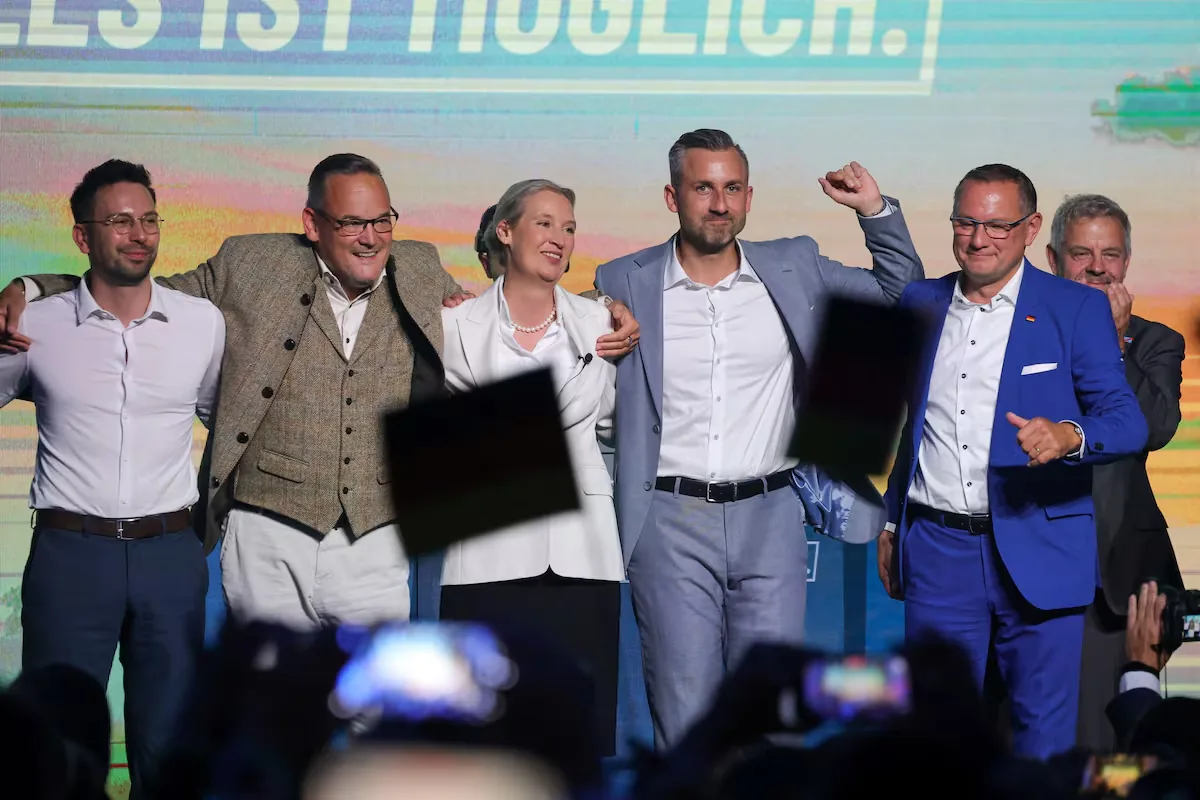
Alternative for Germany (AfD) was founded in the West in 2013 but its initial rapid growth was not there but in the Eastern States. In the former German Democratic Republic (GDR) it is the largest party, doubling its electoral results in each election. An example is the state of Saxony-Anhalt, where it swept the polls on September 6 with almost 44% support (the next party was the Christian Democratic CDU with 17%). In the previous regional elections, in 2021, AfD had 21% of the votes.
“We are deeply dismayed; this election result will have consequences, we cannot return to normality,” acknowledged Chancellor Friedrich Merz in response to AfD’s victory. The far right has in Saxony-Anhalt for the first time since Nazism the option to reach a German regional government.
The difference compared to the West is that in the East it is raining on wet ground: ultra-right parties had already obtained good electoral results there before AfD. The German People’s Union (DVU), now defunct, achieved 12.9% of the votes in the Saxony-Anhalt Parliament in 1998. The main far-right formation before AfD in democracy, the NPD, achieved 9.2% support in 2004 in the eastern state of Saxony, tied with the social democracy of the SPD of then Chancellor Gerhard Schröder.
“Great day of luck”
The NPD shot up at the polls in 2004 because it led protests against cuts to public subsidies and unemployment carried out by Schröder’s government, the Hartz IV program. Far-right experts Nikolai Schreiter and Elke Rajal, from the University of Passau, published this September the results of a study on AfD in Bavaria in which they conclude that this organization bases its growth on “becoming the nexus of debate in times of crisis, whether coronavirus, climate, migration, Ukraine, and the Middle East.” “AfD acts as a reference point, amplifier, and translator of the debate.”
In August, a fundamental book to understand the growth of Alternative for Germany arrived in bookstores. It is Blaues Land (Blue Country), by journalist Olaf Sundermeyer. One of the party’s founders, Alexander Gauland, explains that the turning point in AfD’s trajectory was August 31, 2015, when Chancellor Angela Merkel appeared before the media to announce that Germany was prepared to welcome more than a million refugees from Syria and Afghanistan. “That was our great day of luck,” says Gauland.
The coronavirus crisis was the consolidation of an anti-system strategy to defame institutions that has taken root in society, warns the Hans Böckler Foundation, linked to the DGB union, in a document from this August. But the AfD members interviewed in Blaues Land do not doubt it, Germany’s opening to refugees in 2015 was “the moment when Germans said enough”: enough of being responsible, of sacrifices for the good of Europe and the international community above what they want.
GDR, breeding ground
AfD does not arise from nowhere. The sources consulted agree that in the former GDR a breeding ground was created for its reactionary ideas to take root today. The citizens of the GDR were not educated in the same values as those of democratic Western Europe. The Eastern federal states receive the least migration from Germany, but they are the ones where the most people support the far right because they consider the number of foreigners excessive, according to surveys. “In the GDR, for example, there was as much racism as in the Federal Republic of Germany, the key difference is that the state decreed that in the GDR racism neither existed nor was a social problem.” These are the words of historian Ilko-Sascha Kowalczuk about the rise of AfD in the East that appear in the book The New Wall.
“Reunification left a residue of frustration in the East, of feeling like second-class citizens,” notes Piotr Buras, researcher at the European Council on Foreign Relations (ECFR). There is another reason in contemporary history why the far right triumphs in the East, according to this academic: “In the East they already had a great transformation of their reality with reunification, but for the West it is the first major crisis situation, and that is why in the West they resist more the change that AfD represents.”
Germany’s problem is that AfD is managing to transplant this successful formula to the whole country. In the 2025 federal elections it was the second most voted list with 20.8%, only two points behind the winner, the CDU. Polls indicate that today it is the party with the highest voting intention, nearing 30%, compared to 20% for the CDU.
Read more Marc Márquez hits the Aprilias in Misano and takes the San Marino GP ‘sprint’
Forgotten pedagogy
All of Germany is permeable to what AfD has cultivated in the East, which is even a surprise to the party itself. Gauland acknowledges in Blaues Land that in the early years he considered it impossible that the more radical speeches they transmitted in the East would be accepted in the West. He was wrong. AfD has discovered that “it does not have to present itself with historical fascism to win over the center of society, this comes on its own to the same conclusions to recover a vision as a people and nation,” summarizes Sundermeyer based on a conversation with Benedikt Kaiser, a former neo-Nazi and one of AfD’s ideologists.
What was the use of so much pedagogy against the far right in federal Germany? Its effect has dissipated, sociologist Hartmut Rosa opined in an August 30 interview in EL PAÍS: “Germans for 80 years have wanted to convince the whole world that we must work for peace. But after 80 years, when those who lived through World War II have died, Germans are preparing again for war.” Rosa was referring mainly to the new German rearmament and its support for Ukraine because for him, this is the paradigm that Germans have forgotten history.
“Despite their responsibility in World War II and what was done afterward for democracy, German society has changed like the rest of Europe,” assesses analyst Buras.
AfD’s reference to create a structure that allows it to grow throughout Germany, according to Sundermeyer, is the FPÖ, the Austrian far-right party. The FPÖ has decades of experience in a European liberal democracy country, has won elections, and has been part of the government in two legislatures. If it is possible in Austria, why not in Germany?
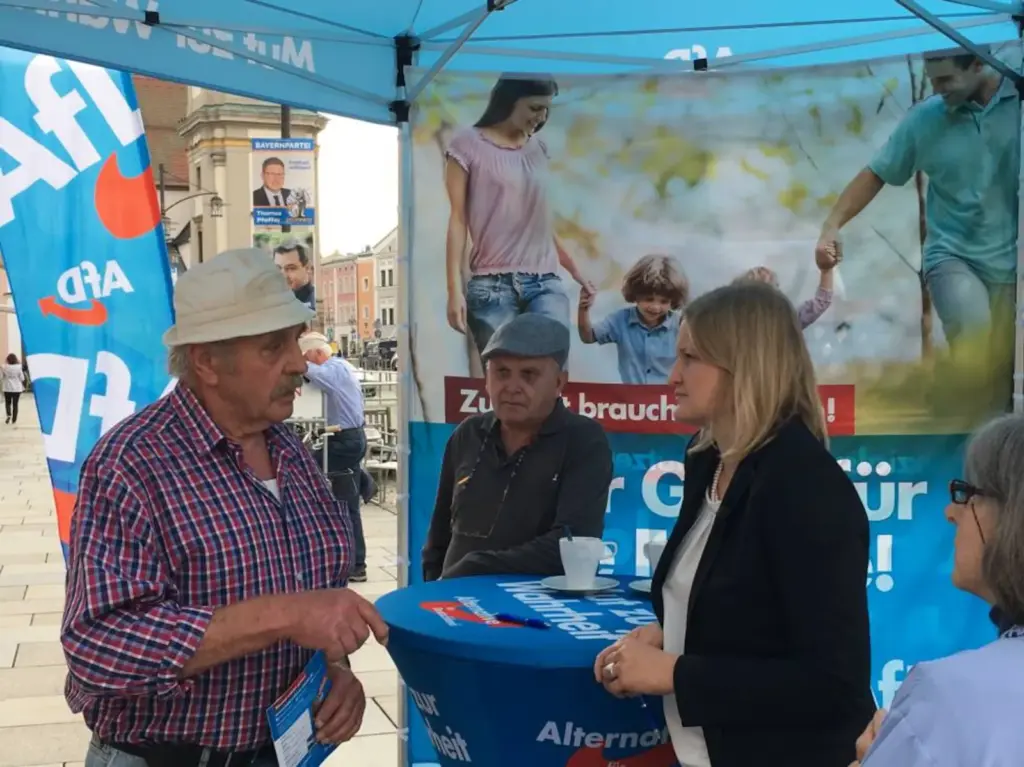
In April 2026, a confidential AfD document detailing the strategy to grow in Western Germany was leaked to the media. The goal was to become before the next federal elections the most voted force in at least 50% of the western rural municipalities. To do this, they plan to set up headquarters in all districts that organize regular activities, inviting drinks and food, “with a friendly and positive image, as a party of power instead of an opposition force.”
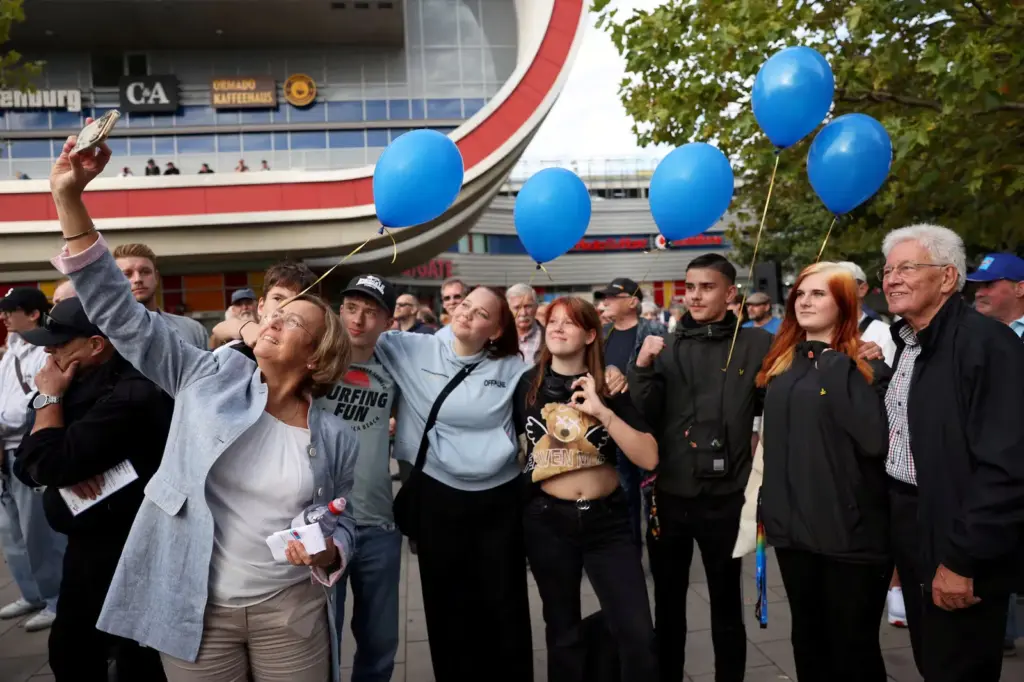
This is what Hannes Loth, the first AfD mayor in history, explained on September 5 in this newspaper: that the basis of the party’s growth is to regularly organize popular activities, as if they were in a permanent election campaign. “No other party maintains this closeness to the people,” Loth added.
Globalization
Buras emphasizes that AfD’s growth has less to do with the loss of historical responsibility and more with the economy. The country, says this ECFR researcher, has gone from being the great champion of the market economy to being its victim: “Germany was the success seal of liberal globalization from 1989 [when the Soviet Union collapsed], but this has come to an end, they have gone from being the great beneficiary of their exports to being the country most affected by Chinese competition.”
“Those who believe AfD is an Eastern phenomenon are wrong; the more factories close in the West, the more they will grow there.” These are the words of Martina Kuemmerle, a 72-year-old retiree who on September 7 protested against the far right at the Brandenburg Gate in Berlin. Kuemmerle is from Halle, a city in Saxony-Anhalt. There, the closure of state factories after reunification left a desolate economy that, according to her, has barely been able to recover: “Decades have passed but projects to create new industry are few and end after a couple of years.”
The East did not manage to be competitive like the West. But now it is all of Germany that suffers a similar situation and the far right feeds on it. “AfD channels populism throughout the country that has already spread across Europe, and it can only be understood if the experience in East Germany is assumed; whoever does not want to assume it is not aware of what is coming,” writes Sundermeyer.
Read more Cerimedo and normalized monstrosity