








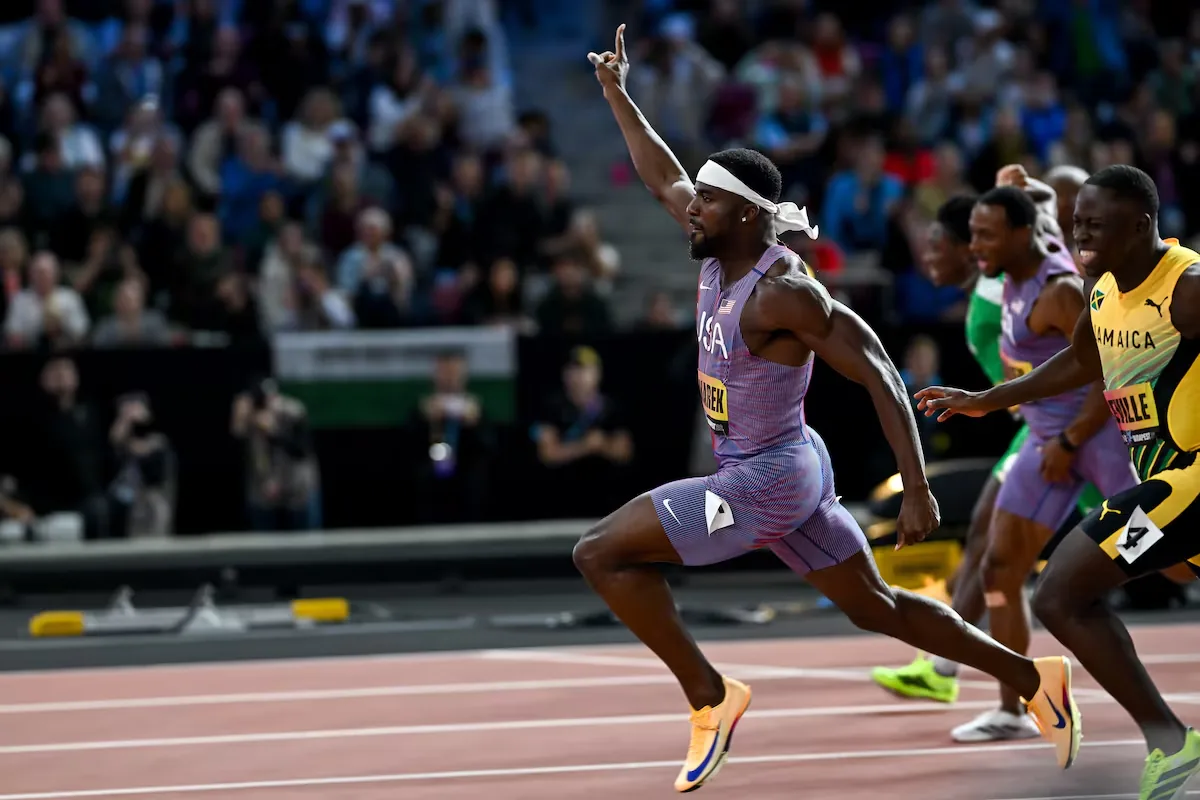
Always in the shadow of others, Kenny Bednarek was always praised for his athletic build, his perfect body for speed, his solid construction, and how nice and cool the half Rambo-half oriental warrior headscarf that earned him the nickname Kung Fu Kenny was, as much as his competitive laziness was lamented, his sure way of fading in the big finals. While he struggled, the figure of his contemporary Noah Lyles, Olympic and world champion, grew abusively and exorbitantly. Or that of the light Oblique Seville, the first Jamaican world champion in the 100m in the post-Usain Bolt era. The three were there, in the black grass stadium of Budapest next to the dark and fresh Danube. Witnesses and actors of Bednarek’s redemption, who at 27 years old, after two Olympic silvers and two more world silvers in the 200m, took the victory in the 100m, a distance in which he had never been a medalist. Two, Lyles, injured athlete and busy DJ, and Bolt, always festive and protagonist, in the athletes’ stands, finally considered the main protagonists of the championships’ show and located in the VIP area, more of a lounge with soft sofas than a stand with hard plastic seats. Both applauded a race in which Bednarek already took a few centimeters advantage from the start and maintained it resisting Seville’s usual final comeback strength, who did not applaud his defeat by five hundredths: 9.85s for the native of Tulsa, Oklahoma, against 9.90s for the Caribbean from St Thomas Parish.
𝙐𝙡𝙩𝙞𝙢𝙖𝙩𝙚 𝙢𝙚𝙣’𝙨 𝘾𝙝𝙖𝙢𝙥𝙞𝙤𝙣! ⚡️💯
Kenny Bednarek takes the #WorldAthleticsUltimate men’s 100m title. 🥇 pic.twitter.com/vubfBK2KiE— The Olympic Games™ (@Olympics) September 12, 2026
Bednarek takes the first title of the impatiently named Ultimate World Athletics Championship by its creator, Sebastian Coe, as the events unfold so fleetingly, in a blink, without dead times, but the award is not accompanied by a medal, but a trophy that looks like an Italian coffee maker and a check for 130,000 euros, the same amount that Mellissa Jefferson-Wooden, the world champion in the 100m, and all the winners in the best-endowed tournament in the history of athletics pocketed.
The American Jefferson-Wooden and the Saint Lucian athlete Julien Alfred had a pending appointment. Alfred, Olympic champion in Paris, was defeated by Jefferson-Wooden at the Tokyo World Championships. Both arrived tied, with the best mark of the year, 10.70s, at the red tape of the Budapest stadium. A mark that the American shattered in an atomic race from the start and that was only sovereignly clarified in the last 40 meters, when Jefferson, always fluid alongside the more powerful Alfred, seemed to find a fifth gear and flew to distance herself by more than a meter and 12 hundredths at the finish line. Her mark, 10.62s, is the best of the year, and only one hundredth slower than the 10.61s with which she won in Tokyo, the fourth best in a history always dominated by Florence Griffith Joyner’s 10.49s.
As football is always the reference, Alison dos Santos talks about his final, the 400m hurdles (Sunday, 18:36, Movistar+ Vamos) as a match in which Cristiano, Messi, and Neymar were among the 22 on the field. Dos Santos is Brazilian, obviously, and also the new great star of world athletics both for his athletic excellence (a recently broken world record of 45.80s), and for the lively and extroverted way he lives his character, the great hair that partially covers the scalp that was burned when as a child boiling oil from a pan fell on him, his samba rhythm in presentations, his look, so far from the sweaty tracksuit of others. Coe’s treasure chest jewel, so concerned with transforming the image of the sport of patience, work, and technical perfection.
Read more Sweden votes this Sunday in elections under the shadow of criminal gangs
If Dos Santos is not wrong in calling his final the great meeting of the ball stars, he would not have been over the hype if he had described the women’s 800m final in the same way, a repeat of the great European final in terms of protagonists – the three best specialists of the distance in the century, who fully coincide in time: Audrey Werro, Keely Hodgkinson, and Femke Bol – and in terms of result – victory for the Swiss (1m 55.88s) ahead of the English and the Dutch – but not in terms of development. There was no drama or tension, just a Swiss steamroller that took the lead in the free lane and never left it, an untiring mechanism that annihilated the fighting spirit of the rivals.
At the DJ booth, Lyles dropped the modernisms when Sandi Morris, 34 years old, old pole vault warrior, asked for the Rolling Stones to get into rhythm for the final jump, 4.90m, which gave her the victory and a breath of rebellion and vindication of veteran status and perseverance. Before grabbing the trophy – which winners hand to themselves on a pedestal, some even pretending to lift weights with it, so heavy and hard it is – Morris – who has never been an Olympic champion but is, along with Isinbayeva and Sidorova, one of only three in history to have jumped 5m or more — went to hug the even older Tina Sutej (38 years old) and grabbing the Slovenian shouted to the microphones: “We competed together 10 years ago at the Rio Games, and we are still here.”
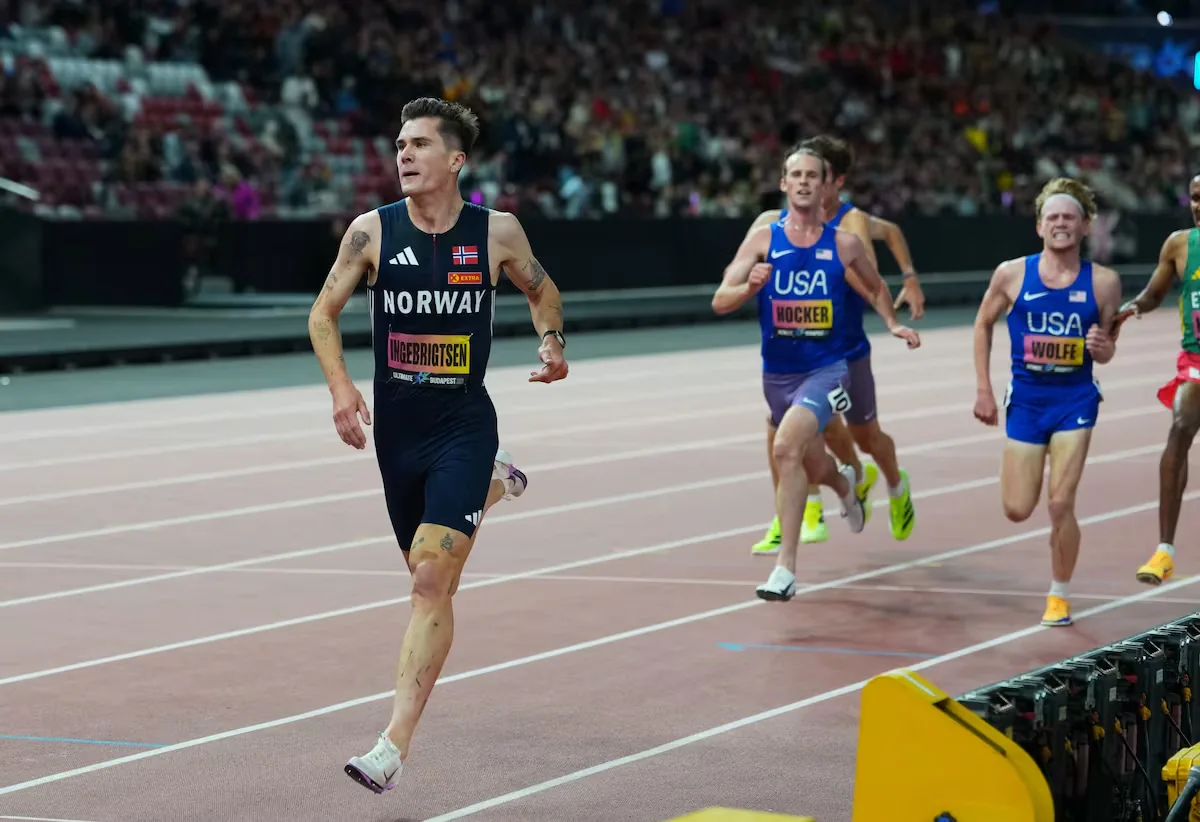
In the men’s 800m final, Moha Attaoui will not be present, who, as suspected, did not qualify (he was sixth in his semifinal) and Jakob Ingebrigtsen will be absent in the 1,500m final, tired after winning the 5,000m on Friday. His absence perhaps robs fans of the most anticipated duel of the weekend: his confrontation with Josh Kerr.