

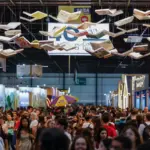
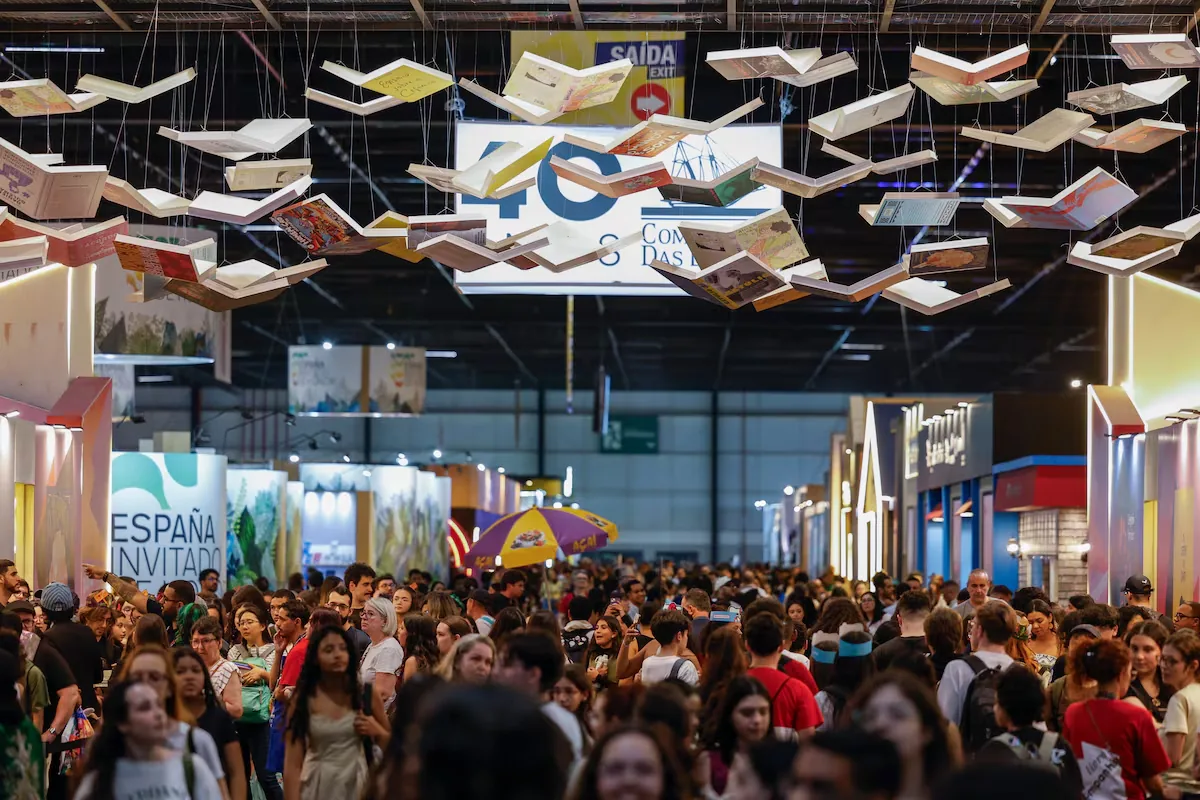
The São Paulo Book Biennial, which ends this Sunday after ten days, may seem like a Martian place to the Spanish reader fond of fairs: there is youth everywhere, lots of youth, tons of youth (mostly female) strolling among stands with architectural pretensions lit by colored lights. A dark carpet prevents trolley suitcases from making that sound that announces wild tourism: here they are used to fill them with books, kilos and kilos of books.
Read more Russia attacks the border area between Poland and Ukraine, a few kilometers from NATO territory
In its aesthetics, this biennial, which presents itself as the largest literary event in Latin America, looks more like a comic or manga convention, with its gothic girls and cosplay fans. There are more young people, floods of young people, queuing at the entrance to the venue—some protected by parasols from the subtropical sun—or at the bookstores; many others sit in circles on the floor to discuss their purchases, some gather around the food trucks. It is a very pop gathering: dominated by young adult literature (such as the romantasy genre, which combines romance and fantasy), comics, illustration, and graphic novels, or the all-time best seller, from classics like Ken Follett to new stars like Freida McFadden, whose names appear on large posters. Apparently, this city has promising generations of readers to develop.
In the very middle of this Carioca mix stands, looking like a castle, the Spain Pavilion, the guest country this year. It is 500 square meters inspired by the work of the jungle artist Antonio Burle Marx that bets on a more “literary” literature (if this is not an absurd redundancy), curated by Marta Sanz, which tries to make Spanish letters known in a market with potential like the Brazilian one. Although Brazil has four times the population of Spain, the Spanish market is larger. The Spanish book miracle is the name given to the trend of more than a decade of growth that reached a turnover of 3.138 billion euros in 2025, according to the Federation of Spanish Publishers’ Guilds (FGEE). The Brazilian turnover, in euros, was 1.130 billion that same year according to the National Union of Book Publishers (SNEL).
“We want to focus the gaze of international book fairs on our literature,” explains Jesús González González, deputy director general for the Promotion of Books, Reading, and Spanish Letters, in a state project in which different ministries such as Culture or Foreign Affairs collaborate. In Culture, they decide “strategically” which countries to attend, trying to identify the most relevant markets. “Since the presence at the Frankfurt fair in 2022, when Spain was guest of honor, a huge deployment has been made,” says the deputy director, recalling other milestones such as the fairs in Guadalajara (Mexico), Bogotá, Calcutta, or Angoulême, focused on comics. “We understand the book as a tool of cultural diplomacy, to showcase our literature, but also to establish a connection,” adds González.
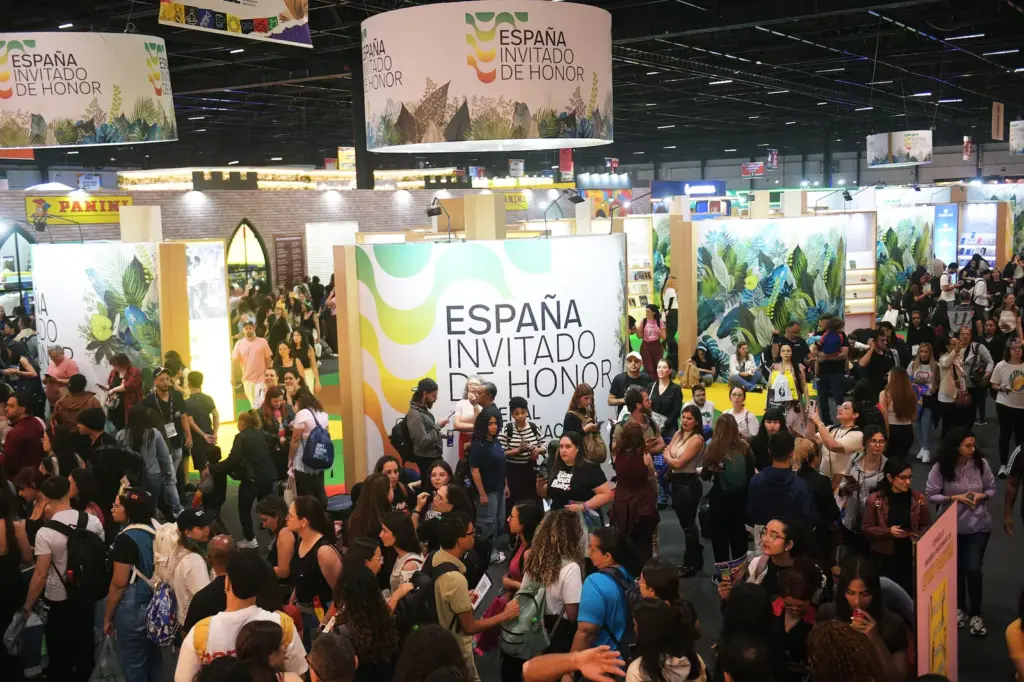
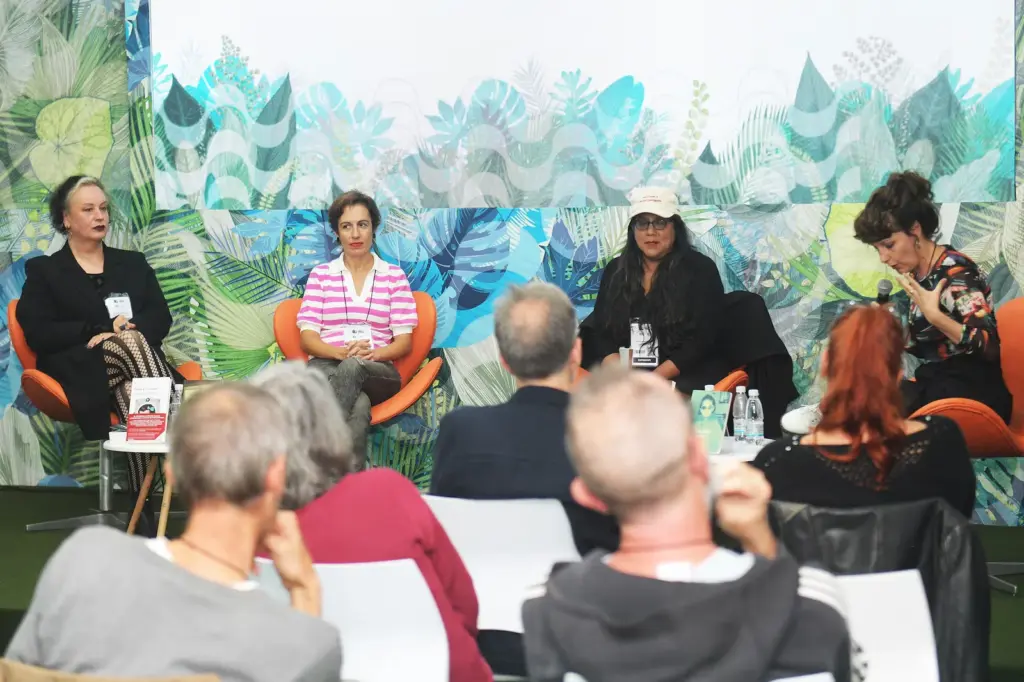
The programming at the pavilion tries to find the “confluences” between Spanish and Brazilian literature. “That is, to bring the most daring proposals that talk about metamorphoses, contradictions, or the violences of our world, but taking into account the major reference points of Brazilian literature: from attention to the landscape to conflicts of race, class, and gender,” says curator Marta Sanz, who has also tried to reflect the plurality of Spanish literature in a country where its presence is discreet. For example, “showing writers who do not only belong to a privileged class of white heterosexual men belonging to a literary caste,” adds the curator. Many generations, many languages, many perspectives; with the weight of independent publishers without forgetting the big groups.
Some of the authors with the largest audiences have been Alana S. Portero or Juan Pablo Villalobos (Latin American authors living in Spain have been included), and other participants have been Sabina Urraca, Gabriela Wiener, Daniel Ruiz, Sheila Blanco, Elvira Navarro, Bernardo Atxaga, Katixa Aguirre, Patricio Pron, or Carlos Zanón, although the curator prefers to emphasize themes rather than individual names: some that aroused special interest were those dedicated to democratic memory and the transition or those that dealt with the boundaries between chronicle, noir, and historical novel. Sanz also values the meeting between Spanish writers and Brazilian publishers: “The goal is to have many more translations.”
“Spanish literature is little known in Brazil,” says Saturnino Valladares, poet, translator, and resident in the country for 15 years, where he is a professor at the State University of Amazonas, in Manaus. Upon arrival, he realized that knowledge of Spanish poetry ended with Lorca, Miguel Hernández, and Antonio Machado. So he launched the Cima del Canto collection, at the Valer publishing house, in which he has translated poets such as José Antonio Valente, Antonio Gamoneda, Claudio Rodríguez Fer, Àngels Gregori, or Olga Novo. “What is very successful here is not so much the Spanish but the Latin American boom novel, Gabriel García Márquez, Mario Vargas Llosa, or Julio Cortázar, authors who also dominated much of Spanish narrative in the second half of the 20th century,” he explains. “Some writers like María Dueñas or Rosa Montero do arrive, very specifically,” he adds.
Around it, the mammoth São Paulo Biennial continues to buzz, aiming to surpass the 700,000 visitors of the previous edition: as the afternoons advance, the young audience is infiltrated by readers of older generations, people of all ages wear a yellow duck on their head or outfit, which is the event’s mascot, shouts are heard when a star author appears, and the smell of popcorn butter is strong. This is a party. Its motto: “A festival of emotions.”