








Everything is in the gesture, in the instantaneous measured, calculated moment of Josh Kerr ascending towards a trophy with the Brooks on his shoulder, an apparent nonchalance that breaks when he stops his movements to carefully place his shoe so that the Hyperion 222 mark could be perfectly seen on the screens of all the countries broadcasting the Ultimate championship, the spikes with which the Scot broke the world mile record on July 18 (3m 42.66s, 222 seconds and 66 hundredths), the same ones with which he danced past all rivals in the last 200 meters (26s) and resisted the final push of the young Australian with long legs and short, quick steps Cameron Myers (3m29.68s) to win the 1,500m (3m29.35s). He earned the right to the photo, to the advertising of the shoes and glasses, to the sparkling fireworks, to a heavy and ugly trophy, and to $130,000. And the sentence to selfies with privileged content creators on his way to the locker rooms more attentive to his outfit than to the sporting feat they witnessed. So generous is the latest invention of athletics, that it has filled the Budapest stadium by the turbid and scarce Danube for three consecutive days, more than 60,000 spectators in total, and has gifted photos, scenes of contagious drunkenness from an Italian jumper with a half beard, big mouth, and full hair (Gianmarco Tamberi, 2.37m and attempts over 2.41m) and also great marks.
Read more Atlético wins but does not convince against a solid Real Sociedad
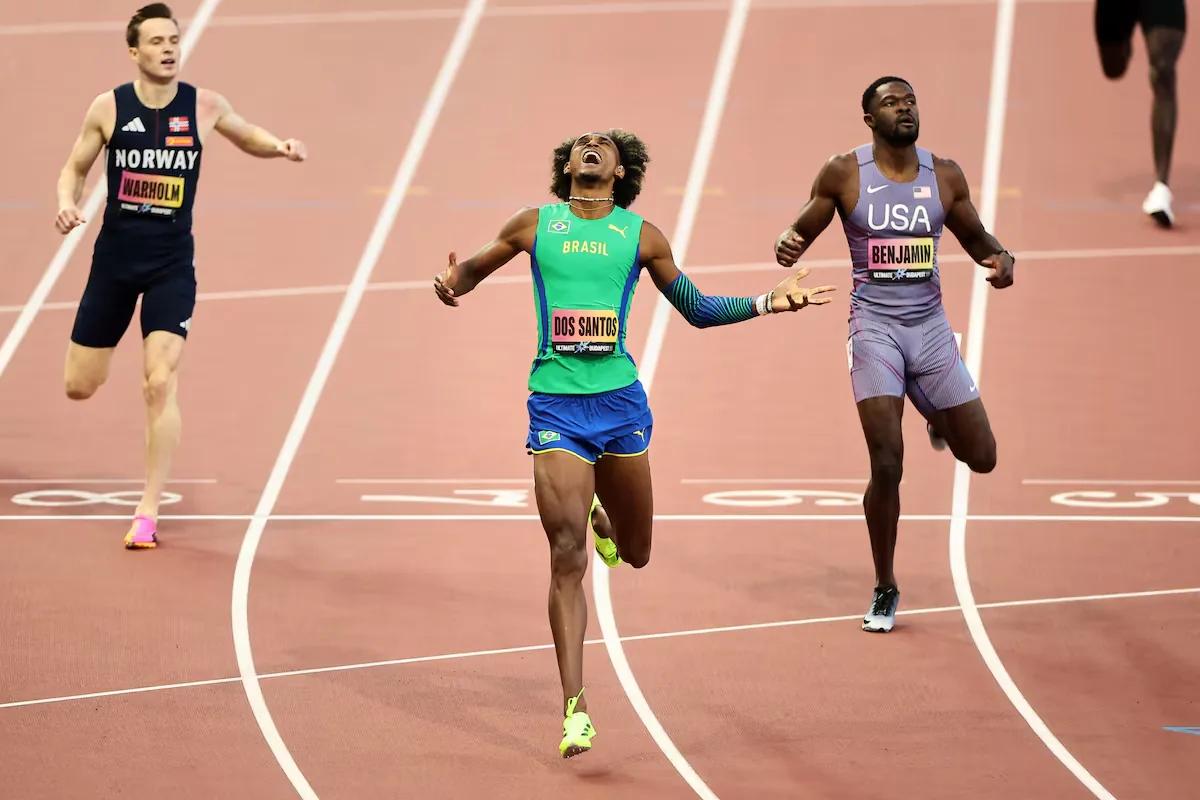
If Tamberi, always ready for the show, even at the Games, and Kerr are, so to speak, pomp and circumstance, Alison dos Santos possesses both attributes, and something more, he is also substance and also the people, he is the Brazil of the great João Carlos de Oliveira in his splendor, an athlete with a tragic end who revolutionized the triple jump, samba and rhythm, as Dos Santos does, from the interior of São Paulo, with the 400m hurdles, another discipline, like the triple jump, of speed, inner music, long legs and metronome rhythm, 12 steps between hurdles, jump with both legs, then 11. An impeccable and happy race that disheartens Karsten Warholm and Rai Benjamin, the two he danced with, the Brazilian behind, in the final of all finals, the Tokyo Games, August 21, in which all three ran under the world record (although only one kept it, the Norwegian, 45.94s). A reed almost two meters tall, at 26 years old Dos Santos has reached his fullness and already makes everyone dance to his rhythm. He achieved it two weeks ago when before the astonished and frightened eyes of Warholm, in lane seven, he took the world record from the Norwegian in Zurich (45.80s), and he did it again this Sunday in Budapest, winning his Ultimate with 45.98s. Only three times in history has anyone gone under 46s in the 400m with 10 hurdles: only Dos Santos has done it twice.
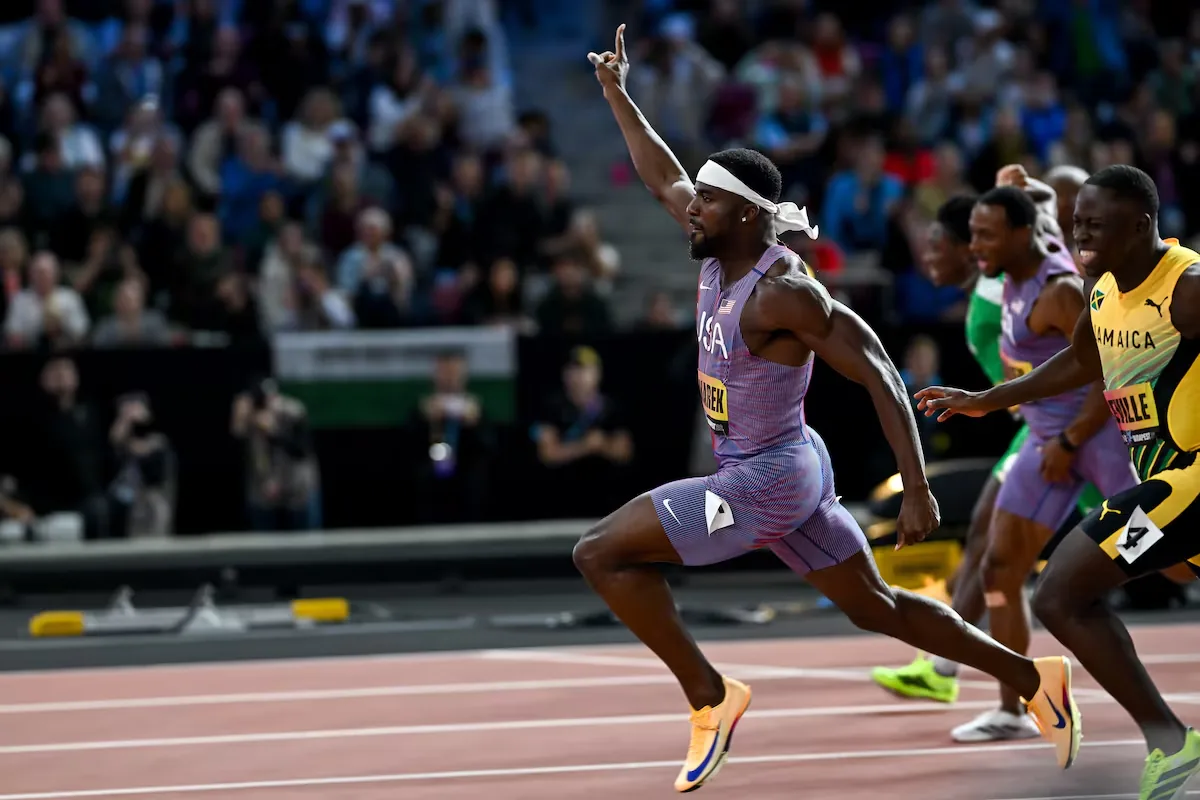
Twenty minutes from the tropical and humid heat of Clermont, Florida, where Felipe da Silva, his lifelong Brazilian coach, cares for and nurtures Dos Santos with spontaneity, is Montverde, the city where Star Athletics operates, the most successful North American speed factory under the care of the tremendous Dennis Mitchell, a sprinter who always reminds us that athletics for the impatient may be summarized in gestures, winks, photos, but it is always marks and memory. In his large body, Mitchell holds much of the dark past of the last decade of the last century, a positive for testosterone and the guidance of Trevor Graham, the coach of Marion Jones and Tim Montgomery who knew all the secrets of the Balco case and injected growth hormone into his athletes. Also Mitchell, who could enjoy it Sunday night watching how his best creations of the moment, Kenny Bednarek, and Melisa Jefferson-Wooden, atomically finished the task started on Saturday by winning the 100m in the 200m. In 60s of absolute expression over the weekend (about 20s each on Saturday between the semifinal and final of the 100m, and another 40s each on Sunday in the two 200m they ran), each earned $300,000 (about 260,000 euros), apart from what sponsors promised them, the sincere applause and the wows from Noah Lyles and Usain Bolt in their lounge, and the open mouths of fans who appreciated their races and the level of their marks. Kung Fu Bednarek still seems like a shy, dull, and serious guy even when he collects his trophy without feigning overwhelming joy, but he has found a winner’s mentality, hard as steel, that shone in the semifinal (19.86s, the best time of the eight finalists) and even more two hours later in the final. A splendid curve (10.16s the first 100) and a magnificent acceleration on the straight (second 100m, flying, in 9.32s) took him to 19.52s, his best ever and the seventh best time in history (still far from Bolt’s 19.19s, but no longer so far from Noah Lyles’ and Michael Johnson’s 19.31s and 19.32s, the only two Americans ahead of him still). Not bad for a cool almost autumn afternoon (18 degrees), at the end of a long season and with no wind.
Read more Levante challenges an effective Barcelona without reward
Even more valuable are the 21.47s with which Melissa Jefferson deactivated in the women’s 200m final the bomb Gabby Thomas, the Olympic champion from Paris who suffered a serious injury in 2025 and was returning to top form. The enormous stature and great composure with which Thomas runs her race had somewhat ridiculed Jefferson’s liveliness in the semifinal, which she ran terribly, with a spectacular start (11.14s) and a collapse on the straight. She went under 22s in the semifinal, 21.88s to 22.15s of the athlete who had taken gold at the Tokyo World Championships in her absence. Few doubted a new exhibition from the very elegant Thomas, perhaps less than anyone herself, who was left paralyzed, very frozen, watching Jefferson repeat the crazy tactic of the semi (an atomic start, even faster, 11.03s on the curve) followed by a supersonic acceleration and straight with headwind (10.44s) to complete 21.47s, the third best mark in history, just 13 hundredths from Florence Griffith’s 21.34s, a mark that just thinking about it gives vertigo.