




Speaks

In El Salvador, a country that at the time was mourning the 80,000 souls swallowed by its civil war, a peasant approached him one day:
Read more An Israeli NGO denounces the «elimination project» in the West Bank
—Thank you for teaching me how to use the computer.
Mariano Jabonero (San Martín de Valdeiglesias, Madrid, 1953), who had been assisting the Government in cooperation tasks with Latin America since 1984, had been tasked with leading a cooperation project with Spanish support in the peace plan and institutional reconstruction there. Surprised, he looked at the man in front of him and replied:
—Excuse me, but we have not delivered computers.
—This is my laptop —the peasant indicated, pulling a pen from his pocket— Now I know how to write and count. They will no longer deceive me.
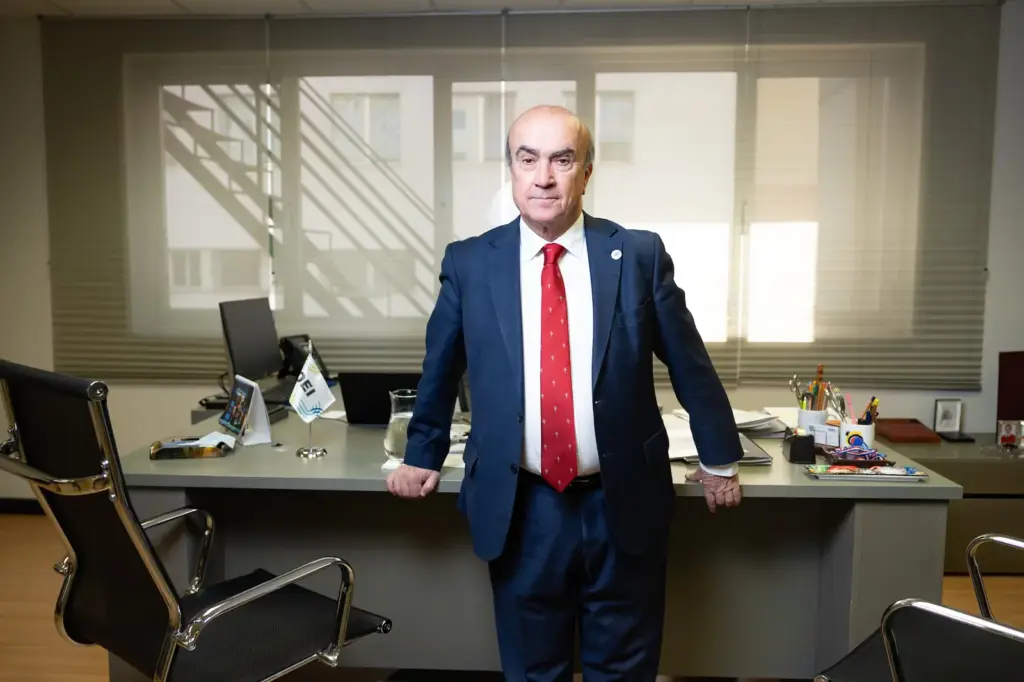
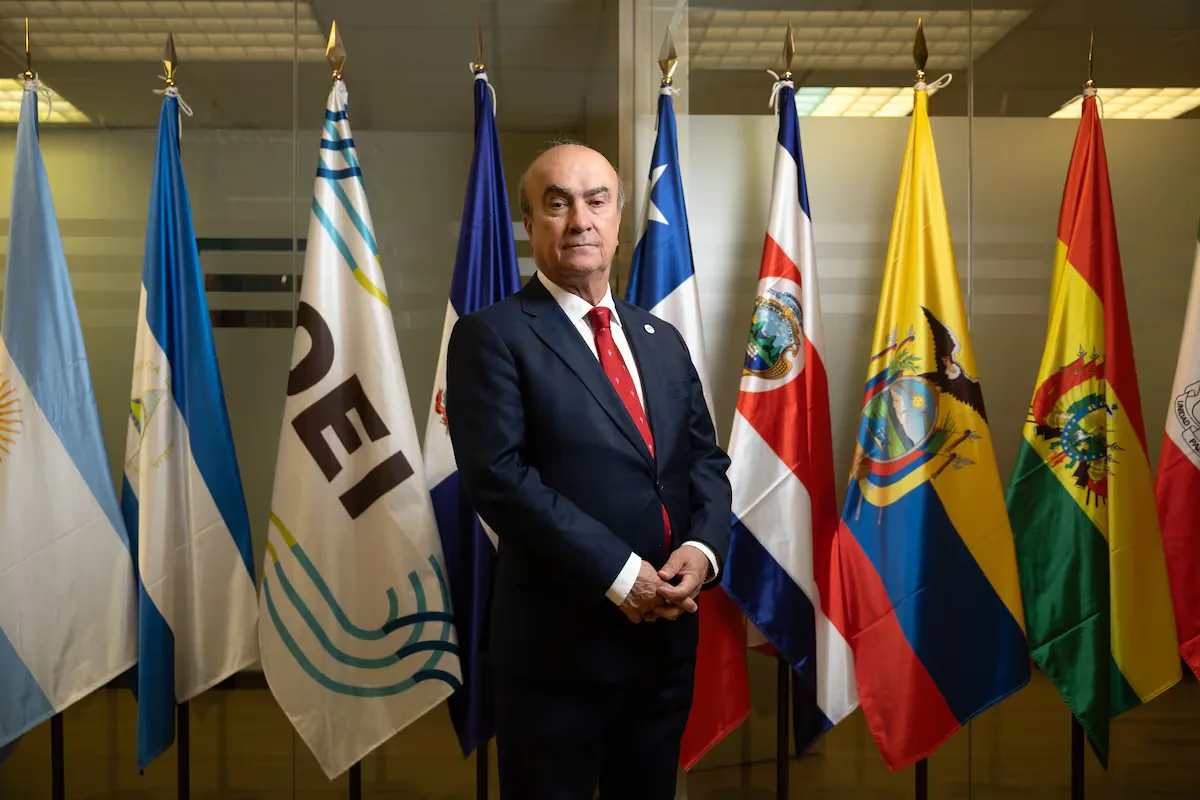
The anecdote is from 1992, but the moral remains just as valid: “In countries with high literacy, per capita income doubles. It is the first step towards a free society,” explains Jabonero, seated in the meeting room of the headquarters of the Organization of Ibero-American States (OEI) in Madrid, now that he is saying goodbye, after eight years, to his position as secretary general. What follows is the assessment of what has been achieved during that period by someone who, above all else, calls himself a “teacher.” The noun resonates gravely when he pronounces it, his voice carries the pride of true belonging. Because in forty years his conviction has not changed that it is in the classroom, among desks and blackboards, where citizenship is built; that dialogue and democracy are learned.

A review of eight years of work
Always action on the ground
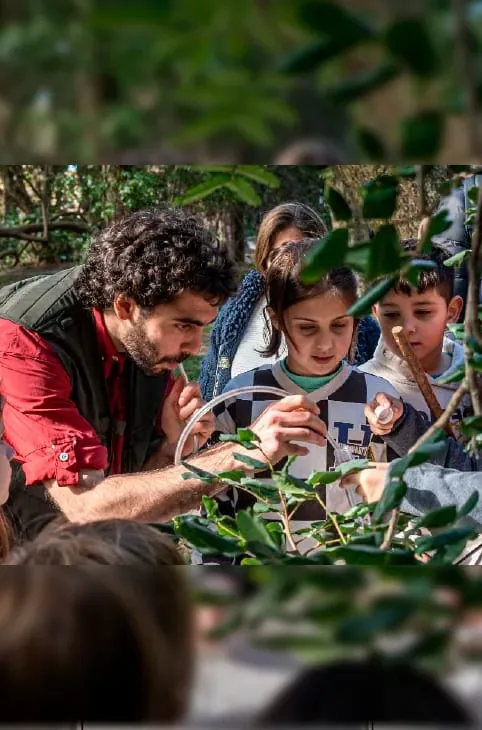
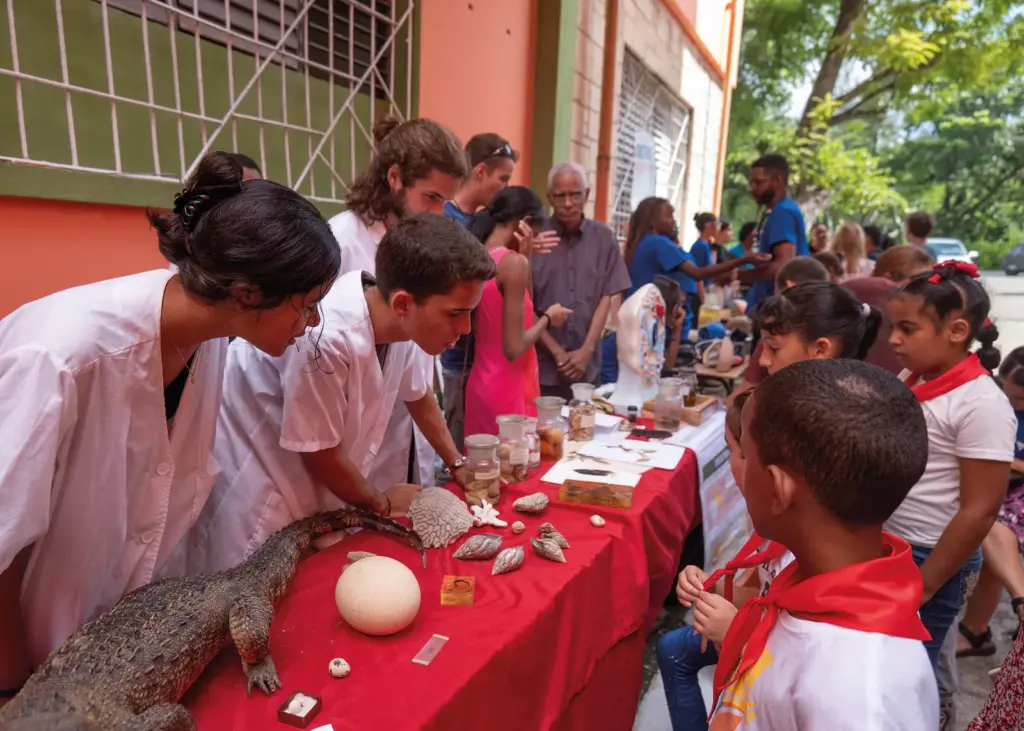
The Organization of Ibero-American States (OEI) is the largest multilateral cooperation network in the region, with 23 member states. In the image, an activity from the Ibero-American Night of Researchers, held in Montevideo (Uruguay) in 2023
Photos: Provided by OEI
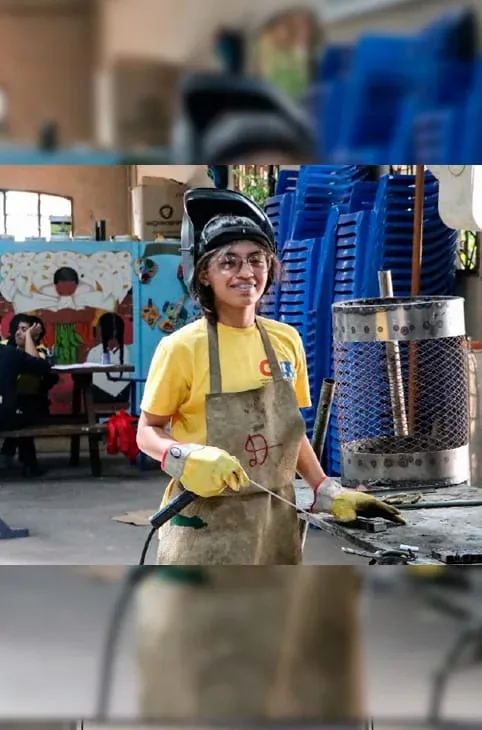
Working for the future
One of its main areas of action is education, also understood as the training that will provide future and employment to the beneficiaries of these programs. In the image, a student from the Workshop School of Asunción (Paraguay), promoted by the OEI in collaboration with the Spanish Agency for International Development Cooperation (AECID)
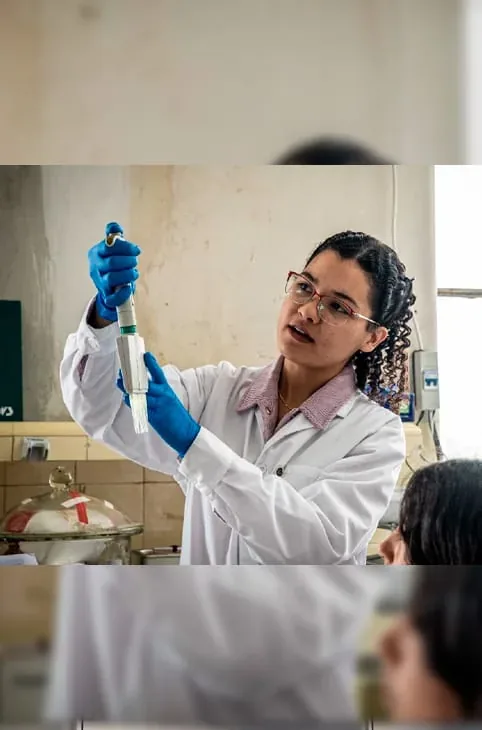
More Ibero-American women scientists
Equality of opportunity and the inclusion of women in research and science is one of the great regional challenges in Ibero-America, and as such the OEI projects try to address it. In the photograph, a moment from the Women in Science program held in 2023 in Montevideo (Uruguay)
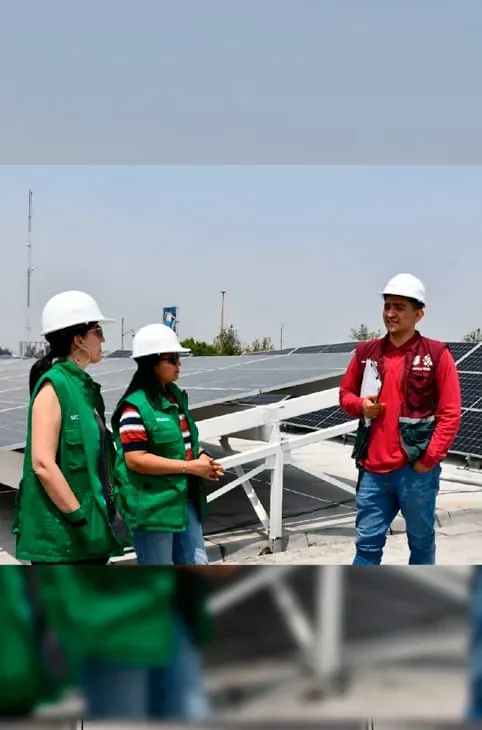
Clean (and fair) energy
Sustainability and energy sufficiency are challenges of the present and future, as Jabonero points out. With European funding, the OEI developed the Energytran project to promote a just and clean transition between Europe and Latin America. The image corresponds to a photovoltaic panel installation in Mexico City, in 2024
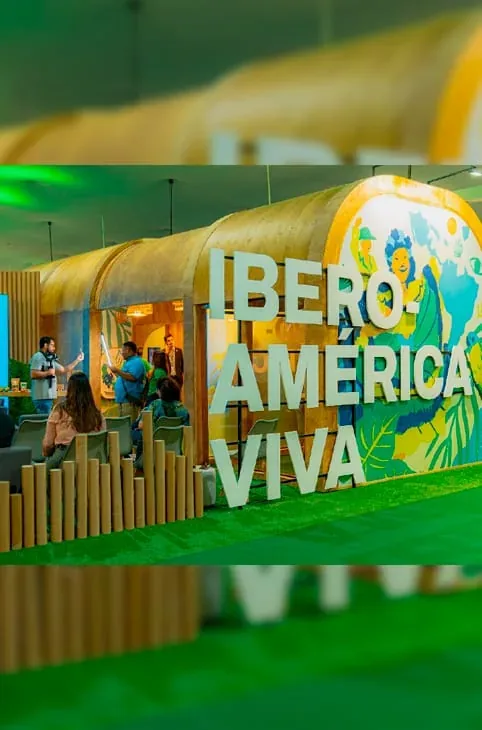
COP30 (Brazil)
One of the great recent milestones was the organization by the OEI, in collaboration with the Government of Brazil, of COP30, the annual United Nations summit on climate change, held in November 2025 in Belém (Brazil), where 56 consensus decisions were adopted, including a roadmap for the phase-out of fossil fuels. It gathered more than 300,000 attendees: the largest project organized in the Amazon
Literacy, the foundation
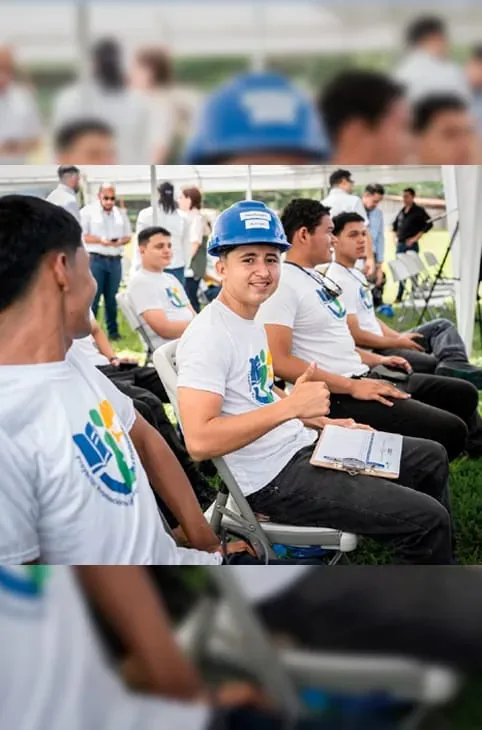
The three main axes of action of OEI projects are education, science, and culture. But for all, the first step was achieving that Ibero-America is a region with 98% literacy. In Honduras (in the image), the OEI contributed to the declaration of the country as a “Literacy-Free Territory” in 2025
An immaculate balance
During the last eight years, the period during which pedagogue Mariano Jabonero has been at the helm of the OEI’s general secretariat, the institution has launched 2,500 projects in the 23 member countries, impacting the lives of a total of 22 million people. “Our team is made up of excellent professionals, we act with transparency and autonomy. We have deep roots and, above all, we make cooperation happen, which makes all countries and beneficiaries trust us,” explains Jabonero
This December, Jabonero leaves an OEI that, far from the assistance and bureaucratic role it may have had in its beginnings (it was created in 1949), has become a regional public good of indisputable utility, which, under his management, has promoted more than 600 annual projects in education, science, culture, and education in human rights and democracy for more than 22 million beneficiaries, an organization with transparent management (“we can track live where the money from a paid invoice in Honduras has gone”) that works on the ground in the 23 countries that make it up; an OEI, Jabonero emphasizes, “very American, but without interference or a single dollar from the US.” “At first, funding came mainly from Spain. Now the percentage of Spanish contribution is minimal. We have managed to make it understood as an invention of the region and for the region.”
Read more Service interrupted at 13 stations on Madrid Metro line 9 due to «technical reasons»
A philosopher teacher forged in the Transition
Jabonero was born in a town in southwest Madrid and his youth is that of someone who, facing the repressive and violent death throes of Franco’s dictatorship, longed for “the arrival of a regime of freedoms and tolerance.” It was his social conscience that, in such an effervescent time, led him to study Philosophy and Educational Sciences.
“I remember the publication of the first issue of EL PAÍS, in May 1976. I bought it at a kiosk in Campamento [a neighborhood in the La Latina district of Madrid where military and civil guard barracks were located]. My first assignment as a teacher was nearby, in a public school in Aluche.” By then, Jabonero had already traveled to France, and upon his return half of the clandestine load in his backpack was books banned here: “Censored Spanish poetry or thinkers like Paulo Freire I read in mimeographed pamphlets.”
He repeats a famous quote, attributed to one of the fathers of this Europe of ours, Jean Monnet: “If I had to start over [building the European Union, he means], I would start with culture.” Pedagogy, education, and sociology are, for Jabonero, faces of the same cube. At the end of the 1970s, he obtained, out of 850 candidates, one of the 18 positions as Education Inspector, a moment when he discovered what the right to education really entailed, the enormous responsibility on his shoulders: “the system, public policies, must ensure that students can sit in the classroom and learn language or math under optimal conditions; and that includes everything from rehabilitating rural schools that at that time had neither bathrooms nor running water to guaranteeing that those boys and girls could have had breakfast at home before coming to school.”
We cannot lose sight of the value of Education as a corrective element of birth inequalities, that democratic faith that Jabonero today observes around him “sadly tired, exhausted,” he expresses, taking the words of the German-Korean philosopher Byung-Chul Han. The next steps, as in an inexorable destiny, were those that shaped the indispensable pedagogue that Jabonero is today: he passed through the Ministry of Education, came El Salvador, Argentina, Colombia and cooperation — the literature of the boom was his key to what Martín Caparrós likes to call Ñamérica —, taught at the Complutense, worked for UNESCO, directed the Santillana Foundation, worked as a consultant for governments across the continent… until in 2018 and unanimously he was elected, for two terms, secretary general of the OEI.
Feeling at home: why Ibero-America is the West
Queue at a cinema. In Paris or Berlin. If, among the tumult of voices, Jabonero hears the soft cadence of the Colombian or the marked accent of the Caribbean Spanish, he says he cannot help but turn around and strike up a conversation. “I have lived in many countries in Ibero-America and I have always felt at home.” He is saddened by the mistaken conception that still, he says, exists in Spain about the neighbors on the other side of the Atlantic: “Regarding the land of dictatorships, wars, and poverty that persists in a certain imaginary, the change has been brutal: 98% literacy, it is the area where enrollment in higher education has grown the most, 33 million students, in 70% of cases from families where the parents did not attend university.”
Inequality or their economies, too dependent on the sale of raw materials, still weigh: “Bolivian lithium is in the hands of Chinese companies; copper is produced in Chile and Peru, but traded in the United States; Ecuadorian flowers are sold in Amsterdam.” But they are, he says, “one step away from becoming true knowledge societies, like the most competitive ones.”
Among Spanish and Portuguese speakers — the latter, the language whose use is growing most in Africa — we total 850 million people worldwide. It is an undeniable potential, which motivates the plea he wants to launch “without falling into too much rhetoric”: by language, by history, by law, by culture, by religion “Latin America is not the periphery of the West, but a part of its core.”
Reputation and future
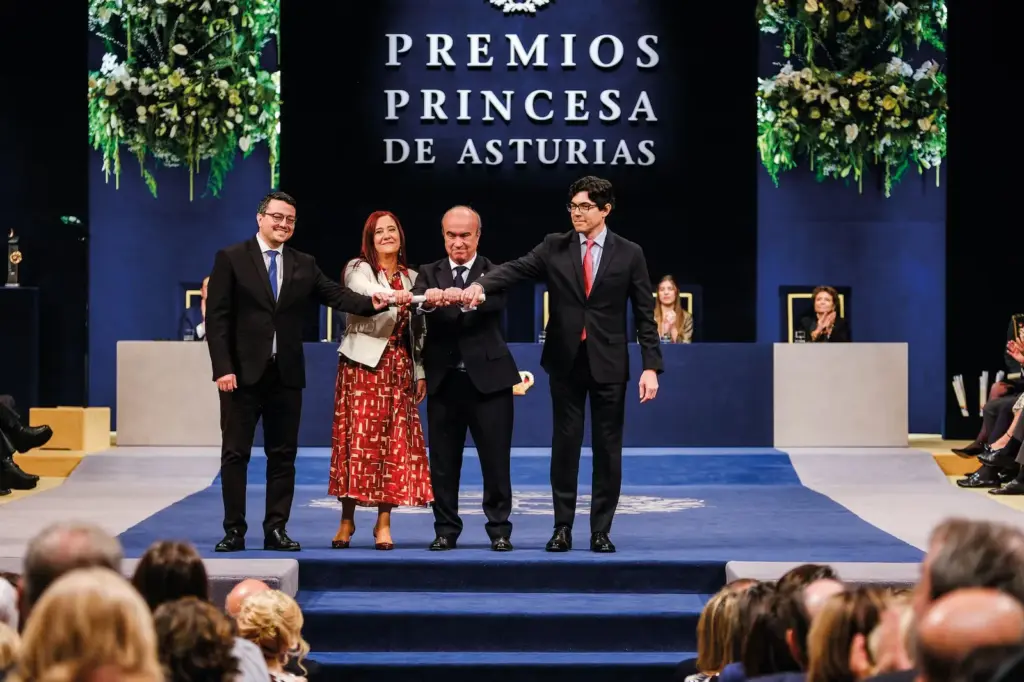
What merits motivate an award like the 2024 Princess of Asturias Award for International Cooperation or the Anna Frank award last March? How does the OEI navigate so that governments of all colors value it equally in its 77 years of action? “We have known how to rise to the occasion,” replies Jabonero. And he lists some examples of why their cooperation projects have generated an immeasurable impact in the area: for example, it was a Costa Rican scholar funded by the OEI to earn a doctorate at the University of Seville who drafted his country’s Care Law.
During the pandemic, about 180 million Latin American students were excluded from classrooms and approximately half did not have sufficient internet connection. The OEI then produced hundreds of digital contents, helped national education systems maintain activity, and granted thousands of scholarships to train university professors who until then worked almost exclusively with notebook and chalk. In one of the most unusual scenes of that period, Mexican educational television programs were broadcast in Equatorial Guinea.
If democracy falters, more democracy and more consensus will be needed. That is what Jabonero defends fiercely for a future in which he identifies several challenges that do not admit complacency: the digital transition — technology at the service of all —, the green transition — new and sustainable energy sources that do not subjugate the inhabitants of the Global South — and, above all, a just transition, without losers, impossible if that old and unbreakable faith in Education is not recovered. How could this teacher not believe in its power who saw how a peasant could change his world with a pen.
Read more Shakira’s love for Spain is more than just a residence: life, children, friends, and lots of music