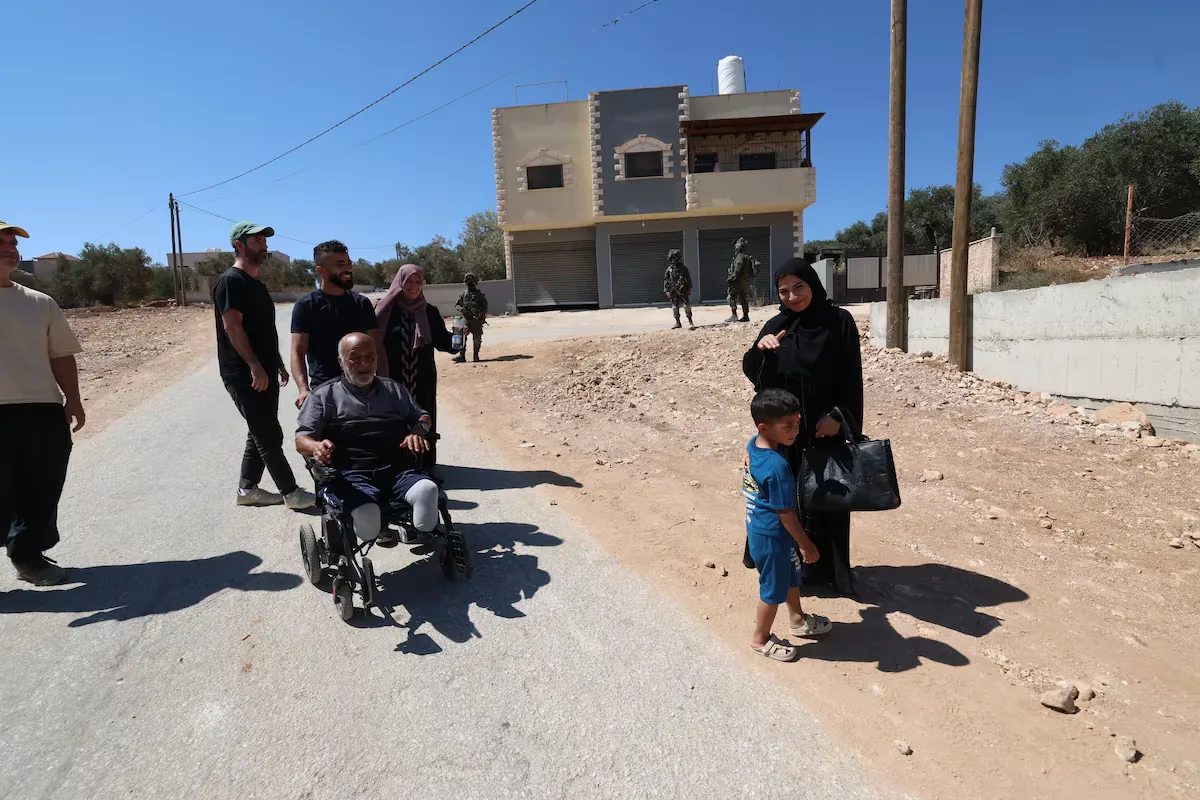






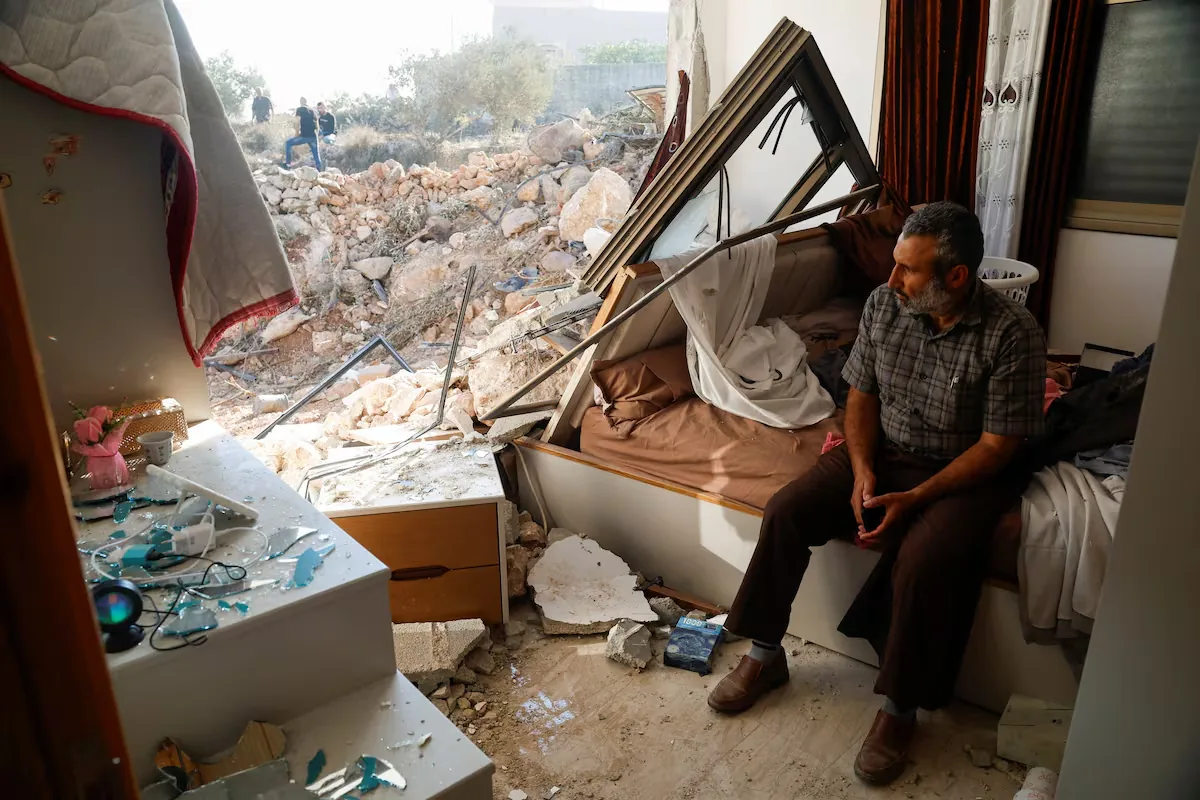
The shoulders of the roads in the West Bank are increasingly filled with Israeli flags, even in front of Palestinian homes. Also from the movement in favor of building a new Jewish temple on the Temple Mount in Jerusalem, the third holiest site in Islam, a claim of the most radical religious nationalism that is gaining ground. On several signs, someone has crossed out the Arabic name of the locality, painted a Star of David, or written the word “Revenge.” The concrete blocks at crossroads and checkpoints increasingly contain symbols of messianic factions. A soldier guarding the entrance to the Efrat settlement near Bethlehem also wears them on his arm, although in theory he is prohibited from displaying political signs. On both sides of the roads, proto-settlements of caravans that did not exist weeks ago can be seen. Some already have paved access. And at the entrance to Palestinian localities, graffiti in Arabic (“There is no future”) makes it clear to their inhabitants who decides today: the army and Israeli settlers.
Read more Service interrupted at 13 stations on Madrid Metro line 9 due to «technical reasons»
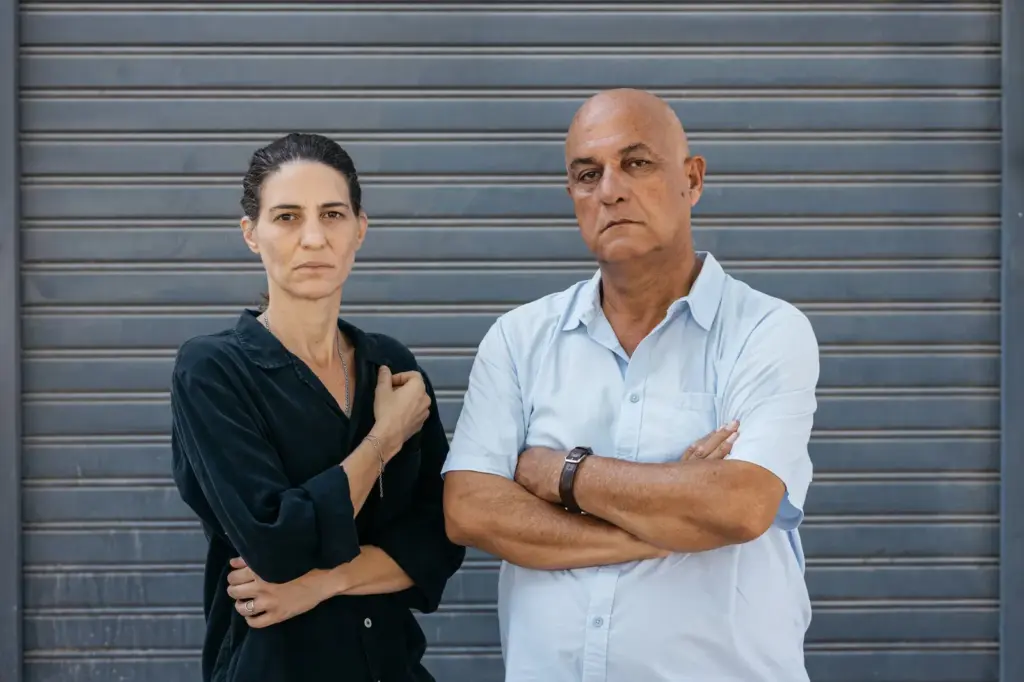
These are visible expressions of what B’Tselem — one of Israel’s main human rights NGOs — calls the Israeli project of “elimination.” It is, in fact, the title of its largest report on the West Bank, a Palestinian territory that has been under military occupation for more than half a century. The document, made public this Monday, defines the project as a “single mechanism that dismantles the necessary conditions for Palestinian collective existence” and that “reorganizes the space and living conditions so that Israeli control and Jewish presence become continuous, institutionalized, and permanent,” while “Palestinian existence is increasingly fragmented, vulnerable, and dependent.” “It is not a report about the future, but about the present,” its executive director, Yuli Novak, specified in an interview with this newspaper in Tel Aviv.
The report depicts a past and present that intertwine. The elimination project, the NGO insists, is neither new nor exclusive to the governments Benjamin Netanyahu has chained since 2009, except for a brief year and a half. It comes from the Nakba (1947-49), through two decades of military administration over Palestinians with Israeli citizenship, the capture of East Jerusalem, Gaza, and the West Bank in the Six-Day War of 1967, and the fragmentation with limited sovereignty left since the 1990s by the Oslo Accords, with a majority of the West Bank under Israeli military and administrative control. It is in this area, called C, where half a million settlers live today, plus another 235,000 in East Jerusalem.
The process, however, has accelerated in Netanyahu’s last four years, as if someone had fast-forwarded the tape of history. It is, until the October 27 elections, the most right-wing coalition in the country’s history, with unprecedented powers for ultranationalism over the West Bank, the police, and prisons. The deadly Hamas attack on Israel in October 2023 not only motivated the invasion of Gaza but also inaugurated in the West Bank an “era of miracles,” as defined by the far-right Minister of National Missions, Orit Strook.
In its 188-page report, B’Tselem identifies five central areas of action through which Israel implements its project: violence and intimidation; movement restrictions; economic strangulation; sociopolitical destruction; and ethnic cleansing and territorial appropriation. It emphasizes that “they operate simultaneously and are interconnected, reinforcing each other” and forming a single project.
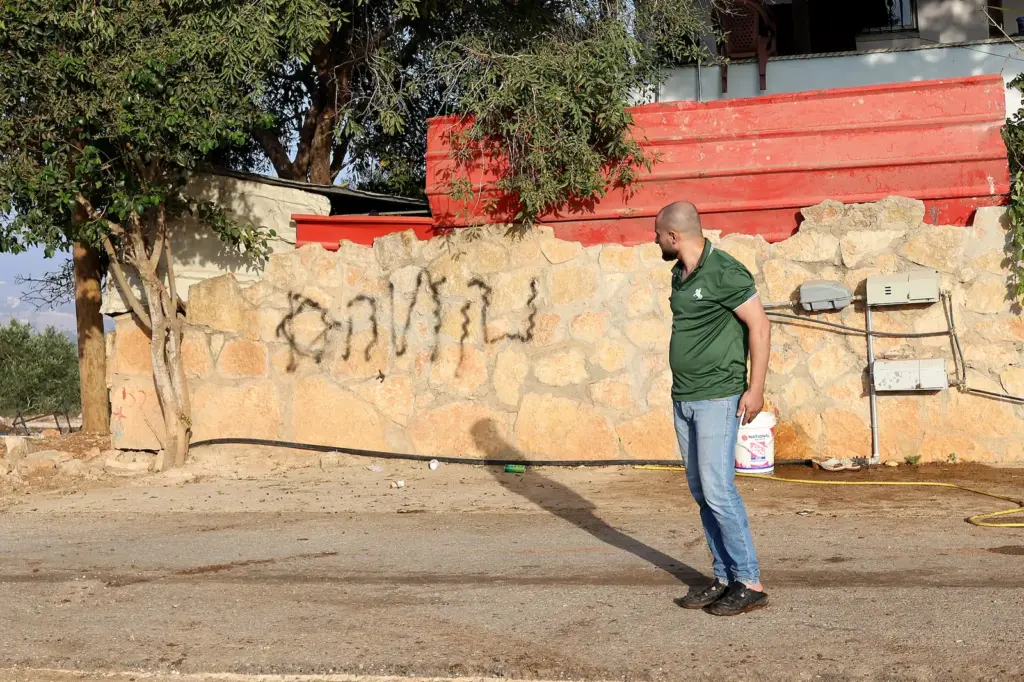
For example, a mound of earth or a metal barrier, like those seen at access points to roads or villages, prevents both going to work or cultivating land and the entry of an ambulance. A new radical settlement on a nearby hill is not only a sign of physical violence but also of serious economic losses, due to the burning of cars, houses, mosques, livestock, or olive trees.
Mohammed Shaban is a farmer in Halhul, a locality historically known for the quality of its grapes, increasingly less cultivated and harvested. The appearance of up to eight settlements in the surroundings limits access to the lands, so Shaban points them out from a distance, next to a cistern. He counts as an achievement the exceptional military permit he obtained on the eve to access his crops.
The area had been declared “military closed” and he understood the order when it was translated to him by Israeli human rights activists. “It means it was closed to Israelis, but the settlers were still there,” he protests. Shaban estimates the loss of agricultural income for Halhul this season at 40 million shekels (11.3 million euros or 13.2 million dollars). The vines give them two products: the leaves, to fill them making dolma, and the grapes, as fruit. “It is no longer just a matter of money, but of the lands we have inherited from generation to generation,” he adds.
Read more Shakira’s love for Spain is more than just a residence: life, children, friends, and lots of music
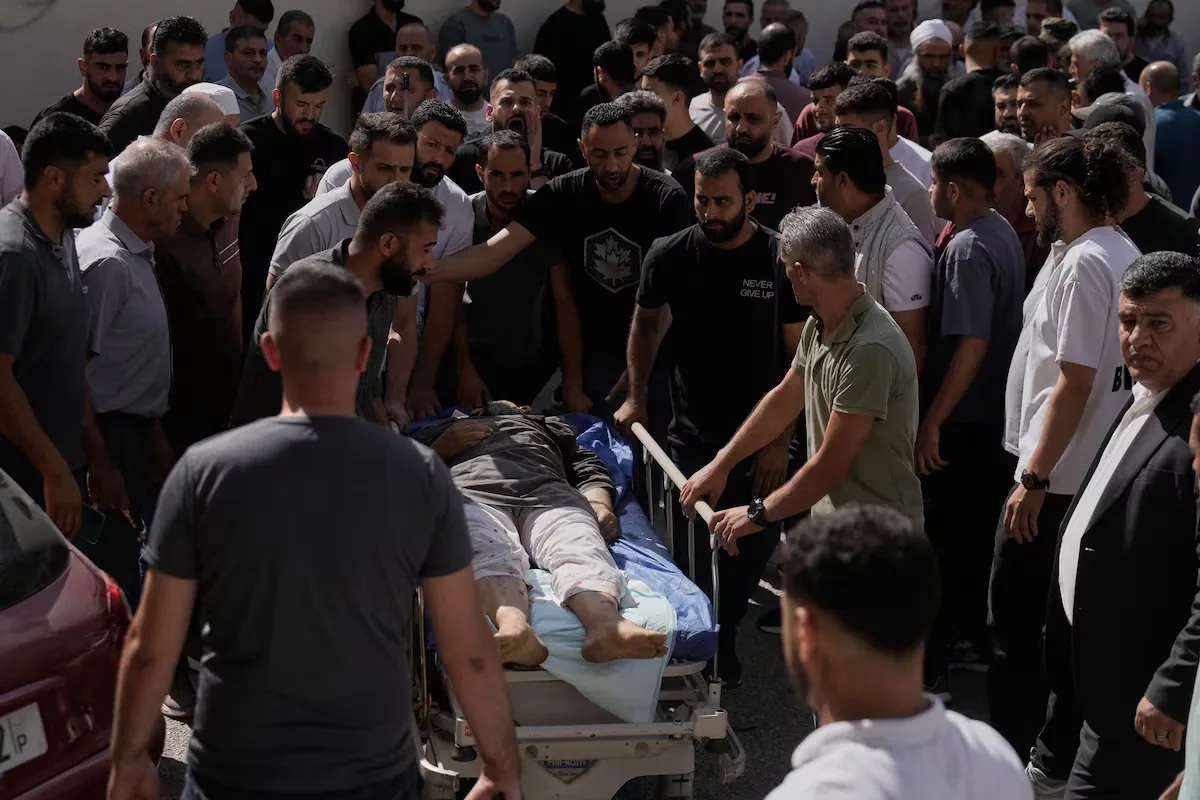
The acceleration of the project is not only noticeable in personal stories but also in the figures. Since October 2023, more than 1,100 Palestinians have died in the West Bank from fire by soldiers or Israeli settlers, sometimes unmistakable, as they serve and receive long weapons and uniforms as reservists. In the first six months since that date, Israel arrested 7,000 Palestinians.
In area C, there is practically no Palestinian life left. The inhabitants of 75 small communities (mostly Bedouin) have dismantled them in recent years, escaping the harassment of violent settlers to safer points. Settlers control 107,000 more hectares, 18% of the West Bank. About 240 of the new settlements in recent years are farms, the new and effective fashionable form, because it allows controlling a lot of territory with few people. And, in the largest population displacement in the West Bank in half a century, more than 30,000 inhabitants of refugee camps in the north have been expelled from their homes for a year and a half, with no return date and the army demolishing houses there. “It is no coincidence that we see no political life on the Palestinian street, with the system’s violence towards Palestinians and all these pressures,” says Karim Yubran, B’Tselem’s field research director.
“Israel employs both official bureaucracy and organized civil violence,” the B’Tselem report states. “It declares lands as state, firing zones, or military closed areas, nature reserves, or archaeological sites; issues military confiscation orders; applies a planning system that makes legal Palestinian construction practically impossible in large areas; demolishes homes and infrastructure; restricts property registration; and allocates land, roads, budgets, and services to settlements. In parallel, armed settlers take control of grazing and cultivation lands through threats, attacks, thefts, property destruction, and access blockades, usually with the protection or participation of the army.”
Israel has installed more than 200 new barriers and checkpoints since 2023. At 5:00 p.m. on a weekday, Israeli troops have already closed the access barrier to Beit Ummar, a locality of about 18,000 inhabitants in the south of the West Bank. “If I want to go to Bethlehem, which is five minutes away, I have to take a detour of about 35 or 40 minutes,” says Mohammed Yousef, a retired teacher. Those unfamiliar with this routine stop the car and ask locals how to enter through a more distant access. Those more familiar, on the other hand, get out of the vehicle, walk around the barrier on foot, and get in with those who have come to pick them up, or in shared vans that leave when full.
The economic strangulation, another of the five points of the project, notably affects the daily life of the population. After the Hamas attack, Israel revoked work permits for more than 140,000 workers (a fundamental income pillar for many families) and increasingly keeps part of the money it collects and should transfer to the Palestinian National Authority. Since 2019, it has withheld, with various explanations, the equivalent of almost 4 billion euros. With all this together, unemployment has risen from 13.1% (2022) to 28.7% last year, civil servants have only been paid half their salary for years, school classes are limited to three days a week, and medical centers have become both debtors (to pharmaceutical companies) and creditors of the PNA.
Also private ones, like the Al Mizan hospital in the city of Hebron. Its general director, Hazem Al Shalaldah, estimates the amount owed by the PNA at around 35 million euros, although he does not exaggerate because he knows Israel ties his hands. “Meanwhile, we owe pharmaceutical companies and can only pay part of the salaries. It is a vicious circle,” admits Shalaldah. Sahar Qawasni, deputy director and head of the Gynecology and Obstetrics department, is seeing another consequence of the social income loss: “Even some families who had a good economic situation can no longer afford to pay for consultations.”
Read more How should ‘How to Lose a Guy in 10 Days’ be to not be cringeworthy in 2026