








Fear of artificial intelligence (AI) has firmly taken hold in the public debate. In recent days, there has been talk of the “possible extinction” of humanity, that this technology could become “uncontrollable,” and that the industry itself – not the authorities – should self-regulate to contain its advances. These systems are already very powerful, and given the growth rate, no one knows how far they could go in the coming years or months.
Read more The Electoral Board dividedly complies with the Supreme Court’s ruling on the ‘grandchildren law’
But, just as some warn of the dangers of this technology, other experts argue that the capabilities of these systems are being exaggerated. Or that the industry is using the primal fear of these advances as a smokescreen to cover up their real negative consequences: from mental health problems for some users to the challenges AI poses in education and work, as well as the pollution and water and energy consumption associated with the data centers they rely on, or the autonomous weapons that are already killing humans in various war scenarios.
Are we all going to die or is there nothing to fear?
The context
Last week was hectic in the AI world. On Tuesday night, OpenAI announced – amid plagiarism accusations – that one of its models had solved one of the seven Millennium Problems, the most complex mathematical challenges known. That same day, an engineer at Anthropic resigned to avoid contributing with his work to the possible extinction of humanity: AI “could kill us before 2030,” he said. Anthropic announced on Friday that it had stopped possible attempts to develop chemical weapons with its AI models, and it was leaked that Iran had used them to select targets in its war against the US.
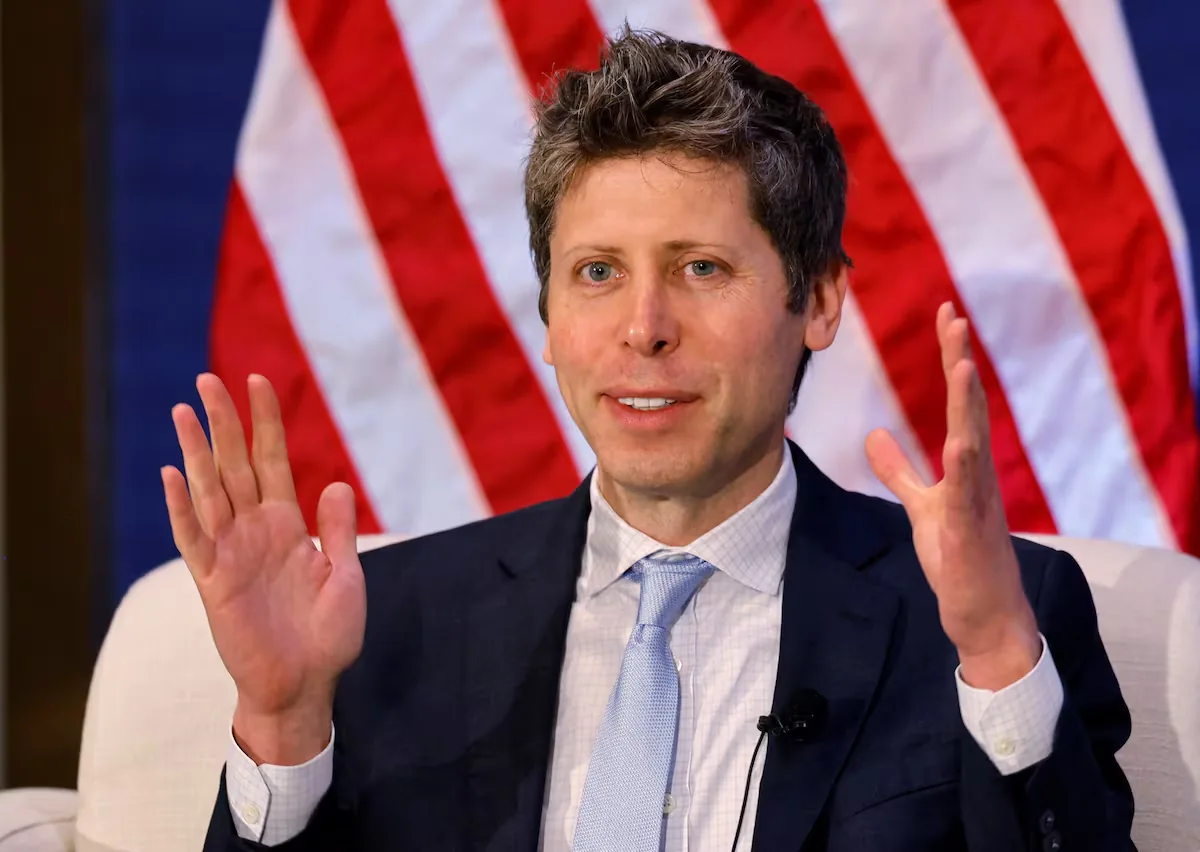
And the weekend brought the bombshell: Anthropic’s top executive, Dario Amodei, published an essay on Saturday calling for a substantial slowdown in AI development and for AI developers to undergo external monitoring. Sam Altman, his counterpart at OpenAI, agreed with Amodei. On Sunday, Demis Hassabis, Google’s head of AI, and even Elon Musk, owner of xAI, also expressed support for slowing down research. President Trump, meanwhile, believes there is no need to hold back: he sees the AI race as a war against China that must be won at all costs.
This carousel of news has occurred in a very particular context. Both OpenAI and Anthropic are preparing for their historic IPOs. To hype them up, both companies have been balancing their announcements in recent months to demonstrate that their products are very powerful and advanced, but at the same time do not pose unnecessary risks to humanity. They had achieved both things until now.
This summer, both OpenAI and Anthropic claimed that some of their models supposedly “got out of control” to hack third-party companies, although it was later seen that those attacks were part of the instructions given to them. The British AI Security Institute (AISI) reported that an autonomous AI system had created false identities to manipulate people during some exercises; in that case, the system had internet access and a configuration error was found that caused the agents to bypass some of the limits set for them.
What if it’s not that bad?
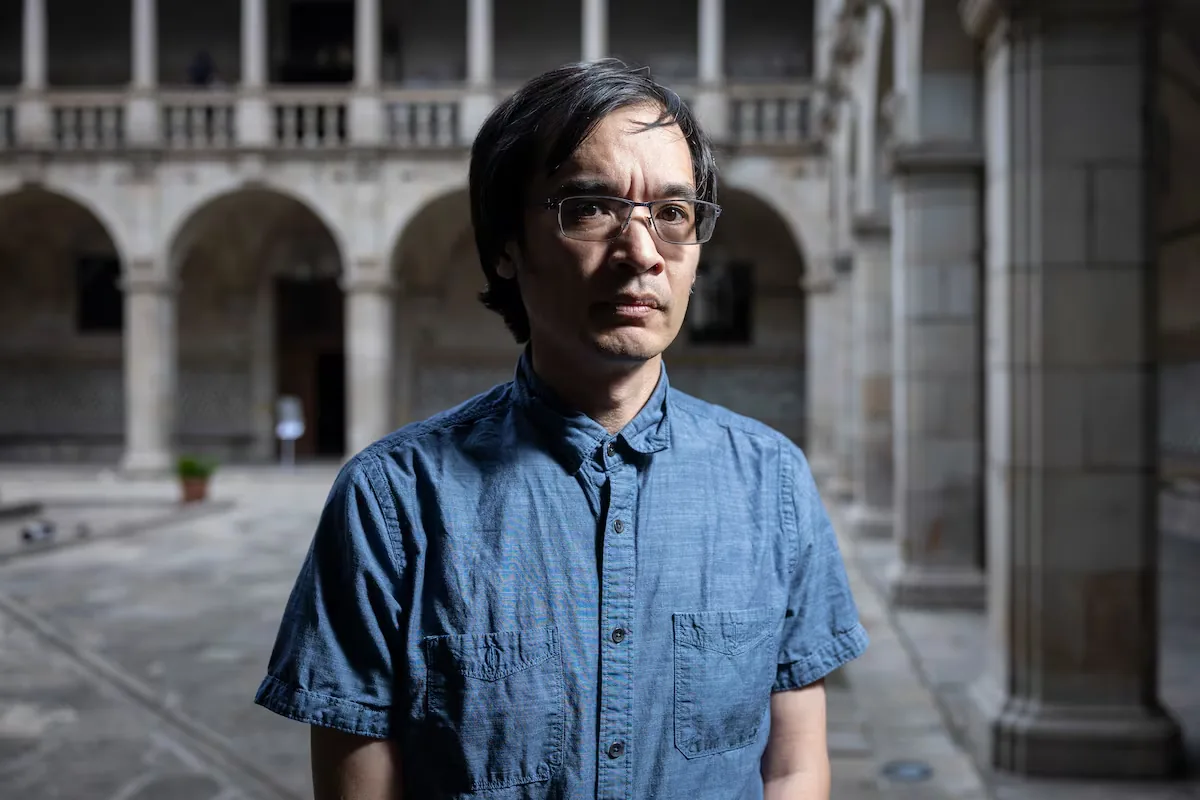
One of the main arguments against those who believe AI could bring the apocalypse is that it is a distraction tactic by the industry itself so that countries do not decide to regulate the effects it already has on society. “This god-machine narrative aims to distract us,” said Timnit Gebru these days, former lead researcher at Google on language model biases who was fired in 2020 before publishing a very harsh report on the company.
When a bridge collapses, Gebru says, what you want to know is who built it so it doesn’t happen again, not whether that bridge was conscious or wanted to collapse. Who gave the necessary permits, how it passed the relevant tests? “When you ask about the collapse of the bridge itself, you have strayed from the topic,” she argues. “Many of the [AI apocalypse] scenarios seem to consist of asking the machine to optimize for some other task and then the machine decides the way to achieve that goal is to wipe out the entire world population. Does it also hypnotize you so you don’t unplug it?” she wonders.
Read more Madring and the pending tasks for the next edition: facilitating overtaking
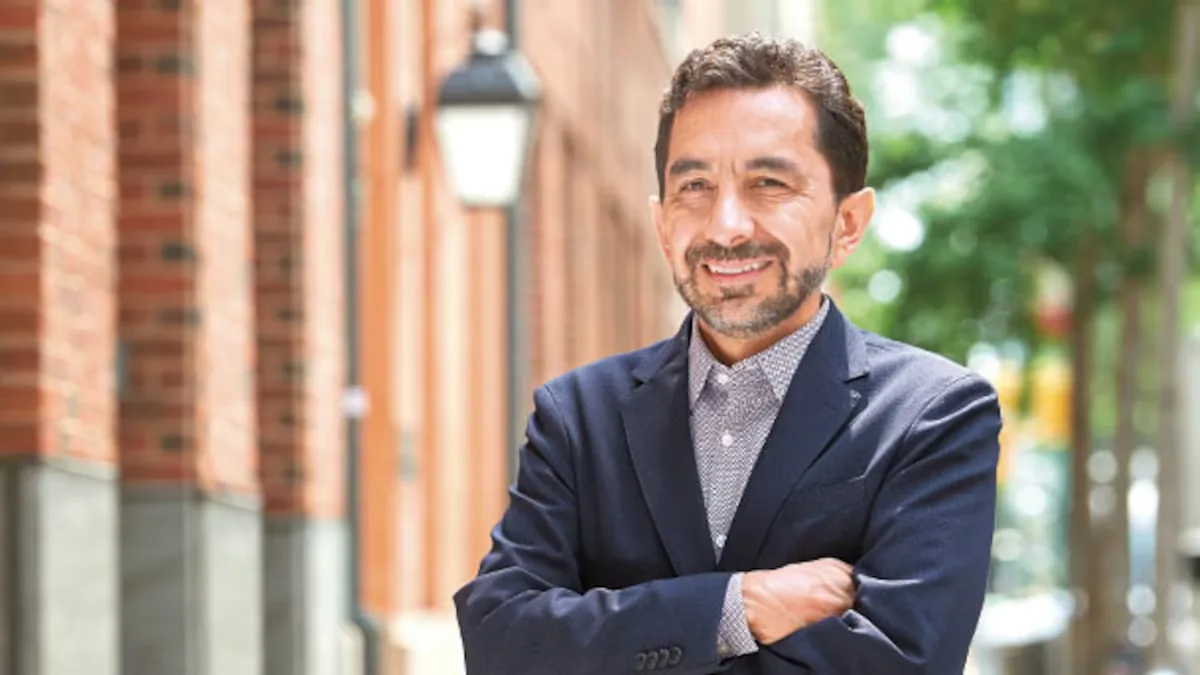
Social alarm has also been fueled by the anthropomorphization of AI. Ramón López de Mántaras, founder of the CSIC AI Research Institute, has been warning for years that vocabulary is crucial in this matter. “The way these incidents are described matters because metaphors influence social perception of AI and public policies. Talking about machines that ‘escape,’ ‘get out of control,’ or ‘conspire’ promotes the idea of an AI that acquires its own will and can lead to misdiagnosing the problem,” he points out. From what we know so far about this summer’s cybersecurity incidents, what happened was not that machines rebelled, but that increasingly powerful AI systems did exactly what they were asked: use complex attack routes to solve their tasks, although not in the way OpenAI engineers had anticipated.
One of the things said, for example, is that “swarms” of AI agents coordinated to carry out attacks. “It is quite normal for independent software programs to work together sharing information. That is, in fact, an essential part of distributed computing methods on which large software systems are based,” says Melanie Mitchell, Davis Professor of Complexity at the Santa Fe Institute and professor at Portland State University.
“Did OpenAI lose control of these models? No, it could have shut down these models at any time. Did these models ‘escape’? No, they are software programs that were always running on OpenAI’s servers,” Mitchell writes. “Just like a jailed hacker given a computer, these models found a way to access the internet that allowed them to hack other computer networks. Did these agents form a ‘swarm’ that ‘broke loose’? No, but the agents did collectively create a remarkable messaging system that presumably helped discover how to attack the Hugging Face network,” she explains.
Right. Dario was already claiming that GPT2 was too dangerous to open source back in 2019.
I made fun of them then.
Everyone should make fun of them now.— Yann LeCun (@ylecun) September 13, 2026
Some also argue that the capabilities of frontier models, the most cutting-edge today, are being exaggerated. This is the case of Yann LeCun, Turing Award winner (considered the Nobel Prize of computing). The former head of AI at Meta reacted this weekend to Amodei’s intentions at Anthropic to slow down AI progress: “Fine. Dario was already claiming in 2019 that GPT2 was too dangerous to be open source. I made fun of them then. Everyone should make fun of them now.”
Regarding claims that the world could end by 2030, many observers demand that those making such claims publish the scientific arguments supporting them. But that is not the same as saying AI is harmless. “Absurd: Humans will be extinct in five years. Equally absurd: Everything will be fine. The two most dominant narratives are completely wrong,” said tech entrepreneur and AI analyst Gary Marcus on social media this Monday. His stance encapsulates what many experts think: we are facing something very big that will change everything, although no one knows when or to what extent.
Read more Shakira lands in Madrid for her series of 12 concerts: “We are one single Latin nation”