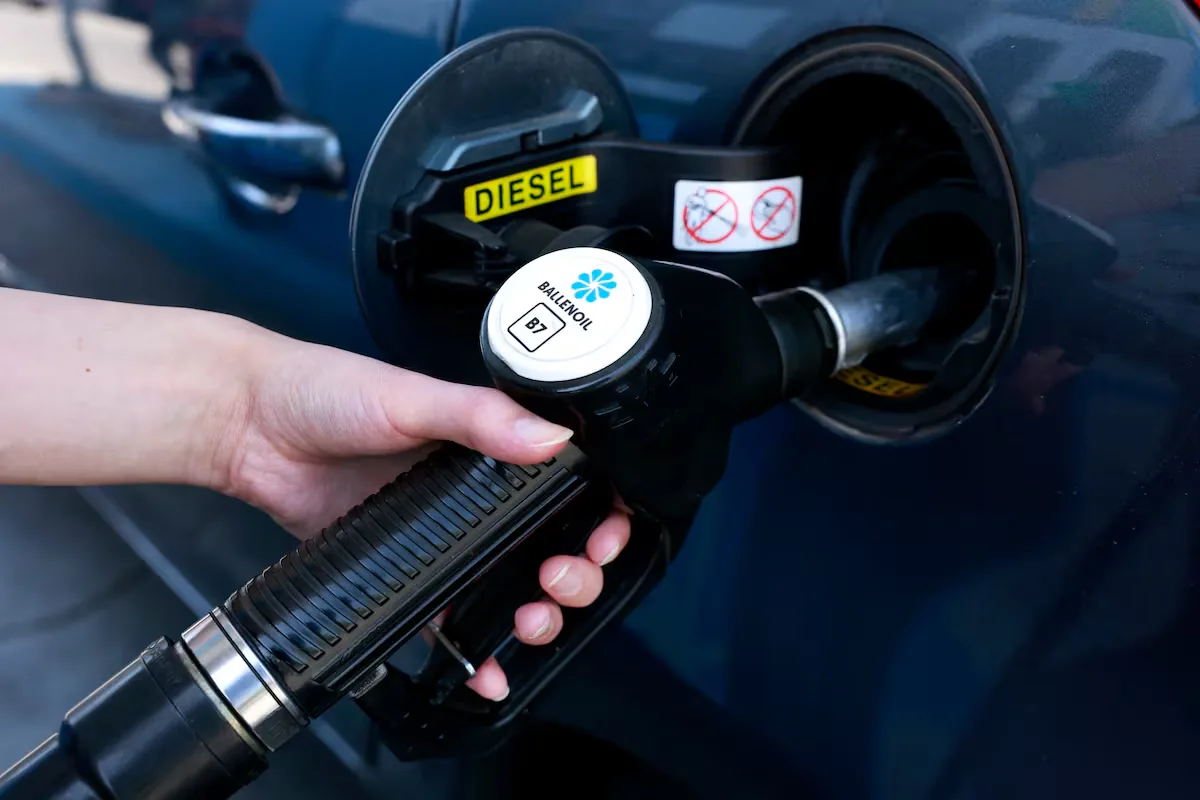









The National Institute of Statistics (INE) confirms that inflation became entrenched in August at levels well above what is desired: prices grew by 4.3% year-on-year, seven tenths more than the previous month, reaching their highest level since February 2023. This is confirmed by the agency in the final data for the eighth month of the year published this Tuesday. The main reason for the increase is the skyrocketing prices of fuels, with the price of a barrel of oil not easing and having once again surpassed 100 dollars in recent days.
Read more NATO fighters shoot down a drone flying over Lithuania from Belarus
Core inflation, stripped of the most volatile elements such as energy and fresh food, also remains at high levels: the INE confirms the preliminary figure it provided at the end of August, which pointed to a rise of 2.9%, one tenth less than the previous month. The positive note is that inflation for food and non-alcoholic beverages remains more contained, at 2.3% year-on-year.
The evolution of inflation so far this year has been in crescendo. The year started with prices growing in a moderate range, just slightly above the 2% target set by the European Central Bank (ECB), but that normality did not last long. The attack by the United States and Israel on Iran at the end of last March reversed the trend: the conflict, which from the start caused bottlenecks in the trade of key goods such as crude oil and fertilizers, began to put pressure on inflation, which did not accelerate again with the arrival of summer.
Now, six months later, the situation remains stagnant with no improvements in sight. The truce signed in June between the United States and Iran was nothing more than a brief pause, insufficient to ease international trade — a quarter of all crude oil and gas worldwide passes through the Strait of Hormuz — and relieve prices.
The Ministry of Economy insists that the evolution of the Consumer Price Index (CPI) in August is mainly due to the rise in fuel prices, which “reflect the persistence of the energy shock caused by the war in Iran and incorporate a base effect because in August 2025 they fell,” it states in an assessment released this Tuesday.
The department led by Carlos Cuerpo also recalls that the anti-crisis shield measures to respond to these imbalances remain in effect, including the discount of 20 cents per liter for diesel and 5 cents for gasoline. But their expiration date is approaching — the aid will run out at the end of this September — without the conflict being resolved nor prices returning to normal. Faced with this situation, the Government assures it will continue “supporting families,” although it remains to be seen with what measures.
Read more Blanca Paloma, singer: “I composed this album pierced by the massacre in Gaza”
[Breaking news, update coming soon]