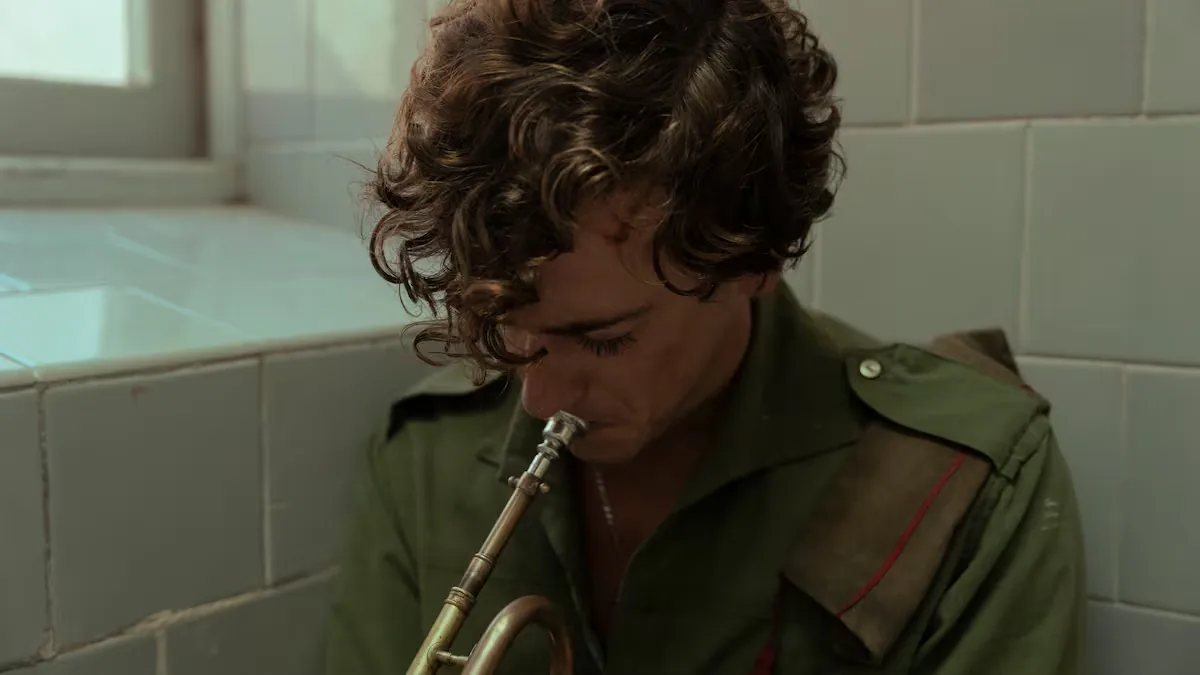










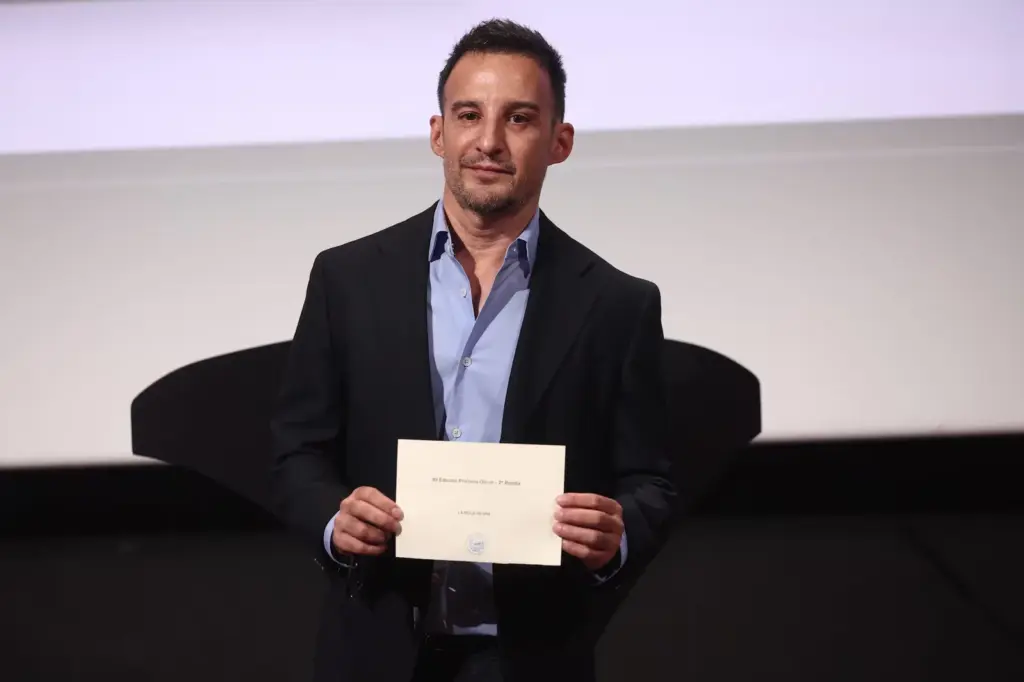
The film La bola negra, by Javier Calvo and Javier Ambrossi, has been chosen by the voters of the Spanish Film Academy to represent Spain in the Best International Feature Film category at the Oscars. The academics selected it from a shortlist that included Los domingos, by Alauda Ruiz de Azúa, and El ser querido, by Rodrigo Sorogoyen. The announcement of the result was made by filmmaker Alejandro Amenábar, the last Spanish director to win that Hollywood award, in the presence of the notary and the president of the Academy, Fernando Méndez-Leite. That was back in 2005 with Mar adentro.
Read more Support for Palestine sparks a crisis on Ed Sheeran’s tour with the departure of several musicians
In early November, the Hollywood Academy will release the list of all films in this category — 86 entered last year — and on December 15 the 15 pre-selected for Best International Feature Film will be announced. The five nominated titles will be revealed on January 21, 2027; and the 99th Oscar ceremony will be held on March 14, 2027, hosted by Conan O’Brien.
La bola negra weaves the shadow of Federico García Lorca with homosexuality over the last 100 years in Spain, as three stories from three eras, 1932, 1937, and 2017, intersect to come together and make sense at the end. The script partly originates from the play La piedra oscura, by Alberto Conejero, and from notes left by García Lorca on the play La bola negra.

From early morning in Toronto, at five in the morning, where the film was applauded on Tuesday night at its market-festival, Javier Calvo, Javier Ambrossi, and actors Milo Quifes and Carlos González connected to share their happiness. Asked about the promotion they are now undertaking, Ambrossi said that the person responsible for Netflix’s awards campaigns had told them the film “is the future.” He emphasized how curious it is that this happens with “a film that talks about the past.” Less than 15 days before its commercial release in Spain, the filmmakers asked that “the audience watch it from scratch, forgetting everything they have read” and enjoy the film.
The Javis have already accompanied the film in Los Angeles, from where they connected when the pre-selection was announced, in Telluride, and in Toronto. “We’ve already been told we will live tied to a suitcase. And we haven’t yet thought about other possible nominations, because there are prior steps, like its screening in Perlak at the Zinemaldia and the Spanish premiere.”

La bola negra will premiere in the US with its Spanish title. “The incredible thing about the screenings in the United States,” Ambrossi highlights, “is that they watch two hours and 35 minutes with subtitles, and they enjoy it just like the Spanish do.” Calvo says that “many people praise the classicism of the proposal.” He adds: “Many tell us it’s the kind of film that is no longer made.”
As their creators said in Cannes: “Lorca is not a chimera, not an idea, he was a person. And Federico García Lorca was murdered for being gay. It is very important to claim that history is not a line of text; history, as the Hispanist played by Glenn Close says, is people.” Alongside Close, the other star appearing in the feature film is Penélope Cruz, who plays the cupletista Nené Romero. Although the weight of the action is carried, in different eras, by musician and actor Guitarricadelafuente, Milo Quifes, and Carlos González. By the way, Guitarricadelafuente and musician Raül Refree have already passed another screening in another Oscar category: their song La nieve is registered and accepted for the Best Original Song statuette.
In the United States, Netflix is distributing it, having announced it will release it in theaters on October 16 before its streaming launch on December 2, and will fully support it. The film won the Best Direction award at the last Cannes festival and will arrive in Spanish cinemas next Friday the 25th, although it will be screened earlier in the Perlak section of the San Sebastián festival.

Last year, the pre-selected trio was composed of Sirât, by Oliver Laxe, Romería, by Carla Simón, and Sorda, by Eva Libertad. The Spanish representative was finally Sirât, which managed to be a candidate for Best International Feature Film and Sound. At that gala, this award was won by Norway with Valor sentimental, by Joachim Trier.
Many countries have already announced their selections. Among others, Romania is sending Fjord, by Cristian Mungiu, which was already qualified under the new rule that winners of certain festivals enter the race, and this drama is the latest Palme d’Or winner at Cannes; Hungary, El amigo silencioso, by Ildikó Enyedi; Chile, El deshielo, by Manuela Martelli; Japan, De repente, by Ryûsuke Hamaguchi; Germany, Everytime, by Sandra Woller; Israel, Tell Me Everything, by Mosher Rosenthal; Belgium, Cobarde, by Lukas Dhont; Iraq, No Paradise If You Are Killed by a Woman, by Kurdish-Norwegian director Halkawt Mustafa; South Korea, Possible Love, by master Lee Chang-dong; Morocco, La más dulce, by Laila Marrakchi; Austria, Rose, by Markus Schleinzer; Switzerland, the documentary about Gaza Who Is Still Alive, by Nicolas Wadimoff; Ireland, Aontas, by Damian McCann; Thailand, 9 Temples to Heaven, by Sompot Chidgasornpongse; Canada, Nina Rozas, by Geneviève Dulude-De Celles; the Philippines, Filipiñana, by Rafael Manuel; and Mexico, En el camino, by David Pablos. In general, these are titles that have started their journey at major festivals, especially Cannes. Among the major countries, Italy and France have yet to decide.
Germany has placed three films in this shortlist in this category, thanks to the new rule by which winners of some festivals chosen by the Hollywood Academy automatically qualify. Alongside Everytime, it already has the Turkish-German Cartas amarillas, by İlker Çatak, because it won the Golden Bear at the last Berlinale, and Shame and Money, by Visar Morina, Grand Jury Prize at Sundance.
Read more Von der Leyen hardens her discourse on migration following the Ceuta crisis