



Lawyer Alejandro Álvarez-Buylla, representing two of the detained youths and a third who is outside Spain, has denied that there is a “political motivation” in the assault on two activists of the Asamblea Moza d’Asturies during the San Mateo festivities in Oviedo on September 11. He insisted that at “no time were expressions such as ‘faggot’ or ‘long live Spain’ uttered.” For his part, the chief of the National Police of Asturias pointed to a “homophobic motivation” at a press conference alongside the Government delegate in Asturias, Adriana Lastra, held this morning. The head of the Superior Headquarters reported that the accused are members of Symmachiarii, the ultra group linked to Real Oviedo, but considered that “violence has nothing to do with sports.”
Read more Lifeless body of a man swept away by the water found in the Olivella stream (Barcelona)
Álvarez-Buylla explained that the five detained youths refused to testify and that, according to the version he gave at the doors of the Oviedo Court of Instruction number 3, it was an “unfortunate situation” between two groups of people, “a product of the night, of alcohol,” which generated “a climate of disagreements, of aggressiveness” and “ended up acting foolishly.”
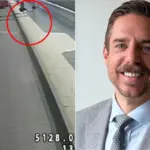
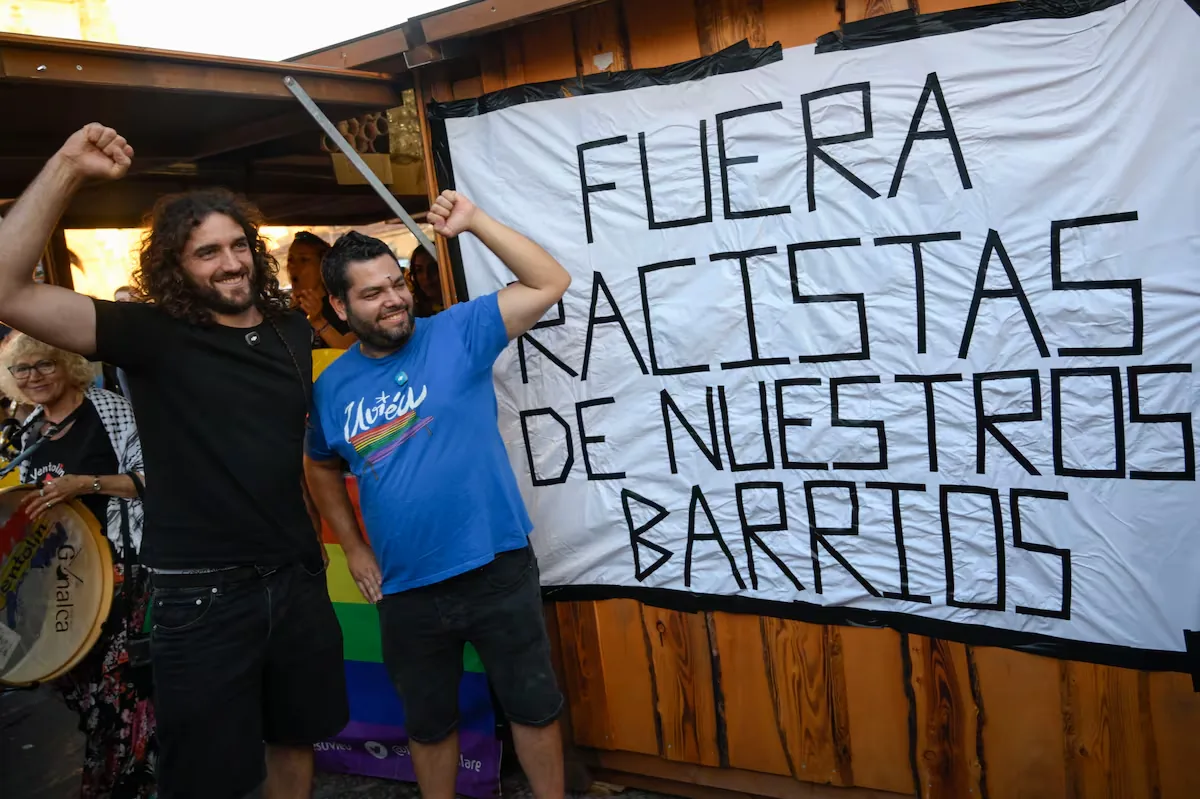
According to the police chief’s details at the press conference, at first one of the aggressors approached the booth and tore down the banner against racism. After a few minutes, “this same person, along with the other five, tore down the skirt with the LGTBI rainbow symbol.” At that moment, the two people who were later assaulted came out of the booth and reproached that action. After a brief argument between them, comments were made against the complainants such as “shitty reds,” “shitty faggots,” or “long live Spain.” “Surprisingly,” the police officer pointed out, one of the men assaulted one of the victims “while they tried to defend themselves.” “The images also show group action and the use of disproportionate violence,” the subsequent National Police statement added.
Read more The National Court allows the temporary use of the migrant camp in the port of Ceuta
The Government delegate in Asturias appealed to the responsibility of public representatives after the controversial words of the mayor of Oviedo, Alfredo Canteli, who initially described the attack as an “anecdote” and said he did not believe the aggressors were “such bad people.” Four days later he rectified and then condemned the violent attack. Without explicitly naming him, Lastra emphasized that the statements of those who have “a microphone in front of them” are decisive: “We can argue very harshly about politics, governments, parties, or ideas, but there is a line we should never cross. We must not trivialize hatred or minimize violence, because words build violence, but they can also destroy it.”