






2197. It is not the title of a science fiction movie, but the year in which equality between men and women will be achieved if nothing changes. This is the warning issued by UN Women in its annual report, published this Thursday, which outlines a landscape of insufficient progress and persistent gender gaps and reveals how far the promise of achieving the sustainable development goal dedicated to gender equality by 2030 has drifted.
According to the agency’s warning, progress has not only stalled but has reversed in many countries amid a reactionary anti-feminist wave and a global democratic backslide. “The same institutions, funding, and movements that have been built over many decades to promote gender equality are being systematically weakened,” says Sarah Hendriks, Director of Policy and Programs at UN Women, in a video call with this newspaper.
Political violence has become one of the main barriers to women’s participation in decision-making spaces. In some countries, eight out of ten women candidates for Parliament and six out of ten candidates for local elections report having suffered psychological, sexual, economic, or physical violence. This risk is amplified by the expansion of social networks and other digital spaces. “Women should not have to choose between their safety or working in politics or public life,” Hendriks laments.
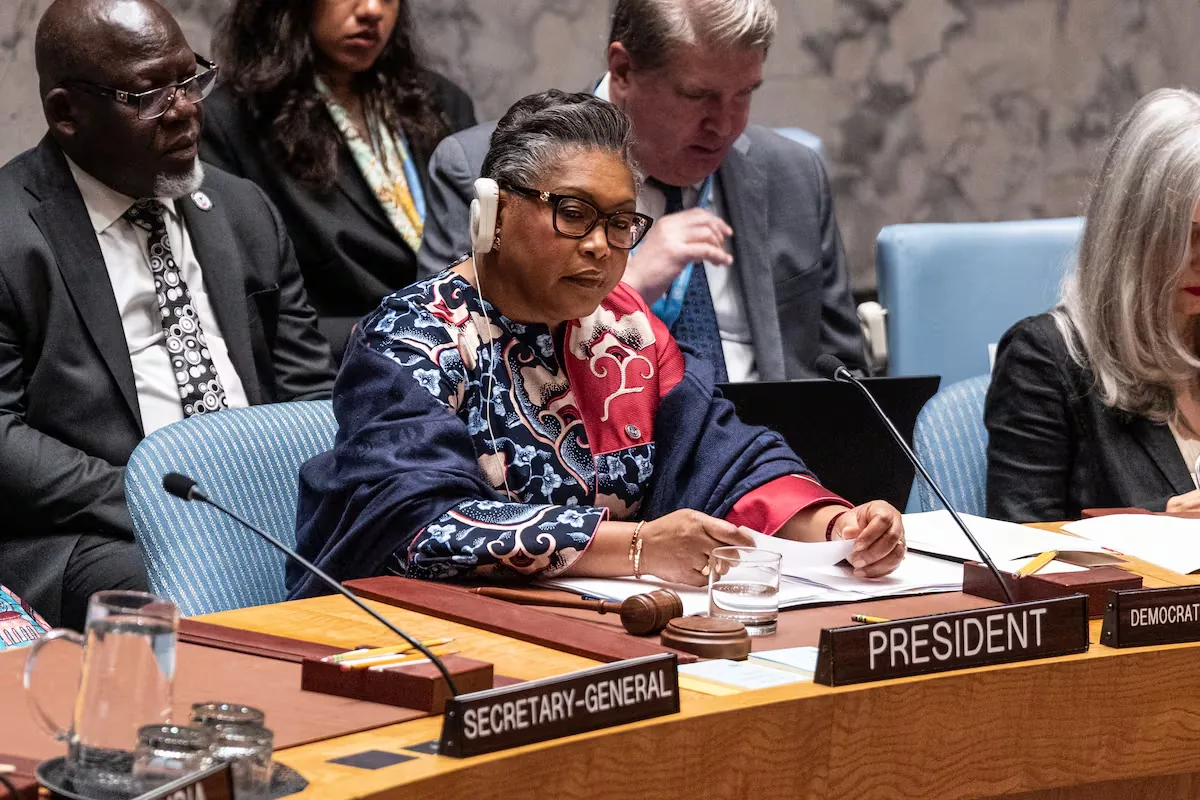
The report places special emphasis on the setback of women in politics and power spaces. Although between 2020 and January 2026 the number of women heads of state or government increased from 20 to 28, six out of seven countries are still led by men. The trend is worrying in Parliaments: in the last five years, the proportion of women parliamentarians has fallen in 54 countries and the number of female ministers has decreased by 20% worldwide. It is also the first time in 21 years that the number of women serving as parliamentary presidents or spokespeople has declined. Since 2015, a total of 36 countries have regressed in female representation in national parliaments, 27 in local governments, and 34 in leadership positions.
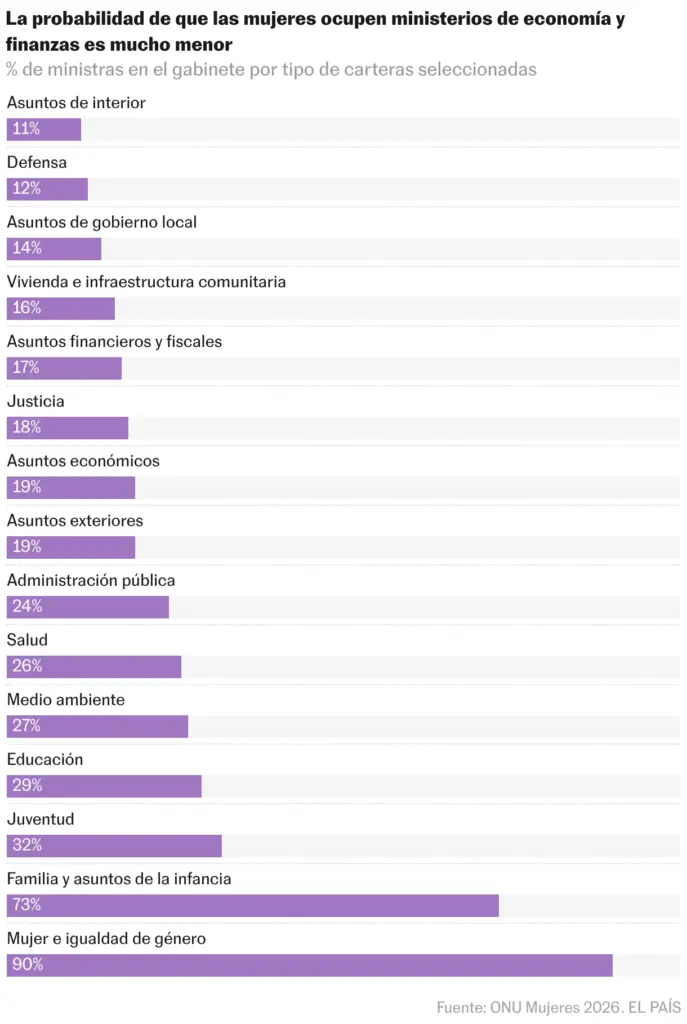
However, it is not enough for more women to reach political leadership positions, as this position does not guarantee that they have the necessary means to achieve real legislative changes. According to the report, 90% of female ministers are concentrated in areas traditionally associated with care (family or childhood) and equality, while only 11% hold Interior portfolios and 12% Defense.
In the last two years, moreover, the power of women who do manage to reach leadership positions has eroded. The report includes complaints of staff cuts, the elimination or downgrading of bodies aimed at combating inequality, and the loss of competencies and influence of these institutions.
Even in the judicial field, where there are more female judges than male judges worldwide (51.2%), it is harder for them to reach positions of power. Worldwide, only one in five presidencies of the highest national courts is held by a woman. And, despite there being more women than ever in leadership and responsibility positions in companies, they remain a minority in the highest decision-making bodies. Additionally, female executives earn less per hour than their male counterparts in eight out of ten countries with available data.
The gap beyond offices
The differences extend to the entire labor market. Although female participation has increased in numerous countries over the last decade, in 2026 only 63.9% of women aged 25 to 54 were employed, compared to 92% of men. Female workers also continue to be overrepresented in informal and precarious jobs.
But the consequences of the lack of female leadership go far beyond offices, parliaments, or boards of directors. According to the UN report, women and girls continue to bear a disproportionate burden of poverty, violence, and exclusion in practically all development indicators. In 2025 alone, the agency estimates, 316 million women suffered physical or sexual violence by a partner. Food insecurity and extreme poverty continue to affect them more than men, and one in five girls marries before turning 18.
Women’s organizations, responsible for much of the progress made in equality over recent decades, also face a severe funding crisis, largely due to the dismantling of USAID, the United States’ cooperation agency. According to UN Women, these groups have historically received “less than 1% of official development aid.” Between 2023 and 2024, these funds were reduced by 28%, a decline that is expected to continue in the coming years.
Hendriks laments that the reduction in international aid coincides with a time marked by two phenomena: numerous armed conflicts that have caused severe humanitarian crises, and the global rise of reactionary movements against gender equality, which have “clear links to the manosphere” (online spaces where men attack and denigrate women), and which the report warns have increasingly younger members.
To combat these setbacks and reduce inequalities in access to power, Hendriks advocates strengthening gender quotas as an effective tool to guarantee greater female representation. The data supports her argument: countries with strong quota systems record a much higher presence of women, who occupy 39.5% of parliamentary seats and 42.4% of local government positions.
The report also calls for more funding for organizations working for equality, tougher legislation against misogyny and political violence against women. Reforms that reduce the high economic and social costs that discourage greater female presence in politics and public life are also essential.